Yonkers Homes Were Built With It. Here's How to Handle It Right.
Most pre-1980 buildings in Yonkers contain asbestos somewhere floor tiles, pipe insulation, ceiling texture, boiler wrap. We provide licensed asbestos abatement in Yonkers with the credentials, process, and documentation to do it properly.
I needed a professional consultation explanation of procedure for safe removal of Asbestos in my apartment complex. Without having an account yet, I was very impressed with the caring, knowledgeable and generous advice offered by Jessica, and will look forward to doing business in the future. Thank you so much! I feel much more informed about a sometimes scary endeavor. Peace. Nancy Silva Mineola, NY.
Mia Munoz
Used this company to clean up some water flood in my house. They were fast and easy to work with.very professional, Would recommend to anyone!
Nini Valle
Great company, had a flood and they responded quickly and efficiently. Billed my insurance company directly. I highly recommend this company!
joe colapietro, jr
I had pipe freeze in my basement right before a snow storm and they made to within an hour to help start the clean up process. They we by our side throughout the entire process and even helped with the insurance company. They did such a great job with the cleanup, repair, remidiation, I contracted them to perform the repairs and finishes in the basement. They came with enough manpower and material to get the job done. Leo and Jessica were nothing but a pleasure to deal with!!
Cristian Arredondo c
I had some water damage in my home and Green Island was able to take care of my issue quickly and effectively. I am very pleased with the work they did. They responded quickly and were very professional.
Michael M
Outstanding service! From the office to the field crew everyone was friendly, helpful and responsive. I highly recommend Green Island Group.
You stop guessing. That’s the first thing. Once asbestos-containing materials are properly identified, removed, and cleared by a licensed contractor who provides real documentation you’re no longer sitting on an unknown risk inside your own property.
For Yonkers homeowners, that matters more than most people realize. The city’s housing stock is old. The pre-war apartment buildings in Park Hill and Nodine Hill, the postwar Cape Cods in Lincoln Park, the brick two-families in Dunwoodie virtually all of it was built during the decades when asbestos was standard in floor tiles, pipe insulation, and ceiling texture. If you’re renovating, selling, or dealing with water damage from aging plumbing or a failing boiler, you’re likely dealing with asbestos whether you know it yet or not.
What you get on the other side of a properly completed abatement is clearance documentation the air test results and formal records that confirm the materials are gone and the space is clean. In Yonkers’ active real estate market, where homes are moving fast and buyers and lenders are increasingly asking for this paperwork before closing, that documentation isn’t just peace of mind. It’s a real asset with real value attached to it.
We are a New York-based environmental remediation contractor with over 5,000 completed abatement projects across the metro area. We hold the NYS Department of Labor Asbestos Handling License, EPA certification, and NYC DEP contractor credentials and every one of those licenses is a public record you can verify yourself. We’re also M/WBE certified by the New York State Office of General Services, a formal state designation that no local competitor in the Yonkers market publicly holds.
We work across Westchester County regularly, including throughout Yonkers’ neighborhoods from the older multi-family buildings near Getty Square and the residential blocks off Central Park Avenue to the waterfront redevelopment corridor along the Hudson. We also work directly with insurance carriers and handle billing on your behalf, which matters most when a pipe burst or water intrusion event is what triggered the abatement need in the first place.
When you call for a free inspection, a trained professional shows up to your property. Not a salesperson. Someone who can actually tell you what you’re dealing with.
No Surprises Just a Clear Process From Start to Finish
It starts with a free on-site inspection. A trained professional visits your Yonkers property, assesses the materials in question, and gives you a straight answer about what’s there, what needs to happen, and what it will cost. No charge for the visit, no pressure to move forward on the spot.
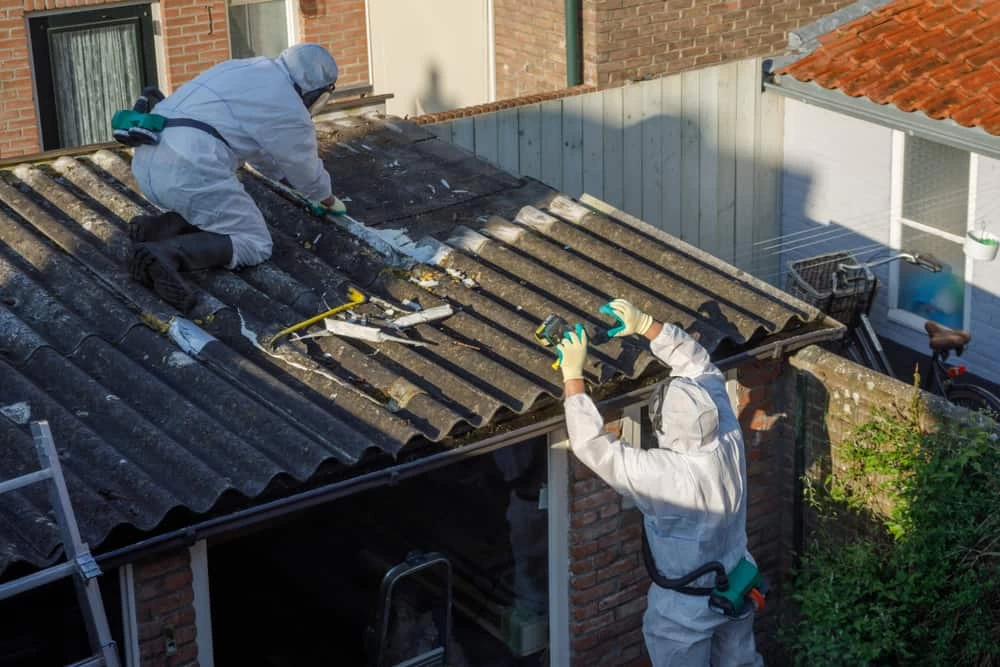
If abatement is needed, we handle all required notifications and coordination with the NYS Department of Labor Asbestos Control Bureau before any work begins. In Yonkers, renovation and demolition projects that may disturb asbestos-containing materials require proper regulatory coordination and that’s our responsibility to manage, not yours. We set up full containment around the work area, use negative air pressure systems to prevent fiber migration, and follow NYS Industrial Code Rule 56 procedures throughout the job.
Once removal is complete, we don’t just pack up and leave. Post-abatement air clearance testing is a standard part of every project not an add-on. An air sample is taken inside the cleared work area, results are tested against the clearance threshold, and you receive the documentation confirming the space is clean. That paperwork is what your real estate agent, lender, or insurance carrier will ask for, and it’s what protects you if questions come up later.
Built for Yonkers Properties Not a One-Size Template
Yonkers is not a uniform market. A pre-war apartment building in Nepperhan has different abatement needs than a postwar single-family in Crestwood, which is different again from a commercial property on South Broadway or a waterfront site being cleared for redevelopment. We handle all of it residential, multi-family, commercial, and pre-demolition abatement with the licensing and project depth to match the scope.
On the residential side, the most common materials we encounter in Yonkers homes are 9×9 vinyl asbestos floor tiles, acoustic popcorn ceiling texture, steam pipe insulation, boiler wrap, and asbestos-containing joint compound in older plaster walls. These are the materials that show up in the housing stock built between the 1890s and the 1960s which describes most of Yonkers. Asbestos tile removal and popcorn ceiling removal are among the most frequent jobs we complete here, and both require licensed handling, proper containment, and clearance testing to be done legally and safely.
On the commercial side, Yonkers’ ongoing waterfront redevelopment and the renovation of older buildings along its commercial corridors generate pre-demolition abatement requirements under EPA NESHAP regulations. We coordinate directly with general contractors, architects, and project managers and provide the compliance documentation that large-scale projects require. Whatever the property type, the free inspection is where it starts and the clearance documentation is where it ends.
Does my Yonkers home actually need asbestos testing before I start renovating?
If your home was built before 1980, the honest answer is yes you should find out what’s there before any renovation work begins. In Yonkers, that covers an enormous portion of the housing stock. The pre-war apartment buildings in Park Hill, the postwar Cape Cods in Lincoln Park, the older two-families throughout Nodine Hill and Dunwoodie nearly all of it falls within the window when asbestos was used in floor tiles, pipe insulation, ceiling texture, and drywall compound.
The reason testing matters before renovation is straightforward: disturbing intact asbestos-containing materials by cutting, sanding, drilling, or demolishing them releases fibers into the air. Once that happens, you have a much larger and more expensive problem than if you’d identified the materials first. New York State requires that any renovation or demolition project likely to disturb ACMs be handled by a licensed asbestos contractor. Getting a free inspection before you start is the simplest way to know what you’re dealing with and whether abatement needs to happen before your contractor touches anything.
How much does asbestos removal typically cost in Yonkers, NY?
Cost depends on the scope specifically, what materials are present, how much of them there are, and where they’re located in the building. A single room of 9×9 vinyl asbestos floor tile in a Yonkers home will cost significantly less than a full-building pipe insulation removal in a pre-war multi-family. For smaller residential jobs, you’re typically looking at a range starting around $1,500 to $3,000. Larger projects full floor tile removal across multiple units, pipe insulation in a multi-story building, or commercial pre-demolition scope can run considerably higher depending on square footage and material type.
What drives cost up most often in Yonkers is building complexity. Older multi-family buildings with steam heating systems typically have asbestos-wrapped pipes throughout common areas and individual units, and working in occupied buildings adds time and containment requirements. The free inspection exists precisely to give you an accurate number before you commit to anything. There’s no reason to guess at cost when a site visit takes the guesswork out of it entirely.
What are the asbestos abatement regulations I need to know about in Yonkers?
Yonkers falls under New York State jurisdiction, which means asbestos abatement is governed by NYS Industrial Code Rule 56. This regulation sets the standards for containment, air monitoring, worker protection, personal protective equipment, and waste disposal on every abatement project in the state. Any contractor performing asbestos abatement in Yonkers must hold a valid NYS Department of Labor Asbestos Handling License and every individual worker on the job must hold their own NYS DOL certification. This is not a company-level license that covers uncertified workers. Every handler and supervisor must be individually credentialed.
For renovation and demolition projects, the NYS DOL Asbestos Control Bureau requires advance notification before work begins if asbestos-containing materials will be disturbed. On the commercial side, EPA NESHAP regulations require pre-demolition asbestos inspections for any structure being demolished, and licensed abatement must be completed before demolition proceeds. Yonkers’ Building Department also enforces local permit requirements for renovation and demolition work. A licensed contractor handles all of this coordination it’s not something you need to navigate on your own.
Can I stay in my home during asbestos abatement in Yonkers?
It depends on the scope and location of the work. For a contained single-room project removing asbestos tile in a basement or a bathroom, for example it’s sometimes possible to remain in the home if the work area is fully isolated and the rest of the living space is unaffected. For larger projects involving multiple rooms, common areas in a multi-family building, or materials that are more difficult to contain (like pipe insulation throughout a heating system), temporary relocation is typically the safer and more practical option.
In Yonkers’ older multi-family buildings the kind common in Nepperhan, Ludlow, and along the South Broadway corridor abatement in occupied buildings requires particularly careful containment planning because we’re protecting not just the client but neighboring tenants. Negative air pressure systems and sealed containment barriers are standard procedure, but the specific setup depends on the building layout and the scope of the job. The on-site inspection is where we assess the building and give you a clear recommendation on whether you need to be out during the work.
Will homeowners insurance cover asbestos removal after water damage in Yonkers?
It can, and in Yonkers it comes up more often than most homeowners expect. The city’s older housing stock particularly buildings with aging steam heating systems, cast iron pipes, and older boilers is prone to water damage events: pipe bursts, basement flooding, boiler failures. When water intrusion disturbs asbestos-containing materials, the resulting abatement is frequently covered under the property damage portion of a homeowners or landlord policy, because the asbestos disturbance is a direct consequence of a covered loss event.
Whether your specific policy covers it depends on the carrier, the policy language, and how the claim is documented. We work directly with insurance carriers and handle billing on your behalf, which removes the back-and-forth that typically slows these claims down. If you’re already managing a water damage situation in your Yonkers property and you suspect asbestos-containing materials were disturbed, call for an inspection before any restoration work proceeds the sequence of documentation matters for how the claim gets processed.
How do I verify that an asbestos contractor is actually licensed to work in Yonkers, NY?
You check the NYS Department of Labor’s public contractor database directly. Every licensed asbestos abatement contractor in New York State is listed there by company name, and every individual certified worker is also on record. You don’t have to take a contractor’s word for it the license is either in the database or it isn’t. This matters in Yonkers because the local search results for asbestos removal include a mix of established contractors, smaller operators, and lead-generation sites that aren’t always transparent about who’s actually doing the work or whether they’re properly licensed.
Our NYS DOL license is a public record you can look it up before you ever call us. Beyond state licensing, we also hold EPA certification and NYC DEP contractor credentials, which is relevant for Yonkers properties given the city’s direct border with the Bronx and the overlap in regulatory expectations that creates. If a contractor you’re considering can’t point you to a verifiable license number, that’s a straightforward reason to keep looking.