Yorktown's Postwar Homes Deserve More Than a Generic Crew
Most homes in Yorktown were built during the same decades asbestos was standard. If you’re renovating, selling, or just dealing with something suspicious, get a straight answer from a licensed contractor who’s already working in your neighborhood.
I needed a professional consultation explanation of procedure for safe removal of Asbestos in my apartment complex. Without having an account yet, I was very impressed with the caring, knowledgeable and generous advice offered by Jessica, and will look forward to doing business in the future. Thank you so much! I feel much more informed about a sometimes scary endeavor. Peace. Nancy Silva Mineola, NY.
Mia Munoz
Used this company to clean up some water flood in my house. They were fast and easy to work with.very professional, Would recommend to anyone!
Nini Valle
Great company, had a flood and they responded quickly and efficiently. Billed my insurance company directly. I highly recommend this company!
joe colapietro, jr
I had pipe freeze in my basement right before a snow storm and they made to within an hour to help start the clean up process. They we by our side throughout the entire process and even helped with the insurance company. They did such a great job with the cleanup, repair, remidiation, I contracted them to perform the repairs and finishes in the basement. They came with enough manpower and material to get the job done. Leo and Jessica were nothing but a pleasure to deal with!!
Cristian Arredondo c
I had some water damage in my home and Green Island was able to take care of my issue quickly and effectively. I am very pleased with the work they did. They responded quickly and were very professional.
Michael M
Outstanding service! From the office to the field crew everyone was friendly, helpful and responsive. I highly recommend Green Island Group.
You get your renovation back on track. You get a clean inspection report. You get the kind of documentation that holds up when a buyer’s attorney starts asking questions and in Yorktown’s market, they will. With homes regularly going $100,000 over asking and median sale prices sitting around $814,000, an unresolved asbestos issue isn’t just a health concern. It’s a deal-breaker.
Yorktown’s housing stock tells a specific story. The Shrub Oak split-levels, the Mohegan Lake ranches, the Cape Cods off Crompond Road most of them went up in the 1950s and 1960s, right in the middle of peak asbestos use. That means the floor tiles in your basement, the texture on your living room ceiling, the insulation wrapped around your heating pipes all of it was installed when asbestos was considered a feature, not a problem.
When abatement is done right, you’re not just removing a material. You’re removing the uncertainty. You know what’s there, you know it’s been handled to NYS standards, and you have the air clearance documentation to prove it. That’s what lets you move forward with the renovation, with the sale, with whatever comes next.
We're Based in Yorktown Not Dispatched From Somewhere Else
Green Island Group is headquartered in Yorktown Heights, NY. That’s not a marketing line it’s an address. Our team that shows up to your home already knows this area, because we work and operate out of it. We’ve handled asbestos remediation in the same Westchester County neighborhoods you’re calling from, and we understand the building patterns that define Northern Westchester.
Our credentials are real and verifiable. We hold the NYS Department of Labor Asbestos Handling License, EPA certification, and NYS M/WBE certification from the Office of General Services a state-issued designation, not a self-applied label. Every crew member is individually DOL-certified. You can look all of it up before you sign anything, and we’d expect you to.
With over 5,000 completed projects across the region, we’ve seen the materials common to Yorktown’s postwar homes many times over. We offer free inspections, direct insurance billing, and post-abatement air clearance documentation as standard not add-ons.
No Surprises Here's Exactly What the Process Looks Like
It starts with a free on-site inspection. One of our certified professionals comes to your property, looks at the materials in question, assesses their condition, and tells you plainly what you’re dealing with. No lab fees upfront, no vague estimates over the phone. You get a clear picture of what’s there and what needs to happen before any work begins.
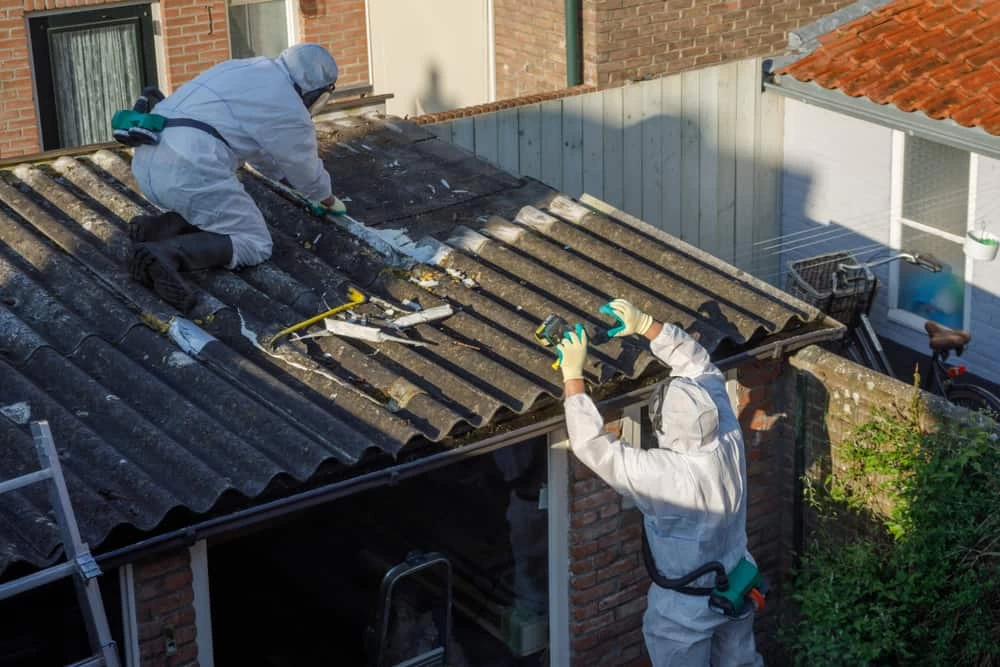
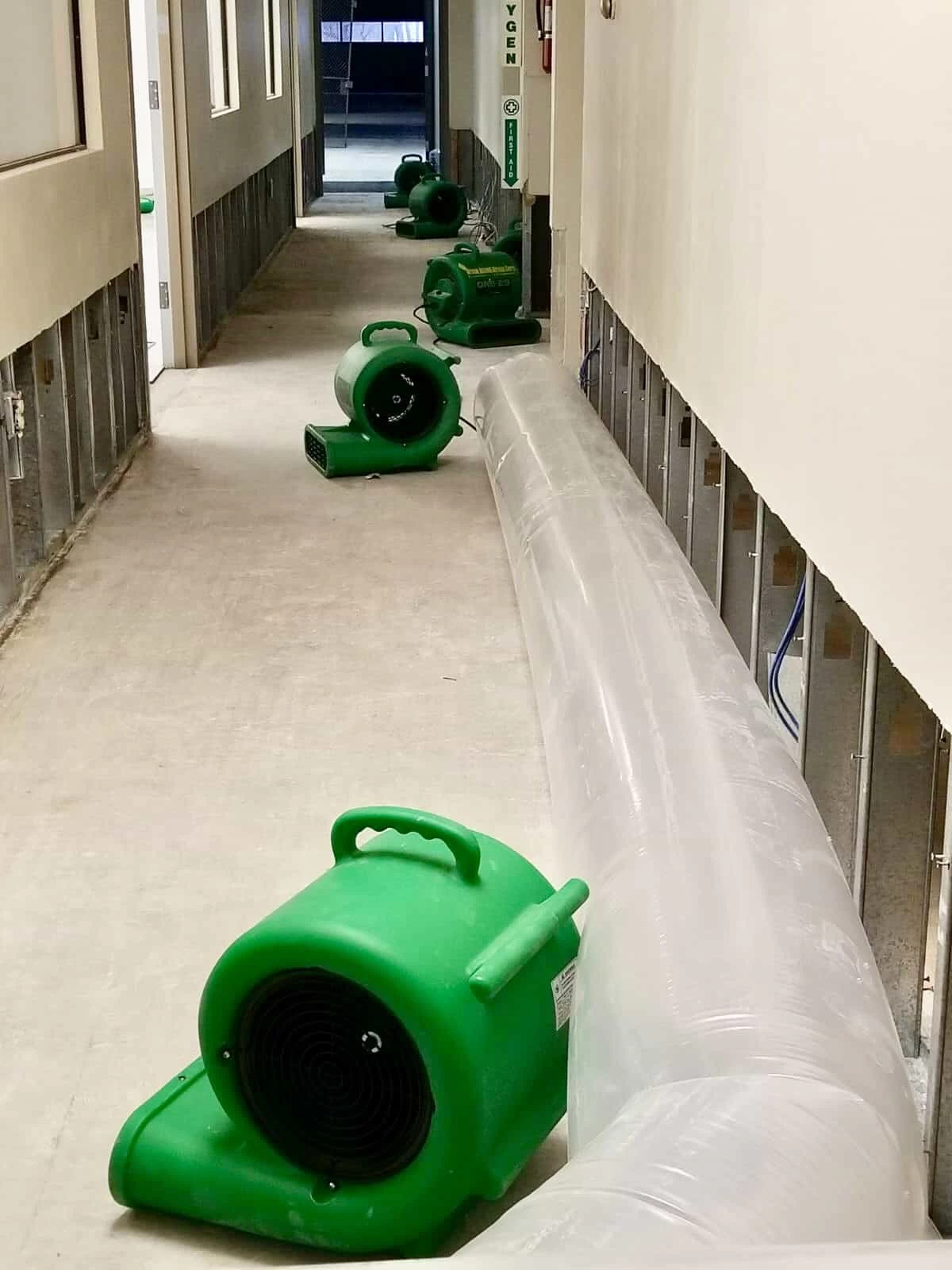
If abatement is needed, we seal the work area with polyethylene sheeting and maintain it under negative air pressure meaning air flows into the containment zone, not out of it. HEPA-filtered air scrubbers run continuously throughout the job. This isn’t optional equipment. It’s required under NYS Industrial Code Rule 56, which governs every asbestos abatement project in Yorktown and across New York State. Before work begins on most projects, we submit proper notification to the NYS Department of Labor typically a minimum of 10 days in advance for standard abatement.
Once the material is removed, independent air clearance testing confirms that fiber levels in the treated area meet the thresholds required by state law. You receive that documentation in writing. If you’re in the middle of a renovation, your contractor can get back to work. If you’re selling, you have the paperwork your buyer’s attorney will ask for. Either way, the job isn’t done until the clearance is confirmed.
Every Material Type Found in Yorktown Homes We Handle It
The asbestos-containing materials most commonly found in Yorktown’s 1950s through 1970s homes follow a predictable pattern. Nine-by-nine and twelve-by-twelve vinyl asbestos floor tiles show up in nearly every basement, laundry room, and kitchen from that era. Acoustic spray ceiling texture the popcorn finish common in living areas and bedrooms is another frequent find. Pipe insulation on heating system lines, boiler wrap, and drywall joint compound round out the list. We handle all of it under one scope of work, so you’re not coordinating between multiple vendors or dealing with gaps in responsibility.
For Yorktown homeowners near water particularly in Mohegan Lake or along the Croton River corridor moisture intrusion and freeze-thaw cycles accelerate the deterioration of older building materials. When a pipe bursts in a 1960s basement or a nor’easter pushes water through an older roof, the resulting damage often disturbs asbestos-containing materials. We work directly with insurance carriers and handle billing on your behalf, which means one less thing to manage during an already stressful situation.
Asbestos tile removal, popcorn ceiling removal, pipe and boiler insulation abatement, and pre-renovation surveys are all part of what we offer. If you’re in Shrub Oak, Jefferson Valley, Crompond, or anywhere else in Yorktown, the process and the standards are the same thorough, documented, and done to NYS ICR 56 requirements.
Does my 1960s Yorktown home likely have asbestos in it?
If your home was built before 1980, the honest answer is probably yes at least in some materials. In Yorktown Heights, the median construction year is 1958, and the bulk of the town’s residential development happened during the 1950s and 1960s, when asbestos was used routinely in floor tiles, ceiling texture, pipe insulation, joint compound, and roofing materials. It wasn’t a corner-cutting measure it was standard practice.
The materials most likely to contain asbestos in a Yorktown home from that era are the nine-by-nine or twelve-by-twelve floor tiles in the basement or kitchen, the spray-applied acoustic texture on ceilings, and the insulation wrapped around heating pipes or the boiler. These materials are not dangerous if they’re in good condition and left undisturbed. The risk comes when they’re damaged, deteriorating, or about to be disturbed by renovation work. A free on-site inspection is the fastest way to know what you actually have and whether it needs to be addressed.
Do I need asbestos testing before starting a renovation in Yorktown, NY?
Under NYS Industrial Code Rule 56, any renovation that will disturb materials suspected of containing asbestos requires that those materials be properly assessed before work begins. In practical terms, that means if your Yorktown contractor is planning to demo a floor, scrape a ceiling, cut into walls, or remove pipe insulation in a pre-1980 home, asbestos needs to be ruled out or addressed before they start.
This matters more than most homeowners realize. A renovation contractor who breaks asbestos floor tiles or sands asbestos ceiling texture without a DOL license is violating state law, and the property owner can share liability for that. More practically, a contractor who discovers asbestos mid-project will stop work until it’s cleared which means delays, cost overruns, and a job site sitting idle. Getting a pre-renovation inspection done first removes that risk entirely. You know what’s there, you have a plan, and your contractor can move forward on schedule.
What happens during asbestos abatement will my family need to leave?
Whether your family needs to vacate depends on the scope and location of the work. For a contained project floor tile removal in a basement, pipe insulation in a utility room we seal off the affected area and maintain it under negative air pressure, which prevents fibers from migrating to the rest of the home. In many cases, occupants can remain in unaffected parts of the house during the work.
For larger projects involving ceiling texture removal in living areas or widespread material disturbance across multiple rooms, temporary relocation is often the more practical choice not because the containment fails, but because the disruption to daily life makes it difficult to stay comfortable. During the inspection process, we discuss exactly this: what the scope looks like, how long it will take, and what the most realistic plan is for your household. You’ll know what to expect before any work begins, not after.
Is asbestos removal covered by homeowners insurance in New York?
It depends on how the asbestos was disturbed. If the abatement is needed because of a covered loss a burst pipe, storm damage, a tree through the roof homeowners insurance often covers the asbestos removal as part of the overall remediation claim. This is a fairly common scenario in Yorktown, where older homes are vulnerable to pipe freezes during hard winters and where the town’s heavy tree canopy means storm damage is a regular occurrence.
If the abatement is purely elective you’re renovating and want to clear materials before your contractor starts that typically falls outside standard homeowners coverage. The distinction matters, so it’s worth a call to your carrier before assuming either way. We work directly with insurance companies and handle billing on behalf of clients when the work is part of a covered claim, which takes the back-and-forth off your plate during an already stressful situation.
How long does asbestos abatement take for a typical Yorktown home?
For a focused residential project floor tile removal in a basement, popcorn ceiling abatement in one or two rooms, or pipe insulation on a heating system the work itself typically takes one to three days. The timeline that catches homeowners off guard is the notification requirement. Under NYS Industrial Code Rule 56, most standard abatement projects require a minimum 10-day advance notification to the NYS Department of Labor before work can begin. That’s a regulatory requirement, not a scheduling preference, so it’s worth factoring into your renovation timeline from the start.
Post-abatement air clearance testing adds a step at the end the treated area needs to be tested and confirmed below state-required fiber thresholds before the containment comes down. That process typically takes less than a day once the abatement is complete. If you’re working against a real estate closing deadline or a contractor’s start date, the earlier you schedule the inspection, the more flexibility you have on timing.
How does asbestos abatement affect a home sale in Yorktown's current market?
In a market where Yorktown homes are regularly going $100,000 over asking, undisclosed or unresolved asbestos is one of the few things that can genuinely derail a deal. Buyers and their attorneys are increasingly asking for documentation on pre-1980 properties not just a verbal assurance that it was handled, but actual post-abatement air clearance certification showing that the work was done to NYS standards.
Sellers who get ahead of this before listing are in a stronger position. A completed abatement with proper clearance documentation removes a negotiating point for buyers, satisfies lender requirements that sometimes flag environmental concerns, and keeps the transaction on track. The cost of professional abatement which varies depending on scope but is typically a fraction of the home’s value is almost always recovered in a cleaner sale process and a stronger final price. For Yorktown sellers, where the median sale price is around $814,000, proactive abatement is less of an expense and more of a straightforward investment in protecting what you’ve already built.