Woodstock-Area Homes Hide It. We Remove It Safely.
Most homes along Zena Road were built when asbestos was standard and if you’re renovating, selling, or just finally dealing with that old floor or ceiling, you need someone licensed to handle it right. We serve Zena with NYS DOL-certified asbestos abatement and air clearance documentation you can actually use.
I needed a professional consultation explanation of procedure for safe removal of Asbestos in my apartment complex. Without having an account yet, I was very impressed with the caring, knowledgeable and generous advice offered by Jessica, and will look forward to doing business in the future. Thank you so much! I feel much more informed about a sometimes scary endeavor. Peace. Nancy Silva Mineola, NY.
Mia Munoz
Used this company to clean up some water flood in my house. They were fast and easy to work with.very professional, Would recommend to anyone!
Nini Valle
Great company, had a flood and they responded quickly and efficiently. Billed my insurance company directly. I highly recommend this company!
joe colapietro, jr
I had pipe freeze in my basement right before a snow storm and they made to within an hour to help start the clean up process. They we by our side throughout the entire process and even helped with the insurance company. They did such a great job with the cleanup, repair, remidiation, I contracted them to perform the repairs and finishes in the basement. They came with enough manpower and material to get the job done. Leo and Jessica were nothing but a pleasure to deal with!!
Cristian Arredondo c
I had some water damage in my home and Green Island was able to take care of my issue quickly and effectively. I am very pleased with the work they did. They responded quickly and were very professional.
Michael M
Outstanding service! From the office to the field crew everyone was friendly, helpful and responsive. I highly recommend Green Island Group.
You stop wondering. That’s the honest answer. When asbestos-containing materials are properly removed, contained, and cleared with air monitoring results in hand you’re not guessing anymore about what’s in your walls, under your floors, or above your head.
For Zena homeowners, that peace of mind carries extra weight. The majority of homes here were built between 1940 and 1969, which means mid-century floor tiles, pipe insulation, boiler wrap, and textured ceilings are common findings the moment a renovation starts. If you’ve purchased one of the older properties off County Route 30 or a cape cod tucked back from Sawkill Road, the odds are real not theoretical.
The Catskills climate adds another layer. The region is seeing more heavy rain events and flooding, and when water gets into a basement with old pipe insulation or damaged floor tiles, materials that were stable can become friable fast. A flooded crawl space in a 1955 home isn’t just a water problem. It can become an asbestos disturbance event overnight. Knowing the job was done correctly and having the documentation to prove it changes what your property means to you, and what it’s worth to the next buyer.
We hold a NYS DOL Asbestos Handling License the specific credential New York State law requires under Industrial Code Rule 56 before any asbestos abatement work can legally begin. That’s not a marketing badge. It’s a verifiable state license, and in Ulster County, where plenty of general contractors will take on renovation work without it, it matters.
We serve Zena as part of an established Ulster County service area, which means we’re already familiar with the Town of Woodstock’s regulatory environment, the pre-1974 housing stock throughout the area, and the specific materials that keep showing up in Catskill-region homes. We’re not learning the area on your job.
Beyond asbestos, we’re also certified in mold remediation, water damage restoration, and other environmental services which is genuinely useful when you’re dealing with an older home that rarely presents just one problem. One call covers the full scope. And every project comes with the documentation air clearance results, project records, disposal manifests that a careful homeowner, a real estate attorney, or an insurance carrier will actually want to see.
No Surprises Here's What the Job Actually Looks Like
It starts with an assessment. Before anything is touched, a certified inspector identifies the suspect materials in your home floor tiles, pipe insulation, popcorn ceilings, joint compound, roofing, whatever applies to your specific property. In Zena, where most homes predate 1970, there’s often more than one material type involved, and knowing the full picture upfront prevents mid-project surprises.
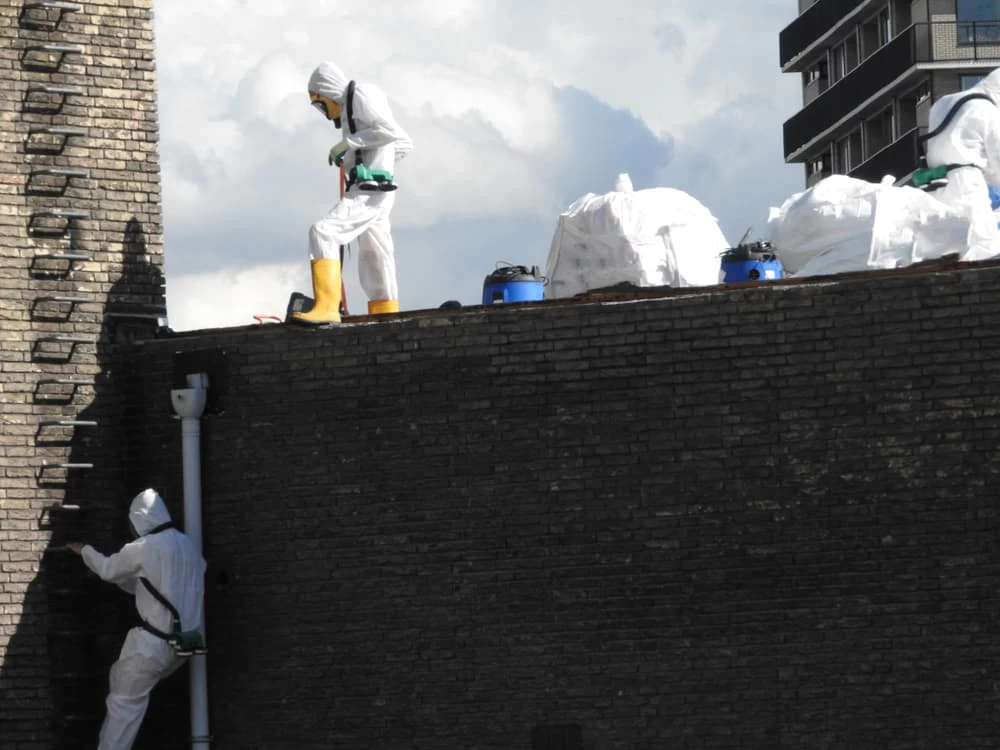
Once the scope is confirmed, the abatement work begins under full containment. The affected areas are sealed off, negative air pressure is established, and the materials are removed according to NYS Industrial Code Rule 56 protocols. Our workers are NYS DOL certified. Waste is packaged and disposed of at a licensed facility not bagged and left at the curb. For projects that meet threshold quantities, the required notification is filed with the NYS DOL Asbestos Control Bureau before work starts, which is a legal requirement that applies to most renovation-scale jobs in pre-1974 structures.
After removal, post-abatement air monitoring is conducted to confirm fiber levels have returned to safe thresholds. You get the clearance documentation in writing. If you’re selling a property, your attorney gets a clean paper trail. If you’re continuing a renovation, your contractor gets the green light. The process is linear, transparent, and built around what you actually need when it’s done proof that it’s over.
The most common asbestos-containing materials found in Zena’s housing stock are the ones that were standard in mid-century residential construction: 9×9 vinyl floor tiles, pipe and boiler insulation, textured popcorn ceilings applied before 1980, joint compound used in drywall finishing, and cement siding. We handle all of them asbestos tile removal, asbestos popcorn ceiling removal, pipe wrap, duct insulation, and more under a single licensed scope of work.
That matters in practice because older homes in the Woodstock area rarely present just one issue. A bathroom gut in a 1958 home might involve floor tiles and joint compound. A basement renovation might turn up boiler wrap and duct insulation in the same afternoon. Having one licensed contractor who can assess and abate across material types keeps your project moving without the coordination headache of managing multiple specialists.
For Zena homeowners dealing with storm or water damage a real and growing concern given the Catskills’ increasing precipitation we also handle emergency asbestos response. If flooding has disturbed materials in your basement or crawl space, our 24/7 availability means you’re not sitting on a disturbance event through a weekend waiting for a callback. Every job, emergency or planned, ends with air clearance documentation and a complete project record maintained for 30 years per state requirements.
Do I need an asbestos survey before renovating my older Zena home?
Yes and it’s not optional. Under New York State Industrial Code Rule 56, any renovation or demolition of a building where construction began before 1974 requires an asbestos survey before work starts. Given that the majority of Zena’s residential housing was built between 1940 and 1969, this requirement applies to nearly every home in the hamlet. It doesn’t matter whether you’re doing a full gut renovation or replacing a bathroom floor if the structure predates 1974, a survey is legally required before your contractor can disturb existing materials.
In practical terms, this means that if you’re pulling permits through the Town of Woodstock for a renovation project, asbestos compliance is part of the process. Skipping the survey doesn’t just create a health risk it creates legal exposure for you and your contractor. The survey itself is straightforward: a certified inspector identifies suspect materials, samples are collected and lab-tested, and results determine whether abatement is needed before your renovation proceeds.
How much does asbestos removal typically cost in the Woodstock, NY area?
The honest range for asbestos removal in New York State is roughly $1,500 to $30,000 or more, depending on what materials are involved, how much of them there are, and where they’re located in the structure. A single room of asbestos floor tile removal is a very different job from a full basement pipe insulation abatement combined with popcorn ceiling removal across multiple rooms.
In the Zena and Woodstock area, where homes are older and often present multiple material types simultaneously, mid-range projects tend to run in the $3,000 to $10,000 range for a typical residential scope. What you’re paying for is licensed labor, proper containment, legal disposal at a certified facility, regulatory filing, and critically post-abatement air clearance documentation. That documentation has real value when you’re selling a home in a market where buyers are paying $500,000 to $900,000 and their attorneys are reading every inspection report carefully. Cutting corners on abatement to save a few thousand dollars upfront is rarely the math that works out.
What asbestos-containing materials are most common in Zena, NY homes?
The materials that show up most consistently in Zena’s mid-century housing stock are 9×9 vinyl floor tiles a hallmark of homes built in the 1950s and 1960s along with the black adhesive mastic used to install them, which often contains asbestos even when the tiles themselves don’t. Pipe and boiler insulation is extremely common in homes from this era, particularly in basements and mechanical rooms. Popcorn or textured ceiling coatings applied before 1980 frequently contain asbestos, as does the joint compound used in drywall finishing throughout the same period.
Less visible but still present in some Woodstock-area homes are asbestos cement siding panels and roofing shingles, particularly on homes that haven’t been resided or re-roofed since original construction. The key thing to understand is that the presence of these materials doesn’t automatically mean they’re dangerous asbestos that is intact and undisturbed poses minimal risk. The risk increases when materials are cut, drilled, sanded, or damaged, which is exactly what happens during renovation. That’s why the survey comes before the demo, not after.
Do I have to leave my house during asbestos abatement in Zena, NY?
For most residential abatement projects, yes you and your family should not be in the home during active removal work. The affected areas are sealed with plastic sheeting and placed under negative air pressure to prevent fiber migration into the rest of the house, but the safest approach is to be out of the structure while abatement is underway. For a single-room or limited-scope project, that might mean being out for a day. For larger multi-area projects, it could be two to three days.
For Zena homeowners who use their property as a second home or weekend retreat and there are quite a few given the area’s appeal to NYC-area buyers the timing often works naturally. Many homeowners schedule abatement for a week when they’re not planning to visit, and the work is complete with air clearance in hand before their next arrival. If you’re a year-round resident, we can walk you through the specific timeline for your project scope so you can plan accordingly. Re-occupancy happens after air monitoring confirms clearance not before.
Can flooding or storm damage cause an asbestos problem in my older home?
It can, and in the Catskills region it’s a more relevant concern than many homeowners realize. The Catskills are projected to see significant increases in total annual precipitation and more frequent heavy storm events in the coming decades, and the Saw Kill creek running through the Zena area adds a localized flood-risk dimension for properties near County Route 30. When water intrudes into a basement or crawl space and contacts old pipe insulation, floor tiles, or duct wrap, materials that were previously stable and non-friable can become damaged and start releasing fibers.
The critical thing is not to disturb those materials yourself while cleaning up. Pulling out wet insulation or ripping up damaged floor tiles without knowing whether they contain asbestos is how accidental exposures happen. If you’ve had water intrusion in a pre-1970 Zena home and you’re not certain about the materials involved, the right move is to have a certified inspector assess before you or your contractor touches anything. We’re available 24/7 for exactly these situations a flood doesn’t wait for business hours, and neither should the response.
How do I verify that an asbestos contractor in New York is actually licensed?
The NYS Department of Labor maintains a public database where you can verify any asbestos contractor’s license status. You’re looking specifically for a NYS DOL Asbestos Handling License this is the credential required under Industrial Code Rule 56 for any contractor performing asbestos abatement in New York State. A general contractor’s license, a home improvement license, or an environmental consulting certification does not substitute for this specific credential. If a contractor can’t provide their NYS DOL asbestos license number, that’s your answer.
In Ulster County and the broader Woodstock area, this matters more than it might in a larger market. There are renovation contractors active throughout the region who will take on work in older homes without holding the correct environmental credentials. The consequences of hiring an unlicensed operator go beyond the health risk if asbestos is disturbed improperly, you may be responsible for remediation costs, face legal liability, and lose the documentation chain you’d need for a future real estate transaction. Our NYS DOL Asbestos Handling License is verifiable, current, and specific to this work. That’s the baseline you should require from anyone you hire for this job in Zena or anywhere else in New York.