South Fork Homes Deserve More Than a Surface-Level Remodel
When your bathroom needs work, you need a bathroom remodeler who knows what coastal Long Island homes actually hide behind the tile and is licensed to deal with it. Here in East Hampton North, that means understanding the specific challenges that come with living on a peninsula surrounded by water, where humidity and salt air work against your home year-round.
I needed a professional consultation explanation of procedure for safe removal of Asbestos in my apartment complex. Without having an account yet, I was very impressed with the caring, knowledgeable and generous advice offered by Jessica, and will look forward to doing business in the future. Thank you so much! I feel much more informed about a sometimes scary endeavor. Peace. Nancy Silva Mineola, NY.
Mia Munoz
Used this company to clean up some water flood in my house. They were fast and easy to work with.very professional, Would recommend to anyone!
Nini Valle
Great company, had a flood and they responded quickly and efficiently. Billed my insurance company directly. I highly recommend this company!
joe colapietro, jr
I had pipe freeze in my basement right before a snow storm and they made to within an hour to help start the clean up process. They we by our side throughout the entire process and even helped with the insurance company. They did such a great job with the cleanup, repair, remidiation, I contracted them to perform the repairs and finishes in the basement. They came with enough manpower and material to get the job done. Leo and Jessica were nothing but a pleasure to deal with!!
Cristian Arredondo c
I had some water damage in my home and Green Island was able to take care of my issue quickly and effectively. I am very pleased with the work they did. They responded quickly and were very professional.
Michael M
Outstanding service! From the office to the field crew everyone was friendly, helpful and responsive. I highly recommend Green Island Group.
Bathroom Renovation Contractors East Hampton North
A Finished Bathroom That Actually Holds Up Out Here
East Hampton North sits in a maritime environment. Gardiners Bay to the north, the Atlantic to the south, and the kind of ambient humidity that gets into walls, works behind grout lines, and quietly does damage that you don’t see until demolition day. A bathroom remodel here isn’t just about aesthetics it’s about choosing materials and methods that actually hold up in a coastal climate. That means waterproof membranes, cement board substrates, ventilation rated for real humidity, and grout formulations that don’t invite mold back in six months. When those details are skipped, you’re looking at another remodel in five years.
Then there’s what’s already in the walls. A significant portion of the housing stock in East Hampton North was built in the 1960s and 1970s. Open up a bathroom in a home from that era and you may find asbestos floor tiles, lead paint on the trim, or mold that’s been growing behind the tile for years. Most remodeling contractors aren’t licensed to handle any of that they stop, call a specialist, and your project sits. We hold active asbestos abatement, lead abatement, and mold remediation licenses. Whatever comes up during demolition, we handle it in-house and keep the project moving.
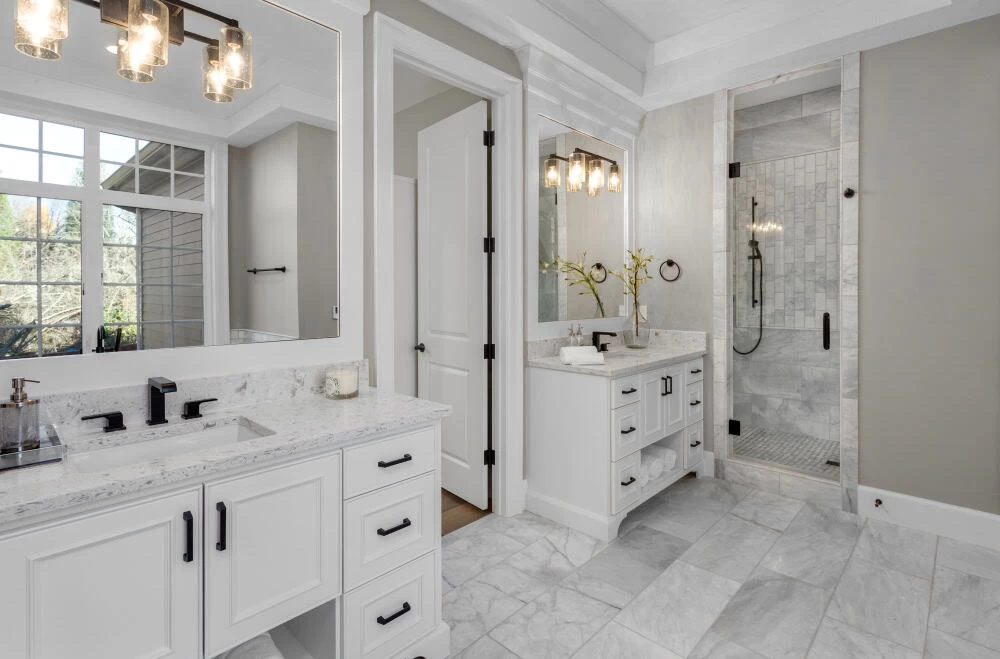
The end result is a bathroom that looks the way it should, functions the way it should, and doesn’t create a new problem two years from now. For a home with a median value pushing $925,000, that’s not a luxury it’s the baseline expectation.
Green Island Group is a family-owned, full-service remodeling and environmental contractor based in Suffolk County, NY. We’ve completed over 5,000 restoration and remodeling projects across New York State not as a talking point, but as a track record you can actually verify. That volume means we’ve opened up hundreds of bathrooms in East Hampton North homes and across the South Fork, dealt with every kind of aging construction surprise, and navigated local permitting in municipalities across the county, including the East Hampton Town Building Department on Pantigo Place.
What sets us apart from most bathroom remodel companies isn’t the tile work it’s what happens when the tile comes off. We hold active licenses for asbestos abatement, lead abatement, and mold remediation, alongside our home improvement contractor credentials. That combination is rare. It means homeowners from Springs to Northwest Harbor to Three Mile Harbor get a contractor who doesn’t flinch when something unexpected turns up behind the walls.
We’re available 24 hours a day, 7 days a week, 365 days a year. If something goes wrong with your bathroom on a Saturday night in January, you can actually reach us and we pick up with the same attitude we bring to every job.
No Surprises. Here's Exactly How the Job Gets Done.
It starts with a thorough walkthrough of your bathroom not just what you can see, but what the home’s age and condition suggest might be underneath. For East Hampton North homes built in the 1960s and 1970s, that means we’re already thinking about subfloor moisture, original plumbing condition, and whether the existing ventilation is adequate for a coastal environment. We ask the right questions upfront so the estimate you get reflects the actual scope of the job, not a best-case scenario.
Once the scope is confirmed, we handle permitting with the East Hampton Town Building Department. Bathroom renovations involving plumbing modifications, electrical work, or structural changes require permits and the process has specific documentation requirements that contractors unfamiliar with this jurisdiction often fumble. We’ve done it before. We manage the application, coordinate inspections, and make sure the finished bathroom has a clean permit record, which matters when it comes time to sell or rent the property.
Demolition is where things get real. If we find asbestos tile, lead paint, or mold and in older East Hampton North homes, it’s not unusual we address it in-house before the rebuild begins. No stopping, no subcontractor coordination, no waiting. From there, the build-out moves forward: waterproofing, tile, fixtures, plumbing, electrical, and finish work. We work with the seasonal rhythm of the East End, so if you’re trying to have a rental-ready bathroom before Memorial Day, that deadline is part of the plan from day one.
Bathroom Remodeling Services East Hampton North NY
What's Actually Included When You Hire Us
A bathroom remodel with Green Island Group covers the full scope demo, hazardous material handling if needed, waterproofing, tile installation, plumbing updates, electrical, fixtures, and finish work. Everything is done by our crew, under our licenses, with no work farmed out to unvetted subcontractors. For East Hampton North homeowners, that matters because the South Fork’s geographic isolation already makes contractor coordination harder than it is anywhere else on Long Island. You don’t want three separate companies trying to schedule around each other on a peninsula where everyone’s calendar fills up fast.
If your bathroom remodel is being triggered by water damage a burst pipe from a January freeze, storm flooding, or a slow leak that finally became visible we handle the restoration side too. We document damage for insurance claims, bill carriers directly, and transition from remediation to renovation under one contract. Customers have confirmed this in their own words: the insurance process is managed, not dumped back on you.
For homeowners thinking about accessibility upgrades grab bars, a roll-in shower, a wider doorway the Village of East Hampton’s building code waives permit fees for renovations that improve mobility access. We design these renovations to meet accessibility standards without looking institutional, and we handle the permit process, including that fee waiver, on your behalf. Whether you’re updating a primary residence, preparing a rental property for the season, or dealing with a post-storm rebuild, the scope of what we do adapts to what your specific situation actually requires.
Do I need a permit for a bathroom remodel in East Hampton North, NY?
Yes, in most cases. If your bathroom renovation involves any plumbing changes moving a drain, replacing a toilet flange, adding a fixture or any electrical work, or removing a wall, you need a permit from the East Hampton Town Building Department, located at 300 Pantigo Place in East Hampton. The permit process requires licensed contractor documentation, and there are inspection stages throughout the project that need to be scheduled and passed before work can continue.
This isn’t just a bureaucratic formality. A bathroom that was renovated without permits creates real problems when you go to sell or rent the property buyers’ attorneys and rental inspectors will flag unpermitted work, and correcting it after the fact is significantly more expensive than doing it right the first time. We manage the entire permit process for East Hampton North homeowners, from the initial application through final inspection sign-off, so you’re not trying to figure out the East Hampton Town Building Department’s requirements on your own.
How much does a bathroom remodel typically cost in the East Hampton area?
The national average for a midrange bathroom remodel runs around $26,000, but that number doesn’t apply to the East End. In the Hamptons market, midrange bathroom renovations routinely run $40,000 to $70,000 or more, driven by higher labor costs, the logistical reality of getting materials to the far end of the South Fork, and the quality expectations that come with a market where the median home value is approaching $925,000. Upscale renovations with custom tile, high-end fixtures, and significant layout changes frequently exceed $100,000.
What affects your specific number most is what’s already in the walls. If your home was built before 1980 and hasn’t been fully gutted since, there’s a real possibility of asbestos-containing materials, lead paint, or moisture damage that needs to be addressed before the rebuild begins. These discoveries don’t have to blow up your budget if your contractor is licensed to handle them in-house but they will blow up your budget if your contractor has to stop work and bring in a specialty crew. Getting an honest, detailed estimate upfront, one that accounts for the age and condition of your home, is the most important thing you can do before a project starts.
What happens if mold or asbestos is found during my bathroom demo?
This is one of the most common scenarios in East Hampton North bathroom remodels, particularly in homes built between the 1950s and 1970s. Asbestos-containing vinyl floor tiles were standard through the late 1970s. Lead paint on trim and walls was common in the same era. And the South Fork’s coastal humidity the result of being surrounded by water on three sides creates the exact conditions that allow mold to grow silently behind tile and inside wall cavities for years without being visible.
When a contractor who isn’t licensed for hazardous materials finds these things, the project stops. They’re legally required to call in a licensed abatement company, which means scheduling delays, additional coordination, and costs that weren’t in the original estimate. We hold active licenses for asbestos abatement, lead abatement, and mold remediation under New York State’s Article 32 mold requirements. When our crew finds something during demolition, we handle it the same day, with the same team, and the project keeps moving. There’s no stoppage, no separate contractor, and no surprise bill from a third party.
Can you work with my insurance company if the remodel is from water damage?
Yes, and this is something we do regularly. A meaningful share of bathroom renovations on the South Fork start as water damage events frozen pipes during a Long Island winter, storm flooding, a slow leak behind the wall that finally became a visible problem. When that happens, you’re dealing with an insurance claim at the same time you’re trying to figure out how to get your bathroom rebuilt, and those two things are complicated enough on their own without having to coordinate between a restoration company and a separate remodeling contractor.
Green Island Group handles both sides. We document the damage in the format insurance carriers require, submit claims on your behalf, and bill the carrier directly where applicable. Customers have confirmed this in their reviews the insurance process is managed as part of the job, not handed back to you to figure out. From remediation through the finished renovation, it’s one contract, one point of contact, and one crew. For East Hampton North homeowners dealing with a post-storm or post-freeze bathroom situation, that simplicity has real value.
How do I time a bathroom remodel around the East Hampton rental season?
The seasonal rhythm of the East End is real, and it affects renovation scheduling in a way that doesn’t apply to most other Suffolk County communities. If your property generates rental income during the summer or if you simply want your updated bathroom ready before Memorial Day that deadline needs to be built into the project plan from the first conversation, not treated as an afterthought once the job is already underway.
The most reliable renovation windows in East Hampton North are fall, after Labor Day when properties become available, and early spring, typically March through April. Fall is generally the better option because it gives the most runway you’re not racing a seasonal deadline, you have more flexibility if something unexpected comes up during demo, and contractors’ schedules are more open than they are in the spring rush. If you’re reading this in February or March and trying to get a bathroom done before summer, it’s still possible, but the timeline is tighter and scheduling needs to move quickly. Call us at 631-256-5711 and we’ll give you an honest read on what’s realistic for your specific situation.
What should I look for when hiring a bathroom remodel contractor in East Hampton North?
Start with licensing. In New York State, contractors performing bathroom renovations that involve plumbing, electrical, or structural work need to hold a valid home improvement contractor license. Ask for the license number and verify it it takes two minutes and tells you immediately whether you’re dealing with a legitimate operation. Beyond that, ask specifically whether the contractor is licensed for asbestos abatement, lead abatement, and mold remediation. In East Hampton North’s older housing stock, the odds of encountering at least one of those three during a bathroom demo are high enough that this question matters before you sign anything.
Second, ask about local experience. The East Hampton Town Building Department has specific permitting requirements, and contractors who don’t regularly work in this jurisdiction often create delays by submitting incomplete applications or missing inspection milestones. A contractor who has navigated East Hampton Town’s process before is worth more to you than one who’s figuring it out on your project. Finally, check how they handle communication not just during the sales process, but once the job is underway. In a market where contractor availability is already stretched and the South Fork’s geography limits your options, a contractor who answers the phone and gives you straight answers matters. It’s the difference between a project that runs smoothly and one that costs you sleep.