I needed a professional consultation explanation of procedure for safe removal of Asbestos in my apartment complex. Without having an account yet, I was very impressed with the caring, knowledgeable and generous advice offered by Jessica, and will look forward to doing business in the future. Thank you so much! I feel much more informed about a sometimes scary endeavor. Peace. Nancy Silva Mineola, NY.
Mia Munoz
Used this company to clean up some water flood in my house. They were fast and easy to work with.very professional, Would recommend to anyone!
Nini Valle
Great company, had a flood and they responded quickly and efficiently. Billed my insurance company directly. I highly recommend this company!
joe colapietro, jr
I had pipe freeze in my basement right before a snow storm and they made to within an hour to help start the clean up process. They we by our side throughout the entire process and even helped with the insurance company. They did such a great job with the cleanup, repair, remidiation, I contracted them to perform the repairs and finishes in the basement. They came with enough manpower and material to get the job done. Leo and Jessica were nothing but a pleasure to deal with!!
Cristian Arredondo c
I had some water damage in my home and Green Island was able to take care of my issue quickly and effectively. I am very pleased with the work they did. They responded quickly and were very professional.
Michael M
Outstanding service! From the office to the field crew everyone was friendly, helpful and responsive. I highly recommend Green Island Group.
A Finished Bathroom That Passes Your Board and Lasts
Most bathroom remodels in Empire State don’t fail because of bad tile work. They stall because the contractor didn’t understand what a Manhattan co-op actually requires board approvals, DOB permits, alteration agreements, and insurance certificates that name your building’s management company. When those pieces aren’t handled correctly from the start, your project gets delayed, your board gets frustrated, and you’re left managing a mess you didn’t sign up for.
We take all of that off your plate. From the first call to the final walkthrough, the entire process is coordinated under one contract permits, demolition, plumbing, electrical, waterproofing, tile, and fixtures. You don’t chase subcontractors. You don’t explain your building’s rules to four different people. You get a single point of contact who already knows how Manhattan buildings work.
The buildings surrounding the Empire State Building most built between the 1920s and 1960s also come with a specific risk that most remodelers aren’t equipped to handle: asbestos. NYC code requires an assessment before any demolition begins in a pre-1987 building. If a standard contractor finds it behind your shower wall, the job stops. Because we’re also a certified environmental remediation contractor, it doesn’t. The project keeps moving, and you don’t end up scrambling for a separate specialist mid-renovation.
We Know What Your Building Manager Is Going to Ask
We’re a Long Island-based remodeling and environmental restoration company serving Empire State, Manhattan, Queens, Nassau County, and Suffolk County. We handle bathroom renovations from start to finish demolition, plumbing, electrical, waterproofing, custom tile, and fixture installation without farming the work out to a rotating cast of subcontractors.
What makes a real difference in the Empire State area specifically is our environmental remediation side of the business. The residential buildings near 34th Street and Fifth Avenue co-ops and condominiums that predate modern building materials by decades regularly turn up asbestos, mold, or water damage once demo begins. We’re certified to handle all of it, which means your project doesn’t hit a wall when something unexpected shows up behind yours.
We also understand the administrative reality of renovating in a Midtown Manhattan co-op. Insurance certificates, alteration agreements, DOB filings these aren’t afterthoughts. They’re built into our process from day one.
What the Process Actually Looks Like in a Manhattan Co-op
It starts with a consultation where the scope gets defined clearly what’s changing, what’s staying, and what the building is going to require before a single tool comes out. In the Empire State area, that last part matters more than most people expect. Co-op boards in Midtown Manhattan typically require a signed alteration agreement, proof of contractor insurance naming the building’s management company as additional insured, and a DOB permit number before work can begin. We prepare all of it.
Once approvals are in place, demolition begins within the building’s work-hour window typically weekdays between 9 AM and 5 PM, with elevator padding and debris removal handled according to your building’s specific rules. If the demo uncovers anything that needs remediation asbestos-containing materials, mold, or deteriorated pipe insulation, which are common in pre-war buildings throughout Midtown South it gets addressed by the same crew under the same contract, without stopping the clock on your project.
From there, the build-out moves in sequence: rough plumbing and electrical, waterproofing membrane installation, tile work, fixture installation, and final inspection. Waterproofing gets particular attention here Manhattan’s humidity and the shared plumbing stacks common in older high-rises make a proper moisture barrier non-negotiable. The last thing you want is your renovation causing a leak into the unit below. When the final inspection is done, you get documentation you can hand directly to your co-op board or a future buyer.
Everything the Job Needs, Nothing You Have to Chase Down
A bathroom renovation in the Empire State area isn’t just a construction project it’s a regulatory process that runs alongside the construction. We manage both tracks simultaneously. On the permit side, that means coordinating the ALT-2 filing with the NYC Department of Buildings for any work that involves plumbing relocation, new electrical circuits, or ventilation changes. On the building side, it means preparing the documentation your co-op or condo board requires and communicating directly with building management so you’re not the middleman.
The physical scope covers everything: full demolition, licensed plumbing and electrical work, certified waterproofing installation, custom tile and stonework, vanity and fixture installation, and smart home integrations like thermostatic shower controls or heated floors if that’s the direction you want to go. Materials are selected for Manhattan’s specific environment porcelain tile, quartz surfaces, and moisture-resistant systems that hold up in buildings where humidity is a year-round reality, not a seasonal one.
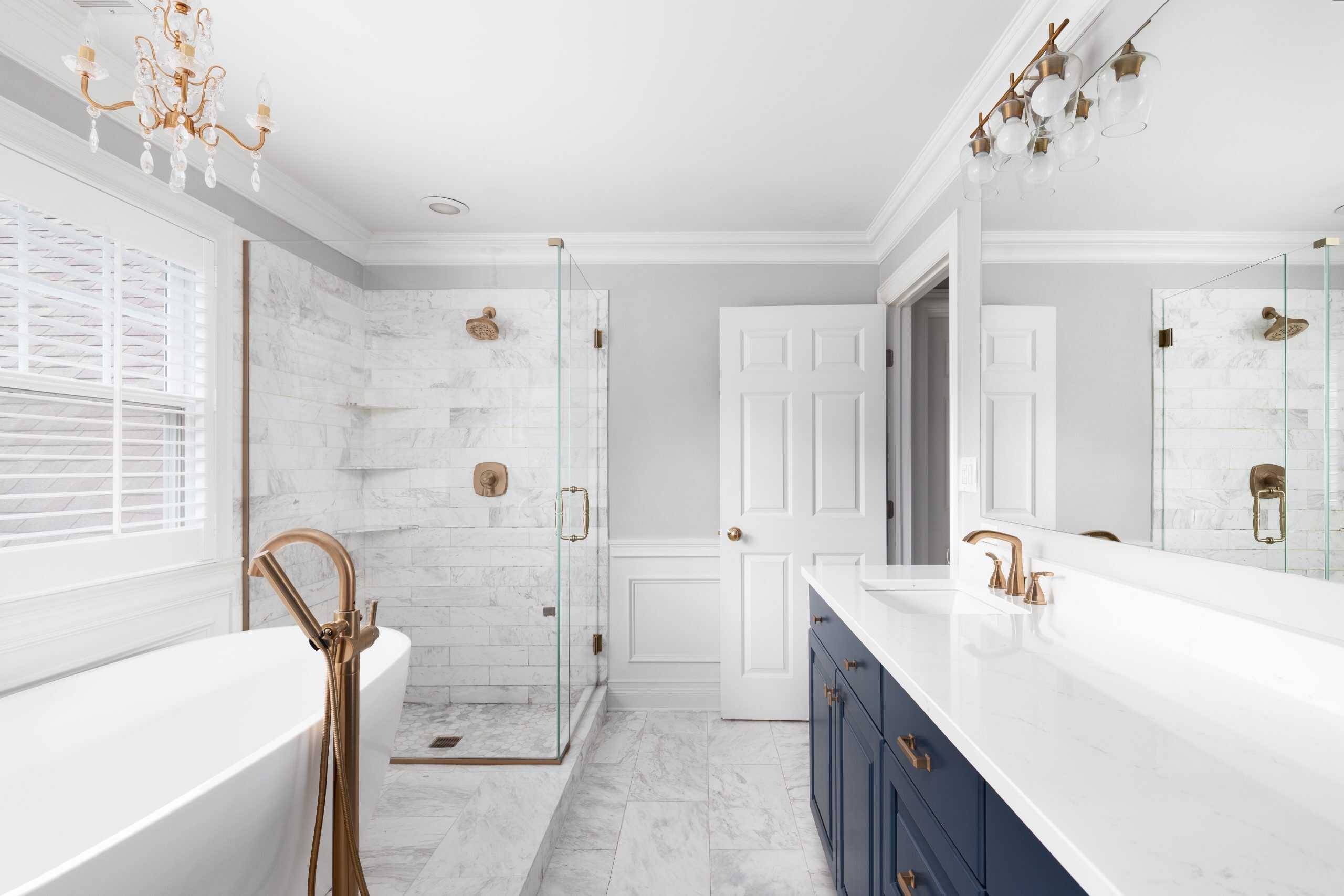
For apartments in the Murray Hill, Kips Bay, or Flatiron-adjacent buildings that make up much of the residential stock near the Empire State Building, design is also built around the spatial reality of Manhattan bathrooms. Floating vanities, wall-mounted fixtures, recessed storage, and frameless glass enclosures aren’t optional upgrades here they’re the standard approach to making a compact bathroom feel like it was designed with intention rather than just tiled over.
Do I need board approval before starting a bathroom remodel in my Empire State area co-op?
Yes and in most Manhattan co-ops, board approval has to come before you can even file with the NYC Department of Buildings. The typical process starts with submitting an alteration agreement to your building’s managing agent, along with contractor insurance certificates, a project scope description, and sometimes architectural drawings depending on what’s being changed. Your board reviews and approves the package, and only then can the DOB filing move forward.
This is one of the most common places bathroom renovations in Empire State and the surrounding Midtown area stall. A contractor who doesn’t understand the sequence or who can’t produce documentation in the format your managing agent requires creates delays that can push your project back by weeks before a single wall gets touched. We prepare all of this documentation as a standard part of the project kickoff, so the approval process runs in parallel with planning rather than becoming a bottleneck.
What permits are required for a bathroom renovation in a Manhattan apartment?
If your renovation involves moving plumbing, adding electrical circuits, changing ventilation, or making any structural modifications, you’ll need an ALT-2 permit filed with the NYC Department of Buildings. That filing has to be prepared and submitted by a Registered Architect or Professional Engineer. A licensed master plumber must pull a separate plumbing permit, and any electrical upgrades require their own permit as well.
For strictly cosmetic work swapping a vanity in the same location, replacing a toilet without moving the drain you may be able to proceed with just board approval and no DOB filing. But most meaningful bathroom remodels in pre-war Midtown buildings touch at least one of those trigger points, so it’s worth assuming you’ll need permits until a professional confirms otherwise. Unpermitted work in a Manhattan co-op can create serious problems at resale, and some buildings will flag it during their own internal inspections. Getting it done right the first time is the only version that makes sense here.
What happens if asbestos is found during bathroom demolition in my Empire State building?
Under NYC administrative code, any building constructed before 1987 requires an Asbestos Assessment Report before demolition begins. Given that the median construction year for residential buildings in the Empire State area is 1958 and a significant portion were built before 1940 this applies to the vast majority of apartments near the Empire State Building. Asbestos was commonly used in pipe insulation, floor tiles, plaster, and joint compound in buildings of that era.
If a standard remodeling contractor finds asbestos-containing materials during demo, they’re legally required to stop work. You then have to find a certified remediation contractor, get them scheduled, wait for the abatement to be completed and cleared, and then restart the renovation a process that can add weeks and thousands of dollars to your project. Because we hold environmental remediation certification, we can assess and abate asbestos without stopping the renovation timeline. The same contractor handles both, which means no project halt, no scramble for a second specialist, and no gap in communication between your remodeler and your remediation team.
How much does a full bathroom remodel typically cost near Empire State, NY?
For a full gut renovation in a Manhattan co-op or condo meaning everything comes out and gets replaced you’re generally looking at a range of $20,000 to $50,000 depending on scope, layout complexity, and materials. High-end finishes, significant plumbing relocation, or luxury additions like radiant floor heating or a steam shower can push that number higher. Permit fees, which vary by project scope, add to the total as well.
It’s also worth building in a contingency budget of around 15 to 20 percent for pre-war buildings specifically. Once walls open up in a building from the 1930s, 1940s, or 1950s, it’s not unusual to find deteriorated pipe insulation, outdated wiring, or moisture damage that needs to be addressed before the new work goes in. That’s not a contractor trying to add scope it’s the reality of renovating older Manhattan buildings. A contractor who gives you a number without acknowledging that possibility is either inexperienced in this market or not being straight with you.
How long will a bathroom renovation take in a Midtown Manhattan apartment?
The construction phase of a full bathroom gut renovation typically runs three to six weeks once work begins. But in a Midtown Manhattan co-op, the total timeline from decision to finished bathroom is usually longer because the board approval and permit process has to happen first, and that alone can take two to four weeks depending on how quickly your managing agent and board move.
Work hours in most co-op buildings in this area are restricted to weekdays between approximately 9 AM and 5 PM, which affects how quickly the job can progress compared to a suburban project with no time constraints. Buildings near Penn Station and Herald Square where foot traffic and building management oversight tend to be higher often have stricter protocols around elevator use, noise, and debris removal that add coordination time. A realistic expectation for the full process, from initial consultation through final sign-off, is eight to fourteen weeks. Any contractor promising significantly less without having reviewed your specific building’s requirements is probably not accounting for the full picture.
Can we handle bathroom renovations in newer condo buildings near the Empire State Building?
Yes and the process looks somewhat different than it does in an older co-op. Newer condo buildings in the Midtown South area, including the developments that have been added to the neighborhood as part of the significant residential growth between 2010 and 2024, typically have their own alteration agreements and building rules, but they don’t carry the same asbestos risk as pre-war construction. The permit requirements from the NYC Department of Buildings still apply for any plumbing, electrical, or structural changes that part doesn’t change based on building age.
What does change is the design conversation. Newer condo units often have more standardized bathroom layouts with modern plumbing rough-ins, which gives more flexibility for fixture placement and layout changes. Pre-war co-ops tend to have more constraints around where plumbing can realistically move. Either way, we scope the project based on what your specific unit and building actually allow not a generic template and handle the documentation and permit filings that apply to your situation specifically.