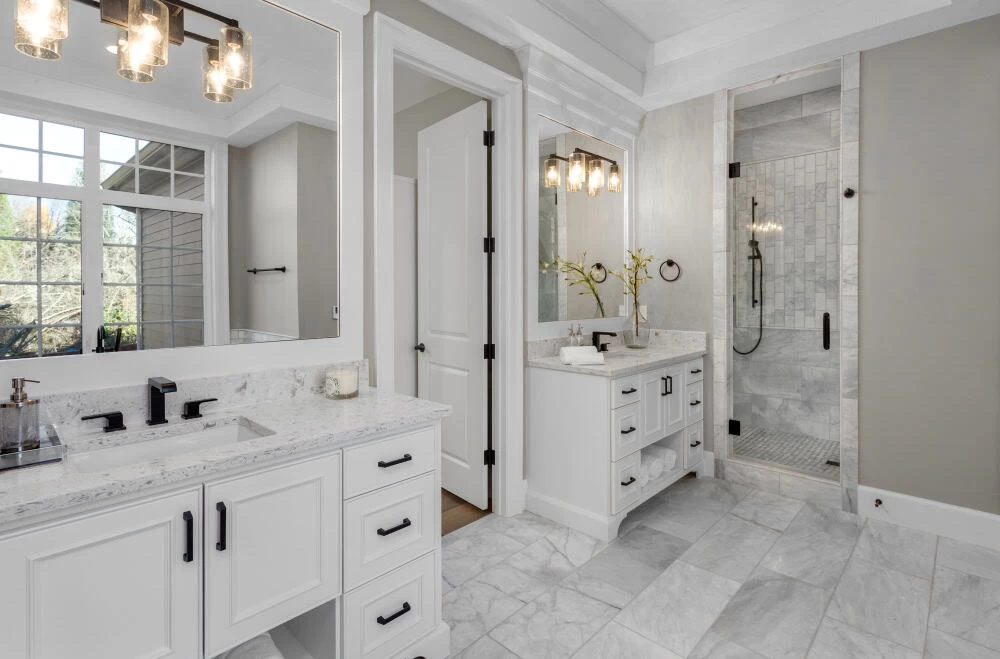
Great River’s coastal conditions, older housing stock, and high-value homes demand a bathroom remodeler who’s ready for what’s behind the walls not just what’s in front of them.
I needed a professional consultation explanation of procedure for safe removal of Asbestos in my apartment complex. Without having an account yet, I was very impressed with the caring, knowledgeable and generous advice offered by Jessica, and will look forward to doing business in the future. Thank you so much! I feel much more informed about a sometimes scary endeavor. Peace. Nancy Silva Mineola, NY.
Mia Munoz
Used this company to clean up some water flood in my house. They were fast and easy to work with.very professional, Would recommend to anyone!
Nini Valle
Great company, had a flood and they responded quickly and efficiently. Billed my insurance company directly. I highly recommend this company!
joe colapietro, jr
I had pipe freeze in my basement right before a snow storm and they made to within an hour to help start the clean up process. They we by our side throughout the entire process and even helped with the insurance company. They did such a great job with the cleanup, repair, remidiation, I contracted them to perform the repairs and finishes in the basement. They came with enough manpower and material to get the job done. Leo and Jessica were nothing but a pleasure to deal with!!
Cristian Arredondo c
I had some water damage in my home and Green Island was able to take care of my issue quickly and effectively. I am very pleased with the work they did. They responded quickly and were very professional.
Michael M
Outstanding service! From the office to the field crew everyone was friendly, helpful and responsive. I highly recommend Green Island Group.
Most bathroom remodels in Great River start with a pretty straightforward goal update the tile, replace the vanity, maybe finally get that walk-in shower. But between the Connetquot River to the west and the Great South Bay to the south, this community sits in one of the more moisture-aggressive environments on Long Island. Salt air, coastal humidity, and years of bay-area weather do real damage to grout lines, caulk seals, and exhaust hardware. A bathroom that isn’t built with that in mind won’t hold up the way it should.
Then there’s the housing stock. A large portion of the homes in Great River and across Sunrise Highway in North Great River were built in the decades after World War II. That era of construction almost always means something floor tiles with asbestos binders, lead paint on the trim, moisture that’s been sitting behind ceramic walls for forty years. When demolition starts and something unexpected turns up, most remodeling contractors have to stop the job and call someone else. That delay can stretch into weeks.
That’s not how it works here. We hold asbestos abatement licenses and lead-based paint abatement credentials, which means the project doesn’t pause when something shows up behind the walls. It keeps moving. For a home worth over a million dollars in a community this established, that kind of continuity isn’t a bonus it’s what the investment actually requires.
Licensed Bathroom Renovation Contractors, Suffolk County
5,000+ Projects. Zero Surprises Passed On to You.
We’re based in Bohemia, right in Suffolk County, a short drive from Great River via Sunrise Highway. This isn’t a company stretching its service area from two counties away our team works in the Town of Islip regularly, knows the Building Division’s permit process, and understands what South Shore homes in Great River are actually made of.
Over 5,000 completed projects across New York State have covered the full range: post-war Hi-Ranches in North Great River, waterfront properties near Nicoll Bay, post-storm rebuilds after coastal flooding. The experience isn’t theoretical. Our team has seen what’s inside these walls and knows how to handle it without derailing your timeline or your budget.
Beyond remodeling, we carry mold remediation certifications, asbestos abatement licensing, and lead abatement credentials and work directly with insurance carriers when a remodel is connected to a water damage or storm claim. For Great River homeowners navigating any of those situations, that combination is genuinely hard to find under one roof.
It starts with a detailed walkthrough of your bathroom. Not a quick glance and a ballpark number an actual assessment of what’s there, what’s behind it, and what the project realistically involves. For older homes in Great River, that means looking at the plumbing configuration, checking for signs of moisture intrusion, and noting anything that might indicate hazardous materials before demolition begins. The goal is an accurate estimate, not a low number that climbs later.
Once the scope is agreed on, we handle the permitting. In Great River, that means filing with the Town of Islip’s Building Division, coordinating the Suffolk County Department of Health Services inspection for any plumbing work, and arranging electrical certification through an approved inspection agency. All of that runs through one point of contact you don’t have to track down separate inspectors or figure out which forms go where.
Demolition and construction follow a clear sequence: demo, substrate and waterproofing, rough plumbing and electrical, tile and fixtures, final trim and hardware. If something unexpected turns up during demo and in coastal South Shore homes like those in Great River, it sometimes does our licensed hazmat capability means it gets handled immediately, in-house, without a separate contractor or a project stoppage. Final walkthrough and inspection close the job out with everything permitted, documented, and code-compliant under the updated NYS Uniform Code.
A full bathroom remodel with us covers the complete scope demolition, waterproofing, tile installation, plumbing, electrical, ventilation, vanities, fixtures, and final finishes. For Great River homes near the bay, that waterproofing layer isn’t optional. Cement board substrates, sealed membrane systems, and corrosion-resistant hardware are specified as standard because the coastal environment here demands it. A bathroom built with interior-grade materials in a salt-air environment is a bathroom you’ll be redoing in five years.
For homeowners in the older sections of North Great River the 1950s Hi-Ranches off Connetquot Avenue the scope often expands once walls are open. Outdated galvanized plumbing, knob-and-tube wiring, and asbestos floor tiles are common finds in homes of that era. Our licensed abatement capabilities mean those discoveries get resolved as part of the same project, not handed off to a third party.
Accessibility upgrades are also a natural part of what we offer here. With a median age of 52 in Great River, aging-in-place design barrier-free showers, comfort-height fixtures, reinforced blocking for grab bars comes up in a lot of consultations. Whether you’re planning ahead or updating now, that work is folded into the remodel from the start, not treated as an add-on. Every project is permitted, inspected, and fully documented for resale.
Do I need a permit for a bathroom remodel in Great River, NY?
It depends on what the remodel actually involves. If you’re doing purely cosmetic work swapping out a vanity, repainting, retiling over existing substrate no permit is required. But the moment you touch plumbing, electrical, or ventilation, you’re in permit territory. In Great River, that means filing with the Town of Islip’s Building Division at One Manitton Court in Islip. Plumbing work also requires a separate inspection and certificate of compliance from the Suffolk County Department of Health Services, and any electrical modifications need to be certified by an inspection agency on the Town’s approved list.
Skipping permits on a home in Great River isn’t a minor shortcut it’s a real liability. Unpermitted work can surface during a home sale inspection, void insurance coverage for related claims, or result in mandatory removal and redo. Given that median home values here are well above $800,000, the risk-to-reward calculation doesn’t favor cutting corners. We manage the entire permit process from application through final inspection, so none of that falls on you.
What happens if asbestos or mold is found during my bathroom demo?
This is one of the most common real-world complications in Great River bathroom remodels, particularly in homes built before 1980. Asbestos was routinely used in floor tiles, pipe insulation, and joint compound during that era and mold behind bathroom walls is an expected finding in any home that’s dealt with moisture intrusion, coastal humidity, or a plumbing leak over the years. When a standard remodeling contractor hits either of these, the project stops. A separate licensed abatement company has to be called in, scheduled, and coordinated before work can resume. That process can add weeks to a timeline.
We hold asbestos abatement licenses and a lead-based paint abatement credential, and carry mold remediation certifications. When something turns up during demolition and in this area’s older housing stock, it’s not unusual it gets handled in-house, immediately, under the same contract. The project keeps moving. That’s a practical distinction that matters a great deal when you’re mid-renovation in a home you’re living in.
How much does a bathroom remodel typically cost in Great River, NY?
Nationally, a midrange bathroom remodel runs around $26,000 based on the most recent Cost vs. Value data. On Long Island, that number is typically 30 to 50 percent higher due to labor costs, permitting complexity, and material pricing in the New York metro area. For a full gut renovation in Great River new tile, new plumbing fixtures, updated electrical, proper waterproofing, and permits you’re realistically looking at somewhere in the $35,000 to $55,000 range for a standard full bathroom, depending on scope and finishes. Master bathrooms with high-end tile, custom vanities, and a full shower system can run higher.
What affects cost most in this area is what’s behind the walls. Homes near the bay with years of moisture exposure sometimes have substrate damage, corroded supply lines, or outdated plumbing that needs to be addressed before the cosmetic work begins. That’s why a detailed pre-demo assessment matters it’s the difference between an estimate that holds and one that climbs. We build estimates based on what’s actually there, not the best-case scenario.
Can a bathroom remodel in Great River be connected to an insurance claim?
Yes, and it happens more often than people expect in this community. Great River spans four hurricane evacuation zones, sits between the Connetquot River and the Great South Bay, and has experienced water intrusion events tied to coastal storms, nor’easters, and bay flooding over the years. When a bathroom is damaged by water whether from a storm surge, a burst pipe in an exterior wall, or flooding that compromises the subfloor the remodel is frequently tied to a homeowner’s insurance claim rather than a simple renovation decision.
We have extensive experience working directly with insurance carriers, including billing insurers directly and helping homeowners document damage correctly from the start. Our completed projects confirm this process works: we’ve handled claims from the initial assessment through completed renovation without the homeowner having to manage two separate contractors or fight for reimbursement on work that wasn’t properly documented. If your bathroom remodel is connected to a claim or if you’re not sure whether it should be that’s worth discussing before any work begins.
How long does a full bathroom remodel take from start to finish?
For a standard full bathroom gut renovation, the construction phase typically runs two to three weeks once permits are in hand and materials are on-site. Permitting with the Town of Islip adds time upfront plan for one to three weeks for permit approval depending on the scope and current volume at the Building Division. Realistically, from signed contract to completed bathroom, a well-managed project in Great River runs four to six weeks for a straightforward scope.
That timeline can extend if unexpected conditions are found during demolition hazardous materials, significant moisture damage, outdated plumbing that needs full replacement. The best way to protect your timeline is a thorough pre-demo assessment that accounts for what’s likely given the age and condition of your home, rather than assuming the best-case scenario. We build schedules around what’s realistic for the specific property, not an optimistic number used to win the bid.
Is a walk-in shower or accessibility upgrade worth adding to a Great River bathroom remodel?
For a lot of Great River homeowners, this question comes up naturally. The community has a median age of 52, and many residents have been in their homes for decades with no plans to leave. Aging-in-place design barrier-free shower entries, comfort-height toilets, reinforced blocking for grab bars, wider doorways is increasingly a standard part of bathroom planning rather than a specialty add-on. When you’re already opening walls and replacing tile, adding that blocking or adjusting the shower threshold costs a fraction of what it would as a standalone project later.
From a resale standpoint, accessibility-conscious design also broadens your buyer pool in a community where the demographic skews older. A walk-in shower in a home worth over a million dollars near the Great South Bay isn’t a medical accommodation it’s a design feature that a large share of buyers in this market actively want. We incorporate these elements from the planning phase so they’re built in correctly from the start, fully permitted, and done in a way that looks intentional rather than retrofitted.