I needed a professional consultation explanation of procedure for safe removal of Asbestos in my apartment complex. Without having an account yet, I was very impressed with the caring, knowledgeable and generous advice offered by Jessica, and will look forward to doing business in the future. Thank you so much! I feel much more informed about a sometimes scary endeavor. Peace. Nancy Silva Mineola, NY.
Mia Munoz
Used this company to clean up some water flood in my house. They were fast and easy to work with.very professional, Would recommend to anyone!
Nini Valle
Great company, had a flood and they responded quickly and efficiently. Billed my insurance company directly. I highly recommend this company!
joe colapietro, jr
I had pipe freeze in my basement right before a snow storm and they made to within an hour to help start the clean up process. They we by our side throughout the entire process and even helped with the insurance company. They did such a great job with the cleanup, repair, remidiation, I contracted them to perform the repairs and finishes in the basement. They came with enough manpower and material to get the job done. Leo and Jessica were nothing but a pleasure to deal with!!
Cristian Arredondo c
I had some water damage in my home and Green Island was able to take care of my issue quickly and effectively. I am very pleased with the work they did. They responded quickly and were very professional.
Michael M
Outstanding service! From the office to the field crew everyone was friendly, helpful and responsive. I highly recommend Green Island Group.
Most bathroom remodels on the North Fork look great on day one. The ones that hold up five years later are the ones built with Greenport’s actual conditions in mind salt air, coastal humidity, and homes that were constructed long before modern waterproofing existed. When moisture has nowhere to go, it finds somewhere. That usually means behind your tile, under your subfloor, or inside your walls.
When you renovate the right way in Greenport, you’re not just updating a bathroom. You’re fixing the conditions that caused it to deteriorate in the first place. That means proper waterproofing membranes, moisture-resistant substrates, ventilation that actually moves air, and fixtures selected to hold up in a coastal environment not the builder-grade materials that look fine in a catalog but start failing within a few years of North Fork winters and summers.
For Greenport homeowners, there’s another layer. A lot of these homes are 80, 100, sometimes 150 years old. A gut renovation in a house like that isn’t just a cosmetic project it’s a structural conversation. When the walls come down, you find out what’s really there. Lead paint, deteriorating plumbing, old asbestos floor tile, subfloor damage that’s been quietly building for years. The outcome you actually want is a bathroom that’s clean, functional, and built correctly from the inside out not one that looks finished until the next problem surfaces.
One Crew. Every License. No Subcontracting Surprises.
We’re based in Suffolk County and have completed more than 5,000 restoration and remodeling projects across New York State. We hold active licenses for asbestos abatement, lead-based paint abatement, and mold remediation in addition to our home improvement contractor credentials. That combination matters more in Greenport than almost anywhere else on Long Island.
When you’re renovating a home near Mitchell Park or along one of the village’s historic streets, you’re almost certainly dealing with pre-1940s construction. That’s not a problem for us it’s exactly the kind of project we’re built for. We don’t stop work when something unexpected turns up behind the walls. We handle it in-house, under the same contract, without blowing up your timeline.
We operate 24 hours a day, seven days a week, every day of the year. For second-home owners and seasonal property holders on the North Fork, that kind of availability isn’t a luxury it’s the difference between a manageable situation and a real crisis.
What the Process Looks Like From First Call to Final Inspection
It starts with a walkthrough and an honest conversation about what you have, what you want, and what the house is actually going to allow. In Greenport, that last part matters. A Victorian-era home on a narrow village lot has different constraints than a newer build, and any contractor worth hiring is going to tell you that upfront rather than after demo day.
Once the scope is agreed on and the estimate is signed off, we handle the permit process with the Village of Greenport’s building department. If your property falls within or near the historic district, we’ll flag anything that could require a Certificate of Appropriateness from the Historic Preservation Commission before work begins so you’re not caught off guard mid-project. Permits are pulled, inspections are scheduled, and nothing moves forward until the paperwork is right.
Demolition comes next, and this is where older homes reveal themselves. If hazardous materials turn up asbestos tile, lead paint, moisture damage behind the walls we handle it in-house before framing, plumbing rough-in, and waterproofing begin. From there, the project moves through tile, fixtures, vanity, electrical, and finish work in a logical sequence that keeps things moving. The final step is inspection and certificate of occupancy. You don’t get a finished bathroom you get a finished and permitted bathroom, which is the only kind worth having in this market.
Full-Scope Renovations Built for Greenport's Older Housing Stock
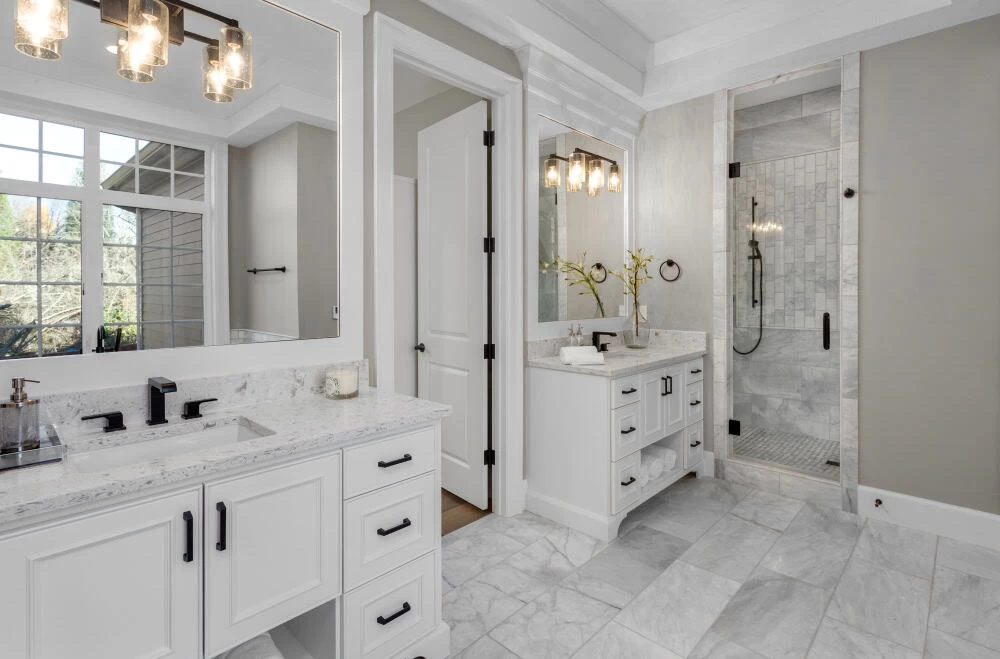
A bathroom remodel with us covers the full scope demolition, hazardous material assessment and removal if needed, plumbing, electrical, waterproofing, tile, fixtures, vanity, finish carpentry, and final inspection. There’s no point in the project where you’re coordinating between separate contractors or waiting on a specialist to show up. It’s one team, one contract, one point of contact.
For Greenport specifically, the hazmat capability is not a side service it’s a core part of what makes a full gut renovation possible in a pre-war home. Suffolk County’s older housing stock, and particularly the village’s historic structures, almost always contains some combination of lead paint, asbestos-containing materials, or long-term moisture damage. We hold the active certifications to assess, contain, and remove those materials legally and safely before the renovation moves forward. That protects you, your family, and the integrity of the finished project.
Beyond the technical side, we also understand what Greenport’s real estate market demands. With average sale prices approaching $987,000 and a significant share of buyers coming from New York City looking for a property that matches their investment, the finish quality has to hold up to scrutiny. Walk-in shower conversions, accessible bathroom modifications, custom tile work, freestanding tub installations whatever the project calls for, the execution is calibrated for a market where the home itself is a serious asset.
Do I need a permit for a bathroom remodel in Greenport, NY?
Yes, in most cases. The Village of Greenport operates its own building department, separate from Southold Town, and requires permits for any bathroom renovation that involves plumbing modifications, electrical work, or structural changes. That covers the majority of gut renovations and most mid-scope remodels. You’ll need to submit plans, pass rough-in inspections before walls are closed, and receive a certificate of occupancy when the work is complete.
If your property is within or adjacent to the Greenport Village Historic District, there’s an additional layer. Any exterior modifications new window openings, vent penetrations visible from the street, changes to exterior materials may require a Certificate of Appropriateness from the village’s Historic Preservation Commission before a building permit can be issued. Most interior bathroom renovations don’t trigger HPC review, but it’s worth confirming early. We manage the permit process from the start, so you’re not navigating the village building department on your own.
How much does a bathroom remodel typically cost in Greenport?
On the North Fork, bathroom remodeling costs run meaningfully higher than national averages. A midrange full bathroom renovation in Greenport typically falls somewhere between $35,000 and $55,000, depending on scope, existing conditions, and material selections. Upscale renovations particularly in larger historic homes or waterfront properties can go well past that range. Labor costs in Suffolk County are higher than the national average, permits add to the baseline, and the material quality that Greenport’s real estate market demands isn’t the cheapest option on the shelf.
What drives cost up most unexpectedly in Greenport is what’s behind the walls. Older homes routinely have deteriorated plumbing, moisture-damaged subfloors, or hazardous materials that need to be addressed before renovation work can proceed. A contractor who doesn’t account for that in their estimate isn’t giving you a realistic number they’re giving you a number that will change once demo begins. We build discovery into the process and communicate clearly before costs shift, so you’re not blindsided mid-project.
What happens if asbestos or lead paint is found during my bathroom renovation?
In a Greenport home built before 1978 which describes the vast majority of the village’s housing stock the presence of lead paint is essentially assumed until tested otherwise. Asbestos-containing materials, including floor tiles, pipe insulation, and ceiling texture, were commonly used through the late 1970s and can also appear in homes that were renovated during that era. When demolition opens up walls and floors in an older structure, finding these materials is a realistic possibility, not an edge case.
For most contractors, discovery of hazardous materials means stopping work and bringing in a separate abatement company which adds time, cost, and coordination complexity to your project. We hold active licenses for both asbestos abatement and lead-based paint abatement, which means we can assess, contain, and remove those materials in-house without pausing the renovation. The work is handled legally, safely, and under the same contract, and the project continues on schedule once the affected area is cleared. You don’t lose weeks to a handoff.
How long does a full bathroom renovation take from start to finish?
A full gut renovation typically runs four to eight weeks from demo to certificate of occupancy, depending on scope and whether any unexpected conditions turn up during demolition. Simpler remodels fixture replacement, tile refresh, vanity swap can move faster. Larger projects involving plumbing relocation, full waterproofing systems, or custom tile work take longer. The permit process with the Village of Greenport building department adds time at the front end, so it’s worth building that into your expectations from the start.
In Greenport, timing is worth thinking about strategically. If you’re a second-home owner or have a rental property, you probably don’t want a major renovation running through peak season. The window between Labor Day and Memorial Day particularly the fall shoulder season tends to be when renovation scheduling is most practical for North Fork properties. Getting on a contractor’s calendar early matters, because the good ones book up. The more lead time you give, the more control you have over when the project starts and ends.
Can you remodel a bathroom in a historic Greenport home without damaging its character?
Yes, and it’s something that comes up regularly in the village. Greenport’s historic district contains 254 contributing buildings, and even outside the district boundaries, a large share of the village’s residential stock consists of 19th and early 20th century structures Italianate homes, Queen Anne Victorians, craftsman bungalows. Renovating a bathroom in one of these homes requires understanding how the original structure was built, not just what the finished product should look like.
That means working within original framing that wasn’t designed around modern plumbing layouts, respecting the proportions and materials of the surrounding space, and making decisions that hold up to scrutiny both from the homeowner and, where applicable, from the Historic Preservation Commission. We’ve worked extensively with older Long Island housing stock and understand the difference between a renovation that feels appropriate to a historic home and one that looks like a modern box dropped into a century-old structure. The goal is a bathroom that functions correctly and fits the house it’s in.
Does Green Island Group handle bathroom renovations that started as water damage claims?
Yes, and this is actually a fairly common path for Greenport homeowners. Coastal exposure, aging plumbing systems, and seasonal properties that sit vacant through the winter create recurring conditions for water damage burst pipes, slow leaks under tile, moisture infiltration through deteriorating exterior walls. When that damage gets discovered, it often reveals that the bathroom was already overdue for a renovation. The insurance claim and the remodel become the same project.
We have direct experience working with insurance carriers, documenting damage for claim purposes, and managing the transition from emergency restoration to full renovation under one contract. For second-home owners who aren’t on-site when something goes wrong, that matters. You don’t have to coordinate between a restoration company and a separate remodeler while managing the claim from your apartment in the city. We handle the documentation, the remediation, and the rebuild and we’re available around the clock if something happens at your North Fork property outside of business hours.