Built for Islip Terrace's Older Homes, Not Around Them
Most bathroom remodelers show up, start demo, and stop cold when they find what’s inside a 60-year-old Islip Terrace home. We don’t stop we’re licensed to handle what’s behind those walls and keep your project moving.
I needed a professional consultation explanation of procedure for safe removal of Asbestos in my apartment complex. Without having an account yet, I was very impressed with the caring, knowledgeable and generous advice offered by Jessica, and will look forward to doing business in the future. Thank you so much! I feel much more informed about a sometimes scary endeavor. Peace. Nancy Silva Mineola, NY.
Mia Munoz
Used this company to clean up some water flood in my house. They were fast and easy to work with.very professional, Would recommend to anyone!
Nini Valle
Great company, had a flood and they responded quickly and efficiently. Billed my insurance company directly. I highly recommend this company!
joe colapietro, jr
I had pipe freeze in my basement right before a snow storm and they made to within an hour to help start the clean up process. They we by our side throughout the entire process and even helped with the insurance company. They did such a great job with the cleanup, repair, remidiation, I contracted them to perform the repairs and finishes in the basement. They came with enough manpower and material to get the job done. Leo and Jessica were nothing but a pleasure to deal with!!
Cristian Arredondo c
I had some water damage in my home and Green Island was able to take care of my issue quickly and effectively. I am very pleased with the work they did. They responded quickly and were very professional.
Michael M
Outstanding service! From the office to the field crew everyone was friendly, helpful and responsive. I highly recommend Green Island Group.
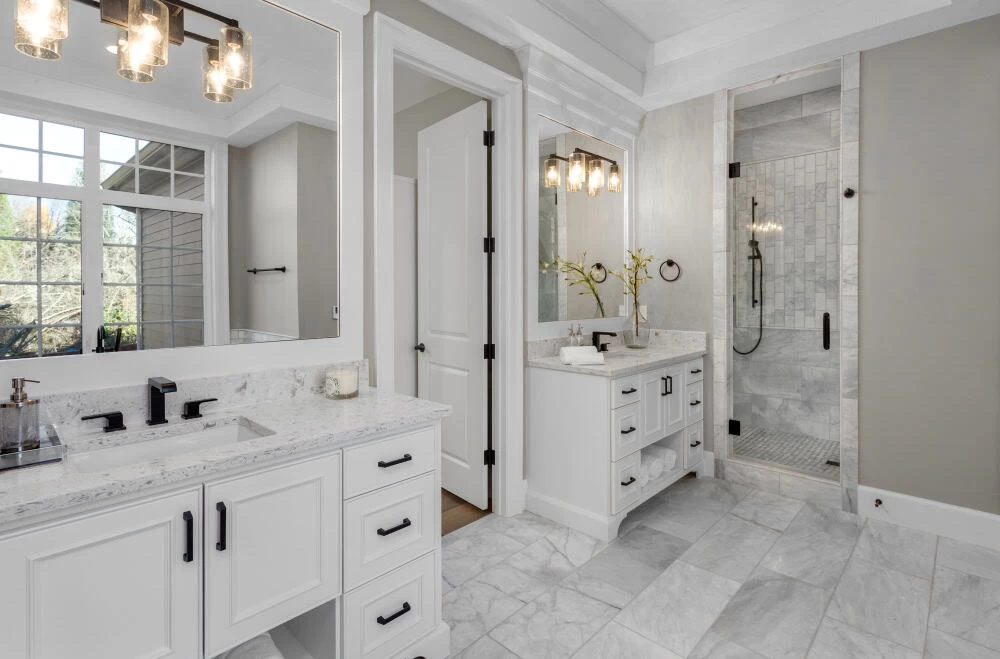
A Finished Bathroom That Holds Up to Real Life in Islip Terrace
The median home in Islip Terrace was built in 1963. That’s not a problem but it does mean your bathroom has probably been quietly losing the battle against time. Galvanized pipes that have been corroding for decades. Tile set over materials that were never meant to last this long. Ventilation that vents into the attic instead of outside, which is exactly how mold gets a foothold behind walls you can’t see.
When the renovation is done right, you get more than a bathroom that looks good. You get waterproofing that actually works, plumbing that doesn’t fight your water pressure, and materials chosen for Long Island’s humid summers and wet nor’easter seasons not just for the showroom photo. That distinction matters when you’re spending $40,000 or more on a project you expect to last another 30 years.
For homeowners in Islip Terrace who are thinking ahead whether that’s a walk-in shower for aging in place, a layout that finally makes sense for your family, or simply a bathroom that doesn’t feel like it belongs to 1968 the outcome isn’t just cosmetic. It’s a home that works better, holds its value, and doesn’t send you back to square one in five years because someone cut corners on the waterproofing.
We Know This Housing Stock Because We Work In It Every Day
We’re based in Bohemia a few miles from Islip Terrace via Sunrise Highway and operate under the same Town of Islip Building Division that governs your neighborhood. That’s not a technicality. It means we file permits with the same office, work with the same local inspectors, and have firsthand experience with the ranch homes and Cape Cods that make up the majority of Islip Terrace’s residential streets.
Beyond the remodeling side, we hold active New York State asbestos abatement certification, a Lead-Based Paint license, and mold remediation credentials. In a community where a confirmed third-party assessment found that Islip Terrace’s oldest neighborhoods carry full asbestos and lead paint risk profiles, those licenses aren’t a bonus they’re the difference between a project that finishes on schedule and one that stops the moment demo uncovers something unexpected.
Over 5,000 completed projects across New York State. Licensed, insured, and available 24 hours a day. That’s the foundation the rest shows up in the work.
No Surprises Here's What the Process Actually Looks Like
It starts with a walkthrough. We look at the bathroom you have now the layout, the plumbing stack location, the ventilation, the condition of the subfloor and we give you an honest read on what you’re working with. In a 1960s Islip Terrace home, that conversation often includes a frank discussion about what demo might uncover and how we handle it if it does. You deserve to know that upfront, not after the walls are open.
From there, we handle the Town of Islip permit process for any plumbing or electrical work which is required, not optional, for anything beyond purely cosmetic updates. That includes coordinating the Suffolk County Department of Health Services inspection for sanitary construction and the electrical certification required before the project closes. If your remodel is connected to a water damage event and you’re navigating a homeowners insurance claim, we’ve done that too including billing carriers directly.
Once permits are in place, the build begins. We use cement board substrates and waterproof membranes behind tile, not the greenboard drywall that was standard when your home was built. Exhaust fans get vented to the exterior, not the attic. Every finish decision gets made with durability in mind, not just appearance. When we’re done, you get a code-compliant, inspected, finished bathroom not a punch list of things to follow up on later.
A bathroom remodel in Islip Terrace isn’t a one-size-fits-all job. Some homeowners are doing a full gut renovation new plumbing, new electrical, new layout, everything. Others are updating a bathroom that’s structurally sound but aesthetically stuck in the past. And some are starting because a pipe failed and the insurance claim opened the door to a renovation they’d been putting off for years. We work across all of it.
On the full renovation side, that means demo and debris removal, rough plumbing and drain work, electrical updates including GFCI outlets and exhaust fan wiring, waterproofing membrane installation, tile setting, vanity and fixture installation, and final trim and paint. If hazardous materials are discovered during demo asbestos floor tile, lead paint on trim, mold behind the existing tile we handle abatement and remediation in-house, under the same roof, without subcontracting it out to a third party and losing weeks on your timeline.
For homeowners thinking about aging-in-place modifications zero-threshold walk-in showers, reinforced walls for grab bars, comfort-height fixtures, non-slip tile we build those in from the design phase, not as an afterthought. The goal is a bathroom that works for your life now and five years from now, built to the current New York State Uniform Code, and permitted correctly so it doesn’t become someone else’s problem at resale.
Do I need a permit for a bathroom remodel in Islip Terrace, NY?
It depends on what’s being changed. If you’re doing purely cosmetic work new tile, a fresh coat of paint, swapping out a vanity light no permit is required. But the moment you’re touching plumbing supply or drain lines, adding or moving electrical circuits, or making any structural changes, the Town of Islip Building Division requires a permit. That’s not a suggestion unpermitted plumbing or electrical work can create real problems when you sell the home, and it may affect your homeowners insurance coverage if something goes wrong later.
The permit process in the Town of Islip also involves a few layers that catch homeowners off guard. Any sanitary construction has to be inspected by and receive a certificate from the Suffolk County Department of Health Services. All electrical work requires certification from the New York Board of Fire Underwriters or another approved third-party inspector, and that certificate gets filed with the Building Division. We manage the entire permit process as part of every project from the initial application through final inspection sign-off. You don’t have to figure out the paperwork.
What happens if asbestos or mold is found during my bathroom renovation?
This is one of the most common concerns for homeowners in Islip Terrace, and it’s a legitimate one. Homes built before 1980 which covers the majority of Islip Terrace’s housing stock commonly contain asbestos in floor tiles, pipe insulation, and joint compound. Lead paint is frequently found on trim and window frames. Mold behind tile is almost a given in bathrooms that have had inadequate ventilation for decades. Discovering any of these during demo doesn’t have to mean the project stops.
The difference is whether your contractor is licensed to handle it. In New York State, asbestos abatement requires specific certification under NYS DOL Article 32. Mold remediation projects over 10 square feet require a licensed NYS Mold Assessor to write a remediation plan and a separate licensed remediator to do the work. We hold all of these credentials in-house. When something gets discovered behind the walls of your Islip Terrace bathroom, we don’t subcontract it out and lose weeks waiting for another company to schedule. We handle it, document it properly, and keep the project moving.
How much does a bathroom remodel cost in Islip Terrace, NY?
The honest answer is that it depends on the scope, but you should go in with realistic expectations for the Long Island market. Nationally, a midrange bathroom remodel averages around $26,000. In Suffolk County, that number typically runs 30 to 50 percent higher due to labor costs, material costs, and permitting requirements so a realistic midrange full renovation in Islip Terrace is more likely in the $35,000 to $50,000 range. An upscale gut renovation with high-end fixtures and tile can push well past that.
What affects your number most is the condition of what’s already there. In a home built in the 1960s, it’s common to open a wall and find corroded galvanized pipes that need full replacement, a subfloor that’s been damaged by years of slow moisture, or hazardous materials that require abatement before the build can continue. A contractor who gives you a quote without accounting for any of that is either not experienced with older homes or not being straight with you. We walk through the real variables with you before you commit to anything, so the number you hear upfront is as close to the final number as we can honestly make it.
How long does a full bathroom renovation take from start to finish?
For a full gut renovation in Islip Terrace, a realistic timeline is four to eight weeks from the start of demo to final walkthrough assuming permits are in place before work begins and no major unexpected conditions are discovered during demo. The permit process through the Town of Islip Building Division typically adds time before the physical work starts, so the total calendar time from first conversation to finished bathroom is often longer than homeowners expect.
A few things can extend that timeline in this area specifically. If hazardous materials are discovered, abatement has to be completed and documented before the build phase continues. If the project involves a homeowners insurance claim which is common when a remodel is triggered by a water damage event the claims process runs parallel to the construction schedule and can add coordination time. We give you a realistic timeline at the start, not an optimistic one, because the 58 percent of homeowners who say their renovation took longer than expected usually got a quote from someone who wasn’t being straight with them at the beginning.
Can my bathroom remodel be covered by homeowners insurance in Islip Terrace?
Sometimes, and it’s worth understanding the distinction. If your bathroom remodel is being done purely for aesthetic reasons you want a new look, better fixtures, updated tile that’s not a covered loss under a standard homeowners policy. But if the remodel is being triggered by a covered event a burst pipe, a roof leak that caused water intrusion, a washing machine overflow then the damage remediation and restoration portion of the project may be covered, depending on your policy and the specific cause.
In Islip Terrace, where the housing stock is predominantly 60-plus years old with aging galvanized plumbing, water damage events that trigger a renovation are not uncommon. We’ve handled the full sequence many times: emergency response to stop the damage, documentation for the insurance claim, remediation, and then the renovation itself. We can bill your insurance carrier directly for the covered portion of the work and walk you through what’s likely to be approved and what falls outside the claim. If you’re in that situation right now, the first call should be to us, not the insurance company getting the damage documented correctly from the start makes the claims process significantly smoother.
How do I choose the right bathroom remodel contractor in Islip Terrace, NY?
Start with licensing. In New York, any contractor doing home improvement work needs to be licensed and for a bathroom remodel that involves plumbing, electrical, and potentially hazardous materials, the licensing requirements go deeper than a basic home improvement contractor registration. Ask specifically whether they hold asbestos abatement certification, a lead paint license, and mold remediation credentials. In Islip Terrace, where a significant portion of the housing stock predates 1980, a contractor who can’t handle those materials legally is a contractor who will have to stop your project if demo turns up a problem.
Beyond licensing, look at local familiarity. A contractor who knows the Town of Islip permit process, has worked with local inspectors, and understands the specific challenges of mid-century Cape Cods and ranch homes on Long Island is going to run a smoother project than one who’s learning your area as they go. Ask for a specific, itemized estimate not a ballpark and ask directly how they handle unexpected discoveries during demo. The answer to that question tells you a lot about whether they’ve actually done this work in homes like yours, or whether they’re figuring it out as they go.