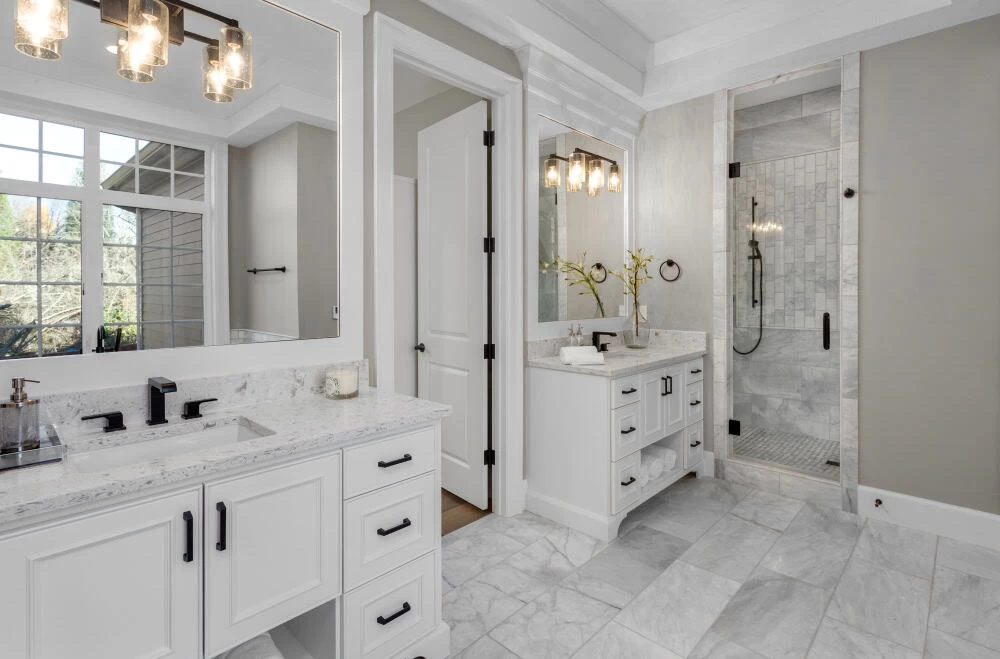
When the Walls Open Up in a 1960s Kings Park Home, You Want One Contractor Who Can Handle All of It
Most Kings Park bathrooms haven’t been touched since the Kennedy administration and what’s behind those walls can stop a job cold if your contractor isn’t licensed to deal with it. We are.
I needed a professional consultation explanation of procedure for safe removal of Asbestos in my apartment complex. Without having an account yet, I was very impressed with the caring, knowledgeable and generous advice offered by Jessica, and will look forward to doing business in the future. Thank you so much! I feel much more informed about a sometimes scary endeavor. Peace. Nancy Silva Mineola, NY.
Mia Munoz
Used this company to clean up some water flood in my house. They were fast and easy to work with.very professional, Would recommend to anyone!
Nini Valle
Great company, had a flood and they responded quickly and efficiently. Billed my insurance company directly. I highly recommend this company!
joe colapietro, jr
I had pipe freeze in my basement right before a snow storm and they made to within an hour to help start the clean up process. They we by our side throughout the entire process and even helped with the insurance company. They did such a great job with the cleanup, repair, remidiation, I contracted them to perform the repairs and finishes in the basement. They came with enough manpower and material to get the job done. Leo and Jessica were nothing but a pleasure to deal with!!
Cristian Arredondo c
I had some water damage in my home and Green Island was able to take care of my issue quickly and effectively. I am very pleased with the work they did. They responded quickly and were very professional.
Michael M
Outstanding service! From the office to the field crew everyone was friendly, helpful and responsive. I highly recommend Green Island Group.
A Finished Bathroom That Actually Holds Up in a North Shore Home
Here’s the reality of remodeling a bathroom in Kings Park: the house was probably built in the 1950s or 1960s, and the bathroom has been quietly collecting problems ever since. Moisture behind the tile. A subfloor that’s soft in the corner. Maybe some 9×9 floor tiles that nobody’s touched because everyone knows what they might be. When you finally decide to do this, you don’t want to find out mid-demo that your contractor has to stop the job and bring in someone else.
That’s the part most remodeling companies don’t talk about upfront. We do. Because we hold active asbestos abatement and lead-based paint licenses not as an add-on, but as part of how we operate the job doesn’t stall when something shows up behind the walls. And in a Kings Park home that’s been absorbing Long Island Sound humidity for 60 years, something usually does.
What you end up with is a bathroom that’s been properly waterproofed, built on a sound subfloor, ventilated correctly, and fully permitted through the Town of Smithtown. Not just a bathroom that looks good in photos one that actually holds up in this climate, in this housing stock, for the long term.
5,000 Projects In. We Know What's Behind Your Kings Park Walls.
We’re based in Bohemia, NY Suffolk County, about 20 miles from Kings Park and we’ve been doing restoration and remodeling work on Long Island for years. Over 5,000 completed projects. That number matters because it means we’ve seen the full range of what mid-century North Shore homes can throw at a renovation crew, and we’ve built the licenses and capabilities to handle all of it without stopping the job.
We’re not a remodeling company that dabbles in remediation. We’re a remediation and restoration contractor that also does full bathroom renovations which means when we open a wall in a Kings Park home built in 1962 and find mold or asbestos tile, we already have the license, the protocol, and the team to deal with it. No subcontractors to coordinate. No delays while you wait for someone else to come assess the situation.
We handle the permit process through the Town of Smithtown’s Building Department, manage the inspections, and deliver a completed, code-compliant bathroom with a Certificate of Occupancy. One contractor, one contract, one point of contact from start to finish.
No Surprises Here's Exactly What the Process Looks Like
It starts with a walkthrough. We come to your Kings Park home, look at the existing bathroom, and give you a clear picture of what the renovation involves including what we might find during demo and how we’d handle it. For a home built before 1980, that conversation always includes a realistic assessment of asbestos-containing materials and lead paint, because pretending those aren’t a possibility in a house of that age doesn’t help anyone.
Once we’re aligned on scope and you’re ready to move forward, we handle the permit application with the Town of Smithtown Building Department. Smithtown now has an online permit system, which speeds things up, but the requirement is still there and skipping it isn’t something we’d recommend in a town where unpermitted work shows up in property records and can create real problems when you go to sell.
Demo comes next, and this is where the real condition of the space becomes clear. If we find anything that needs to be addressed deteriorated subfloor, mold in the wall cavity, materials that require licensed abatement we handle it in-house and keep the project moving. From there it’s waterproofing, rough plumbing and electrical, tile, fixtures, vanity, and final inspection. You get a finished bathroom and a closed permit. That’s the whole process, without the gaps.
Built for Older Homes, Long Island Conditions, and the Long Haul
A full bathroom remodel with us covers everything from demolition through final inspection and in Kings Park, that scope almost always includes more than just the cosmetic layer. We install cement board substrates and waterproof membranes behind tile because we’ve seen what happens in homes along the North Shore when that step gets skipped. We upgrade ventilation because most bathrooms in this housing stock were built without adequate exhaust, and that moisture has to go somewhere. We assess plumbing and flag galvanized supply lines or cast iron drains that are at the end of their service life, so you’re not redoing this in five years because a pipe failed behind a brand-new wall.
For homeowners in Kings Park who are thinking about staying in their home long-term which describes most of this community we also do aging-in-place modifications: zero-threshold walk-in showers, comfort-height fixtures, reinforced blocking for grab bars, and non-slip flooring. These aren’t specialty add-ons. They’re practical upgrades that make a bathroom safer and more functional for the long run.
Everything we do is pulled under permit and inspected by the Town of Smithtown. The finished bathroom is documented, code-compliant, and part of your home’s permanent record which matters when you eventually sell a home in a market where median values are sitting around $670,000 and buyers’ attorneys look at everything.
Do I need a permit for a bathroom remodel in Kings Park, NY?
Yes, in most cases. If your bathroom remodel involves any changes to plumbing moving a drain, relocating supply lines, adding a new fixture location or any electrical work like adding circuits, upgrading to GFCI outlets, or installing a new ventilation fan, you’ll need a permit from the Town of Smithtown Building Department. Structural changes, like removing a wall to expand the bathroom footprint, also require a permit.
The reason this matters beyond just following the rules is that Smithtown maintains permanent records of all permitted and unpermitted work. If you sell your Kings Park home and a buyer’s attorney or inspector finds a renovated bathroom with no permit on file, that becomes a negotiating issue or worse, a closing delay. We handle the entire permit process for you, from application through final inspection and Certificate of Occupancy, so there’s no gap in your home’s record.
What does a bathroom remodel typically cost in Kings Park, NY?
For a midrange full bathroom renovation in Kings Park, you’re realistically looking at somewhere in the $35,000 to $55,000 range and sometimes beyond that depending on what’s found during demo. That’s meaningfully higher than national averages, which tend to land around $26,000, but Long Island labor rates, Suffolk County permit fees, and the near-certainty of encountering at least one complicating factor in a home built before 1980 all push the number up.
The variables that move the cost most are what’s behind the walls when demo starts. If the subfloor is water-damaged, if there are asbestos-containing floor tiles that need licensed abatement, or if the plumbing needs to be brought up to current code, those add to the scope. We talk through all of this before work begins so you have a realistic picture, not a low number that climbs once the walls are open.
What happens if asbestos or mold is found during my bathroom renovation?
In a Kings Park home built in the 1950s or 1960s, finding asbestos-containing materials or mold during a bathroom demo is not unusual it’s actually pretty common. Asbestos was standard in 9×9 vinyl floor tiles, pipe insulation, and joint compounds used during that era. Mold tends to show up in wall cavities and subfloors that have been absorbing moisture from inadequate ventilation or slow leaks for decades.
With most remodeling companies, discovering either of these materials means stopping work, bringing in a separate licensed contractor, waiting for assessment and abatement, and then restarting which can add weeks and significant cost to the project. We hold active asbestos abatement and lead-based paint removal licenses, so we handle it in-house. The job doesn’t stop. We document what was found, follow the proper EPA and NYS DEC protocols for removal and disposal, and keep the project moving on schedule.
How long does a bathroom remodel take in Kings Park from start to finish?
For a full bathroom renovation in Kings Park, a realistic timeline from the start of demo to final inspection is typically four to six weeks assuming no major surprises during demolition. The permit process through the Town of Smithtown adds time on the front end, though Smithtown’s online permit system has reduced some of that administrative lag. Scheduling inspections at the right milestones also needs to be factored in, since inspectors need to see rough plumbing and electrical before walls are closed.
Where timelines extend is when something unexpected turns up during demo a compromised subfloor, mold remediation, or materials requiring abatement. Because we handle those situations in-house rather than pausing to bring in outside contractors, we keep the schedule tighter than most. We give you a realistic timeline upfront, and we communicate directly if anything changes. No one likes finding out mid-project that the job is going to take three more weeks than expected.
My Kings Park home has older plumbing does that affect the bathroom remodel?
It can, and it’s worth knowing about before you commit to a scope. Homes in Kings Park built in the 1950s and 1960s frequently have galvanized steel supply lines, which corrode from the inside over time and restrict water pressure as mineral buildup accumulates. Cast iron drain lines are also common in this era of construction and can crack or deteriorate after 60 or 70 years of use. Neither of these is an automatic problem, but both are worth assessing before new tile and fixtures go in on top of them.
During our initial walkthrough, we look at the existing plumbing condition and flag anything that’s likely to become an issue down the road. If supply lines or drains need to be replaced as part of the renovation, we handle that as part of the scope rather than leaving it for a separate plumber to deal with later. The goal is a bathroom that doesn’t develop a water problem behind brand-new walls two years from now.
Can Green Island Group handle a bathroom remodel that started as a water damage claim?
Yes, and this is actually a common path for Kings Park homeowners. Older homes in this area especially those with basements that see groundwater seepage during heavy rains, or aging plumbing that’s prone to failure during a hard freeze sometimes experience water damage that reveals a bathroom that needed replacing anyway. A burst pipe in January or a slow leak behind a wall that finally shows up as a stain on the ceiling below can open the door to a full renovation that was already overdue.
We do both restoration and remodeling, which means we can handle the insurance documentation, work directly with your carrier, and transition from the restoration scope into a full bathroom renovation without you having to start over with a different contractor. That matters because the documentation for an insurance claim needs to be done correctly and having the same team manage both sides of it means nothing falls through the gap between the restoration work and the remodel that follows.