I needed a professional consultation explanation of procedure for safe removal of Asbestos in my apartment complex. Without having an account yet, I was very impressed with the caring, knowledgeable and generous advice offered by Jessica, and will look forward to doing business in the future. Thank you so much! I feel much more informed about a sometimes scary endeavor. Peace. Nancy Silva Mineola, NY.
Mia Munoz
Used this company to clean up some water flood in my house. They were fast and easy to work with.very professional, Would recommend to anyone!
Nini Valle
Great company, had a flood and they responded quickly and efficiently. Billed my insurance company directly. I highly recommend this company!
joe colapietro, jr
I had pipe freeze in my basement right before a snow storm and they made to within an hour to help start the clean up process. They we by our side throughout the entire process and even helped with the insurance company. They did such a great job with the cleanup, repair, remidiation, I contracted them to perform the repairs and finishes in the basement. They came with enough manpower and material to get the job done. Leo and Jessica were nothing but a pleasure to deal with!!
Cristian Arredondo c
I had some water damage in my home and Green Island was able to take care of my issue quickly and effectively. I am very pleased with the work they did. They responded quickly and were very professional.
Michael M
Outstanding service! From the office to the field crew everyone was friendly, helpful and responsive. I highly recommend Green Island Group.
A Finished Bathroom Built to Last on the North Fork
Laurel sits right on the Peconic Bay, and that coastal air does real damage over time grout breaks down faster, caulk fails sooner, and moisture finds its way into places you can’t see until a wall comes down. A bathroom renovation done right here isn’t just about aesthetics. It’s about using the right materials for the environment your home actually lives in, not just what looks good in a showroom.
A lot of homes in Laurel were built well before modern construction standards farmhouses, mid-century ranches, the historic cottages over at Campground Circle. When you open up those walls, you don’t always know what you’ll find. Lead paint, asbestos tile, decades of moisture behind old fixtures these aren’t rare surprises on the North Fork. They’re common ones. The difference is whether your contractor can handle them without stopping your project cold.
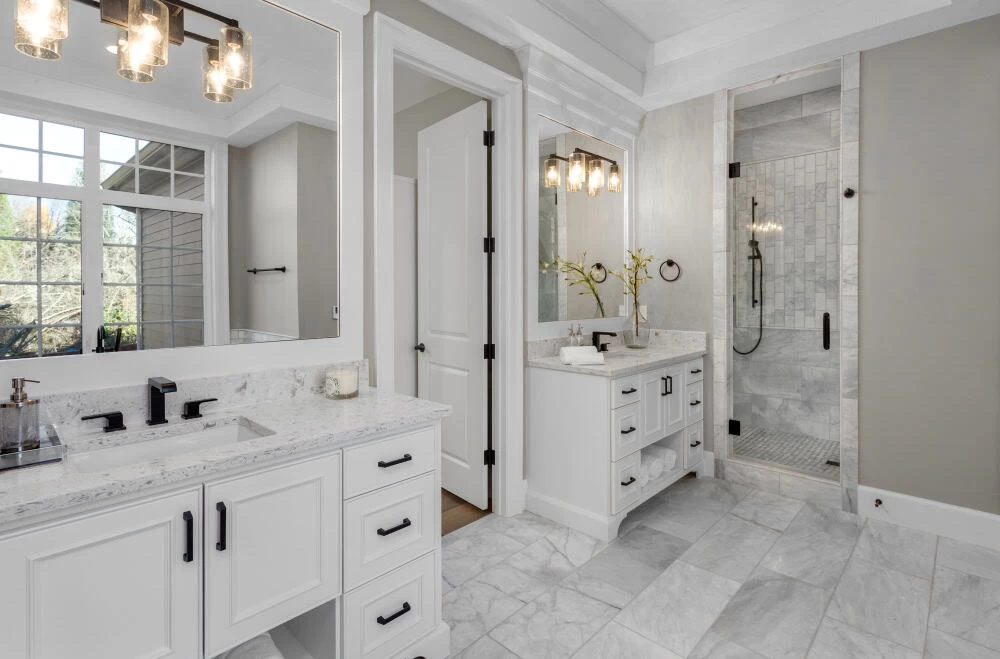
When the work is done correctly, you get a bathroom that holds up to the humidity, looks the way you actually wanted it to look, and doesn’t come with a list of follow-up problems six months later. Whether this is your year-round home or your weekend escape on the North Fork, that’s what a renovation should deliver.
Licensed for the Work Others Have to Stop and Walk Away From
We’re a Suffolk County-based contractor with over 5,000 completed projects across New York State. That’s not a number pulled from thin air it’s the kind of track record that comes from handling real jobs on real Long Island homes, including the ones that throw curveballs the moment demolition starts.
What separates us from most bathroom remodel companies is the licensing. Asbestos abatement, lead-based paint removal, mold remediation these are regulated, certified capabilities that most contractors simply don’t have. In a hamlet like Laurel, where the housing stock includes homes that predate 1978 by decades, that matters more than it does almost anywhere else. You don’t want to be three days into a gut renovation and find out your contractor has to stop and call someone else.
We operate 24 hours a day, 365 days a year, and handle everything from permits to final inspection under one contract. One call, one team, one finished bathroom.
What Actually Happens From First Call to Finished Tile
It starts with an assessment a real look at the space, the existing plumbing, the age of the home, and any signs of moisture or material concerns before a single tool comes out. For a lot of Laurel homes, especially anything built before 1980, that upfront evaluation is where you find out whether there are asbestos tiles under the floor or lead paint on the trim. Knowing that before demo starts is the difference between a smooth project and an expensive delay.
From there, permits get pulled. Laurel sits across two town jurisdictions the Town of Southold covers most of the hamlet, while a portion falls under the Town of Riverhead and if your home runs on a septic system, the Suffolk County Health Department may also be in the picture. We navigate all of it. You don’t have to figure out which building department handles your property or what forms need to go where.
Once permits are in place, the work moves in order: demolition, hazardous material handling if it’s needed, rough plumbing and electrical, waterproofing, tile, fixtures, and finish work. Everything stays on one timeline, managed by one team. If you’re not local full-time and managing this from the city, you stay informed at every step without having to chase anyone down for an update.
Full Scope, One Contract, No Subcontractor Shuffle
A bathroom renovation with us covers the complete scope demolition, plumbing, electrical, waterproofing, tile installation, vanity and fixture installation, and all finish work. Nothing gets handed off to a separate crew you’ve never met. The same licensed team that starts your project finishes it.
For Laurel specifically, that includes a few things you won’t find on every contractor’s list. Moisture-resistant substrates and waterproof membranes are standard here, not an upgrade because the Peconic Bay corridor demands it. If your home is on a private well, plumbing work accounts for water pressure and mineral buildup that municipal systems don’t produce. If hazardous materials turn up during demo, the work doesn’t stop. We hold the licenses to handle asbestos and lead-based paint removal in-house and keep the project moving.
For homeowners dealing with post-storm water damage or a bathroom that’s been compromised by moisture intrusion something that happens regularly on the North Fork after a hard nor’easter we also handle the restoration side before transitioning into the full renovation. That means no starting over with a new contractor once the emergency is resolved. It’s all one process, handled by one team, billed under one contract.
Do I need a permit for a bathroom remodel in Laurel, NY?
It depends on the scope of the work. Cosmetic updates swapping out a vanity, replacing fixtures in the same location, retiling without structural changes generally don’t require a permit. But if you’re relocating plumbing, adding or modifying electrical circuits, or making any structural changes, you’ll need to pull permits before the work starts.
Here’s where Laurel gets specific: the hamlet spans two town jurisdictions. Most of Laurel falls under the Town of Southold Building Department, but a small portion sits within the Town of Riverhead. Which department handles your permit depends on exactly where your property is located. And if your home uses a septic system which many Laurel properties do any changes to bathroom drainage may also involve the Suffolk County Health Department. We handle the permit process from start to finish, including identifying the right jurisdiction for your address, so you’re not guessing your way through it.
What does a bathroom remodel typically cost in Laurel, NY?
A midrange bathroom remodel nationally averages around $26,000, but that number tends to be a floor on the North Fork rather than a ceiling. Labor costs on eastern Long Island run higher than national averages, material delivery to Laurel adds logistics, and older homes frequently require additional work updated plumbing, electrical upgrades to meet current code, or hazardous material removal that a newer construction home wouldn’t need.
For a full gut renovation in Laurel, a realistic budget typically starts in the $30,000–$45,000 range depending on the size of the space, the fixtures and finishes selected, and what turns up during demolition. With Laurel’s median home value sitting near $730,000, a well-executed bathroom renovation is a meaningful return on a high-value asset especially for homeowners planning to sell or increase rental income from a seasonal property. We provide detailed written estimates before any work begins so you know exactly what you’re committing to.
What happens if asbestos or lead paint is found during my bathroom renovation?
This is one of the most common concerns for homeowners renovating older properties on the North Fork, and it’s a legitimate one. Homes built before 1980 have a real statistical likelihood of containing asbestos in floor tiles, pipe insulation, or ceiling materials and homes built before 1978 may have lead-based paint on trim and walls. In a hamlet like Laurel, where the housing stock includes farmhouses, mid-century cottages, and historic structures, these aren’t edge cases.
Under New York State law, asbestos abatement must be performed by a licensed contractor before any other work can continue in the affected area. Most bathroom remodeling companies are not licensed for this work which means they have to stop the project, bring in a separate remediation contractor, wait for availability, and then restart. That process can add weeks and significant cost to your timeline. We hold EPA-compliant asbestos abatement credentials and a lead-based paint abatement license, which means if these materials are discovered during your demo, the work doesn’t stop. We handle it in-house and keep the project on schedule.
How long does a bathroom remodel take on the North Fork?
A straightforward bathroom renovation no hazardous materials, no major plumbing relocation, standard permit timeline typically runs three to five weeks from demo to completion. That said, a few factors specific to Laurel and the North Fork can affect the schedule.
Permit turnaround through the Town of Southold Building Department adds time upfront, and if the Suffolk County Health Department needs to review any septic-related drainage changes, that review runs on its own timeline. Material delivery to the eastern end of Long Island takes longer than deliveries to more central Suffolk County locations, so lead times on specialty tile, fixtures, or custom vanities need to be factored in early. The best window for interior renovations in Laurel is typically late fall through early spring the off-season when second homes are vacant, rental properties are between tenants, and contractor schedules have more flexibility. If you’re working toward a Memorial Day or summer rental deadline, the earlier you start the planning process, the better your chances of hitting that target.
My Laurel home is a second property can you manage the renovation without me being on-site?
Yes, and this is something we handle regularly for North Fork property owners who aren’t local full-time. A significant portion of homes in Laurel are weekend residences or seasonal properties owned by people who live and work in the city during the week. Managing a renovation remotely without a reliable point of contact is genuinely stressful and one of the most common complaints homeowners have about contractors is that communication disappears once the deposit clears.
We operate with a single point of contact for each project and provide updates at every milestone: permit approval, demo completion, rough inspection, tile work, and final walkthrough. If something comes up mid-project that requires a decision a material substitution, an unexpected finding behind a wall you get a call, not a surprise on your next visit. And because we’re available 24 hours a day, if something urgent happens at the property outside of business hours, you’re not waiting until Monday morning to reach someone.
How do I know the bathroom remodel will hold up in a coastal environment like Laurel?
The materials and methods that work fine in an inland suburban home don’t always perform the same way in a coastal environment. Homes along Peconic Bay Boulevard and throughout Laurel are exposed to persistent humidity, salt air, and the kind of moisture cycling that accelerates grout failure, corrodes fixtures, and causes mold to develop behind walls that look perfectly fine on the surface.
Our approach to coastal bathroom renovations starts with the substrate. Cement board and waterproof membranes behind tile are non-negotiable in this environment not an optional upgrade. Fixture and hardware selections account for corrosion resistance. Grout and caulk products are chosen for moisture performance, not just appearance. And because we come from a restoration background, the installation techniques reflect a real understanding of how bathrooms fail in environments like Laurel’s and how to build them so they don’t. A bathroom that’s still performing five and ten years from now, without mold behind the tile or failing grout along the pan, is the actual goal. That’s what the right materials and the right installation deliver.