I needed a professional consultation explanation of procedure for safe removal of Asbestos in my apartment complex. Without having an account yet, I was very impressed with the caring, knowledgeable and generous advice offered by Jessica, and will look forward to doing business in the future. Thank you so much! I feel much more informed about a sometimes scary endeavor. Peace. Nancy Silva Mineola, NY.
Mia Munoz
Used this company to clean up some water flood in my house. They were fast and easy to work with.very professional, Would recommend to anyone!
Nini Valle
Great company, had a flood and they responded quickly and efficiently. Billed my insurance company directly. I highly recommend this company!
joe colapietro, jr
I had pipe freeze in my basement right before a snow storm and they made to within an hour to help start the clean up process. They we by our side throughout the entire process and even helped with the insurance company. They did such a great job with the cleanup, repair, remidiation, I contracted them to perform the repairs and finishes in the basement. They came with enough manpower and material to get the job done. Leo and Jessica were nothing but a pleasure to deal with!!
Cristian Arredondo c
I had some water damage in my home and Green Island was able to take care of my issue quickly and effectively. I am very pleased with the work they did. They responded quickly and were very professional.
Michael M
Outstanding service! From the office to the field crew everyone was friendly, helpful and responsive. I highly recommend Green Island Group.
A Bathroom That Finally Matches the Building You Live In
The buildings around Madison Square Park were built to last cast-iron bones, thick plaster walls, and architectural detail that newer construction can’t replicate. But the bathrooms inside many of those prewar co-ops and loft conversions haven’t kept pace. You’re living steps from Eleven Madison Park and the NoMad hotel district, and your bathroom still looks like 1994. That gap is exactly what a well-executed renovation closes.
When the work is done right, you’re not just getting a better-looking bathroom. You’re getting a space that actually functions for how you live better storage, smarter layout, real waterproofing that protects you and the neighbor below you. In a building where a leak becomes your liability, that last part matters more than most people realize until it’s too late.
The other thing that changes is your position in the market. With NoMad median sale prices sitting at $2.65 million and climbing, an outdated bathroom is a negotiating liability when you list. An updated one is leverage. Whether you’re staying for another decade or starting to think about selling, the investment compounds in a neighborhood where buyers have high expectations and brokers know exactly what to point out.
We've Worked in These Buildings. We Know What's Inside the Walls.
Green Island Group is a full-service remodeling and environmental restoration company serving Manhattan and the surrounding boroughs. We don’t subcontract the complicated parts out and hope for the best demolition, plumbing, electrical, waterproofing, tile, and fixture installation all happen under one roof, with one team, on one timeline.
That matters especially in Madison Square and the Flatiron area, where the building stock dates back to the 1870s and almost nothing about a renovation goes exactly as planned on paper. We’ve opened walls in prewar loft buildings along Park Avenue South and found pipe systems that predate modern plumbing standards. We’ve handled asbestos discoveries mid-project without stopping work, because our environmental remediation background means we’re equipped to deal with it in-house rather than calling in a third party and grinding your project to a halt.
What you get is a contractor who already knows what questions your co-op board is going to ask and has the documentation ready before they ask it.
From Board Approval to Final Tile Here's the Real Timeline
The first conversation is a walkthrough your space, your goals, what you want the bathroom to do and look like when it’s finished. From there, we put together architectural plans that are built to clear your co-op or condo board, not just satisfy your own taste. That distinction matters because boards in this area scrutinize contractor documentation closely, and a plan that isn’t board-ready adds weeks to your timeline before a single tile is touched.
Once your alteration agreement is signed and board approval is in hand, we file the ALT-2 permit with the NYC Department of Buildings. This is where a lot of projects get delayed permit timelines in Manhattan typically run two to six months for complex alterations, and filings that are incomplete or incorrectly prepared go to the back of the line. We manage that process with a Registered Architect as the applicant of record, and we stay current on regulatory changes, including the DOB attestation requirements that took effect in January 2026 for co-op and condo renovations.
Construction itself runs four to eight weeks depending on scope. During that time, we coordinate elevator reservations, protect your building’s lobby and common areas, and keep noise within your building’s required hours. When we’re done, the space is clean, the permit is closed, and there are no open items left for you to chase down.
Everything the Job Needs, Without the Subcontractor Shuffle
A bathroom renovation in a Madison Square co-op or NoMad condo isn’t a simple swap of fixtures and tile. The scope almost always includes plumbing updates to aging cast-iron systems, electrical upgrades to meet current code, waterproofing that accounts for the wet-over-dry rule most buildings in this area enforce, and asbestos assessment before any demolition begins which NYC DOB requires for any pre-1978 building. That covers virtually every structure in Madison Square.
We handle all of it. Design, permitting, demolition, plumbing, electrical, waterproofing, custom tile work, vanity and fixture installation, and final cleanup. If asbestos or mold turns up during demo and in buildings from this era, it’s not unusual we remediate it in-house without pausing your project or bringing in unfamiliar subcontractors. Your building management only has to deal with one contractor, one insurance certificate, and one point of contact throughout the job.
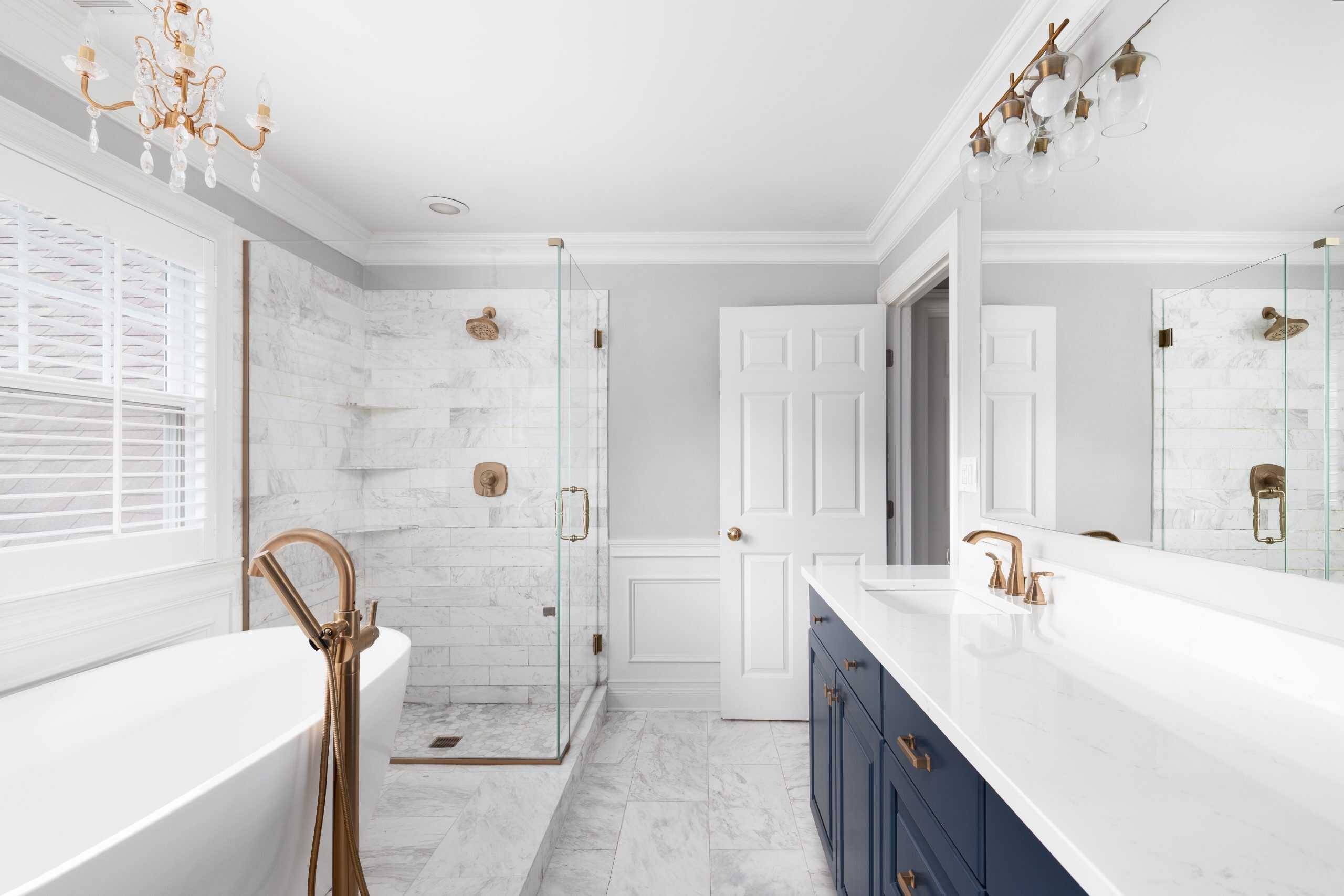
On the design side, we work with what the space actually calls for. That might mean wall-mounted fixtures and recessed storage in a compact prewar bathroom, or a full spa layout with a rainfall shower, heated floors, and a soaking tub in a loft-style unit where the square footage allows for it. Either way, the finishes are chosen to hold up in Manhattan’s humidity and to meet the aesthetic standard of a neighborhood that lives next to some of the best hospitality design in the city.
Do I need co-op board approval before renovating my bathroom in Madison Square?
Yes and in most Madison Square and NoMad co-ops, board approval comes before anything else, including the NYC DOB permit filing. Your board will typically require architectural plans, a signed alteration agreement, proof of contractor insurance that meets your building’s specific requirements, and sometimes a refundable damage deposit. Some boards also require a contractor interview before granting approval.
This process takes time, and it’s one of the most common reasons bathroom renovations in Madison Square get delayed before construction even starts. The key is having a contractor who knows what co-op boards are looking for and can prepare the documentation correctly the first time. Incomplete submissions get sent back, and that adds weeks. We’ve been through this process in buildings throughout the Flatiron and NoMad area, and we prepare the full documentation package upfront so your board has what it needs to move forward without going back and forth.
What is the wet-over-dry rule, and does it affect my bathroom renovation?
The wet-over-dry rule is a restriction enforced by most co-op buildings in New York City including the majority of buildings in the Madison Square and Flatiron area that prohibits expanding a bathroom or kitchen so that it sits above a “dry” space, like a living room or bedroom, in the apartment below. The concern is water damage liability: if your plumbing runs over someone else’s ceiling and something goes wrong, the consequences are significant for everyone involved.
This rule directly affects what you can and can’t do with your bathroom layout. If you’re hoping to expand the footprint of the space or relocate plumbing to a different wall, the wet-over-dry rule may constrain those options depending on what’s directly below you. A contractor who doesn’t know this rule or who designs around it without proper waterproofing creates real liability for you. We design with this rule in mind from the first conversation, so your renovation plan is board-ready and structurally sound before we ever file a permit.
How long does a bathroom renovation actually take in a Manhattan apartment?
The honest answer is that the construction phase the actual work happening inside your apartment typically runs four to eight weeks depending on scope. But the full timeline from first conversation to finished bathroom is usually two to four months, sometimes longer, because of everything that has to happen before a single tile goes up.
In Manhattan, you’re working through co-op or condo board approval, DOB permit filing, and in some cases an asbestos assessment before demolition can begin. Permit approval alone can take two to six months for complex alterations, which is why starting the process early matters. The buildings in the Madison Square area also have construction hour restrictions typically 8 a.m. to 5 p.m. on weekdays which affects daily progress. We factor all of this into the timeline we give you upfront so there are no surprises halfway through the project.
Does my Madison Square building require an asbestos test before bathroom demolition?
If your building was constructed before 1978 which applies to nearly every prewar structure in Madison Square, Flatiron, and NoMad NYC DOB rules require an Asbestos Assessment Report before any demolition work begins. This isn’t optional, and it’s not something to skip. Asbestos in this era of buildings is commonly found in pipe insulation, floor tiles, wall plaster, and joint compound. It’s a real and frequent discovery in buildings from the 1870s through the 1930s, which make up the majority of the residential stock in Madison Square.
If asbestos is identified during the assessment, it has to be properly remediated before demo proceeds. Most contractors stop the project at that point and refer you to a separate remediation company, which adds cost, time, and an unfamiliar crew in your building. We handle asbestos remediation in-house, which means if something turns up, we deal with it on the same timeline without halting your project or bringing in outside parties your board hasn’t vetted.
How much does a bathroom remodel cost in a prewar Manhattan co-op?
Bathroom renovation costs in Manhattan run 30 to 50 percent above the national average, and prewar buildings in the Madison Square area tend to sit at the higher end of that range. A midrange bathroom renovation in this market typically falls between $25,000 and $50,000 depending on scope, materials, and what’s discovered behind the walls during demolition. Full gut renovations with high-end finishes heated floors, custom tile, a soaking tub, or a walk-in rainfall shower can go higher.
The reason prewar buildings cost more isn’t arbitrary. Cast-iron plumbing systems, thick concrete subfloors, and solid plaster walls all take more time and skill to work with than modern drywall construction. It’s also standard practice to carry a contingency budget of 15 to 20 percent above your initial estimate in buildings of this age, because hidden conditions are common and it’s better to be prepared than caught off guard mid-project. We give you a clear, itemized estimate before work begins so you know exactly what you’re committing to.
What should I look for when hiring a bathroom remodel contractor in Madison Square, NY?
The most important thing to verify in this market is whether the contractor has actually worked in Manhattan co-ops and condos before not just in New York generally, but specifically in buildings with board approval requirements, DOB permit filings, and the kind of regulatory complexity that’s standard in the Flatiron and NoMad area. Ask them directly: have they filed an ALT-2 permit before? Do they know the wet-over-dry rule? Can they prepare the full alteration agreement documentation your board requires? If they hesitate on any of those questions, that’s your answer.
Beyond regulatory experience, look for a contractor who handles all trades in-house. In a building like the ones surrounding Madison Square Park, every additional subcontractor means another insurance certificate to review, another unfamiliar crew in your lobby, and another variable that can delay or complicate your project. A single-contractor operation with environmental remediation capability meaning we can handle asbestos or mold if it comes up during demo is the cleanest, lowest-risk option for a building of this age and complexity.