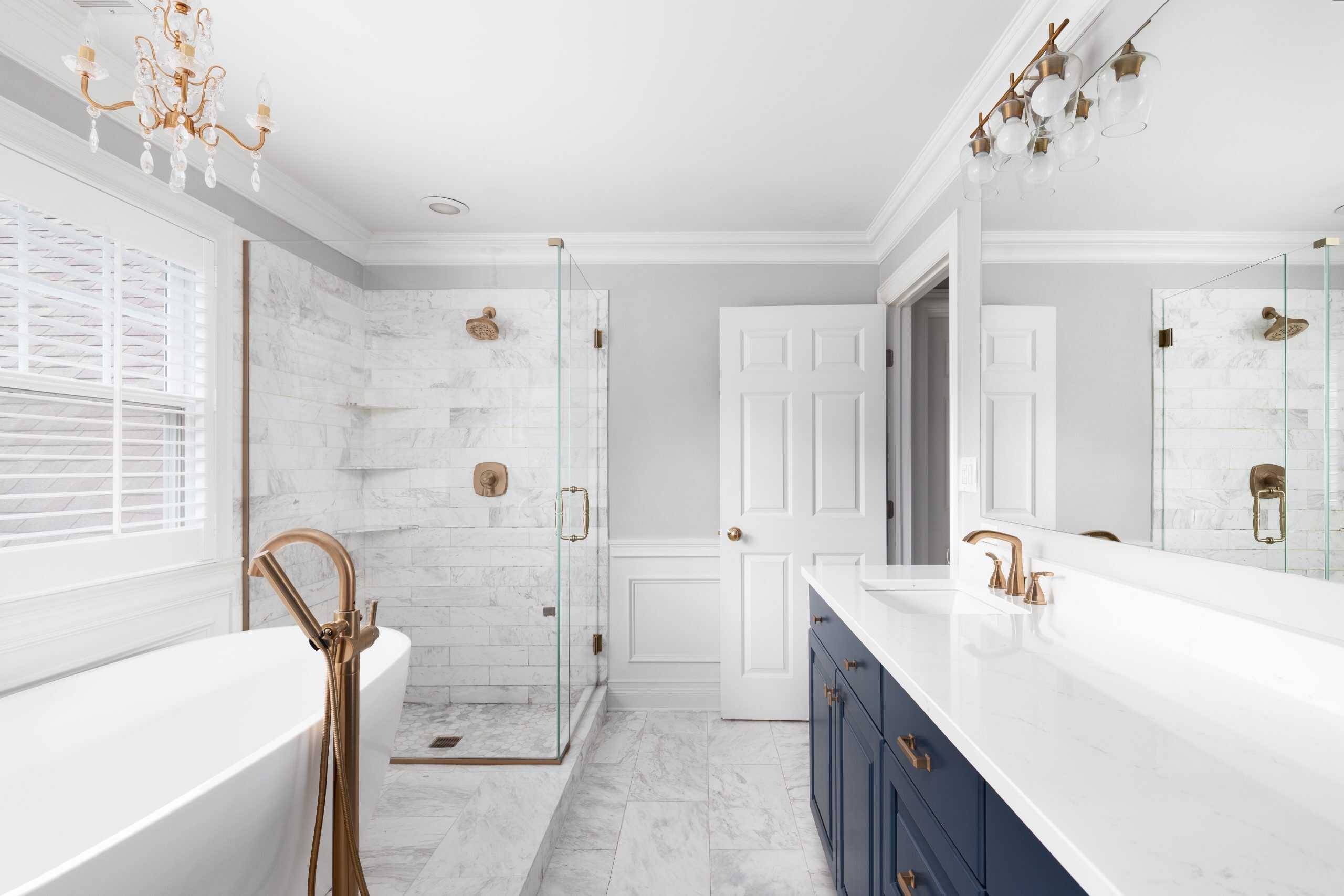
Manhattan Bathrooms Demand More Than a Standard Contractor
From pre-war co-ops on the Upper West Side to new condos in Hudson Yards, bathroom remodeling in Manhattan is its own category and we’re built for exactly that.
I needed a professional consultation explanation of procedure for safe removal of Asbestos in my apartment complex. Without having an account yet, I was very impressed with the caring, knowledgeable and generous advice offered by Jessica, and will look forward to doing business in the future. Thank you so much! I feel much more informed about a sometimes scary endeavor. Peace. Nancy Silva Mineola, NY.
Mia Munoz
Used this company to clean up some water flood in my house. They were fast and easy to work with.very professional, Would recommend to anyone!
Nini Valle
Great company, had a flood and they responded quickly and efficiently. Billed my insurance company directly. I highly recommend this company!
joe colapietro, jr
I had pipe freeze in my basement right before a snow storm and they made to within an hour to help start the clean up process. They we by our side throughout the entire process and even helped with the insurance company. They did such a great job with the cleanup, repair, remidiation, I contracted them to perform the repairs and finishes in the basement. They came with enough manpower and material to get the job done. Leo and Jessica were nothing but a pleasure to deal with!!
Cristian Arredondo c
I had some water damage in my home and Green Island was able to take care of my issue quickly and effectively. I am very pleased with the work they did. They responded quickly and were very professional.
Michael M
Outstanding service! From the office to the field crew everyone was friendly, helpful and responsive. I highly recommend Green Island Group.
What Changes When the Right Contractor Handles Your Manhattan Bathroom
Renovating a bathroom in Manhattan is not like doing it anywhere else. You’re not just dealing with a contractor you’re dealing with a co-op board, a building manager, a DOB permit timeline, freight elevator windows, and neighbors on both sides of your walls. When all of that is managed for you, the project actually moves. You’re not chasing down a plumber while your electrician waits.
Manhattan’s pre-war building stock concentrated in neighborhoods like Carnegie Hill, Gramercy Park, and the Upper West Side brings its own set of surprises behind the walls. Aging galvanized pipes, original BX electrical wiring, plaster-and-lath construction, and in many cases, asbestos-containing materials that most contractors aren’t certified to handle. When those things get discovered mid-demolition, a contractor without remediation credentials stops the job. We keep going.
The result on the other side of a well-managed renovation is straightforward: a bathroom that functions the way your apartment’s price tag suggests it should, built to hold up in Manhattan’s humid climate, properly waterproofed so your downstairs neighbor stays out of it, and finished to a standard that actually moves the needle when it’s time to sell.
One Company That Handles What Manhattan's Older Buildings Actually Require
We’re a full-service remodeling and environmental restoration company serving Manhattan and the broader New York City area. What makes the difference here isn’t just the renovation work it’s our remediation background. As a certified restoration company, we handle asbestos abatement, mold remediation, and water damage in-house, which matters enormously in a borough where pre-war construction is the norm and aging plumbing stacks affect entire buildings at once.
From the Financial District up through Inwood, our team has worked inside Manhattan’s co-op and condo buildings navigating alteration agreements, DOB filings, building management coordination, and the tight scheduling windows that come with apartment renovations in this city. That’s not a learning curve we’re still on. It’s operational experience that protects your timeline and your deposit.
How a Manhattan Bathroom Remodel Actually Runs From Permit to Finished Tile
It starts with a real conversation about your space, your building, and what you’re trying to accomplish. Before any design decisions are made, the practical constraints get mapped out whether your building allows layout changes, what the wet-over-dry restrictions look like, and whether your scope requires a full Alteration Type 2 permit through the NYC Department of Buildings or qualifies for a simpler Limited Alteration Application. That distinction alone affects your timeline by months, and it gets sorted before you commit to anything.
From there, the permit documentation gets prepared and filed. In Manhattan, that process typically takes two to six months for full permit applications, and that window gets built into your project schedule honestly not glossed over. While permits are in motion, material selections, fixture sourcing, and building management coordination happen in parallel so no time is wasted.
Once work begins, every trade demolition, plumbing, electrical, waterproofing, tile, and fixture installation runs under one roof. Freight elevator scheduling, building work hour compliance (typically 8 AM to 5 PM, Monday through Friday), and daily site management are handled directly. If demolition reveals something unexpected behind the walls and in Manhattan’s older buildings, it often does the remediation capability is already on the team. The job doesn’t stop.
Everything Your Manhattan Bathroom Renovation Actually Requires
A bathroom renovation in Manhattan involves more line items than most people expect going in. Beyond the visible work tile, fixtures, vanity, lighting there’s the permit filing, the co-op or condo board alteration agreement package, the insurance certificate naming your specific building as additionally insured, and the contingency budget that should be sitting at 15 to 20 percent of your total project cost. These aren’t optional details. They’re what separates a renovation that closes cleanly from one that triggers a stop-work order or a board dispute.
We cover the full scope: demolition, plumbing, electrical, waterproofing, custom tile work, fixture installation, and final cleanup. For Manhattan apartments specifically where bathrooms in Hell’s Kitchen studios or Murray Hill one-bedrooms often run 40 to 50 square feet the design approach matters as much as the construction. Wall-mounted toilets, floating vanities, recessed medicine cabinets, and large-format tile are practical choices in tight spaces, not just aesthetic ones, and they get specified with that intent.
For projects triggered by water damage a leak from an upstairs neighbor, a failing pipe inside the wall, a tile failure that’s allowed moisture to reach the subfloor our remediation background means the restoration and the renovation happen together. One contract, one team, one timeline. In a building where a bathroom leak can affect multiple floors and trigger building-wide liability, that matters more than most people realize until they’re in the middle of it.
Do I need board approval to remodel my bathroom in a Manhattan co-op?
In almost every Manhattan co-op, yes and the process is more involved than most people expect. Before any work begins, you’ll need to submit a formal alteration agreement package to the board. That typically includes a set of architectural drawings, proof of your contractor’s licensing and insurance, a certificate of insurance that names the building as additionally insured, a signed agreement committing to the building’s specific work rules, and often a security deposit held against potential damage to common areas.
The board review process can take several weeks on its own, and some buildings require a separate sign-off from building management before the board even sees the package. Getting that documentation prepared correctly the first time with the right insurance language, the right plan format, and the right contractor credentials is what keeps the project from stalling before demolition even starts. We prepare this package as part of the project, not as an afterthought.
How much does a full bathroom renovation typically cost in Manhattan, NY?
A full gut renovation in Manhattan generally runs between $18,000 and $74,000 depending on the scope, the finishes you select, and the condition of what’s behind the walls. That range is wide because what gets discovered during demolition varies significantly especially in pre-war buildings throughout the Upper East Side, Upper West Side, and Gramercy Park, where original plumbing and electrical systems are still common.
On top of the core renovation costs, Manhattan-specific expenses add up quickly. Building permits through the NYC DOB typically run $500 to $3,000. Co-op or condo board fees can add another $500 to $2,000. Freight elevator charges, after-hours labor premiums, and material delivery logistics in a dense urban environment all factor in. A realistic contingency budget sits at 15 to 20 percent of your total project cost not because something will definitely go wrong, but because in Manhattan’s older building stock, surprises during demolition are common enough that planning for them is just smart.
What permits are required for a bathroom renovation in Manhattan?
It depends on what you’re changing. If you’re replacing fixtures in the same location without touching the plumbing layout or electrical system, you may qualify for a Limited Alteration Application a simpler filing process with the NYC Department of Buildings. But if you’re relocating plumbing, modifying electrical, or making any structural changes, you’ll need a full work permit, and in many cases an Alteration Type 2 permit, which requires a licensed Registered Architect or Professional Engineer to prepare and submit the application as the Applicant of Record.
One thing worth knowing upfront: the NYC DOB permit approval timeline for full applications commonly runs two to six months. That’s not a contractor problem it’s the city’s process, and it needs to be built into your project schedule honestly. Trying to work around it or start without proper permits in a Manhattan building is a fast way to a stop-work order, a board dispute, and a much more expensive outcome than the permit itself would have cost.
Can I move my bathroom to a different location in my Manhattan apartment?
Technically, it may be possible but in most Manhattan co-op buildings, it’s restricted by what’s commonly called the wet-over-dry rule. This rule, enforced by the vast majority of co-op boards across the borough, prohibits relocating a wet room like a bathroom or kitchen to a position directly above a dry room a bedroom or living area in the unit below. It’s not a written city code, but it’s a near-universal building governance requirement that effectively limits how much you can change your bathroom’s footprint.
Even in condominiums where the wet-over-dry rule is less rigidly applied, relocating a bathroom involves tapping into the building’s plumbing stack, which requires building management approval and careful coordination with the riser system that serves your neighbors above and below. Before any layout change is designed or priced, it’s worth confirming with building management exactly what’s permitted in your specific building. That conversation happens at the start of a project with us not after plans are drawn.
What happens if asbestos or mold is found during bathroom demolition in Manhattan?
In Manhattan’s pre-war buildings which make up a significant share of the residential stock in neighborhoods like Morningside Heights, Carnegie Hill, and the Upper West Side finding asbestos-containing materials during demolition is not unusual. Pipe insulation, floor tile adhesive, and ceiling compounds from buildings constructed before the 1980s can all contain asbestos. When a standard contractor hits that, the job stops while they locate a separate certified remediation specialist, which can add weeks and thousands of dollars to your timeline.
We carry environmental remediation certification in-house, which means asbestos abatement, mold remediation, and water damage restoration are handled by our team doing your renovation not a separate company brought in after the fact. The work gets documented properly, the hazardous materials get removed according to NYC and EPA requirements, and the project keeps moving. For a Manhattan homeowner already managing a tight schedule and a building management relationship, that continuity is not a small thing.
How long does a bathroom renovation take in a Manhattan apartment building?
The construction phase of a Manhattan bathroom renovation the actual demolition, plumbing, electrical, tile, and fixture work typically runs two to four weeks for a standard apartment bathroom, assuming the scope is well-defined and no major surprises come up during demolition. For larger bathrooms or more complex scopes, four to six weeks is realistic.
What extends the overall timeline in Manhattan is everything that happens before construction starts. If your project requires a full NYC DOB permit application, factor in two to six months for approval. Co-op board alteration agreement review can add several more weeks. Material lead times for specialty fixtures or custom tile can run four to eight weeks depending on what’s specified. The honest answer is that a Manhattan bathroom renovation from first conversation to finished product often takes four to eight months when you account for the full regulatory and logistical process and any contractor who tells you otherwise without addressing the permit timeline is skipping over the part that matters most. We build that full timeline into the project plan from day one so you’re not caught off guard halfway through.