I needed a professional consultation explanation of procedure for safe removal of Asbestos in my apartment complex. Without having an account yet, I was very impressed with the caring, knowledgeable and generous advice offered by Jessica, and will look forward to doing business in the future. Thank you so much! I feel much more informed about a sometimes scary endeavor. Peace. Nancy Silva Mineola, NY.
Mia Munoz
Used this company to clean up some water flood in my house. They were fast and easy to work with.very professional, Would recommend to anyone!
Nini Valle
Great company, had a flood and they responded quickly and efficiently. Billed my insurance company directly. I highly recommend this company!
joe colapietro, jr
I had pipe freeze in my basement right before a snow storm and they made to within an hour to help start the clean up process. They we by our side throughout the entire process and even helped with the insurance company. They did such a great job with the cleanup, repair, remidiation, I contracted them to perform the repairs and finishes in the basement. They came with enough manpower and material to get the job done. Leo and Jessica were nothing but a pleasure to deal with!!
Cristian Arredondo c
I had some water damage in my home and Green Island was able to take care of my issue quickly and effectively. I am very pleased with the work they did. They responded quickly and were very professional.
Michael M
Outstanding service! From the office to the field crew everyone was friendly, helpful and responsive. I highly recommend Green Island Group.
Manhattanville is changing fast. Columbia’s campus is up and running, the Factory District is drawing people in, and property values have followed. But a lot of the apartments the pre-war buildings along Broadway, the brownstones tucked between Amsterdam and Convent still have bathrooms that look exactly like they did in 1987. That gap is what we close.
A renovated bathroom in this neighborhood does more than look better. It makes your apartment more livable, more leasable, and more valuable in a market that’s actively appreciating. Whether you’re preparing to sell, refinancing to reinvest, or just tired of starting every morning in a space that doesn’t work the return here is real. Zillow data puts cosmetic bathroom upgrades at $1.71 back for every dollar spent. In a neighborhood on this kind of trajectory, that math only gets better.
Beyond the money, there’s the day-to-day reality. A properly waterproofed shower, fixtures that actually function, tile that doesn’t crack underfoot these aren’t luxury upgrades. In a building where your floor is someone else’s ceiling, a bathroom done right protects you and your neighbors. That’s the outcome. Not just a prettier room, but a room that works the way it should.
We’re a full-service remodeling and restoration contractor serving Manhattan and the surrounding boroughs. We handle every phase of a bathroom renovation in-house demolition, plumbing, electrical, waterproofing, tile, fixtures, and final cleanup. No subcontractor handoffs. No gaps in communication. One crew, one timeline, one point of contact from start to finish.
What makes us different in Manhattanville specifically is what we know how to handle before the demo even starts. These pre-war buildings the ones running up Broadway toward 135th, the brownstones near Grant’s Tomb, the older walk-ups throughout Community District 9 they don’t always reveal what’s behind the walls until you open them up. Galvanized pipes, deteriorated waterproofing, the occasional asbestos-containing floor tile. Our background in environmental remediation means we’re equipped to deal with those discoveries without stopping the job or calling in a separate specialist.
We also know the regulatory side of doing this work in Manhattan. DOB permit filings, co-op alteration agreements, Licensed Master Plumber coordination we manage all of it so you’re not learning a new system mid-project.
From Board Approval to Final Tile Here's the Process
In Manhattan, a bathroom renovation doesn’t start with demo. It starts with paperwork. For most projects in Manhattanville whether you’re in a co-op on Riverside Drive, a condo near the Columbia campus, or a privately owned brownstone we begin by preparing your permit documentation and, if applicable, your building’s alteration agreement package. That means the ALT-2 application with the NYC Department of Buildings, insurance certificates formatted to your building’s specific requirements, and any architectural plans your board needs to review. We’ve done this enough times to know what stalls a filing and what moves it forward.
Once approvals are in place, we move to demolition. This is where older buildings can surprise you and where our remediation background matters. If we open a wall and find mold, or pull up a floor and encounter asbestos-containing tile, we handle it properly, in-house, without turning it into a separate project or a second contract. We document everything and keep you informed.
From there, the renovation follows a logical sequence: rough plumbing and electrical, waterproofing, cement board, tile installation, fixture installation, and finish work. Our Licensed Master Plumber schedules all required DOB inspections. You get a realistic timeline at the start typically four to eight weeks of active construction once permits are issued and we stick to it. No radio silence after the deposit clears.
Bathroom Renovations and Remodeling in Manhattanville
Built for Manhattan Apartments, Not Showroom Floor Plans
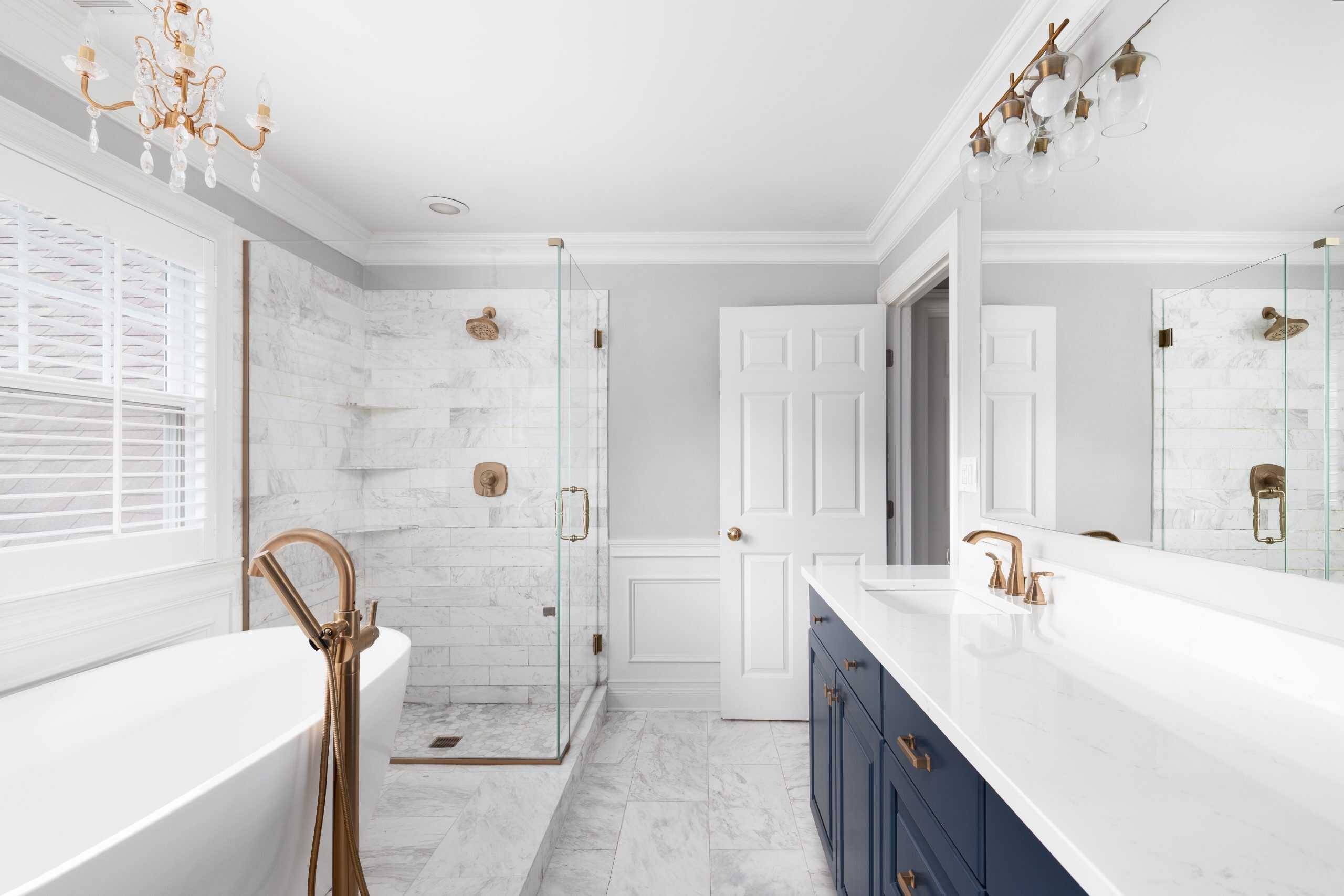
The average New York City bathroom runs about 40 square feet. In Manhattanville’s pre-war apartments, you’re often working with less narrow footprints, awkward fixture layouts, no natural light. That’s not a limitation we work around. It’s a design problem we actually know how to solve. Wall-mounted toilets, floating vanities, recessed shower niches, frameless glass enclosures, and well-placed lighting can make a small bathroom feel like a completely different space without moving a single wall or blowing your budget on structural changes.
Every bathroom renovation we do includes full demolition and debris removal, rough and finish plumbing, electrical work, waterproofing, cement board installation, tile work, fixture installation, and a complete final clean. We handle all DOB permit filings and coordinate directly with your building’s management or board. If your building requires proof of insurance in a specific format which most co-ops and condos in this area do we provide it.
On budget: a full bathroom renovation in Manhattan typically runs between $15,000 and $40,000 depending on scope and finishes. We also recommend building in a 15 to 20 percent contingency for older buildings, because what’s behind the walls in a pre-war Manhattanville apartment is rarely a surprise in your favor. We tell you that upfront, not mid-project.
Do I need a permit for a bathroom renovation in Manhattanville, NY?
Yes in almost every case. Any bathroom renovation in Manhattan that involves relocating plumbing fixtures, modifying electrical, or making changes to building systems requires an Alteration Type 2 (ALT-2) permit filed with the NYC Department of Buildings. This isn’t optional, and it’s not something you can skip and sort out later. Unpermitted work in a co-op or condo can create serious problems at resale and in a building where your neighbors share walls, floors, and ceilings, an unpermitted plumbing change that causes water damage becomes a liability issue fast.
Beyond the DOB filing, most buildings in Manhattanville particularly the pre-war co-ops and condos throughout Community District 9 also require a signed alteration agreement from the building’s board before any work begins. That process typically involves submitting contractor insurance certificates, architectural plans, and a project description for board review. We prepare all of this documentation and manage the filing process directly, so you’re not navigating the DOB’s online portal on your own or learning what an ALT-2 application requires mid-project.
How long does a bathroom renovation actually take in a Manhattan apartment?
The honest answer is longer than most contractors will tell you upfront and that’s because most of the timeline isn’t construction, it’s permitting. For a standard bathroom renovation in a Manhattanville apartment, you should plan for 10 to 16 weeks from the time you submit your board alteration packet to the time you have a DOB sign-off in hand. The active construction phase demo through finish work typically runs four to eight weeks once permits are issued.
The variables that affect timeline in this neighborhood specifically are worth knowing. If your building’s board meets monthly, a submission that misses the meeting date can add four to six weeks before approval is even granted. If the DOB flags your filing for additional review, that adds time too. And if demo reveals infrastructure issues which is common in pre-war buildings throughout this area the scope may expand. We build realistic timelines from the start and account for these variables rather than promising a fast turnaround that falls apart once the job is underway.
What tends to go wrong inside the walls of older Manhattanville apartments?
Quite a bit, and it’s worth knowing before you start. Manhattanville’s residential building stock the pre-war apartment buildings along Broadway, the brownstones near the Factory District, the older walk-ups throughout the neighborhood was constructed in an era when galvanized steel supply lines and cast-iron drain stacks were standard. Galvanized pipes corrode from the inside out over decades, restricting water pressure and eventually failing. Cast-iron stacks can crack or separate at joints. Neither shows up on the surface until you open a wall.
Waterproofing is another common issue. Older bathrooms in this area were often tiled directly over materials that were never designed to handle long-term moisture exposure. When that fails and it does water migrates through the floor assembly and into the apartment below. In a dense multi-unit building, that’s not just a repair problem, it’s a neighbor dispute and a potential insurance claim. We assess the existing waterproofing layer during demo and replace it entirely when needed, using a membrane system that meets current code. Our background in mold remediation and water damage restoration means we’re equipped to handle what we find, not just document it and hand it off.
How much does a bathroom remodel cost in Manhattanville, NY?
For a full bathroom renovation in Manhattan, the realistic range is $15,000 to $40,000 and sometimes more, depending on the scope of work, the condition of the existing infrastructure, and the finish level you’re going for. NYC labor and material costs run roughly 30 to 50 percent above the national average, which is why the numbers here look different from what you might see on a national home improvement website.
The most important thing to understand about cost in Manhattanville specifically is the contingency. Industry standard for NYC bathroom renovations is a 15 to 20 percent buffer above your base estimate and in a pre-war building, that buffer is not just a formality. It accounts for what demo reveals: corroded supply lines that need full replacement, failed waterproofing that has to come out before new tile goes in, or asbestos-containing materials in original floor tile that require proper handling before work can continue. A contractor who quotes low without discussing contingency is setting you up for a mid-project conversation you don’t want to have. We build that number into the estimate from the start and explain exactly what it covers.
Can we handle a bathroom renovation in a Manhattanville co-op or condo building?
Yes and navigating co-op and condo buildings is something we do regularly. Most of the residential buildings in Manhattanville that aren’t NYCHA or private rentals operate under co-op or condo governance structures, and each one has its own alteration agreement with its own requirements. Some buildings want a full set of architectural drawings. Some require proof of a Licensed Master Plumber on the project. Most require contractor insurance certificates in a specific format that names the building’s management company and board as additional insureds.
We prepare all of that documentation. We coordinate directly with your building’s management office, submit the alteration agreement package on your behalf, and handle any follow-up the board requests. We’ve been through this process enough times to know what a board is actually looking for and how to present a project in a way that moves through approval cleanly rather than getting kicked back for missing paperwork. If you’re not sure what your building requires, we can help you figure that out before you commit to a start date.
Is now actually a good time to renovate a bathroom in Manhattanville?
For most homeowners in this neighborhood, yes and the timing has a few things working in its favor. Property values in Manhattanville have risen meaningfully over the past several years, driven largely by Columbia University’s Manhattanville campus coming fully online, the Columbia Business School relocating there, and the broader investment activity that followed. That appreciation has created a real financial case for renovation that didn’t exist in the same way a decade ago. A bathroom that felt like a low-priority update in 2015 is now a direct factor in what your apartment appraises for and how quickly it sells.
From a scheduling standpoint, the winter months January and February specifically tend to offer better contractor availability and more scheduling flexibility than the spring surge that hits every year once the weather turns. If you want a completed bathroom by summer, starting the permitting and consultation process in early winter puts you in a realistic position to hit that window. The DOB processing timeline alone typically several weeks for an ALT-2 filing means waiting until March or April to start the process usually pushes your project into late summer at best. Getting the paperwork moving early is genuinely the most useful thing you can do to control your timeline.