I needed a professional consultation explanation of procedure for safe removal of Asbestos in my apartment complex. Without having an account yet, I was very impressed with the caring, knowledgeable and generous advice offered by Jessica, and will look forward to doing business in the future. Thank you so much! I feel much more informed about a sometimes scary endeavor. Peace. Nancy Silva Mineola, NY.
Mia Munoz
Used this company to clean up some water flood in my house. They were fast and easy to work with.very professional, Would recommend to anyone!
Nini Valle
Great company, had a flood and they responded quickly and efficiently. Billed my insurance company directly. I highly recommend this company!
joe colapietro, jr
I had pipe freeze in my basement right before a snow storm and they made to within an hour to help start the clean up process. They we by our side throughout the entire process and even helped with the insurance company. They did such a great job with the cleanup, repair, remidiation, I contracted them to perform the repairs and finishes in the basement. They came with enough manpower and material to get the job done. Leo and Jessica were nothing but a pleasure to deal with!!
Cristian Arredondo c
I had some water damage in my home and Green Island was able to take care of my issue quickly and effectively. I am very pleased with the work they did. They responded quickly and were very professional.
Michael M
Outstanding service! From the office to the field crew everyone was friendly, helpful and responsive. I highly recommend Green Island Group.
What a Finished Bathroom Actually Means in Sag Harbor
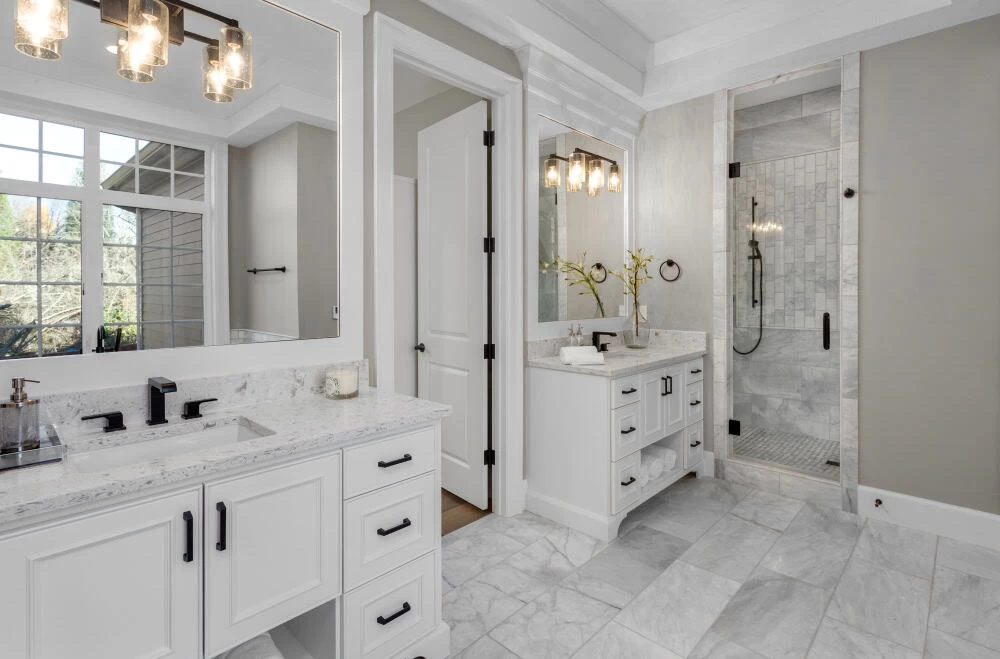
A bathroom renovation in Sag Harbor isn’t the same as one anywhere else on Long Island. You’re dealing with homes that in many cases predate World War II, salt air that accelerates grout failure and fixture corrosion faster than any inland property, and a Historic District permitting process that can stall an unprepared contractor before a single tile comes off the wall. When the renovation is done right, you’re not just looking at a new bathroom you’re looking at a space that was built for the environment it actually lives in.
That means waterproof membranes behind every tile installation, not just caulk and hope. It means ventilation that accounts for Gardiners Bay humidity, not the spec that works fine in Holbrook. For the significant portion of Sag Harbor residents who are 65 or older, it also means a bathroom designed around how you actually use it walk-in showers, grab bars positioned correctly, comfort-height fixtures, and lighting that does its job. These aren’t add-ons. They’re what a bathroom remodel in this village should include by default.
If your home is a seasonal property, a well-executed renovation pays for itself in rental income alone. Hamptons rental platforms reward listings with spa-caliber bathrooms with meaningfully higher nightly rates and Sag Harbor’s real estate market has shown some of the strongest price appreciation on the entire South Fork. A bathroom that matches the value of your home isn’t a luxury. It’s the baseline.
The Credentials to Handle What Other Contractors Can't
We’ve completed over 5,000 restoration and remodeling projects across New York State. That’s not a number we throw out to sound impressive it’s the reason we don’t get rattled when demolition in a 19th-century Sag Harbor home reveals asbestos floor tile, lead paint behind the trim, or mold that’s been growing behind original tilework for decades. Most remodeling contractors have to stop work when that happens. We hold active licenses for asbestos abatement, lead-based paint abatement, and mold remediation. We keep going.
We’re based in Suffolk County, and we understand the East End. We know what pre-1940 construction looks like from the inside. We know the Sag Harbor Building Department’s permit process, what triggers a review by the Board of Historic Preservation and Architectural Review, and what it means when a property near Otter Pond or the bay requires additional wetlands review before work can begin. You shouldn’t have to explain any of that to your contractor. We already know it.
No Surprises Here's Exactly How Your Sag Harbor Bathroom Project Moves Forward
It starts with a walkthrough. Before anything is quoted or scheduled, we look at what you actually have the layout, the plumbing configuration, the age of the home, and any visible signs of moisture damage or material concerns. In Sag Harbor’s older housing stock, that first look matters. A bathroom that appears straightforward on the surface can tell a different story once you know what to look for in a home built before 1940.
From there, we handle the permits. That means the building permit application with the village’s Building Department, and if your renovation involves any exterior-facing changes venting, window modifications, anything visible from the street coordination with the Board of Historic Preservation and Architectural Review as well. Typical permit processing in Sag Harbor runs two to four weeks for a complete application. We factor that into your project timeline from day one, so it doesn’t become a surprise delay mid-project.
Once permits are in hand, demolition begins. If hazardous materials turn up and in pre-1978 homes, there’s a real chance they will we handle abatement in-house under the same contract, without stopping the job. From there, it’s rough plumbing, electrical, waterproofing, tile, fixtures, and finish work, in the right order, inspected at each stage. When we’re done, you have a completed bathroom with a proper Certificate of Occupancy no open permits, no code issues to resolve at your next sale.
A bathroom renovation with us covers the full scope demo, plumbing reconfiguration, electrical, waterproofing, tile installation, vanity and fixture selection, shower enclosures, and final finish work. If the renovation is triggered by water damage or a covered insurance loss, we document the damage, work directly with your carrier, and transition from restoration to full remodel under one contract. For Sag Harbor homeowners whose seasonal property sat unoccupied over winter and came back to a burst pipe or a slow leak that went undetected for months, that capability matters more than almost anything else.
For homes in the Historic District whether you’re on Main Street, near Long Wharf, or in one of the older sections of the village we approach material selection and scope with the character of the home in mind. That doesn’t mean you’re limited in what you can do. It means the work is done thoughtfully, with an understanding of what the village’s preservation standards require and what the home deserves.
We also serve the surrounding communities that consider themselves part of the Sag Harbor area North Haven, Noyac, and Northwest Harbor included. Whether you’re updating a modest cottage in Azurest, renovating a waterfront estate in North Haven, or finishing out a unit at The Watchcase, the standard of work doesn’t change. Licensed, insured, fully permitted, and built to last in the environment it’s actually in.
Do I need a permit to remodel a bathroom in Sag Harbor, NY?
Yes any bathroom renovation in Sag Harbor that involves plumbing modifications, electrical work, or structural changes requires a building permit from the Sag Harbor Building Department. This applies whether you’re doing a full gut renovation or reconfiguring an existing layout. The permit process typically takes two to four weeks for a complete application, so it needs to be factored into your project schedule from the start, not treated as an afterthought.
If your home is within the Historic District and the renovation involves any exterior-facing elements a new vent, a window modification, anything visible from the street you’ll also need a Certificate of Appropriateness from the Board of Historic Preservation and Architectural Review before the building permit can be issued. That adds a layer to the timeline that surprises homeowners who aren’t familiar with the process. Properties near Otter Pond or the bay may require wetlands review and Harbor Committee approval as well. A contractor who doesn’t know this going in will cost you time.
What happens if asbestos or lead paint is found during my bathroom remodel?
In Sag Harbor, this isn’t a hypothetical. A significant portion of the village’s housing stock was built before 1940, and homes constructed before 1978 may contain lead-based paint. Asbestos-containing materials floor tile, adhesives, pipe insulation were common in construction through the late 1970s and into the early 1980s. When you’re gutting a bathroom in an older Sag Harbor home, there’s a real chance you’ll encounter one or both.
Under New York State law, any renovation work that disturbs asbestos-containing materials requires a licensed asbestos contractor and specific disposal protocols. The EPA’s Renovation, Repair and Painting Rule also requires certified contractors for lead paint disturbance in pre-1978 homes. Most remodeling contractors aren’t licensed for either which means they have to stop work, bring in a third party, and leave you with a half-demolished bathroom while the scheduling gets sorted out. We hold active licenses for asbestos abatement, lead-based paint abatement, and mold remediation. When something turns up during demo, we handle it in-house and keep the project moving.
How much does a bathroom remodel typically cost in Sag Harbor, NY?
National averages don’t apply here. A midrange bathroom remodel nationally runs around $26,000, but in a market like Sag Harbor where median home values approach $3 million and the expectations for finishes reflect that a realistic midrange renovation starts closer to $40,000 and moves up from there. A full gut renovation with custom tile, natural stone, a frameless glass enclosure, and high-end fixtures in a primary bathroom can run $70,000 to well over $100,000 depending on scope and materials.
The more useful question is what a well-executed bathroom renovation does for your property. In a market showing the kind of price appreciation Sag Harbor has seen recently, a bathroom that matches the value of the home is a financial decision as much as an aesthetic one. If you’re renting the property during summer season, a renovated primary bathroom directly increases what the market will bear on nightly rates. The cost of doing it right is real so is the return.
How does Sag Harbor's coastal environment affect a bathroom renovation?
More than most homeowners expect. Salt air and coastal humidity don’t just affect the exterior of a home they work their way into bathrooms through ventilation systems, around window frames, and through any gap in the building envelope. Grout fails faster in this environment. Caulk breaks down sooner. Fixtures corrode at a rate that simply doesn’t happen in inland communities. A bathroom that was installed fifteen years ago in a Sag Harbor home on or near Gardiners Bay may be showing deterioration that would take twenty-five years to appear in a home in Smithtown or Commack.
The practical implication is that how a bathroom is built matters as much as what it looks like. Cement board substrates instead of standard drywall behind tile. Waterproof membranes that actually seal the assembly, not just surface waterproofing. Ventilation sized for the humidity levels the South Fork actually produces. Marine-grade sealants where standard products would fail within a couple of years. These aren’t upgrades they’re what a bathroom renovation in Sag Harbor’s coastal environment requires to hold up.
My Sag Harbor home is a seasonal property how do I plan a bathroom renovation around that?
This is one of the most common situations we work with on the East End. The typical pattern is spring or fall renovation either completing the project before Memorial Day so the home is ready for summer rental or personal use, or starting after Labor Day when the seasonal window closes. Both timelines are workable, but they require a contractor who commits to a schedule and actually keeps it. A project that misses a Memorial Day completion isn’t just inconvenient it’s a direct financial loss if the home was booked.
The other scenario we see regularly is discovery upon return. A homeowner arrives at their Sag Harbor property in April and finds a bathroom that has been dealing with a slow leak, a frozen pipe failure, or moisture infiltration all winter. In those cases, the renovation starts as a damage assessment and insurance claim, not a design conversation. We handle both phases we document the damage, work with your carrier, and transition into the full renovation without you needing to coordinate between separate companies. If you’re managing this from the city, that single point of contact matters.
Does the Sag Harbor Historic District affect what I can do inside my bathroom?
For interior-only renovations, the Historic District designation typically doesn’t restrict what you can do inside your bathroom. The Board of Historic Preservation and Architectural Review the BHPAR primarily governs exterior alterations: changes that are visible from the street or that affect the character of the structure as seen from outside. A new vanity, a tile replacement, a reconfigured shower, updated fixtures none of that triggers BHPAR review on its own.
Where it becomes relevant is when interior work connects to exterior changes. Adding or relocating a bathroom exhaust vent that penetrates an exterior wall, modifying a window, or any structural change that alters the building’s exterior profile will require a Certificate of Appropriateness before the village’s Building Department will issue a building permit. In practical terms, this means your contractor needs to know the distinction and plan the scope accordingly. If your renovation stays entirely interior, the permitting path is straightforward. If it touches the exterior in any way, there’s an additional approval step that needs to be built into the timeline typically several weeks before work can begin.