When Your Kent Home Takes on Water, You Need More Than a Quick Fix
One call gets you emergency response, full drying, and complete restoration — no handoffs, no second contractors, no waiting in a rural market where waiting costs you.
I needed a professional consultation explanation of procedure for safe removal of Asbestos in my apartment complex. Without having an account yet, I was very impressed with the caring, knowledgeable and generous advice offered by Jessica, and will look forward to doing business in the future. Thank you so much! I feel much more informed about a sometimes scary endeavor. Peace. Nancy Silva Mineola, NY.
Mia Munoz
Used this company to clean up some water flood in my house. They were fast and easy to work with.very professional, Would recommend to anyone!
Nini Valle
Great company, had a flood and they responded quickly and efficiently. Billed my insurance company directly. I highly recommend this company!
joe colapietro, jr
I had pipe freeze in my basement right before a snow storm and they made to within an hour to help start the clean up process. They we by our side throughout the entire process and even helped with the insurance company. They did such a great job with the cleanup, repair, remidiation, I contracted them to perform the repairs and finishes in the basement. They came with enough manpower and material to get the job done. Leo and Jessica were nothing but a pleasure to deal with!!
Cristian Arredondo c
I had some water damage in my home and Green Island was able to take care of my issue quickly and effectively. I am very pleased with the work they did. They responded quickly and were very professional.
Michael M
Outstanding service! From the office to the field crew everyone was friendly, helpful and responsive. I highly recommend Green Island Group.
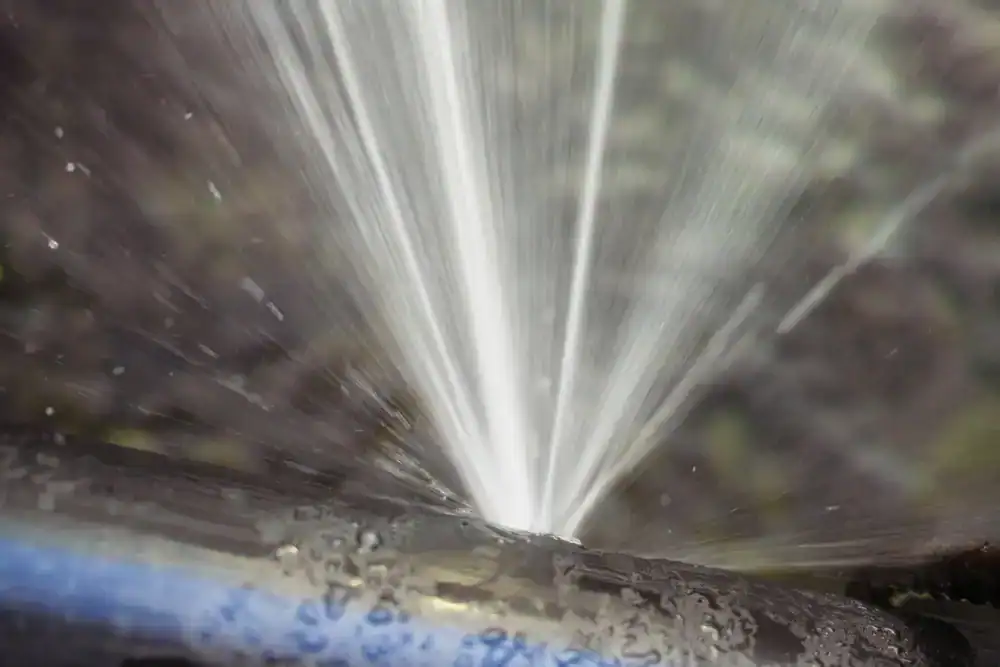
A burst pipe in Kent is not the same problem it would be in a dense Westchester suburb. Homes here sit on wooded lots along country roads, contractors are not around every corner, and a lot of the housing stock — especially around Lake Carmel and Peach Lake — was originally built as a seasonal cottage before someone winterized it decades later. That history matters, because it means older plumbing, under-insulated wall cavities, and pipes running through spaces that were never designed to handle a January cold snap.
When water gets into those walls, the clock starts immediately. Mold can begin growing on wet building materials within 24 to 48 hours — that is what the EPA documents. For year-round residents, that window is tight. For weekend property owners who arrive Friday to find a pipe that let go on Tuesday, the window is already closed. Either way, what you need is someone who can assess the full scope of what happened, extract the water, dry the structure properly, and then actually put the walls back together.
That is what a complete restoration looks like. Not a remediation company that leaves you with open walls and a list of contractors to call. Not a plumber who fixes the pipe and hands you a dehumidifier. The outcome you are paying for is a home that is dry inside the structure, cleared of mold risk, and finished — so you can get back to your life without managing three different vendors across a rural county.
We have been handling water damage, mold remediation, and full restoration work across the Hudson Valley for over 12 years. That includes Putnam County — the older lake communities, the converted bungalows, the rural properties where the nearest competitor might be 45 minutes away and not actually picking up after hours. We know Kent’s housing stock because we have worked in it repeatedly, and we understand the specific vulnerabilities that come with seasonal conversions and aging plumbing systems.
We are NYS and NYC M/WBE certified — a government-audited credential, not a self-designation — and have worked directly with the NYS Office of General Services. That level of accountability carries over into every private job. Our crews are fully insured, including liability and workers’ compensation, and we hold a NYS Mold Remediation Contractor License under Article 32 of the Labor Law, which is a legal requirement in New York, not a marketing badge.
What actually sets us apart for Kent homeowners is the scope. Most restoration companies stop at remediation. We handle everything through finished reconstruction, which means you are not left coordinating a second contractor to rebuild what the water destroyed. One company, one project, one point of contact from the emergency call to the final walkthrough.
From the Emergency Call to a Finished Room — Here Is What Happens
It starts with the call. We operate a real 24/7 emergency dispatch line — not a voicemail that routes to a callback queue the next morning. When you call at midnight in January because water is coming through your ceiling in Kent, someone answers and a crew gets moving. Response time matters more in a rural community than almost anywhere else, and we do not take that for granted.
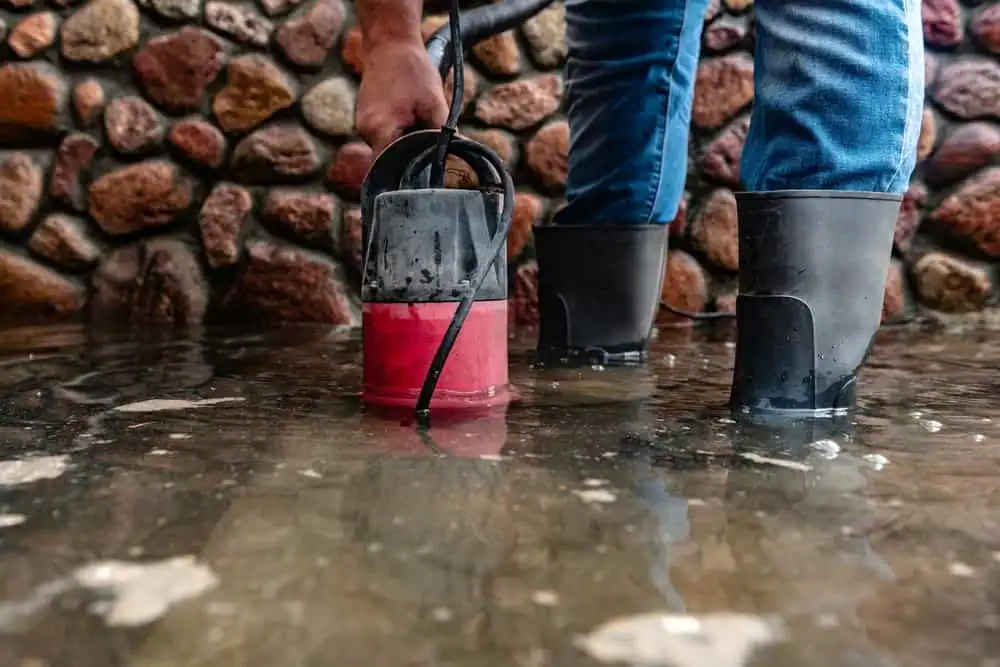
Once on-site, our first priority is stopping ongoing damage and assessing what you are actually dealing with. That means moisture mapping throughout the affected area — not just the visible wet spots, but inside wall cavities, under flooring, and in any adjacent spaces where water may have traveled. In Kent’s older housing stock, water has a way of moving through gaps in conversion-era construction that were never properly sealed. Thermal imaging helps us locate moisture that you cannot see.
From there, extraction and structural drying begin using industrial equipment. This is not a few box fans — it is a calculated drying process based on actual moisture readings, monitored until the structure hits the right levels. If your home is older and walls need to be opened, we check for asbestos-containing materials before cutting, which is especially relevant in homes built before 1980. If abatement is needed, we handle it in-house, without bringing in a separate contractor or adding weeks to the timeline. Once the structure is dry and clear, reconstruction begins — drywall, flooring, finishes — until the space looks and functions the way it did before.
The full scope of what we handle goes well beyond water extraction. From the moment our crew arrives, the job includes moisture mapping and thermal imaging, industrial-grade water extraction, structural drying monitored to IICRC standards, mold assessment and licensed remediation if needed, and complete reconstruction through finished surfaces. That last part — reconstruction — is what most restoration companies in the Putnam County market do not offer. They remediate and leave. We stay until the room is done.
For Kent homeowners in older properties — particularly the converted seasonal homes around Lake Carmel, Peach Lake, and Ludingtonville — the in-house asbestos abatement capability is not a theoretical benefit. Homes built in the 1920s through 1950s frequently contain asbestos in pipe insulation, floor tiles, and joint compound. New York State law requires proper abatement before those materials are disturbed. Having that handled by us, without scheduling a separate abatement contractor, keeps the project moving and keeps you out of a situation where remediation stalls for weeks while you wait.
Insurance coordination is also part of our service. We document damage in the format adjusters require, communicate directly with your carrier, and handle the back-and-forth so you are not the one translating between your insurance company and your contractor. And if the claim takes time to resolve, financing up to $200,000 at 0% APR means remediation can start immediately — not when the check finally clears.
How quickly does mold grow after a burst pipe in a Kent home?
The EPA documents that mold can begin growing on wet building materials within 24 to 48 hours of a water intrusion event. That timeline does not care whether your home is occupied or not — and in Kent, where a meaningful number of properties are used part-time or seasonally, a pipe that bursts during a January cold snap can go undetected for days before anyone arrives to find it.
By the time you walk in on a Friday and see the damage, the conditions for mold growth may already have been met inside the wall cavities, under the subfloor, and in the insulation. That does not mean the situation is unsalvageable — it means the response needs to include a licensed mold assessment, not just drying. Under New York State Labor Law Article 32, mold remediation must be performed by a licensed contractor. We hold that license and can assess, remediate, and document the work in a way that protects you legally and keeps the project on track.
Does homeowners insurance typically cover burst pipe damage in Putnam County?
In most cases, yes — a sudden and accidental pipe burst is a covered peril under standard homeowners insurance policies. The complications arise when the insurer argues the damage was caused by a slow leak or gradual deterioration rather than a sudden failure, which is a more common dispute in older homes like the converted seasonal properties throughout Kent and Lake Carmel. Insurers look at the condition of the plumbing, the age of the materials, and whether the homeowner took reasonable steps to prevent the failure.
Having a restoration contractor who documents damage thoroughly and communicates directly with your adjuster makes a real difference in how these claims resolve. We handle that process as part of the job — not as an add-on. Our team knows what documentation adjusters need, how to photograph and report damage in the format carriers require, and how to advocate for a fair assessment. If there is a dispute or a delay, the 0% APR financing option means you are not waiting on the insurance timeline to start work that needs to happen now.
My older Lake Carmel home has galvanized pipes — am I at higher risk for a burst?
Galvanized steel pipes have a functional lifespan of roughly 40 to 70 years. If your Lake Carmel home was built as a seasonal cottage in the 1930s, 1940s, or 1950s and the plumbing has never been fully replaced, there is a real possibility that the pipes are operating well beyond their intended service life. Galvanized pipes corrode from the inside out, which restricts water flow over time and creates weak points that are vulnerable to pressure changes — exactly the kind of stress that happens when water freezes and expands inside a pipe during a cold snap.
The freeze risk in Kent is compounded by the town’s elevation in the Taconic Hills, which creates colder microclimates than lower Hudson Valley communities. Pipes routed through uninsulated exterior walls or crawl spaces in converted bungalows are especially vulnerable. If you have not had your plumbing assessed and you are in an older converted property, that is worth doing before the next hard winter — not after. If a failure has already happened, the priority is getting the water out and the structure dried before the secondary damage compounds.
What happens if a pipe bursts in my seasonal property and I do not find it right away?
Delayed discovery is one of the more expensive scenarios in water damage restoration, and it is a realistic one for the segment of Kent homeowners who use their Lake Carmel or Peach Lake properties on weekends or seasonally. A pipe that fails during a week when the property is unoccupied — especially if the heating system malfunctioned or was set too low — can release hundreds of gallons of water into the structure before anyone finds it.
By the time you arrive, you may be looking at saturated framing, mold already beginning in wall cavities, and flooring that has buckled or separated. The remediation scope is significantly larger than a same-day response would require, and the reconstruction cost reflects that. The good news is that even delayed-discovery events are fully addressable. We handle the full scope — assessment, extraction, licensed mold remediation if needed, and complete reconstruction — so you are not managing a partially restored property through multiple contractors in a rural county where scheduling coordination alone can add months to the timeline.
Do I need asbestos testing before water damage repair work begins in my older home?
If your home was built before 1980 — which covers a substantial portion of Kent’s housing stock, particularly the converted lake cottages around Lake Carmel and Peach Lake — asbestos-containing materials may be present in pipe insulation, floor tiles, ceiling tiles, or joint compound. New York State law requires that these materials be properly identified and abated before they are disturbed. Opening walls for water damage remediation without addressing asbestos is not just a health risk — it is a legal violation that can create liability for the homeowner.
The practical problem for most homeowners is that this requires a separate abatement contractor, which means a separate schedule, a separate negotiation, and a delay that pushes the project deeper into the mold growth window. We handle asbestos abatement in-house, which means the assessment, abatement, and remediation happen under one roof without the scheduling gap. If testing reveals no asbestos-containing materials, the project moves forward immediately. If abatement is needed, it is built into the same project timeline rather than treated as a separate job that has to be scheduled and completed before anything else can begin.
How long does full water damage restoration take in Kent, NY?
The honest answer is that it depends on how much water entered the structure, how long it sat before remediation began, and what the reconstruction scope looks like once the drying is complete. A straightforward burst pipe caught within a few hours — water extracted, walls opened, structure dried over several days — can move to reconstruction within a week or two. A delayed-discovery event in a seasonal property, where water has been sitting for days and mold has begun developing, takes longer because licensed mold remediation has to be completed and documented before reconstruction begins.
In Kent specifically, the older housing stock adds a variable that newer-construction communities do not face. Converted seasonal homes may have construction details — uninsulated cavities, original subfloor assemblies, older framing — that absorb and retain moisture differently than modern construction. Drying times are monitored with actual moisture readings, not estimated on a calendar. The structure is not closed up until it hits the right numbers, because closing wet walls is how you create a mold problem inside a finished room. Once drying is confirmed and any necessary remediation is complete, reconstruction moves through drywall, flooring, and finishes until the space is fully restored — not just patched.