When Old Pipes Fail in Tarrytown, You Need More Than a Mop
Burst pipe damage moves fast — and in Tarrytown, where a huge portion of homes predate World War II, the risks hiding inside your walls go well beyond standing water. We respond 24/7, handle your insurance claim, and take the job from emergency extraction all the way to a finished room.
I needed a professional consultation explanation of procedure for safe removal of Asbestos in my apartment complex. Without having an account yet, I was very impressed with the caring, knowledgeable and generous advice offered by Jessica, and will look forward to doing business in the future. Thank you so much! I feel much more informed about a sometimes scary endeavor. Peace. Nancy Silva Mineola, NY.
Mia Munoz
Used this company to clean up some water flood in my house. They were fast and easy to work with.very professional, Would recommend to anyone!
Nini Valle
Great company, had a flood and they responded quickly and efficiently. Billed my insurance company directly. I highly recommend this company!
joe colapietro, jr
I had pipe freeze in my basement right before a snow storm and they made to within an hour to help start the clean up process. They we by our side throughout the entire process and even helped with the insurance company. They did such a great job with the cleanup, repair, remidiation, I contracted them to perform the repairs and finishes in the basement. They came with enough manpower and material to get the job done. Leo and Jessica were nothing but a pleasure to deal with!!
Cristian Arredondo c
I had some water damage in my home and Green Island was able to take care of my issue quickly and effectively. I am very pleased with the work they did. They responded quickly and were very professional.
Michael M
Outstanding service! From the office to the field crew everyone was friendly, helpful and responsive. I highly recommend Green Island Group.
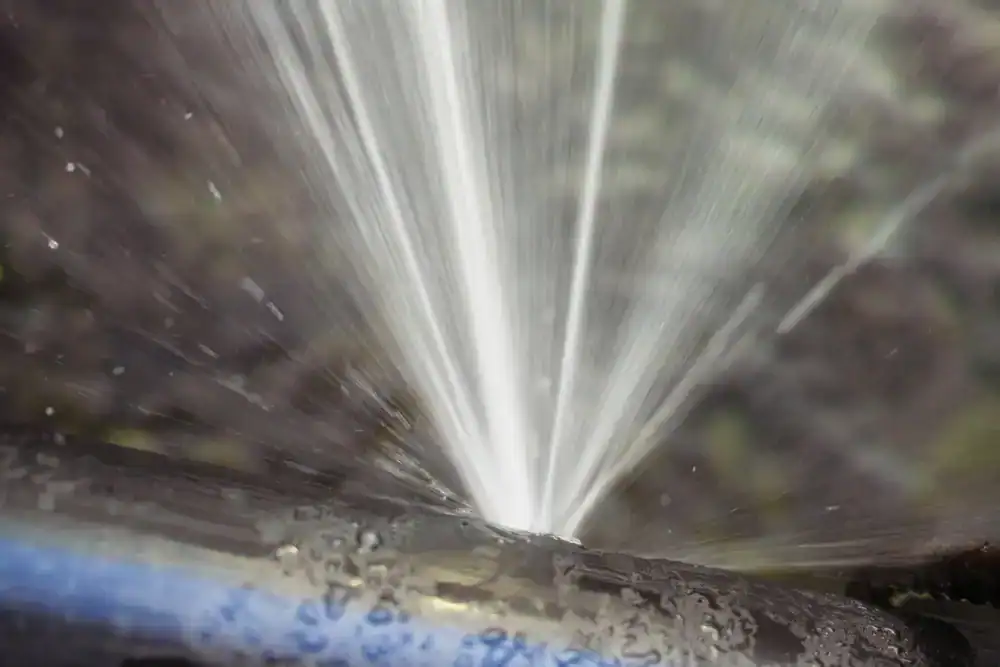
A burst pipe doesn’t just leave water on the floor. It soaks into wall cavities, saturates insulation, and works its way under flooring before you’ve even found the shutoff valve. If it’s not extracted and dried professionally — with moisture readings to prove it — you’re looking at mold growth within 24 to 48 hours. That’s what the EPA documents, and it’s what restoration crews see every winter in homes across Westchester County.
Tarrytown’s housing stock makes this more complicated than most. Nearly 29% of homes here were built before 1939, which means original plaster walls, wood lath framing, and pipe runs through uninsulated exterior wall cavities that were never designed for modern heating standards. When a pipe freezes and bursts in a home like that, water doesn’t just sit — it travels. It finds every gap and seam in a century-old structure. Getting it all out requires industrial extraction equipment, thermal imaging, and a drying process that’s documented at every stage.
When the job is done right, you get your home back — not just dry on the surface, but structurally sound, mold-free, and fully restored. No open walls waiting on a second contractor. No mystery moisture hiding behind new drywall. Just a finished space you can actually use again, with documentation your insurance carrier will accept.
12 Years Restoring Tarrytown's Older Homes — With State Credentials to Prove It
We’ve been handling water damage, mold remediation, and full restoration work across Westchester County for over 12 years. That’s not just time in business — it’s 12 years of working inside the specific homes that Tarrytown is built on. Pre-war Colonials near downtown Tarrytown. Mid-century split-levels on the hillside above the Hudson. Older Tudors with steam heat systems and galvanized pipes that have been quietly aging for decades. We’ve seen what these homes look like from the inside when something goes wrong, and we know how to fix them completely.
What sets us apart in this market is the combination of capabilities under one roof. We hold NYS and NYC M/WBE certification — a government-audited credential, not a self-applied label. We carry a NYS Mold Remediation Contractor License under Article 32 of the Labor Law, which is a legal requirement in New York, not optional. We’re fully insured including liability and workers’ compensation. And we handle the insurance process directly, so you’re not left translating damage documentation for an adjuster on your own.
From the Middle of the Night to a Finished Room — Here's What We Do
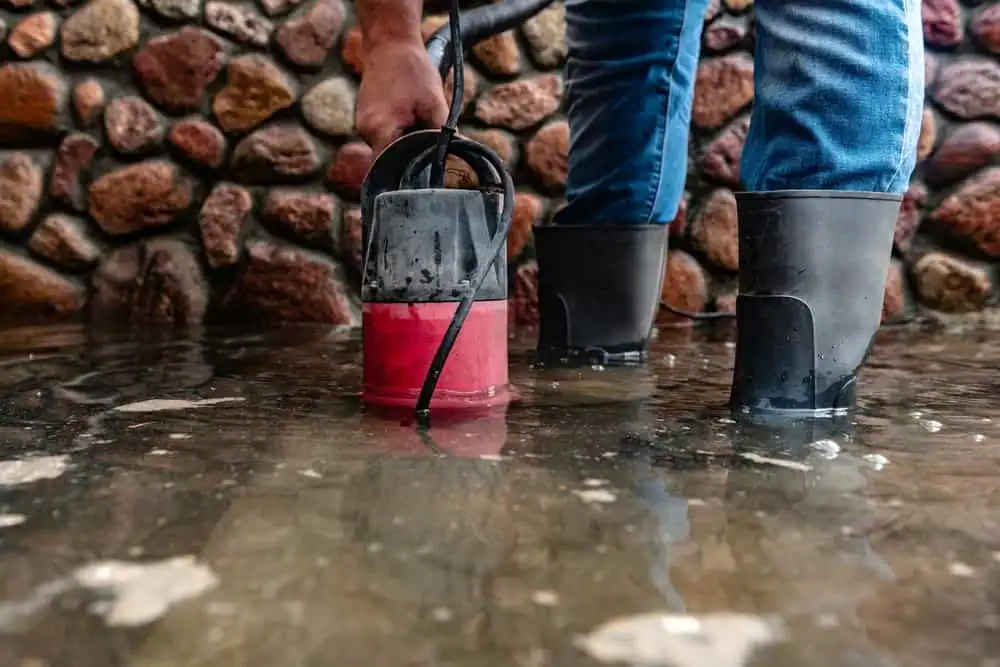
It starts the moment you call. We dispatch a crew 24 hours a day, seven days a week — not an answering service that schedules you for the next morning, but an actual team that can be at your Tarrytown home the same night. The first priority is stopping the spread. That means locating the source, extracting standing water, and getting air movers and dehumidifiers placed before the moisture migrates further into your structure.
Once extraction is underway, the focus shifts to what you can’t see. Thermal imaging identifies moisture hiding behind walls and under flooring. Moisture readings are taken and logged throughout the drying process so there’s a documented record — not just a crew’s word that it’s dry. In older Tarrytown homes, this step often reveals additional concerns: asbestos-containing materials around pipe insulation or in floor tiles that need to be addressed before walls can be opened. We handle licensed asbestos abatement in-house, which means that discovery doesn’t pause your project or send you looking for a second contractor.
After the structure is verified dry and any hazardous materials are properly abated, reconstruction begins. Drywall, flooring, trim, paint — whatever the pipe damage took out, we put it back. By the time the job is complete, your home looks the way it did before the pipe ever failed. And throughout the entire process, we’re coordinating directly with your insurance carrier so the claim moves forward without you having to manage it.
Full Restoration Built for Tarrytown's Older Homes
Burst pipe repair in Tarrytown isn’t a simple dry-and-patch job — not in a village where the housing stock is what it is. Our restoration service is built around the full scope of what these homes actually need. That starts with licensed water extraction and structural drying, moves through mold prevention and remediation if growth has already started, and includes in-house asbestos abatement for the pre-1980 homes that make up a significant portion of Tarrytown’s residential streets. New York State law requires licensed abatement before any asbestos-containing materials are disturbed — and in homes near Pennybridge, the historic downtown blocks, or anywhere else in the village with original construction, that’s not a hypothetical. It’s a routine part of the job.
From there, the work moves into full reconstruction. We handle everything from replacing opened drywall and subfloor to refinishing trim and repainting — so you’re not left coordinating a general contractor after the remediation crew packs up. For Tarrytown homeowners with high-value properties along the Hudson River corridor or near the Sunnyside neighborhood, that single point of accountability matters. One company, one contract, one finished result.
Financing is available up to $200,000 at 0% APR for situations where the insurance timeline creates a gap. If you need the work started immediately — and in water damage, you always do — that option removes the one reason most homeowners hesitate.
Does homeowners insurance actually cover burst pipe damage in Tarrytown, NY?
In most cases, yes — sudden and accidental pipe bursts are covered under standard homeowners insurance policies. The key word is “sudden.” If an adjuster can argue the damage resulted from a pipe that was visibly deteriorating and ignored over time, coverage can be disputed. That’s a real concern in Tarrytown, where a significant portion of homes have aging galvanized pipes that are well past their expected service life. Documentation matters enormously here.
We work directly with insurance carriers throughout the entire process. We document the damage in the format adjusters require, communicate with your carrier on your behalf, and advocate for the full scope of covered repairs. If you’ve never filed a major property damage claim before, having someone handle that process who does it routinely is one of the most valuable parts of the service — not just the restoration work itself.
How quickly does mold start growing after a pipe bursts in my Tarrytown home?
The EPA and FEMA both document that mold can begin growing on wet building materials within 24 to 48 hours of a water intrusion event. That window is not flexible — it starts from the moment the water makes contact with organic materials, not from when you notice the damage. In a modern home, that’s serious. In a pre-1940 Tarrytown home with original plaster walls, wood lath, and old-growth lumber framing, the conditions are even more favorable for rapid mold establishment because those materials absorb and retain moisture differently than modern drywall.
This is why the speed of the initial response matters so much. Getting professional extraction and drying equipment running within the first few hours after a burst pipe is the difference between a contained remediation job and a full mold remediation project that costs several times more. If you’re calling at 2 AM, that’s exactly when we dispatch — not at 8 the next morning.
Do I need asbestos testing before water damage repair in an older Tarrytown house?
If your home was built before 1980, you should assume asbestos-containing materials are present until testing says otherwise. In Tarrytown’s pre-war housing stock — the Tudors, the Colonials, the Folk Victorians that line the village’s historic streets — asbestos commonly appears in pipe insulation around steam heat systems, vinyl floor tiles, ceiling tiles, and joint compound. When a pipe bursts and walls need to be opened for remediation, disturbing those materials without proper licensed abatement is a violation of New York State Department of Labor regulations.
This isn’t a technicality — it’s a health and legal issue that affects the homeowner, not just the contractor. We handle licensed asbestos abatement in-house, which means if testing identifies a concern, it gets addressed as part of your single restoration project. You don’t need to find a separate abatement contractor, negotiate a separate timeline, or delay your remediation while you wait. It’s handled, documented, and done correctly under one roof.
How long does it take to dry out a house after a burst pipe in Tarrytown?
The honest answer is three to five days for a standard water intrusion event — but that number depends heavily on what the water reached and how quickly professional drying equipment was deployed. In Tarrytown’s older homes, drying timelines can run longer because original plaster walls, wood framing, and older insulation materials hold moisture differently than modern construction. A wall that looks dry on the surface can still be holding significant moisture content inside the cavity, which is exactly why moisture readings need to be taken and logged throughout the process — not just at the end.
Drying is verified using calibrated moisture meters and thermal imaging, not by feel or visual inspection. We provide documented moisture readings at each stage so you have a record that the structure was actually dried to acceptable levels — documentation that matters both for your peace of mind and for your insurance carrier’s records. Rushing this step to close out a job faster is how hidden mold problems develop months later.
What's the difference between a burst pipe and a slow leak — and does it change what I need?
A burst pipe is an acute event — a sudden failure that releases a large volume of water quickly, usually from freezing, age, or pressure. A slow leak is a chronic problem that seeps over weeks or months, often going undetected until the damage is already extensive. Both require professional remediation, but they present differently. A burst pipe typically causes visible flooding and immediate damage across a larger area. A slow leak tends to produce concentrated moisture damage, often with mold already established by the time it’s discovered.
In Tarrytown, both scenarios are common. Frozen pipe bursts happen during January and February cold snaps, particularly in homes where pipes run through exterior wall cavities with minimal insulation — a design feature of many pre-war homes in the village. Slow leaks behind finished walls are a known issue in older homes with galvanized steel pipes that have been corroding from the inside out for decades. In either case, the scope of the remediation is determined by where the moisture actually traveled — not just where it’s visible — which is why thermal imaging is part of every assessment.
Can you handle burst pipe repair near the Tarrytown Metro-North station area and Hudson Harbor?
Yes — we serve all of Tarrytown and the surrounding Westchester County area, including the waterfront neighborhoods near the Metro-North station and the Hudson Harbor townhomes and condos along the river. Waterfront properties in this part of Tarrytown come with their own moisture dynamics. Proximity to the Hudson River means higher ambient humidity levels, which affects how quickly materials dry and how aggressively mold can establish after a water intrusion event. Properties in this corridor also tend to have finished lower levels and high-end interior finishes that require careful, experienced handling during restoration.
For Hudson Harbor residents and homeowners near the riverfront corridor, the combination of high property values and moisture-prone conditions makes professional restoration — not a DIY dry-out — the only reasonable option. Our structural drying process is calibrated to the specific conditions of each property, and our documentation supports insurance claims on high-value homes where the scope of covered repairs is more likely to be scrutinized by an adjuster.