When a pipe lets go in a West Haverstraw home — especially one built when this village was still running on brick-era plumbing — the damage moves fast and the decisions get complicated quickly. We respond 24/7, handle the insurance, and take the job all the way to finished.
I needed a professional consultation explanation of procedure for safe removal of Asbestos in my apartment complex. Without having an account yet, I was very impressed with the caring, knowledgeable and generous advice offered by Jessica, and will look forward to doing business in the future. Thank you so much! I feel much more informed about a sometimes scary endeavor. Peace. Nancy Silva Mineola, NY.
Mia Munoz
Used this company to clean up some water flood in my house. They were fast and easy to work with.very professional, Would recommend to anyone!
Nini Valle
Great company, had a flood and they responded quickly and efficiently. Billed my insurance company directly. I highly recommend this company!
joe colapietro, jr
I had pipe freeze in my basement right before a snow storm and they made to within an hour to help start the clean up process. They we by our side throughout the entire process and even helped with the insurance company. They did such a great job with the cleanup, repair, remidiation, I contracted them to perform the repairs and finishes in the basement. They came with enough manpower and material to get the job done. Leo and Jessica were nothing but a pleasure to deal with!!
Cristian Arredondo c
I had some water damage in my home and Green Island was able to take care of my issue quickly and effectively. I am very pleased with the work they did. They responded quickly and were very professional.
Michael M
Outstanding service! From the office to the field crew everyone was friendly, helpful and responsive. I highly recommend Green Island Group.
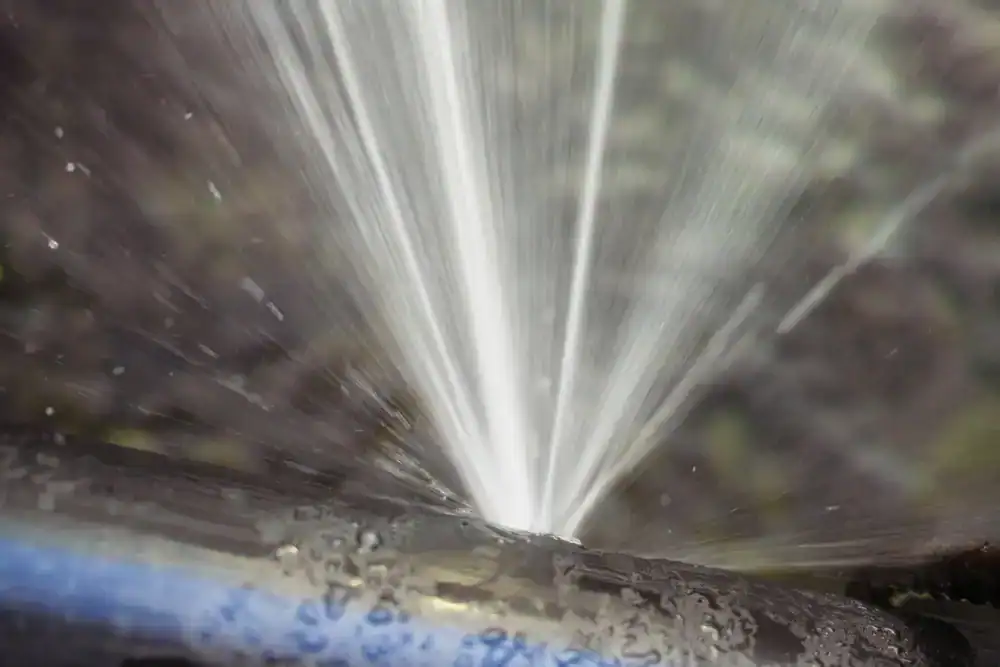
A burst pipe in West Haverstraw is not just a plumbing problem. The water is already inside your walls before you’ve made a single phone call, and in the older construction that defines much of this village — plaster walls, old-growth framing, galvanized pipes that have been corroding from the inside out for decades — moisture doesn’t just sit on the surface. It wicks deep, and it stays.
The EPA is clear that mold can begin growing within 24 to 48 hours of a water intrusion event. In a pre-war West Haverstraw home with dense wall assemblies and limited air circulation, that window can feel even shorter. What that means practically is that the speed of your response determines whether you’re dealing with a water damage job or a water damage and mold remediation job — and the difference in cost between those two scenarios is not small.
What you should walk away with is a home that’s been properly extracted, dried to documented moisture levels, and fully restored — not handed back to you with open walls and a referral to find your own contractor. West Haverstraw’s dense housing also means that in a two-family home or attached structure, a burst pipe rarely stays one household’s problem for long. The sooner it’s contained and dried, the less likely it is to become your neighbor’s emergency too.
We’ve been doing environmental restoration work in Rockland County and the Hudson Valley for over 12 years. That’s not a number we throw out to sound established — it means we’ve worked inside the kind of homes that line the streets between Route 9W and the waterfront in West Haverstraw. We know what pre-1960 construction looks like from the inside of a wall. We know what galvanized pipe failure looks like in a home that was built when the brickyards along Haverstraw Bay were still running.
We hold NYS and NYC M/WBE certification, carry full liability and workers’ compensation insurance, and have a documented contract history with the NYS Office of General Services. That’s not a self-issued badge — it’s a credential that required state-level auditing and verification. We also handle your insurance claim directly, which is something our customers consistently say was the most valuable part of working with us. You’re not filing paperwork in the middle of a crisis. We do that.
When you call, someone actually picks up — day or night. We ask a few quick questions to understand what we’re walking into, and then we dispatch. In West Haverstraw, where a burst pipe in a two-family home can start affecting a neighboring unit within hours, getting someone there fast isn’t just good service — it’s how we prevent a contained problem from becoming a much larger one.
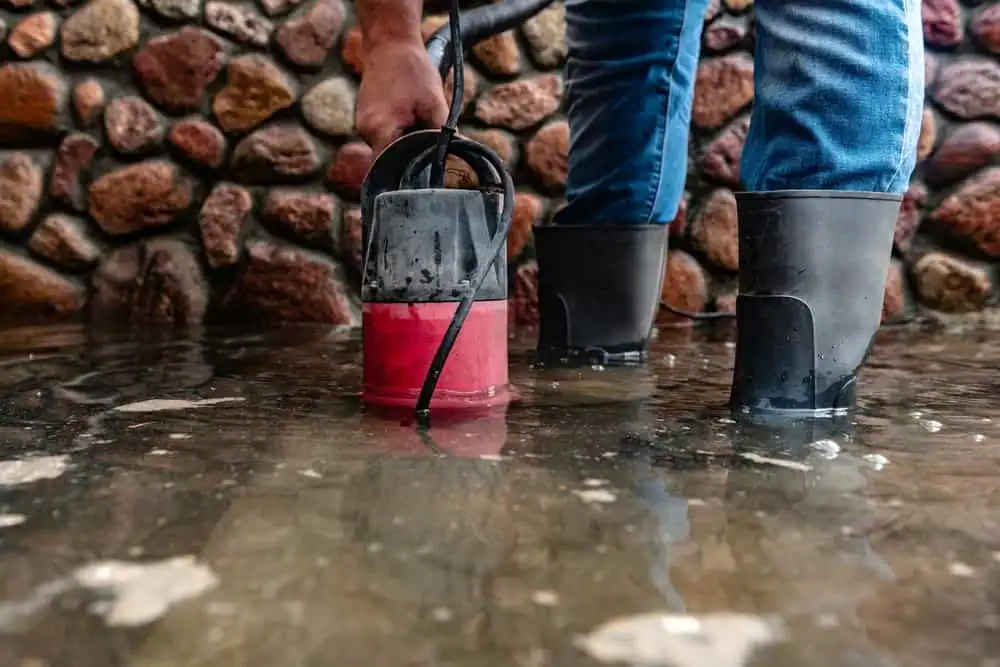
Once we’re on site, the first priority is stopping the spread. We extract standing water, set up professional drying equipment, and use calibrated moisture meters and thermal imaging to map exactly where the water has traveled — including inside walls and under flooring where you can’t see it. We don’t guess and we don’t call it dry until the numbers say it’s dry. Every step gets documented, because that documentation is also what your insurance adjuster needs.
If your home was built before 1980 — which covers a significant portion of West Haverstraw’s housing stock — we assess for asbestos-containing materials before any walls get opened. We handle abatement in-house under our NYS Department of Labor license, so there’s no project halt while a separate contractor gets sourced. After remediation is complete and clearance is confirmed, we move into reconstruction: drywall, flooring, paint, whatever it takes to bring the space back. One company. One timeline. One point of contact.
Everything the Job Actually Requires, Under One Roof
Burst pipe repair in West Haverstraw rarely stops at pulling out wet drywall. In this village’s older housing stock — homes that predate modern plumbing materials, built during and after the brick-making era that shaped northern Rockland County — the scope of what a pipe failure touches is almost always wider than it looks at first. That’s why we’re structured to handle the full range of what follows: emergency water extraction, structural drying, mold remediation licensed under Article 32 of New York State Labor Law, asbestos abatement licensed under NYS Industrial Code Rule 56, and complete structural reconstruction.
The mold remediation license isn’t optional under New York State law — any company performing that work is legally required to hold it. If you hire someone who doesn’t, you carry the exposure. Our license is current, our abatement team is certified, and every job is documented in a format that protects you if questions come up later — including at resale.
We also work directly with insurance carriers. We document the damage, communicate with your adjuster, and bill them directly where coverage applies. For anything not covered, we offer financing up to $200,000 at 0% APR. In a community where an unexpected five-figure repair bill is a real financial strain, that option matters. You shouldn’t have to choose between doing the job right and keeping your household financially stable.
Does homeowners insurance actually cover burst pipe damage in West Haverstraw?
In most cases, yes — sudden and accidental pipe failures are covered under standard homeowners insurance policies in New York. The key word is “sudden.” If an adjuster determines that the pipe showed signs of long-term deterioration that went unaddressed, they may push back on the claim. This is more of a real concern in West Haverstraw than in newer suburban communities, because a significant portion of the village’s housing stock still has original or older galvanized plumbing that has been degrading for years.
That’s exactly why documentation matters from the moment the damage is discovered. When we respond, we photograph and record everything before we touch it — the condition of the pipe, the extent of the water spread, the affected materials. That documentation is what your adjuster needs to process the claim, and it’s also your protection if there’s any dispute about the cause or scope. We work directly with insurance carriers and handle that communication on your behalf throughout the process.
How quickly can mold actually grow after a pipe bursts in my home?
The EPA documents mold growth beginning within 24 to 48 hours on wet building materials — and that’s under average conditions. In West Haverstraw’s older homes, where plaster walls and dense wood framing absorb and hold moisture more readily than modern materials, the conditions for mold can develop quickly even in areas that look dry on the surface. The visible signs of mold often don’t appear until the colony is already established inside the wall.
This is why the response window matters so much. A pipe that bursts at midnight on a Tuesday is not a Wednesday morning problem. We dispatch 24 hours a day, seven days a week, specifically because the difference between a water damage job and a water damage plus mold remediation job is often just a matter of hours. Mold remediation adds significant cost and time to any project — getting extraction and drying started immediately is the most effective way to prevent it.
My West Haverstraw home was built in the 1940s — should I be worried about asbestos?
If your home was built before approximately 1980, there’s a real possibility that some building materials contain asbestos — particularly pipe insulation around steam or hot water heating systems, floor tiles, ceiling tiles, and joint compound. Homes built during the mid-20th century in West Haverstraw commonly used these materials, and many of them are still in place behind walls and under floors.
The issue becomes legally and medically significant when those materials are disturbed — which is exactly what happens during water damage remediation when walls need to be opened. New York State regulates asbestos abatement under Industrial Code Rule 56 and requires a licensed contractor for any abatement work. We hold that license and perform abatement in-house, which means we can identify the issue, handle it properly, and keep the project moving — rather than stopping everything while you try to find a separate abatement contractor. No other restoration company appearing in West Haverstraw search results offers this capability under one roof.
What happens if the burst pipe in my home affected my neighbor's unit too?
This is a genuinely common situation in West Haverstraw, where the housing density — roughly 7,000 people per square mile across just 1.54 square miles — means a large proportion of residents live in two-family homes, attached structures, or older apartment buildings. Water doesn’t respect property lines or unit boundaries. It follows gravity and moves through shared walls, floors, and ceilings, and it can cause significant damage to a neighboring unit before the source unit owner even realizes how far it’s spread.
When multiple units are involved, the insurance coordination gets more complicated — you may be dealing with multiple policies, a landlord’s policy, or a dispute about responsibility. We handle multi-unit water damage regularly and can coordinate documentation and communication across the affected parties. We work with each relevant insurance carrier directly, which removes a significant amount of the logistical burden from everyone involved. The most important thing is getting remediation started quickly, before the moisture has time to compound the damage further.
How much does burst pipe water damage restoration typically cost in Rockland County?
The honest answer is that it depends heavily on how quickly you respond and how far the water traveled before it was stopped. A contained pipe failure caught within a few hours — where extraction and drying can begin before moisture has penetrated deeply into wall assemblies — might run several thousand dollars. A failure that went undetected overnight, or one in an older home where water wicked into plaster walls and a wood subfloor, can run significantly higher. If mold remediation is required, costs can increase by three to five times compared to a water-only event.
The national average insurance payout for water damage claims is approximately $13,954, but that figure spans a wide range. In Rockland County, where labor costs and permit requirements add to the base cost, larger jobs can run well above that. We offer financing up to $200,000 at 0% APR for costs that exceed what insurance covers or for situations where insurance payment timing creates a gap. We also bill your insurance carrier directly, so you’re not fronting the cost and waiting for reimbursement while the project is underway.
Do pipes freeze often in West Haverstraw, and what should I do before winter?
West Haverstraw gets real winter. Temperatures regularly drop into the mid-20s Fahrenheit and below during January and February, and the village’s position between the Palisades ridge to the west and Haverstraw Bay to the east creates localized conditions where cold air drainage from the ridgeline can push temperatures lower than surrounding areas. Pipes in exterior walls, unheated crawl spaces, and basement utility areas are at real risk during extended cold snaps — and the failure often doesn’t show itself until the thaw, when a pipe that cracked while frozen finally releases water as temperatures rise.
In West Haverstraw’s older housing stock, the risk is compounded by plumbing that was never designed with freeze protection in mind. Galvanized pipes that have been narrowing from corrosion for decades are far more brittle than modern copper or PEX and fail more readily under freeze pressure. Before winter, it’s worth having a plumber assess any pipes running through unheated spaces and ensuring those areas are properly insulated. If a pipe does fail, call immediately — don’t wait to see how bad it is. The damage from a burst pipe grows with every hour it goes unaddressed, and we can be there the same night.