From flood-damaged basements along the Great South Bay to aging post-war homes ready for a full teardown we handle demolition in Babylon, NY with the permits, the hazmat capability, and the crew to do it right the first time.
I needed a professional consultation explanation of procedure for safe removal of Asbestos in my apartment complex. Without having an account yet, I was very impressed with the caring, knowledgeable and generous advice offered by Jessica, and will look forward to doing business in the future. Thank you so much! I feel much more informed about a sometimes scary endeavor. Peace. Nancy Silva Mineola, NY.
Mia Munoz
Used this company to clean up some water flood in my house. They were fast and easy to work with.very professional, Would recommend to anyone!
Nini Valle
Great company, had a flood and they responded quickly and efficiently. Billed my insurance company directly. I highly recommend this company!
joe colapietro, jr
I had pipe freeze in my basement right before a snow storm and they made to within an hour to help start the clean up process. They we by our side throughout the entire process and even helped with the insurance company. They did such a great job with the cleanup, repair, remidiation, I contracted them to perform the repairs and finishes in the basement. They came with enough manpower and material to get the job done. Leo and Jessica were nothing but a pleasure to deal with!!
Cristian Arredondo c
I had some water damage in my home and Green Island was able to take care of my issue quickly and effectively. I am very pleased with the work they did. They responded quickly and were very professional.
Michael M
Outstanding service! From the office to the field crew everyone was friendly, helpful and responsive. I highly recommend Green Island Group.
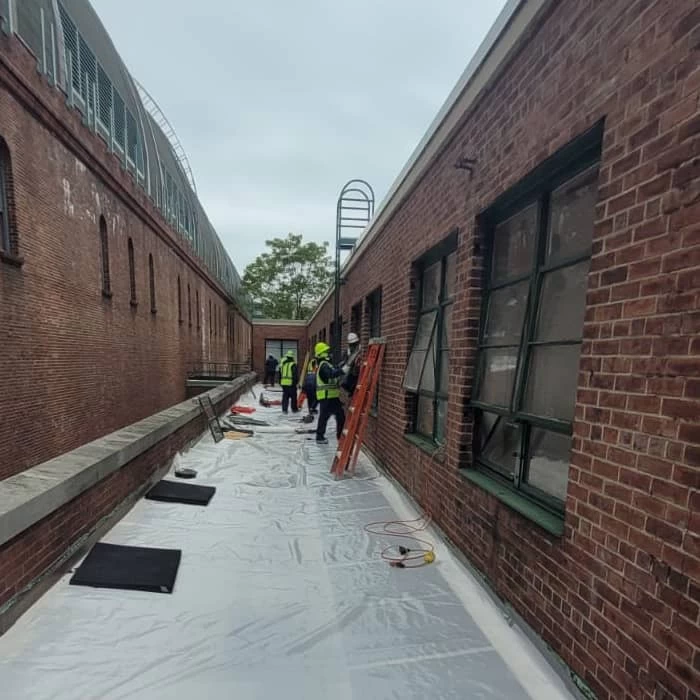
Most demolition headaches in Babylon don’t start with the wrecking bar they start before anyone swings it. A contractor shows up, finds asbestos in the floor tile or pipe insulation, and suddenly your project is on hold while they scramble for a third-party abatement crew. In a town where the majority of homes were built during the post-war boom of the 1940s and 1950s, that’s not an edge case. It’s the norm. We handle asbestos abatement, lead paint removal, and demolition under one roof, so there’s no gap in the chain and no reason to stop.
The coastal side of this matters too. Babylon sits directly on the Great South Bay, and the Town’s own records acknowledge that most of the South Shore was built on low-lying marshland without adequate flood infrastructure. Storm surge, saltwater backflow through drainage systems, and high water tables during heavy rains regularly damage structures here in ways that don’t happen ten miles inland. When that damage hits, you need a contractor who understands what South Shore flooding does to an older home not one who’s seeing it for the first time.
When the job is done, you get a cleared, compliant site. Permits pulled, utilities signed off, debris removed. No open loops.
Licensed Demolition Contractors Serving Babylon, NY
Local Enough to Know What's Inside Your Walls
We’re based in Bohemia, NY about ten miles east of Babylon Village on the Sunrise Highway corridor. That’s not a coincidence. Suffolk County is our backyard, and the South Shore is a market we’ve been working in for over twelve years. We already have an active service history throughout Babylon and West Babylon, which means we know the difference between the Village of Babylon’s Building Department and the Town of Babylon’s Building Department and that distinction matters when you’re pulling permits.
With more than 5,000 completed projects across Long Island, we’re not learning on your property. Our team is small enough that real people answer the phone customers consistently mention Leo and Jessica by name in reviews and large enough to handle full-scale residential and commercial demolition without subcontracting the critical work out.
If your home is near Deer Park Avenue, off Montauk Highway, or anywhere in the West Babylon or North Babylon hamlets, we’ve worked in your neighborhood. That familiarity shows up in how the job gets managed.
Babylon Demolition Process From Start to Site Clear
What Actually Happens Before, During, and After
It starts with a site assessment. Before any work is scoped or priced, we walk the property to understand what we’re dealing with structure type, age, materials, access, and any visible signs of hazardous materials. In Babylon’s pre-1960s housing stock, that assessment almost always includes an eye toward asbestos-containing materials: floor tiles, pipe wrap, ceiling texture, roofing felt. If testing is needed, it gets done before demolition begins, not after something gets disturbed.
From there, permits are handled. In the Town of Babylon, that means a notarized application, contractor insurance documentation, and Letters of Compliance from the Suffolk County Water Authority, LIPA, and the Suffolk County Sewer District among others. If your property falls within the Village of Babylon’s incorporated limits, the permit goes through the Village Building Department, not the Town. We manage all of it. You don’t spend weeks chasing utility sign-offs.
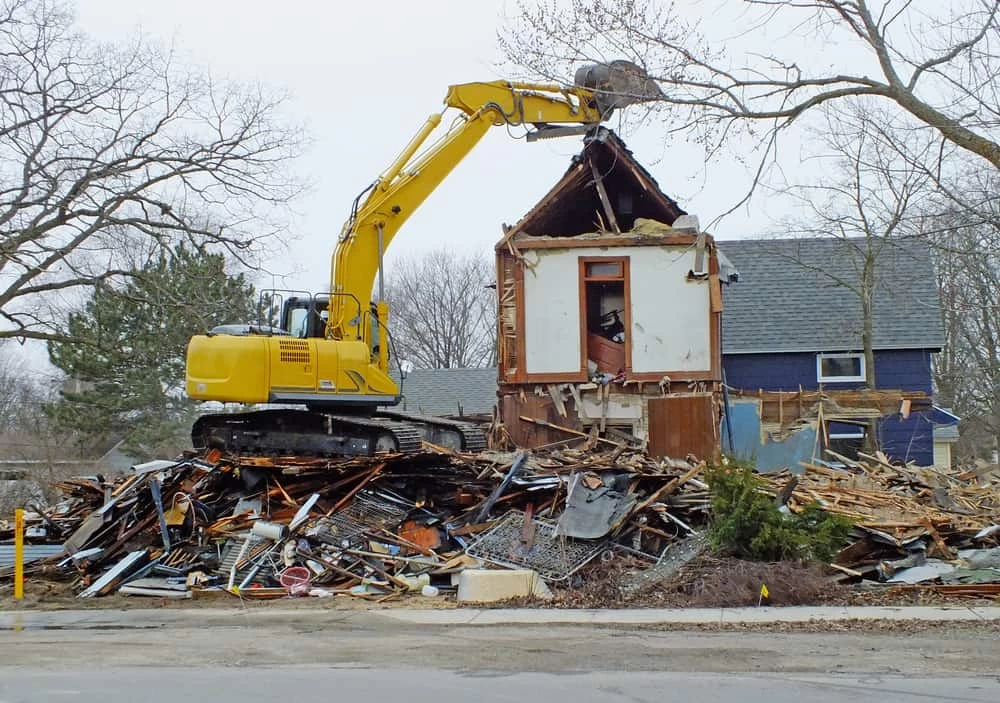
Once permits are in hand, the physical work begins. Selective interior demolition, structural teardown, or full site clearance the scope depends on what you need. Debris is removed and disposed of properly. If remediation is part of the job, it runs in sequence with demolition rather than as a separate engagement. By the time our crew leaves, the site is clean, inspected, and ready for whatever comes next.
Commercial and Residential Demolition Specialists in Babylon
Full-Scope Demolition Built for South Shore Conditions
We handle the full range residential teardowns, interior gut demolition, selective structural removal, and commercial site clearance. For homeowners in Babylon Village, West Babylon, Copiague, and the surrounding hamlets, that typically means working on homes with decades of layered construction history: additions built without permits, materials that haven’t been touched since the Eisenhower administration, and basements that have seen more water than most people realize.
Our integrated model is what separates us from a standard demo crew. Asbestos abatement, lead paint removal, mold remediation, and environmental testing are all handled in-house. That matters in a market like Babylon, where the Babylon IDA has more than $1.88 billion in active development projects and where commercial site clearance is a real and growing part of the pipeline. Whether it’s a residential teardown on a South Shore lot or a commercial structure being cleared for redevelopment, the same licensed, insured team handles it start to finish.
Emergency response is also part of our service. Babylon’s coastal exposure means storm damage, flooding, and structural compromise happen year-round not just in hurricane season. We’re available 24/7, and customers have documented same-day response during active storm events. If you’re dealing with damage right now, that availability isn’t a marketing claim it’s a documented part of how we operate.
Do I need a permit for demolition work in Babylon, NY?
Yes and the process is more involved than most people expect. In the Town of Babylon, a demolition permit requires a completed application that must be signed and notarized by the property owner, along with contractor insurance documentation covering workers’ compensation, disability, and general liability. Before the permit is issued, you’ll also need Letters of Compliance from the Suffolk County Water Authority, LIPA, the Suffolk County Sewer District, and any applicable underground utility providers. There’s also a certified check or money order required as part of the application.
One thing that catches people off guard: if your property is within the incorporated Village of Babylon, your permit goes through the Village Building Department not the Town of Babylon’s Building Department. Those are two separate offices with separate processes. We manage the entire permit process for you, including identifying which jurisdiction applies to your property and coordinating all the required utility sign-offs. You don’t have to figure out which department to call.
What happens if asbestos is found during a demolition project?
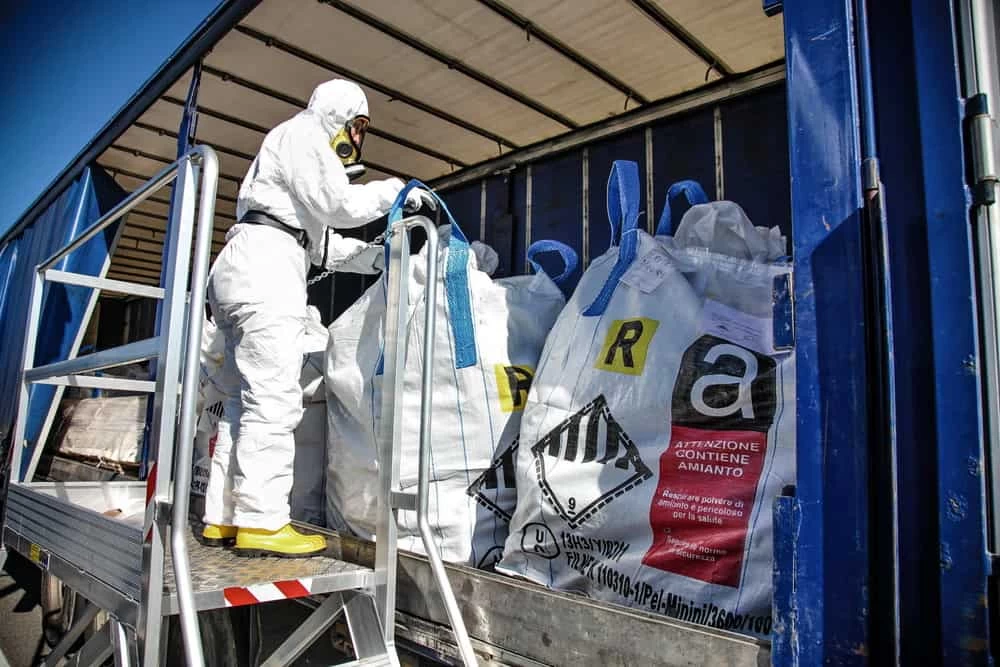
If asbestos-containing materials are discovered, work has to stop until they’re properly assessed and abated by a licensed contractor. That’s not optional it’s required under New York State Department of Labor regulations and federal EPA NESHAP rules. For a lot of homeowners, this is the moment a project goes sideways: they hired a demo-only contractor, asbestos shows up, and now they’re managing two separate companies, two separate schedules, and a project that’s sitting idle.
In Babylon, this scenario is common not rare. The town’s housing stock is dominated by construction from the 1940s through the 1960s, when asbestos was standard in floor tiles, pipe insulation, ceiling texture, and roofing materials. We hold active NYS DOL asbestos contractor certification, which means abatement is handled in-house, in sequence with the demolition work. There’s no project stoppage, no emergency third-party call, and no gap between who’s responsible for what. The scope stays intact and the timeline stays on track.
How much does house demolition typically cost in Babylon, NY?
Demolition costs vary based on structure size, materials, access, and whether hazardous materials are present but for a standard single-family home in Babylon, you’re generally looking at a range that starts around $8,000 to $15,000 for a full teardown, with larger or more complex projects running higher. If asbestos abatement or lead paint removal is required which is common in Babylon’s pre-1960s housing stock that adds to the total, but it’s work that has to happen regardless of who does it.
What affects cost most in this area specifically is the age and condition of the structure, how accessible the site is, and whether the property has any unpermitted additions or alterations. Babylon’s post-war boom produced a lot of homes that have been modified over sixty or seventy years, and unpermitted work can complicate both the permit process and the physical scope of demolition. Getting a detailed on-site assessment before any pricing is finalized is the only way to avoid surprises and it’s the first step in our process.
Can a demolition contractor in Babylon also handle water damage and flooding cleanup?
Yes and in Babylon, that combination comes up more than you’d think. The Town sits directly on the Great South Bay, and the municipal infrastructure in many South Shore communities was built more than seventy years ago on low-lying marshland without adequate flood protection. Drainage pipes run underground through bays and canals, and during storm events, saltwater pushes back through those systems and into basements and crawl spaces. The result is water damage that often requires selective demolition removing damaged drywall, flooring, insulation, or structural framing before remediation can begin.
We handle both sides of that in-house. Water damage remediation and demolition aren’t treated as separate engagements they run in sequence under a single scope of work. That matters when you’re dealing with a time-sensitive situation after a storm or a pipe failure in an older home. We also work directly with insurance companies, which is relevant for most homeowners navigating a damage claim. You get one contractor managing the full response instead of trying to coordinate multiple crews during an already stressful situation.
How long does the demolition permit process take in the Town of Babylon?
The timeline depends on how quickly the required Letters of Compliance come back from the utility agencies. The Town of Babylon requires sign-offs from the Suffolk County Water Authority, LIPA, the Suffolk County Sewer District, and any underground utility providers before a demolition permit is issued. Each of those agencies operates on its own schedule, and delays on any one of them can hold up the entire application. Realistically, the permit process can take anywhere from two to six weeks depending on the project and how responsive the agencies are at the time of submission.
The best thing you can do is start early. If you’re planning a demolition project in the spring or summer the peak season for planned teardowns and renovations in Babylon getting the permit process started well in advance of your target start date is the only way to avoid sitting on a cleared schedule with no permit in hand. We initiate the permit process as early as possible and track the compliance letters so nothing stalls because of a missed follow-up.
Does Green Island Group handle commercial demolition projects in Babylon, NY?
Yes. Commercial demolition is a meaningful part of what we do, and Babylon has a real and active commercial development pipeline to match. The Babylon Industrial Development Agency oversees more than 170 active projects valued at approximately $1.88 billion and commercial site clearance and building demolition are frequently required preconditions before new construction can begin. We hold MWBE certification and have approved contractor status with state agencies, which positions us for the kind of publicly supported commercial projects the Babylon IDA is actively moving forward.
On the commercial side, the scope typically includes structural teardown, selective interior demolition for tenant buildouts or gut renovations, site clearance, debris removal, and any required environmental abatement. The same integrated model applies asbestos, lead, and mold are handled in-house rather than subcontracted, which keeps the timeline tighter and the accountability cleaner. If you’re a property owner, developer, or contractor working on a commercial project in Babylon or the surrounding hamlets, the process starts the same way as residential: a site assessment, a clear scope, and a permit strategy that accounts for the Town’s specific requirements.