When Baiting Hollow's Older Homes Hide More Than You Expected
From Sound Avenue cottages to bluff-side estates, demolition in Baiting Hollow almost always comes with a question nobody wants to answer mid-project what’s actually inside these walls? We handle the full scope, so you’re never left waiting on a second contractor.
I needed a professional consultation explanation of procedure for safe removal of Asbestos in my apartment complex. Without having an account yet, I was very impressed with the caring, knowledgeable and generous advice offered by Jessica, and will look forward to doing business in the future. Thank you so much! I feel much more informed about a sometimes scary endeavor. Peace. Nancy Silva Mineola, NY.
Mia Munoz
Used this company to clean up some water flood in my house. They were fast and easy to work with.very professional, Would recommend to anyone!
Nini Valle
Great company, had a flood and they responded quickly and efficiently. Billed my insurance company directly. I highly recommend this company!
joe colapietro, jr
I had pipe freeze in my basement right before a snow storm and they made to within an hour to help start the clean up process. They we by our side throughout the entire process and even helped with the insurance company. They did such a great job with the cleanup, repair, remidiation, I contracted them to perform the repairs and finishes in the basement. They came with enough manpower and material to get the job done. Leo and Jessica were nothing but a pleasure to deal with!!
Cristian Arredondo c
I had some water damage in my home and Green Island was able to take care of my issue quickly and effectively. I am very pleased with the work they did. They responded quickly and were very professional.
Michael M
Outstanding service! From the office to the field crew everyone was friendly, helpful and responsive. I highly recommend Green Island Group.
Your Baiting Hollow Project Stays on Track No Matter What We Find Inside
Baiting Hollow’s housing stock tells a story. Woodcliff Park cottages open every April 15th with decades of wear behind them. Ranch-style homes in Oak Hills have been standing since the mid-century. The Bluffs at Fox Hill has units that look modern on the outside but carry older bones underneath. When you start pulling things apart, what you find isn’t always what you planned for and that’s exactly where most demolition projects fall apart.
The difference between a smooth project and a stalled one usually comes down to one thing: whether your contractor can handle what they find. If asbestos turns up and in pre-1980 Long Island construction, it usually does in some form a contractor without active abatement certification has to stop, step back, and call someone else. That gap costs you time, money, and momentum. We hold active NYS Department of Labor asbestos contractor certification and handle abatement and demolition together, as one continuous project.
Baiting Hollow’s position along the Long Island Sound bluffs also means storm damage is a real, recurring trigger for demolition work here not a rare event. When a nor’easter rolls through and compromises a structure, you need a contractor available at any hour, not one you’ll reach on Monday morning. That kind of response fast, licensed, and fully insured is what keeps a bad situation from getting worse.
5,000 Projects In. We Know What to Expect in Baiting Hollow.
We are a Suffolk County-based demolition and environmental remediation contractor with over 12 years of experience and more than 5,000 completed projects across Long Island. We already have an active service history in Baiting Hollow including asbestos abatement work so we’re not learning the area on your dime.
What sets us apart in a market like the North Fork isn’t just the credentials, though those matter. It’s our ability to walk into a Baiting Hollow property whether it’s a seasonal cottage near the Sound or a home along the Baiting Hollow Golf Club corridor and manage everything from the Town of Riverhead permit application to the final Certificate of Compliance. No handoffs. No gaps in coverage.
We carry $2,000,000+ in general liability insurance, hold active NYS DOL asbestos certification, and work directly with insurance companies on behalf of clients a capability that matters in a coastal community where storm-triggered claims are part of life.
From Riverhead Permit to Final Sign-Off Here's Our Real Process
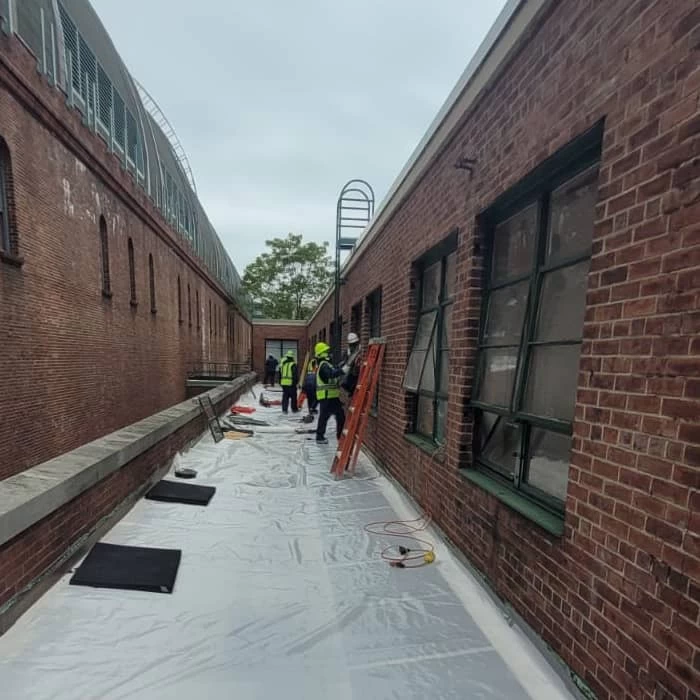
It starts with a site assessment. Before anything is touched, our team evaluates the structure, identifies what materials are present, and determines whether hazardous materials asbestos, lead paint need to be addressed before demolition begins. In Baiting Hollow’s older housing stock, that step isn’t optional. It’s what keeps your project legally compliant and your timeline intact.
From there, we handle the Town of Riverhead permit process directly. That means submitting the application in person at Town Hall on West Second Street, securing the sewer district disconnect letter, confirming utility shutoffs, and scheduling the required inspections. Riverhead demolition permits expire after six months, so the clock starts the moment it’s issued and managing that timeline is part of the job, not something we hand back to you.
Once permits are in place and any necessary abatement is complete, demolition proceeds. Debris is hauled and disposed of responsibly, with salvageable materials concrete, steel, and other recoverable items separated where possible. The project closes with a formal inspection and the Certificate of Compliance from the Town of Riverhead Building Department. That document is what officially clears the site for whatever comes next, whether that’s new construction, a renovation, or a sale.
Commercial and Residential Demolition Contractor Baiting Hollow
Full-Scope Demo Built for North Fork Properties
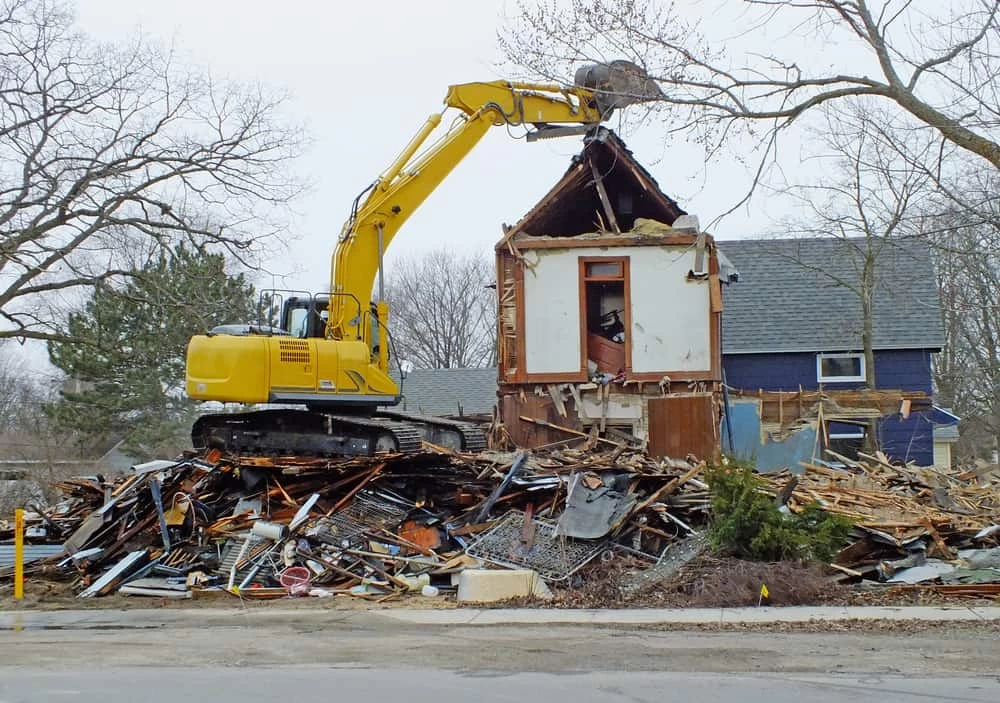
We handle the full range of demolition work that comes up in Baiting Hollow interior gut demolition for condo renovations at Fox Hill, structural demolition of aging cottages and outbuildings, site clearance for new construction along the Baiting Hollow Golf Club corridor, and emergency response for storm-damaged structures after a nor’easter hits the Sound-facing bluffs.
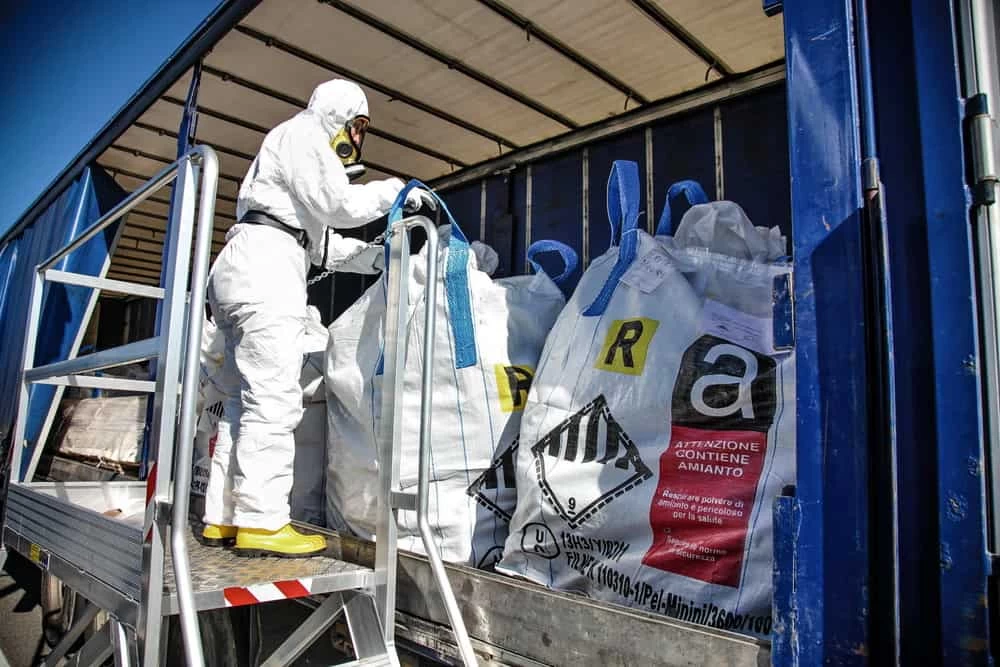
Every project includes asbestos and lead paint evaluation before work begins. If regulated materials are found, we handle abatement in-house under active NYS DOL certification no subcontractors, no project pauses, no separate contracts to manage. That’s a meaningful difference in a community where pre-1980 construction is common and where stopping mid-project is not an option when you’re working against a six-month permit window.
For clients dealing with insurance-triggered demolition storm damage, flooding, fire we work directly with adjusters and handle the documentation on your behalf. We’re also MWBE-certified, which makes us eligible for public and municipal contracts in Suffolk County and across New York State. Whether it’s a single-family teardown in Baiting Hollow Estates or a commercial project near the Riverhead corridor, the scope of what we handle under one contract is what keeps projects moving from start to finish.
Do I need a demolition permit in Baiting Hollow, NY before starting work?
Yes all demolition work in Baiting Hollow falls under the Town of Riverhead’s jurisdiction, and a permit is required before any structure can be demolished. The application must be submitted in person at the Town of Riverhead Building Department at Town Hall, 4 West Second Street. You’ll also need to provide a disconnect letter from the Riverhead Sewer District and confirmation that all utilities have been shut off before the permit will be issued.
Permit fees are $75 for structures under 1,000 square feet and $110 for structures over 1,000 square feet and those fees are non-refundable. Once issued, the permit is valid for six months. Demolition must be completed and a Certificate of Compliance obtained within that window, or the permit needs to be renewed. That timeline matters, especially for seasonal property owners in Baiting Hollow communities like Woodcliff Park who are working against a spring opening date. Having a contractor who manages the permit process end-to-end keeps that clock from becoming a problem.
Is asbestos testing required before demolition on a Baiting Hollow property?
It’s not just recommended it’s legally required under NYS DEC Code Rule 56 for any demolition project where asbestos-containing materials may be present above threshold quantities. In Baiting Hollow, where a significant portion of the housing stock was built before 1980, that threshold is reached more often than most homeowners expect. Pipe insulation, floor tiles, ceiling tiles, textured plaster, and certain types of siding are all common sources of asbestos in mid-century Long Island construction.
If regulated asbestos-containing material is found, it has to be properly abated by a licensed contractor before demolition can proceed that’s not negotiable under state law. The problem most homeowners run into is hiring a demolition contractor who isn’t also licensed for abatement. When asbestos turns up, they stop work and call someone else, and your project sits idle while you coordinate a second contract. We hold active NYS DOL asbestos contractor certification, so abatement and demolition happen under one roof, without the gap.
How long does a demolition project typically take in the Town of Riverhead?
The actual physical demolition of a residential structure can often be completed in a matter of days but the full project timeline depends heavily on the permitting and abatement phases that come before it. Getting a demolition permit through the Town of Riverhead Building Department typically takes one to several weeks depending on application completeness, department workload, and whether additional documentation like a sewer disconnect letter needs to be tracked down first.
If asbestos or lead paint is present and needs to be abated before demolition begins, that adds time as well, though the exact duration depends on the scope of what’s found. The practical takeaway for Baiting Hollow property owners is that planning ahead matters. If you’re a seasonal property owner at Woodcliff Park or Fox Hill looking to complete demolition before a spring renovation, starting the permit process in late fall or early winter gives you the runway you need. Waiting until March to start the process is where timelines get compressed and costly.
What happens if my Baiting Hollow property was damaged in a storm can a demolition contractor help?
Yes, and in a community like Baiting Hollow, this comes up more than people realize. The hamlet’s location along the Long Island Sound bluffs makes it one of the more storm-exposed areas in Suffolk County. High winds, coastal flooding, and bluff erosion are recurring realities for properties along this stretch of the Sound.
When storm damage compromises a structure whether it’s a flooded basement, a collapsed outbuilding, or a foundation undermined by erosion emergency demolition response is sometimes the only safe next step. We operate 24/7 and have documented response times under one hour during storm events. We also work directly with insurance companies on behalf of clients, handling documentation and coordinating with adjusters so you’re not managing that process on top of everything else. If your damage is insurance-covered, having a contractor who knows how to navigate that process is worth a lot.
What's the difference between interior demolition and full structural demolition?
Interior demolition refers to removing specific elements inside a structure walls, flooring, ceilings, cabinetry, fixtures while leaving the building’s shell intact. It’s common in renovation projects, particularly in condo units like those at The Bluffs at Fox Hill or The Knolls at Fox Hill, where the goal is a gut renovation of the interior without touching the building’s exterior or foundation. Interior demolition still requires proper handling of any hazardous materials found inside, and in older units, that’s a real consideration.
Full structural demolition means taking the entire structure down to the ground foundation included in some cases and clearing the site completely. This is what happens when a property is being rebuilt from scratch, when a structure is beyond repair after storm damage, or when a developer is preparing a site for new construction, like the active development happening along the Baiting Hollow Golf Club corridor. Both types of work require permits through the Town of Riverhead Building Department, and both require asbestos evaluation before work begins if the structure predates 1980.
How do I find a licensed demolition contractor near Baiting Hollow who handles everything?
The honest answer is that most contractors serving the Baiting Hollow area handle part of the scope not all of it. Junk removal companies will take down a deck or a shed, but they’re not licensed for structural demolition or asbestos abatement. Some demolition contractors can handle the physical teardown but will stop the moment regulated materials are found. Very few have the insurance coverage, permit experience, and emergency availability that a property in a coastal community like Baiting Hollow actually demands.
What you’re looking for is a contractor who is licensed for both demolition and asbestos abatement in New York State, carries $2,000,000 or more in general liability insurance, knows the Town of Riverhead permit process inside and out, and can respond when a storm doesn’t wait for business hours. We check each of those boxes and already have documented service history in Baiting Hollow. When you’re evaluating contractors, ask specifically about their asbestos certification status it should be active, not expired and whether they manage the Riverhead permit process or hand it back to you. Those two questions will tell you most of what you need to know.