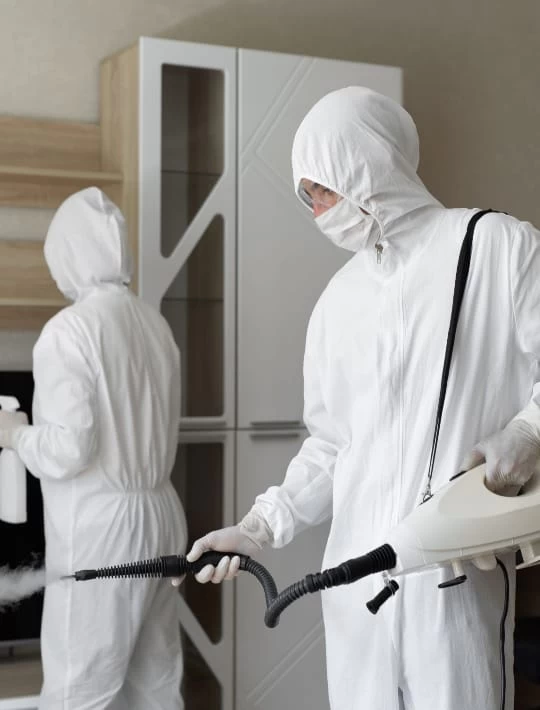
Most homes in Bellerose Terrace were built before 1940. That means asbestos, lead paint, and a permit process that catches unprepared contractors off guard. We handle all of it — licensed demolition and abatement under one roof, so your project doesn’t stall when something turns up behind the walls.
I needed a professional consultation explanation of procedure for safe removal of Asbestos in my apartment complex. Without having an account yet, I was very impressed with the caring, knowledgeable and generous advice offered by Jessica, and will look forward to doing business in the future. Thank you so much! I feel much more informed about a sometimes scary endeavor. Peace. Nancy Silva Mineola, NY.
Mia Munoz
Used this company to clean up some water flood in my house. They were fast and easy to work with.very professional, Would recommend to anyone!
Nini Valle
Great company, had a flood and they responded quickly and efficiently. Billed my insurance company directly. I highly recommend this company!
joe colapietro, jr
I had pipe freeze in my basement right before a snow storm and they made to within an hour to help start the clean up process. They we by our side throughout the entire process and even helped with the insurance company. They did such a great job with the cleanup, repair, remidiation, I contracted them to perform the repairs and finishes in the basement. They came with enough manpower and material to get the job done. Leo and Jessica were nothing but a pleasure to deal with!!
Cristian Arredondo c
I had some water damage in my home and Green Island was able to take care of my issue quickly and effectively. I am very pleased with the work they did. They responded quickly and were very professional.
Michael M
Outstanding service! From the office to the field crew everyone was friendly, helpful and responsive. I highly recommend Green Island Group.
When you’re renovating a home in Bellerose Terrace, the age of the structure changes everything. These aren’t generic older homes — NeighborhoodScout confirms the majority of housing here was built no later than 1939, with a significant portion going up between 1940 and 1969. That puts virtually every gut renovation, kitchen demo, or basement project squarely in hazardous materials territory. Asbestos in floor tiles, pipe insulation, and ceiling texture. Lead paint on every surface. If your contractor isn’t licensed to handle what they find, your project stops.
What you get when that’s handled correctly from the start is a project that actually finishes. No mid-demo surprises that require a second contractor. No compliance gaps that create liability when you go to sell. No scrambling to find an abatement crew after the fact. The work moves forward because every phase — testing, abatement, demolition, cleanup — is managed by one licensed team.
Bellerose Terrace’s dense row-house blocks add another layer to this. Shared walls, tight setbacks, and neighbors within feet of the work zone mean containment and structural awareness aren’t optional. They’re the baseline. When the job is done right, your neighbors don’t have a complaint, your property is protected, and you have the documentation to prove everything was handled properly — which matters in a market where homes are selling for $570,000 to $980,000 and buyers scrutinize every detail.
Residential Demolition Contractors Near Bellerose Terrace
One Team, Every License, No Handoffs
We’re a full-service environmental contracting and demolition company based on Long Island, serving residential and commercial clients across Nassau County and the greater New York metro area. The reason clients in Bellerose Terrace, Floral Park, and Elmont keep coming back is straightforward: you don’t get handed off. The same team that does the asbestos assessment handles the abatement and the demolition. One contract, one point of contact, one crew that knows your project from day one.
We hold a New York State Department of Labor Asbestos Handling Contractor License — the specific credential required by state law to legally disturb and remove asbestos-containing materials. That’s not a general contractor license or a home improvement registration. It’s the license that lets the work proceed legally when ACMs are found, which in Bellerose Terrace’s pre-war housing stock, they almost always are.
With a 4.7-star Google rating and reviews that name specific team members for their communication and follow-through, our track record speaks for itself. When you reach out, you hear back — and you stay informed throughout.
How the Demolition Process Works in Bellerose Terrace
No Guesswork — Here's What the Process Looks Like
It starts with an assessment. Before anything is touched, the structure is evaluated for hazardous materials — asbestos, lead paint, and any other regulated substances common in Bellerose Terrace’s pre-1940 housing stock. If ACMs are present, abatement is planned and executed first, with full NYS DOL compliance and documented disposal manifests. You’ll have a paper trail that covers the chain of custody from your property to a licensed disposal facility.
From there, we handle permitting through the Town of Hempstead Building Department — the correct permitting authority for Bellerose Terrace as an unincorporated hamlet, not the adjacent Village of Bellerose or Village of Floral Park, which have their own separate building departments. Nassau County also requires a rodent-free certification before demolition of any residential building, and we coordinate that as part of the project — not flagged as a surprise after you’ve already scheduled the crew.
Once permits are in order and the site is cleared, demolition proceeds according to a written plan that accounts for the structural realities of your specific property. In a neighborhood where homes share walls or sit within feet of each other, that plan includes vibration management and containment protocols. When the work is done, the site is cleaned and you receive full documentation — disposal records, permit sign-offs, and anything else you’ll need for the next phase of your renovation.
Demolition Specialists Serving Bellerose Terrace, NY
What's Actually Included When We Take the Job
We handle the full scope — residential demolition, interior gut renovations, selective structural demolition, and commercial demolition for Nassau County property owners and managers. Every project includes hazardous materials assessment upfront, because in Bellerose Terrace’s housing stock, skipping that step isn’t just risky — it’s a compliance violation waiting to happen. If asbestos or lead paint is found, we handle abatement in-house under active NYS DOL licensing before any demolition work begins.
For residential clients in Bellerose Terrace, the most common projects are kitchen and bathroom gut renovations, basement demolitions, and full interior strip-outs in preparation for major renovations. Given that the majority of homes here were built before 1970, almost every one of these projects involves some level of hazardous material management. The difference between a $4,000 quote and a $12,000 quote from two different contractors is often exactly this — one of them is accounting for what’s actually in the walls, and one of them isn’t.
We also offer commercial demolition services for Nassau County property owners with retail, office, or mixed-use spaces requiring interior buildout preparation or structural removal. Regardless of project type, every job includes full permit coordination with the appropriate authority, Nassau County rodent-free certification handling, EPA NESHAP compliance where applicable, and documented disposal records for all hazardous materials removed from the site.
Do I need a permit for demolition work in Bellerose Terrace, NY?
Yes — and the permit process in Bellerose Terrace is worth understanding before you hire anyone. Because Bellerose Terrace is an unincorporated hamlet within the Town of Hempstead, your demolition permits go through the Town of Hempstead Building Department. This trips up contractors who aren’t familiar with western Nassau County’s jurisdictional layout, because the neighboring Incorporated Village of Bellerose and the Incorporated Village of Floral Park each have their own separate building departments. Hiring someone who files in the wrong place — or skips the permit entirely — creates real downstream problems when you go to sell or pull permits for future work.
Nassau County also requires a rodent-free certification before demolition of any residential, commercial, or industrial building. This is a step many homeowners don’t know about until it’s flagged mid-project. We handle permit coordination and the rodent-free certification as part of the standard project scope, so nothing gets missed and nothing delays your timeline unexpectedly.
How do I know if my Bellerose Terrace home has asbestos before renovating?
The honest answer is: you don’t know until it’s tested. And in Bellerose Terrace, where the majority of homes were built no later than 1939 and a significant portion between 1940 and 1969, the statistical likelihood of asbestos-containing materials is very high. We’re talking about floor tiles, ceiling texture, pipe and duct insulation, joint compound, and roofing materials — all common ACM locations in homes of this era. The EPA estimates that roughly 30 million U.S. homes contain asbestos-containing materials, and that number skews heavily toward pre-1970 construction.
The right move is a professional asbestos assessment before any demolition or renovation work begins. If ACMs are found, they need to be removed by a contractor holding a valid NYS Department of Labor Asbestos Handling Contractor License before any disturbing work takes place. That’s not optional — it’s state law. We conduct the assessment and, if abatement is needed, handle it in-house with the appropriate licensing, so your project doesn’t have to pause while you find a second contractor.
What's the difference between a demolition contractor and an abatement contractor?
A demolition contractor tears things down. An abatement contractor is licensed to identify, contain, and remove hazardous materials like asbestos and lead paint before anything gets torn down. In most states — and specifically in New York — these are separate license categories, and not every demolition contractor holds an abatement license. That gap matters enormously in a community like Bellerose Terrace, where the housing stock almost guarantees that hazardous materials will be present.
If you hire a demolition-only contractor and they discover asbestos mid-project, work has to stop. They can’t legally proceed until a licensed abatement contractor comes in, assesses the situation, removes the materials, and clears the site. That means delays, additional mobilization costs, and a project timeline that’s now out of your control. We hold both capabilities under one license and one team — which means the project doesn’t stop when something is found, because finding it and handling it was already part of the plan.
How much does interior demolition typically cost in Nassau County?
The range is wide, and the reason for that gap is almost always hazardous materials. A straightforward interior demolition in a newer home might run $3,000 to $6,000 depending on scope and square footage. In a pre-war or early postwar home in Bellerose Terrace — where asbestos testing, abatement, proper disposal, and permit fees are part of the actual cost of doing the job legally — a more realistic range for a full interior gut is $8,000 to $15,000 or more, depending on what’s found and how much material needs to be abated.
When you see a quote that’s dramatically lower than others, it’s worth asking specifically what it includes. Does it cover asbestos testing? Is abatement included if ACMs are found? Do they hold a NYS DOL Asbestos Handling Contractor License? Are permit fees included? Is hazardous waste disposal and documentation covered? In Bellerose Terrace’s housing stock, a quote that doesn’t account for these items isn’t a bargain — it’s a project that will either stop mid-demo or leave you with undocumented liability on a property worth $700,000 or more.
Can flooding or storm damage to my home require demolition work in Bellerose Terrace?
Yes, and it happens more often than most homeowners expect. Bellerose Terrace sits within the Hook Creek Watershed, a drainage system whose natural wetland buffer was significantly reduced during the 20th century — including by the construction of JFK Airport to the south. That history means the area has less natural absorption capacity during major storms, and nor’easters, tropical storm remnants, and heavy rainfall events have repeatedly caused flooding in basements and lower floors throughout this part of Nassau County.
When water gets into a basement or crawl space, mold begins developing within 24 to 48 hours. By the time a homeowner is ready to remediate, partial or full interior demolition of affected walls, flooring, and framing is often necessary before any restoration work can begin. The challenge is that water-damaged materials in a pre-war Bellerose Terrace home frequently contain asbestos or lead paint, which means the demolition phase requires licensed abatement — not just a crew with a dumpster. We handle post-storm demolition and remediation with the same licensed, documented process used on planned renovation projects, so the urgency of the situation doesn’t push you toward cutting corners.
Does Green Island Group handle demolition permits, or is that the homeowner's responsibility?
We handle permit coordination as part of the project. For Bellerose Terrace residents, that means filing with the Town of Hempstead Building Department — the correct authority for this unincorporated hamlet — and managing the Nassau County rodent-free certification requirement, which applies to all residential demolition projects in the county. These are steps that an experienced contractor handles routinely, but they’re also steps that create real delays and compliance problems when they’re missed or filed incorrectly.
At the state and federal level, the project also involves NYS DOL compliance for any asbestos abatement work and EPA NESHAP notification requirements when demolition involves structures with above-threshold quantities of regulated asbestos. We manage all of this internally. What that means for you practically is that you’re not spending time learning a regulatory process you’ve never navigated before — you’re getting a contractor who has done this in Nassau County, knows what each agency requires, and makes sure the paperwork is in order before the first tool touches the building.