Bethpage Homes Hide What Most Contractors Can't Handle
When your 1950s Bethpage home needs demolition work, what’s behind the walls matters as much as the walls coming down. We handle it all — licensed demolition and asbestos abatement, one team, no stops.
I needed a professional consultation explanation of procedure for safe removal of Asbestos in my apartment complex. Without having an account yet, I was very impressed with the caring, knowledgeable and generous advice offered by Jessica, and will look forward to doing business in the future. Thank you so much! I feel much more informed about a sometimes scary endeavor. Peace. Nancy Silva Mineola, NY.
Mia Munoz
Used this company to clean up some water flood in my house. They were fast and easy to work with.very professional, Would recommend to anyone!
Nini Valle
Great company, had a flood and they responded quickly and efficiently. Billed my insurance company directly. I highly recommend this company!
joe colapietro, jr
I had pipe freeze in my basement right before a snow storm and they made to within an hour to help start the clean up process. They we by our side throughout the entire process and even helped with the insurance company. They did such a great job with the cleanup, repair, remidiation, I contracted them to perform the repairs and finishes in the basement. They came with enough manpower and material to get the job done. Leo and Jessica were nothing but a pleasure to deal with!!
Cristian Arredondo c
I had some water damage in my home and Green Island was able to take care of my issue quickly and effectively. I am very pleased with the work they did. They responded quickly and were very professional.
Michael M
Outstanding service! From the office to the field crew everyone was friendly, helpful and responsive. I highly recommend Green Island Group.
Know Exactly What You're Getting Before Work Starts
Most Bethpage homes were built in the late 1950s to house the Grumman workforce that shaped this community. That’s not just local history — it’s a direct indicator of what’s likely inside your walls, floors, and ceilings. Asbestos floor tiles, pipe insulation, textured ceilings, lead paint. These aren’t rare findings in Bethpage. They’re the baseline.
When a demolition contractor without abatement licensing hits those materials, the job stops. You’re left coordinating a second company, waiting on a new schedule, and managing a gap in accountability that nobody warned you about. That’s the most common way a straightforward renovation turns into a months-long headache in Nassau County.
When we do the job, that gap doesn’t exist. Demolition and hazardous material handling happen under the same license, the same project manager, and the same contract. Your kitchen gut, bathroom teardown, or full interior renovation moves forward without the handoff that slows everyone else down. And when it’s done, you have the disposal documentation that protects you when it’s time to sell — because in a market where Bethpage homes are moving fast and buyers’ attorneys look at everything, that paperwork matters.
We’re a full-service environmental contracting and demolition firm serving Bethpage, Nassau County, and the broader Long Island area. Our work spans residential gut renovations, commercial buildouts, and municipal projects — but what makes us different isn’t the range. It’s the licensing.
Holding both a demolition contractor license and a NYS Department of Labor Asbestos Handling Contractor License under one roof is not standard in this industry. Most contractors have one or the other. We have both, which means when a Bethpage homeowner near the Bethpage State Park corridor or off Stewart Avenue calls about a renovation, the team that shows up can legally and safely handle whatever the house reveals — without subcontracting the hard part to someone else.
Our reviews reflect it. Customers specifically name the staff, mention same-day responses, and come back for the next project. That’s not a coincidence — it’s what happens when a company is actually set up to do the whole job right.
It starts with a site assessment. Before any work begins, we evaluate the scope of your project and identify any materials that require testing or handling under NYS and federal regulations. For a Bethpage home built before 1980 — which is most of them — that means checking for asbestos-containing materials and lead paint before a single wall comes down. This isn’t optional. It’s what the law requires, and it’s what protects you.
Once the assessment is complete, we handle the permit process through the Town of Oyster Bay’s Building Division. Permits are pulled in our name as the licensed contractor of record — not handed off to you to figure out. If you’ve ever been asked by a contractor to pull your own permit, that’s a red flag. A properly licensed contractor pulls their own.
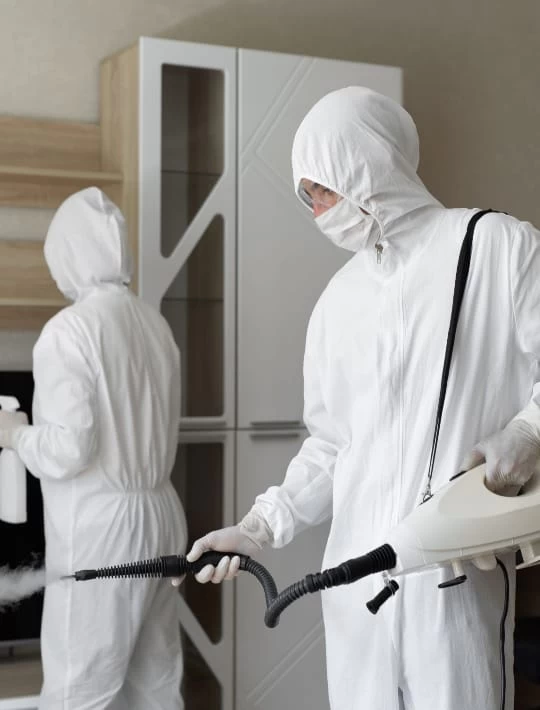
From there, demolition and any required abatement work proceed together under one project timeline. Containment protocols are in place throughout — especially important in Bethpage’s tightly spaced neighborhoods where the house next door is close. When the work is done, post-project clearance documentation is provided so you have a clean paper trail. That includes disposal manifests for any hazardous materials removed — the kind of records that matter when your home eventually goes to market.
Built for Bethpage's Older Homes and Commercial Spaces
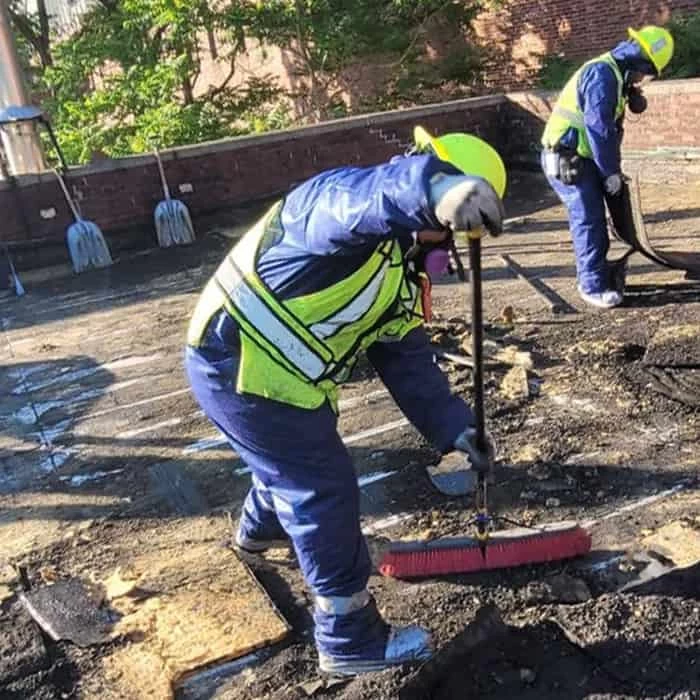
We handle the full range of demolition work in Bethpage — interior selective demolition, full gut renovations, structural teardowns, and commercial space clearing. For residential clients, that typically means kitchens, bathrooms, basements, and full interior guts in homes that haven’t been touched since they were built for Grumman-era families. For commercial clients along the Broadway corridor or in the surrounding Town of Oyster Bay commercial zones, it means tenant buildouts, space conversions, and pre-construction clearing.
What’s included isn’t just the physical demolition. It’s the hazardous materials assessment upfront, the asbestos and lead abatement if needed, the permit coordination with the Town of Oyster Bay Building Division, the containment and site management during work, and the clearance documentation when it’s complete. That’s the full scope of what a demolition project in a pre-1980 Nassau County home actually requires — and we handle it all in-house.
If your project involves mold, water damage, or other environmental conditions discovered during demolition, we handle that too. Our environmental contracting background means we don’t stop at the demo and leave you with an unresolved remediation problem. The work gets finished.
Does my Bethpage home likely have asbestos before I start demolition?
If your home was built before 1980 — and the majority of Bethpage homes were, with a median construction year of 1958 — there’s a strong probability that asbestos-containing materials are present somewhere in the structure. The most common locations are vinyl floor tiles and the adhesive underneath them, spray-on textured ceiling material, pipe insulation on older heating systems, and joint compound used in original drywall installation. The 9×9 floor tiles found in many mid-century Bethpage homes are almost universally asbestos-containing.
The only way to know for certain is testing. A licensed inspector takes samples of suspect materials and sends them to an accredited lab. If asbestos is confirmed above regulatory thresholds, it must be abated by a NYS DOL-licensed asbestos contractor before demolition can disturb those materials. Skipping that step isn’t just a legal violation — it’s a health risk and a liability that follows the property. We handle both the testing coordination and the abatement, so you’re not managing two separate processes.
Do I need a permit for demolition work in Bethpage, NY?
Yes. Any demolition work in Bethpage that involves structural elements requires a permit from the Town of Oyster Bay’s Building Division. Bethpage is an unincorporated hamlet within the Town of Oyster Bay, so all building and demolition permits are processed through the TOB Building Division — either at 74 Audrey Avenue in Oyster Bay or at the Building Division Annex at 977 Hicksville Road in Massapequa. Permit applications require a signed and notarized application along with contractor disclosure documentation.
The permit should be pulled by the licensed contractor in their own name as the contractor of record — not by you as the homeowner. If a contractor asks you to pull the permit yourself, it’s typically because they don’t hold the proper licensing to do it. That’s a problem that can surface at inspection, at resale, or if there’s ever a dispute about the work. We handle the entire permit process as part of the project, so you’re not navigating the Town of Oyster Bay’s requirements on your own.
What happens if asbestos is found after demolition has already started?
If asbestos-containing materials are disturbed without proper abatement, work must stop immediately under both federal EPA NESHAP regulations and New York State Labor Law. The area needs to be contained, air monitoring may be required, and a licensed abatement contractor must be brought in before anything else can proceed. If the contractor who started the demo doesn’t hold an asbestos abatement license, you’re now managing two separate companies, two schedules, and a gap in accountability — while your project sits idle.
This is exactly the scenario we’re built to prevent. Because demolition and asbestos abatement are handled under the same license and the same project team, there’s no stop-and-call situation. If asbestos is found during demolition — which happens regularly in Bethpage’s older housing stock — the same crew handles it, the project keeps moving, and you don’t end up stuck between two contractors pointing at each other. That continuity is worth more than most homeowners realize until they’ve experienced the alternative.
How long does a typical demolition project take in Bethpage?
Timeline depends on the scope of the project and what the assessment turns up before work begins. A selective interior demolition — a kitchen or bathroom gut, for example — typically runs a few days to a week for the physical work. If asbestos abatement is required, that adds time depending on the extent of the materials involved. The abatement process itself follows a regulated sequence: containment setup, removal, air clearance testing, and documentation before the space can be reopened.
Permit timing through the Town of Oyster Bay can also affect the overall schedule. Getting the application in early and complete — with all required notarized documentation — helps avoid delays. We handle the permit submission as part of the project, which means the process starts moving from day one rather than waiting on the homeowner to figure out the TOB’s requirements. For larger projects like full gut renovations or structural demolition, a realistic timeline is typically two to four weeks from permit approval to project completion, depending on scope and what the assessment reveals.
What's the difference between selective demolition and a full gut renovation?
Selective demolition means removing specific elements — a wall, a ceiling, a floor, a built-in — while leaving the surrounding structure intact. It’s common in renovation projects where you’re updating one area of a home without touching everything else. A full gut renovation means stripping a space down to the studs: removing all finishes, fixtures, insulation, and mechanical systems to start fresh. In Bethpage’s older homes, full guts are common when a kitchen or bathroom hasn’t been touched since original construction and the underlying systems — plumbing, electrical, HVAC — need to be replaced entirely.
The distinction matters for hazardous materials planning. A selective demo that only removes drywall in one area may have limited asbestos exposure. A full gut in a 1958 Bethpage home is almost guaranteed to encounter multiple categories of suspect materials across floors, ceilings, and mechanical systems. Both project types require an upfront assessment, but the scope of that assessment — and the abatement work that may follow — scales with how much of the structure is being disturbed. We scope both accurately so you know what you’re getting into before work starts.
Why does Green Island Group serve Bethpage specifically — are they familiar with this area?
Bethpage is an active part of our Nassau County service area, not a market we’re entering for the first time. We’re familiar with the Town of Oyster Bay permit process, the character of the mid-century housing stock that defines neighborhoods throughout Bethpage, and the environmental awareness that Bethpage residents bring to conversations about hazardous materials — an awareness shaped by decades of living alongside the Northrop Grumman contamination story that’s still being remediated today.
That community context matters when you’re talking to a contractor about what might be inside your walls. Bethpage homeowners tend to ask better questions than average — about licensing, about disposal, about what happens if something is found. Our environmental contracting background means those conversations are handled with real answers, not reassurances. Whether the project is a kitchen gut off Powell Avenue, a basement renovation near the Bethpage LIRR station corridor, or a larger commercial clearing on Broadway, we come in knowing the area and knowing what these projects typically involve.