Lower Manhattan Demolition Without the Regulatory Headaches
Canal Street’s building stock is old, the permits are layered, and one wrong move can shut a project down for weeks. We handle licensed demolition in Canal Street, NY from the DOB application to the last load of debris.
I needed a professional consultation explanation of procedure for safe removal of Asbestos in my apartment complex. Without having an account yet, I was very impressed with the caring, knowledgeable and generous advice offered by Jessica, and will look forward to doing business in the future. Thank you so much! I feel much more informed about a sometimes scary endeavor. Peace. Nancy Silva Mineola, NY.
Mia Munoz
Used this company to clean up some water flood in my house. They were fast and easy to work with.very professional, Would recommend to anyone!
Nini Valle
Great company, had a flood and they responded quickly and efficiently. Billed my insurance company directly. I highly recommend this company!
joe colapietro, jr
I had pipe freeze in my basement right before a snow storm and they made to within an hour to help start the clean up process. They we by our side throughout the entire process and even helped with the insurance company. They did such a great job with the cleanup, repair, remidiation, I contracted them to perform the repairs and finishes in the basement. They came with enough manpower and material to get the job done. Leo and Jessica were nothing but a pleasure to deal with!!
Cristian Arredondo c
I had some water damage in my home and Green Island was able to take care of my issue quickly and effectively. I am very pleased with the work they did. They responded quickly and were very professional.
Michael M
Outstanding service! From the office to the field crew everyone was friendly, helpful and responsive. I highly recommend Green Island Group.
What Changes When the Right Crew Shows Up on Canal Street
Most demolition problems on Canal Street don’t start with the demo itself. They start before anyone swings a tool when a contractor pulls the wrong permit, skips the asbestos survey, or doesn’t know that a property two blocks into SoHo requires a Landmarks Preservation Commission sign-off before the DOB will even look at the application. By the time you find that out, you’ve already lost two weeks and possibly your GC’s schedule.
When you work with a crew that’s done this in Canal Street and Lower Manhattan before not just somewhere in the five boroughs, but commercial teardowns in this specific geography those surprises stop being surprises. The permit is filed correctly the first time. The asbestos inspection happens before demo begins, not after the walls are open. The LPC process, if it applies to your property, is accounted for in the timeline from day one.
The building stock along Canal Street is genuinely old. Federal-style row houses on this street date to 1821. Pre-war tenements throughout Chinatown and the Lower East Side were built in the late 1800s. That means asbestos-containing materials and lead paint are not edge cases here they’re the baseline expectation. We handle abatement in-house, without farming it out to a third party, which is what keeps your Canal Street project moving instead of stalling at the worst possible moment.
340 NYC Projects. Canal Street and Lower Manhattan Are Familiar Ground.
We’ve been doing demolition and environmental remediation work across New York for over 12 years. More than 340 of those projects have been in New York City’s five boroughs including full commercial teardowns in Lower Manhattan, the same geography that Canal Street sits in. This isn’t a company learning your neighborhood on your timeline.
We’re fully licensed by the NYC Department of Buildings, EPA and OSHA certified for hazardous material handling, and carry the specialized insurance that Manhattan projects require. We’re also a certified Minority and Woman-Owned Business Enterprise, a credential that matters for commercial clients and developers working with public financing or city agency involvement which is common in the Civic Center and Chinatown corridor just east of Canal Street.
Whether you’re a Chinatown building owner gutting a ground-floor commercial space, a Tribeca developer repositioning a deteriorated property, or a SoHo co-op navigating a gut renovation with LPC implications, the same licensed team handles it same standards, same compliance, no shortcuts.
How a Canal Street Demo Project Actually Gets Done
It starts with a site assessment. Before any paperwork is filed or any equipment is scheduled, we walk the property, evaluate the scope, and identify what’s actually there structural conditions, material age, proximity to shared walls or adjacent occupied spaces, and any indicators of hazardous materials. On Canal Street, where buildings routinely predate 1940, that last part is never skipped.
From there, the pre-demolition asbestos survey is conducted. Federal EPA regulations require this for any building constructed before 1980, and virtually every building in the Canal Street corridor qualifies. If asbestos-containing materials are found and they usually are we handle abatement in-house before physical demolition begins. No third-party referral, no gap in the schedule. The DOB demolition permit application is filed during this phase, along with any required NYC DOT coordination for equipment access and sidewalk shed installation on what is one of Manhattan’s most congested corridors.
Once permits are issued and abatement is cleared, demolition proceeds according to the site safety plan. Debris removal is scheduled around Canal Street’s traffic patterns Holland Tunnel approach traffic to the west, Manhattan Bridge approach traffic to the east because logistics matter on a street that doesn’t have room for improvisation. When the work is done, the site is cleaned, inspected, and signed off. You get documentation of everything: permits pulled, abatement clearance, final inspection sign-off.
Residential and Commercial Demolition Service Canal Street
Every Scope Covered From a Chinatown Gut-Out to a Full Teardown
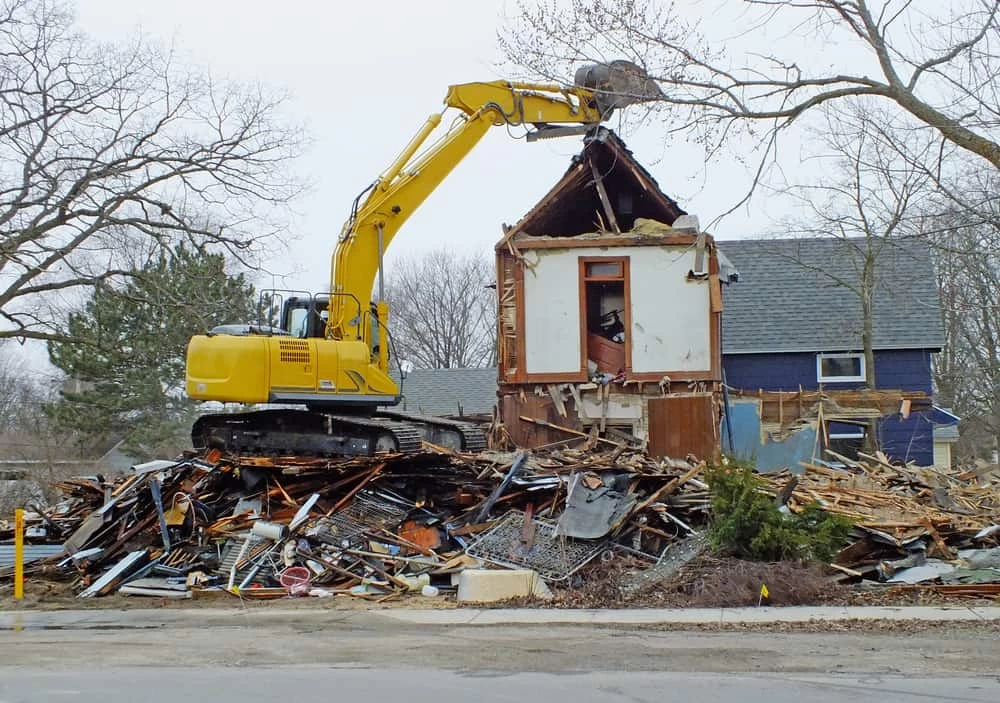
We handle the full range of demolition work that Canal Street and the surrounding Lower Manhattan neighborhoods generate. Interior demolition for residential gut renovations loft conversions in Tribeca, co-op renovations in SoHo, ground-floor commercial buildouts in Chinatown is handled with the same DOB-licensed team and the same asbestos and lead paint protocols as larger commercial scopes. There’s no separate “small job crew” that operates outside the compliance framework.
For commercial and mixed-use projects, we manage selective demolition, full structural teardowns, and everything in between. If your property sits within or adjacent to the SoHo Cast Iron Historic District which begins at Canal Street’s northern boundary along Broadway LPC coordination is part of the scope, not an afterthought. We’re familiar with the LPC review process and what documentation is required before the DOB will issue a demolition permit on a landmark-adjacent property.
Emergency response is also available around the clock. Canal Street’s location on former marshland near the Hudson River puts it in a documented flood zone, and post-storm structural damage is a real and recurring scenario in this corridor. If you’re dealing with water intrusion, fire damage, or a structural failure that can’t wait, we’re reachable 24 hours a day and can respond the same day.
Do I need a special permit to demolish a building near Canal Street?
Yes and in Lower Manhattan near Canal Street, the permit process is more layered than most people expect. At minimum, you’ll need a NYC Department of Buildings demolition permit, which requires engineering drawings, a site safety plan, and documentation that utilities have been disconnected. For commercial demolition specifically, the contractor must hold NYC DOB Special Contractor Registration under NYC Administrative Code §28-3401.1 not every contractor qualifies for this, and working with one who doesn’t is a serious compliance risk.
If your property is located within or adjacent to the SoHo Cast Iron Historic District which runs along Canal Street’s northern boundary you’ll also need Landmarks Preservation Commission approval before the DOB will issue a demolition permit. This is a step that trips up contractors who don’t know Lower Manhattan well. We manage the full permit process, including LPC coordination where it applies, so you’re not navigating that on your own.
Does my building on Canal Street need an asbestos inspection before demolition?
Almost certainly yes. Federal EPA regulations require an asbestos survey for any building constructed before 1980 before demolition can begin. On and around Canal Street, that regulation applies to essentially every building on the street including Federal-style row houses dating to 1821, pre-war tenements throughout Chinatown built in the late 1800s, and mid-century commercial buildings throughout the corridor. Asbestos-containing materials in these buildings typically show up in floor tiles, pipe insulation, ceiling materials, and joint compound.
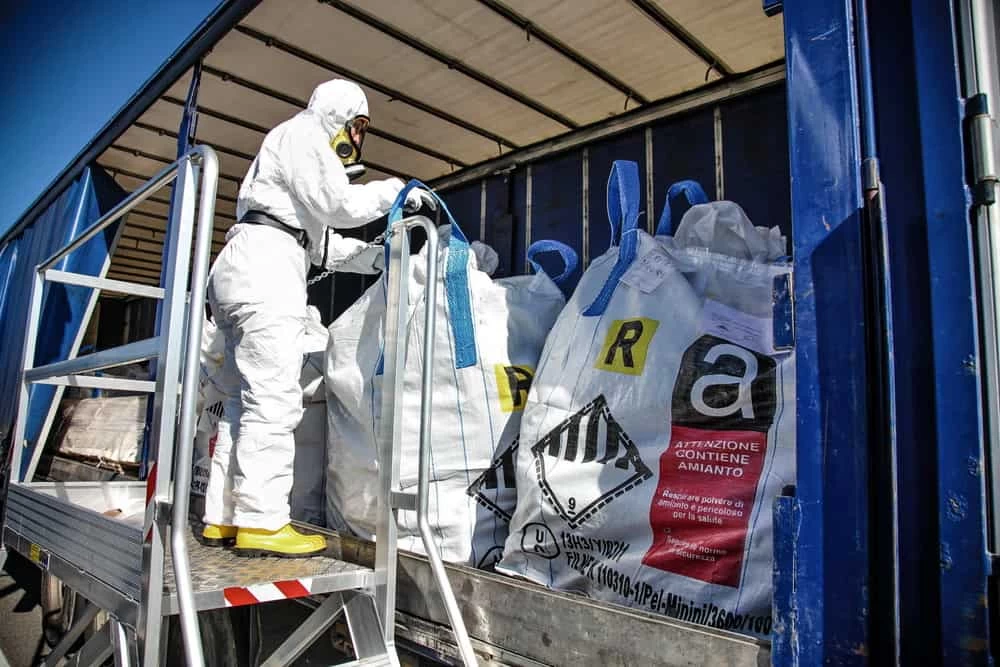
If asbestos is found and in this Canal Street building stock, it usually is a licensed abatement contractor must remove it before physical demolition begins. We handle asbestos abatement in-house with EPA and OSHA certified professionals, which means there’s no gap between the inspection, the abatement, and the start of demo. You don’t have to coordinate a separate abatement contractor or wait for a third party to clear the site before work can proceed.
How does Canal Street's subsurface affect demolition projects with below-grade work?
It’s something worth knowing before you start. Canal Street literally follows the path of a covered 19th-century drainage canal built over the former Collect Pond a marshy, spring-fed body of water that was filled in during the early 1800s. Subway construction in the early 1900s encountered what The New York Times described as “quicksands” in what was called “the old Canal Street swamp.” That subsurface history doesn’t disappear just because the street is paved.
For any demolition project involving below-grade work foundation removal, excavation, or work near the building’s base the unstable soil conditions and potential groundwater in this Canal Street corridor are real factors. An experienced contractor accounts for this in the pre-demo assessment and plans accordingly, rather than discovering it mid-project. Our environmental remediation background means we’re equipped to identify and manage subsurface conditions before they become project-stopping problems.
What happens if my Canal Street property has lead paint in addition to asbestos?
Lead paint is just as common as asbestos in Canal Street’s pre-war building stock, and the handling requirements are just as specific. Under EPA’s Renovation, Repair and Painting (RRP) Rule, any work that disturbs lead-based paint in a pre-1978 building requires a certified renovator to follow specific containment and cleanup procedures. For demolition scopes, this means lead paint removal must be handled by certified professionals using proper containment not simply demolished through and cleaned up after.
Our team is certified for both asbestos abatement and lead paint removal, and both are handled as part of the integrated demolition scope. You won’t receive a referral to a separate lead paint contractor mid-project. The pre-demolition assessment covers both hazardous materials, the abatement is completed before physical demo begins, and clearance documentation is provided at the end which your insurance carrier, building management, or co-op board may require before they’ll authorize the next phase of work.
Can you handle emergency demolition in Canal Street after storm or flood damage?
Yes, and this is a real scenario in this part of Lower Manhattan. Canal Street’s corridor is built on former marshland near the Hudson River and sits within documented flood zone designations. Hurricane Sandy demonstrated what storm surge can do to this neighborhood, and post-storm structural damage compromised foundations, water-saturated load-bearing walls, collapsed interior structures creates situations where waiting three days for a quote isn’t an option.
We’re available 24 hours a day for emergency response. When you call, you’re reaching someone who can assess the situation, confirm the scope, and mobilize the same licensed, insured, DOB-registered team that handles planned projects. Emergency demolition in NYC still requires proper permits and safety protocols there’s no shortcut around that but an experienced team can move through the emergency permitting process significantly faster than a contractor who doesn’t know the DOB system. If your Canal Street property has sustained structural damage and needs immediate attention, we can respond the same day.
How much does commercial demolition typically cost for a Canal Street property?
The range is wide, and the honest answer is that it depends heavily on what’s inside the walls. For mid-to-large commercial demolition projects in the Canal Street corridor the kind of scope you’d see in an office-to-residential conversion like the ones currently active on Canal Street at 54-58 Canal or 202 Canal project costs typically run from $50,000 into the hundreds of thousands depending on square footage, hazardous material scope, and structural complexity. Interior demolition for smaller residential or retail scopes, like a Chinatown ground-floor gut-out or a Tribeca loft renovation, generally runs in the $15,000 to $60,000 range depending on size and what’s found during the asbestos and lead paint inspection.
What tends to move the number significantly in this corridor is the hazmat scope. Buildings that predate 1940 which is most of Canal Street almost always have asbestos-containing materials and lead paint that must be abated before demo begins. That’s not a surprise charge if your contractor is doing the pre-demo assessment correctly. We provide detailed written estimates that itemize the demolition scope and the abatement scope separately, so you know what you’re paying for before any work begins not after the walls are open.