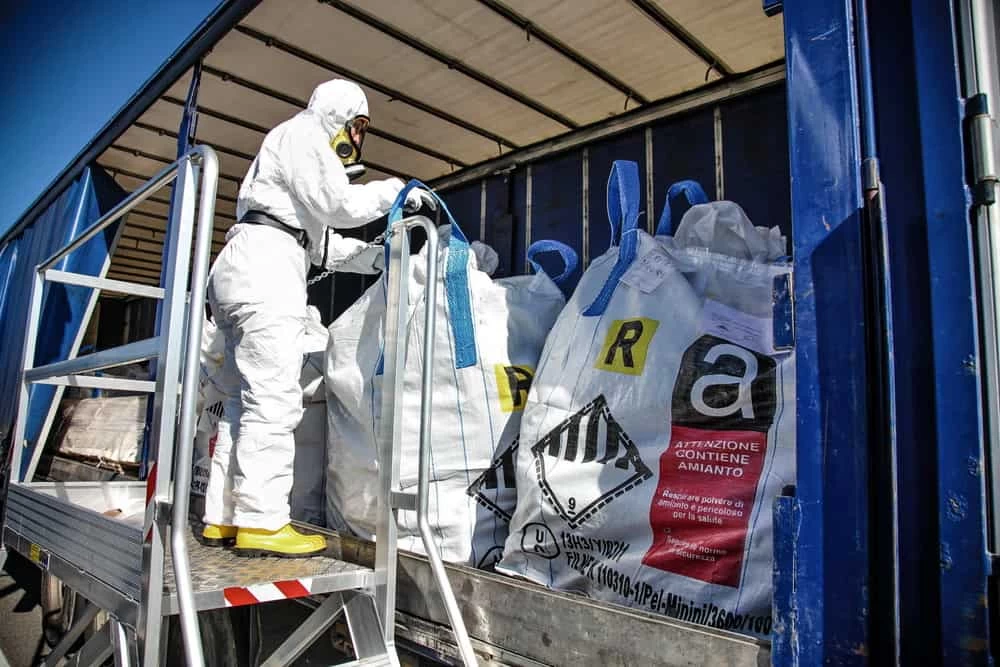
I needed a professional consultation explanation of procedure for safe removal of Asbestos in my apartment complex. Without having an account yet, I was very impressed with the caring, knowledgeable and generous advice offered by Jessica, and will look forward to doing business in the future. Thank you so much! I feel much more informed about a sometimes scary endeavor. Peace. Nancy Silva Mineola, NY.
Mia Munoz
Used this company to clean up some water flood in my house. They were fast and easy to work with.very professional, Would recommend to anyone!
Nini Valle
Great company, had a flood and they responded quickly and efficiently. Billed my insurance company directly. I highly recommend this company!
joe colapietro, jr
I had pipe freeze in my basement right before a snow storm and they made to within an hour to help start the clean up process. They we by our side throughout the entire process and even helped with the insurance company. They did such a great job with the cleanup, repair, remidiation, I contracted them to perform the repairs and finishes in the basement. They came with enough manpower and material to get the job done. Leo and Jessica were nothing but a pleasure to deal with!!
Cristian Arredondo c
I had some water damage in my home and Green Island was able to take care of my issue quickly and effectively. I am very pleased with the work they did. They responded quickly and were very professional.
Michael M
Outstanding service! From the office to the field crew everyone was friendly, helpful and responsive. I highly recommend Green Island Group.
No Permit Delays, No Surprise Hazmat, No Second Contractor to Call
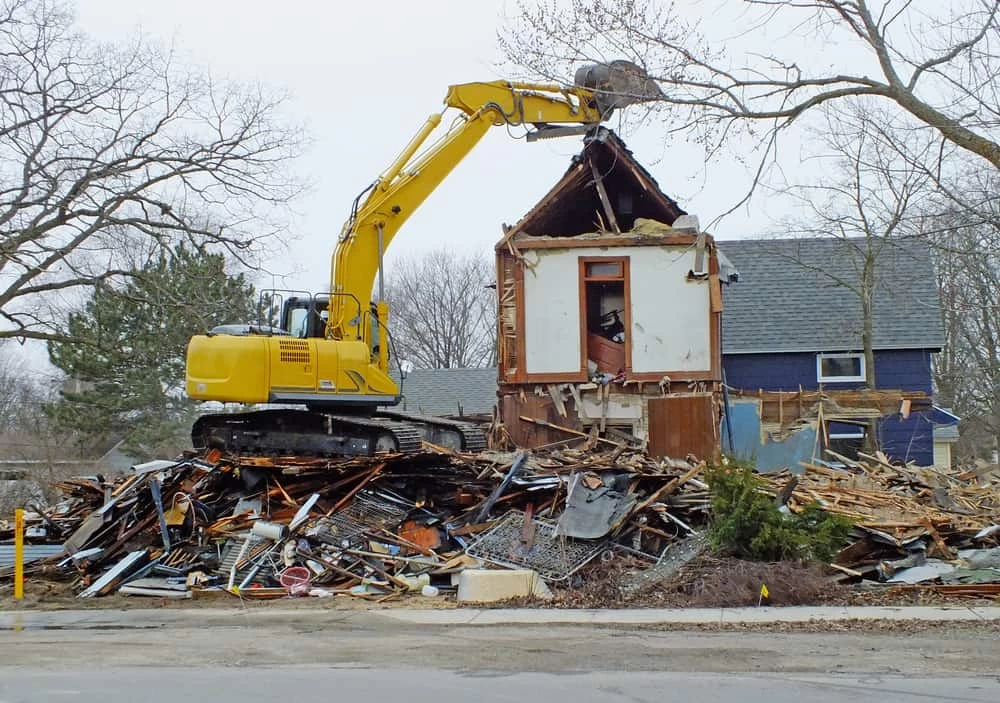
Most demolition problems in Centerport don’t start with the wrecking bar. They start before the job even begins when a homeowner finds out their 1940s bungalow needs an asbestos survey before the Town of Huntington will issue a demolition permit, and the contractor they hired doesn’t do that. Now you’re managing two companies, two schedules, and a project that’s already stalled.
We handle the asbestos assessment, the abatement, and the demolition under one roof. For the HBCA district specifically where most of the housing stock was built between the 1930s and 1950s that integration isn’t a convenience, it’s a necessity. New York State requires a licensed asbestos contractor to survey any pre-1974 structure before demolition begins. We’re licensed to do it, and we do it as part of the same project, not a separate engagement you have to coordinate yourself.
Centerport’s position on Northport Bay also means weather-driven damage is a real and recurring issue. Nor’easters, storm surge, frozen pipes in February these events don’t wait for business hours, and the damage compounds when response is slow. We operate 24/7 with documented sub-one-hour emergency response times. When your waterfront property takes a hit, you need one team that can assess, demo, and restore not three separate calls and three separate invoices.
Licensed Demolition Contractors Serving Centerport, NY
12 Years, 5,000 Projects, and We Know What's Inside a Centerport Bungalow
We’re a Long Island-based environmental and demolition company headquartered in Bohemia, NY about 25 miles from Centerport. We’ve been doing this work for over 12 years, with more than 5,000 completed projects across Long Island and New York City. That’s not a number we throw out to sound impressive. It means we’ve opened up enough pre-war homes on the North Shore to know what to expect, and more importantly, how to handle it when something unexpected shows up.
We hold active NYS Department of Labor asbestos certifications, carry $2,000,000 in general liability insurance, and are licensed in Suffolk County which is a requirement the Town of Huntington’s Building and Housing Division will ask for before your demolition permit moves forward. We also carry MWBE certification, which matters for public and municipal projects in the area.
What you’ll actually notice is that we answer the phone, we show up when we say we will, and we don’t hand your project off to a subcontractor the moment things get complicated. The team members who quote your job are the ones managing it.
What a Demolition Project Actually Looks Like From First Call to Final Inspection
The first step is a site assessment. We come out, look at the structure, and give you a clear picture of what the project involves including whether an asbestos survey is required. For most homes in Centerport’s HBCA district, it will be. New York State law mandates a licensed survey of any building constructed before January 1, 1974, before demolition can begin. We handle that survey ourselves, which means no waiting on a third-party abatement company before your permit application can move.
Once the assessment is complete, we build out the permit package. For demolition in Centerport, that means submitting Form 87-04 to the Town of Huntington’s Building and Housing Division at 100 Main Street in Huntington, along with utility disconnection letters from LIPA and National Grid, the asbestos survey documentation, our Suffolk County contractor’s license, and a Workers’ Compensation certificate. We manage that entire submission on your behalf.
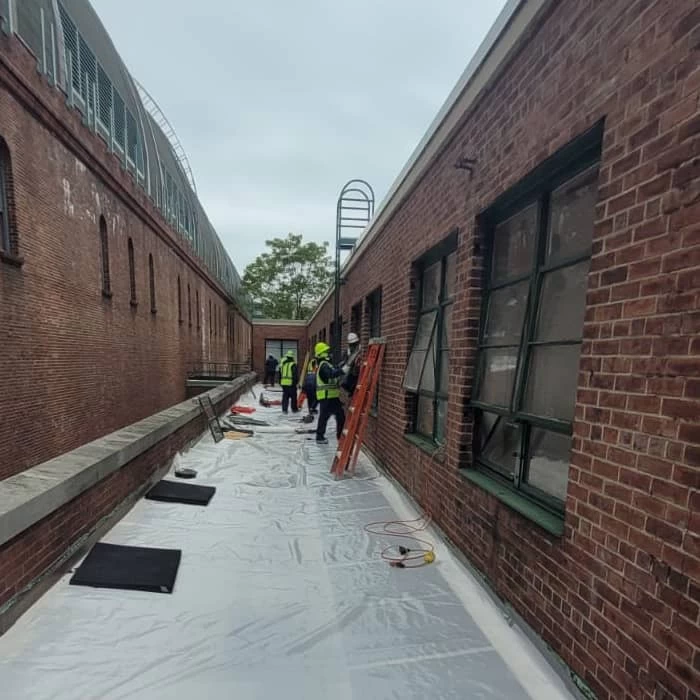
When the permit is in hand, the physical work begins. We disconnect and confirm all utilities, contain and remove any hazardous materials according to USEPA NESHAP standards, and execute the demolition whether that’s a full teardown, selective interior demo, or structural removal. The site gets cleaned and cleared before we leave. If your project is insurance-triggered, we coordinate documentation with your adjuster throughout the process so you’re not navigating that separately.
Full Demolition, Asbestos Abatement, and Permits Handled as One Job
The demolition services we provide in Centerport cover the full range of what residential and commercial property owners on the North Shore actually need. Full structural teardowns for bungalow-to-new-construction projects in the HBCA district. Selective interior demolition for gut renovations in older colonials and historic homes along the Little Neck Road corridor. Emergency structural removal after storm damage or water intrusion. And the environmental work asbestos abatement, lead paint removal, mold remediation that has to happen before or alongside the physical demolition.
Every project in Centerport starts with a clear scope and a permit plan. The Town of Huntington has specific requirements, and skipping steps or using an unlicensed contractor doesn’t just slow the project down it can create stop-work orders and title complications on a property worth close to a million dollars or more. We’ve seen what happens when that goes wrong, and we’re set up specifically to prevent it.
For properties with storm or water damage, we also work directly with insurance carriers. We document the damage, communicate with adjusters, and make sure the scope of work is accurately represented in the claim. In a community where waterfront and near-waterfront homes regularly reach $2 million to $4 million in value, having that handled correctly isn’t optional it’s the whole game.
Do I need a demolition permit to tear down my house in Centerport, NY?
Yes. Any structure being demolished within the Town of Huntington which includes Centerport as an unincorporated hamlet requires a demolition permit from the Town’s Building and Housing Division. The application is Form 87-04, and it requires more than just a signature. You’ll need to submit utility disconnection letters from LIPA and National Grid confirming that gas and electric service to the building has been cut, a Workers’ Compensation certificate, and your contractor’s Suffolk County license number.
For most homes in Centerport, there’s one more requirement that catches people off guard: if the building was constructed before January 1, 1974, New York State law requires a licensed asbestos contractor to survey the structure before the permit can be issued. Given that the majority of homes in the HBCA district were built in the 1930s, 1940s, and 1950s, this applies to a large percentage of teardown projects in the area. A contractor who isn’t licensed for asbestos work can’t complete your permit package which means your project stalls before it starts.
Is asbestos testing required before demolition in Centerport, NY?
For most homes in Centerport, yes. New York State Labor Law requires a licensed asbestos contractor to survey any building constructed before January 1, 1974, before any demolition work begins. That survey has to be completed and documented before the Town of Huntington will issue a demolition permit. Buildings with original construction on or after January 1, 1974, are exempt but in the HBCA district, where most of the housing stock dates to the 1930s through 1950s, the exemption rarely applies.
Asbestos in these older Centerport homes typically shows up in floor tiles, pipe insulation, roofing materials, and textured wall coatings. Lead paint is also common in pre-1978 structures. If either is found during the survey, it has to be properly abated before demolition proceeds not after, and not during. We hold active NYS Department of Labor asbestos certifications and handle both the survey and any required abatement in-house, so you’re not waiting on a separate company to clear the site before work can begin.
How long does a demolition project typically take in Centerport?
The physical demolition of a residential structure a full teardown of a bungalow in the HBCA district, for example typically takes one to three days once the permit is in hand and utilities are disconnected. The longer part of the timeline is usually the permit and pre-demolition phase. Between scheduling the asbestos survey, completing the abatement if materials are found, assembling the permit package, and waiting for Town of Huntington approval, you should plan for two to four weeks from initial contact to the day demolition begins under normal circumstances.
Emergency situations storm damage, structural compromise from water intrusion, or a February pipe burst that’s left a Centerport property uninhabitable move faster. We prioritize emergency response and can often mobilize same-day. In those cases, we work with you and your insurance carrier simultaneously, documenting damage while we begin the work that needs to happen immediately to prevent further loss. The permit process still applies, but emergency conditions can sometimes be addressed with expedited review depending on the scope and safety risk involved.
What's the difference between full demolition and selective demolition?
Full demolition means the entire structure comes down foundation removal is sometimes included, sometimes not, depending on whether you’re rebuilding on the same footprint. This is the most common scenario for the teardown-and-rebuild projects happening throughout Centerport’s HBCA district, where older bungalows are being replaced with new construction on the same lots.
Selective demolition is more surgical. It means removing specific parts of a structure a load-bearing wall, a kitchen or bathroom, an addition, or a section damaged by water or fire while leaving the rest of the building intact. This is common in Centerport’s larger colonials and older homes where the goal is renovation, not replacement. Selective work requires more planning and more precision, because you’re working around live structure. It also still triggers the asbestos survey requirement if the building predates 1974, even if you’re only touching one room. Any disturbance of materials in a pre-1974 building that could contain asbestos walls, flooring, ceiling tiles, pipe insulation requires proper assessment and handling before that material is cut, broken, or removed.
Can a demolition contractor in Centerport help with an insurance claim after storm damage?
Yes, and honestly, for waterfront and near-waterfront properties in Centerport, this is one of the more important things to sort out before you hire anyone. Centerport faces documented risk of high winds and flooding from major storms nor’easters, tropical remnants, and storm surge events off Northport Bay are real occurrences here. When that damage happens, the insurance process starts immediately, and what gets documented in those first hours matters significantly for your claim.
We have a track record of working alongside insurance carriers coordinating damage documentation, communicating with adjusters, and making sure the scope of the demolition and restoration work is accurately reflected in the claim. For a property worth $700,000 to $4 million, having that handled correctly can be the difference between a claim that covers your actual loss and one that falls short. We don’t just show up with equipment we help you build the paper trail that protects your investment from the first call forward.
How do I find a licensed demolition contractor in Centerport, NY I can actually trust?
Start with the credentials that are legally required for the work. Any contractor doing demolition in Centerport needs a Suffolk County contractor’s license the Town of Huntington’s permit application requires it. They should also carry a minimum of $2,000,000 in general liability insurance, which is the New York State requirement for demolition contractors. And if your home was built before 1974, they need active NYS Department of Labor asbestos certifications. Ask for all three before you sign anything.
Beyond credentials, look at whether the contractor actually operates in this area or just has a landing page with a local zip code attached. Several companies that appear in search results for Centerport are out-of-state operations or directory aggregators not contractors with real experience working in the Town of Huntington’s permit system, dealing with the North Shore’s older housing stock, or responding to coastal storm damage in this specific community. A contractor who knows what Form 87-04 is, who knows that LIPA and National Grid disconnection letters are required, and who has handled pre-war bungalow demolitions on the North Shore before is a fundamentally different hire than one who’s never worked in Suffolk County.