When your building sits in the shadow of the World Trade Center and the agency that licenses demolition debris removal is literally on your block, you need a demolition contractor who’s already done this not one learning on your project.
I needed a professional consultation explanation of procedure for safe removal of Asbestos in my apartment complex. Without having an account yet, I was very impressed with the caring, knowledgeable and generous advice offered by Jessica, and will look forward to doing business in the future. Thank you so much! I feel much more informed about a sometimes scary endeavor. Peace. Nancy Silva Mineola, NY.
Mia Munoz
Used this company to clean up some water flood in my house. They were fast and easy to work with.very professional, Would recommend to anyone!
Nini Valle
Great company, had a flood and they responded quickly and efficiently. Billed my insurance company directly. I highly recommend this company!
joe colapietro, jr
I had pipe freeze in my basement right before a snow storm and they made to within an hour to help start the clean up process. They we by our side throughout the entire process and even helped with the insurance company. They did such a great job with the cleanup, repair, remidiation, I contracted them to perform the repairs and finishes in the basement. They came with enough manpower and material to get the job done. Leo and Jessica were nothing but a pleasure to deal with!!
Cristian Arredondo c
I had some water damage in my home and Green Island was able to take care of my issue quickly and effectively. I am very pleased with the work they did. They responded quickly and were very professional.
Michael M
Outstanding service! From the office to the field crew everyone was friendly, helpful and responsive. I highly recommend Green Island Group.
What Changes When the Right Crew Shows Up on Church Street
Most demolition problems in this part of Manhattan aren’t about the physical work they’re about what happens before the first wall comes down. An asbestos survey that stalls your DOB permit. A debris hauler without a Class 2 Registration. An after-hours variance that nobody pulled. These aren’t rare edge cases on Church Street. They’re the standard obstacles in a corridor where virtually every building predates 1987 and the regulatory agencies are your neighbors.
When you work with us, we handle asbestos abatement, permitting, and demolition under one roof, so those obstacles stop being your problem. Your project stays on schedule. Your DOB filings are clean. And you’re not coordinating three separate vendors while a $3 million Tribeca loft sits untouched.
The office-to-residential conversion wave reshaping the Financial District is real, and it’s accelerating. If you’re gut-renovating a commercial floor or stripping out a pre-war office suite near Church Street, the difference between a contractor who understands Lower Manhattan’s building stock and one who doesn’t shows up immediately in the survey, in the permit application, and in how the crew handles what’s inside those walls.
We’ve been doing this work for over 12 years, with more than 5,000 completed projects across New York including 340-plus demolition jobs specifically within the five boroughs. We’re not a general contractor who occasionally swings a sledgehammer in Manhattan. We’re a team that has navigated the NYC Department of Buildings, filed ACP-5 asbestos forms with the DEP, coordinated site safety plans for high-rise interiors, and delivered clean, compliant demolition work in the exact kind of dense, pre-war environment that defines Church Street and its surrounding blocks in Lower Manhattan.
We’re EPA and OSHA certified, NYC DOB licensed, and MWBE certified credentials that matter in a corridor where 100 Church Street houses both the NYC Law Department and the Business Integrity Commission, the agency that regulates demolition debris removal in the city. We’re not getting familiar with your neighborhood. We already know it.
It starts with a site assessment. Before anything is touched, we evaluate the scope of work, identify any hazardous materials asbestos, lead paint, mold and determine exactly what permits are required. In a pre-1987 building on or near Church Street, an asbestos survey isn’t optional. NYC Buildings Bulletin 2009-031 requires it, and the DEP won’t clear your demolition permit without a filed ACP-5 form. We handle that step in-house, not hand it off.
From there, permitting moves forward through the NYC DOB. If the building is seven stories or taller which covers a significant portion of the Church Street building stock a site safety coordinator and approved site safety plan are required. If work needs to happen outside standard hours to avoid disrupting tenants or neighboring businesses, we file after-hours variance permits. None of this lands on your plate.
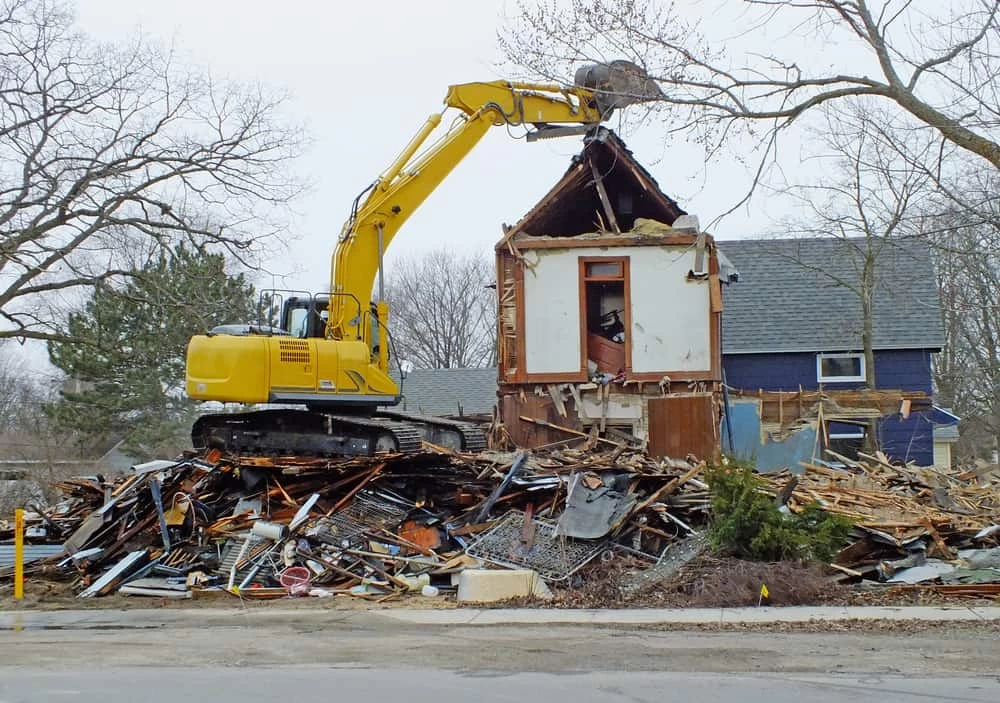
Once the permits are in place, demolition begins. Whether it’s a selective interior gut-out, a full floor strip for a commercial-to-residential conversion, or targeted structural removal, we work to scope contained, documented, and compliant. When the physical work is done, debris is hauled by a BIC-registered carrier and the site is cleared and documented for your next phase. You get a project that’s finished, not just started.
Commercial and Residential Demolition Contractors near Church Street
Every Service Built for What These Buildings Actually Contain
The buildings along and around Church Street aren’t simple. You’ve got early 20th-century commercial structures, mid-century office towers, converted lofts in Tribeca, and mixed-use buildings in the Civic Center that have been through multiple lives. What’s inside those walls the materials, the systems, the surprises is why you need demolition specialists who know this building stock, not just contractors who know demolition in general.
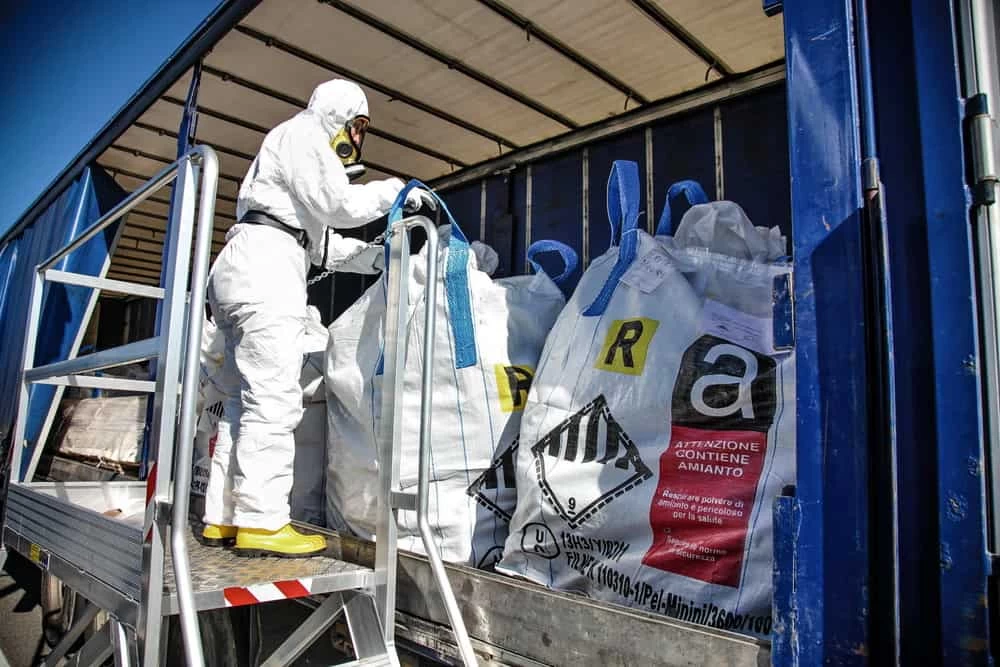
We offer the full scope of demolition services: interior selective demolition, full structural demolition, asbestos abatement, lead paint removal, mold remediation, and site preparation. For commercial clients working through the Financial District’s office-to-residential conversion pipeline, that means gut-outs of entire office floors with asbestos abatement built into the same project timeline. For residential clients renovating high-end condos or loft units near Chambers Street or Fulton Street, it means precision selective demolition that protects the building envelope and neighboring units.
Everything is handled by our licensed, certified team operating under one contract and one insurance policy. You’re not managing a chain of subcontractors. The asbestos crew, the demolition crew, and the site safety coordination all come from us which means fewer handoffs, fewer delays, and one point of accountability from the first survey to the final site clearance.
Do I need an asbestos survey before demolition work on Church Street in Manhattan?
Yes and it’s not optional. NYC Buildings Bulletin 2009-031 requires an asbestos survey for virtually all pre-1987 structures before any demolition, renovation, or repair work that may disturb building materials. Given that the overwhelming majority of buildings on and around Church Street were constructed well before that cutoff many before 1940 an asbestos survey is a standard first step, not an exception.
Beyond the survey itself, the NYC DEP requires that an ACP-5 form be filed before any full demolition permit is issued. If asbestos is found and abatement is needed, an ACP-7 form must be submitted to the DEP as a project notification. Skipping either step doesn’t just create a compliance problem it stops your permit from being issued entirely. We handle the survey, abatement, and DEP filings in-house, so that sequence happens without delays and without you managing multiple vendors to get there.
What permits are required for interior demolition in a Manhattan building?
For interior demolition that doesn’t affect use, egress, or occupancy, you’ll typically need an Alt2 permit through the NYC Department of Buildings. For full structural demolition, a separate full demolition application is required. On top of that, if your building is seven stories or taller a threshold that now covers a large portion of the Church Street building stock after the DOB expanded its “major building” definition you’ll need a site safety coordinator and an approved site safety plan before work can begin.
If the project requires work before 7am, after 6pm, or on weekends, an after-hours variance permit is also required. Missing any of these filings isn’t just a paperwork issue. Base fines run $2,500 to $25,000 per violation, daily penalties accrue, and forced legalization can cost two to three times the original permit fee. Open or unpermitted work also creates problems when the property changes hands. Getting the permit sequence right from the start is the only way to protect the project.
How long does interior demolition typically take in a Lower Manhattan building?
It depends heavily on the scope, the building, and what’s found during the initial survey. A selective interior gut-out in a Tribeca loft removing a kitchen, a few partition walls, or a bathroom can take anywhere from a few days to a week once permits are in place. A full floor strip in a Financial District office building undergoing conversion to residential use is a larger operation and typically runs two to four weeks, depending on floor size, hazardous material findings, and site access logistics.
The permit timeline is usually the variable that surprises people. NYC DOB processing times vary, and if asbestos abatement is required, DEP clearance has to happen before demolition can resume in the affected areas. In a dense corridor like Church Street where neighboring tenants, building management, and after-hours variance requirements all factor into scheduling working with a contractor who has managed this process hundreds of times in New York City makes a real difference in keeping the timeline realistic and on track.
What does commercial demolition cost per square foot in the Financial District?
Commercial interior demolition in Manhattan generally runs between $8 and $20 per square foot for a standard gut-out, though that range shifts based on several factors: the age of the building, what hazardous materials are present, the floor height, site access constraints, and whether after-hours work is required. In the Financial District and along Church Street specifically, older building stock and the near-universal presence of pre-1987 materials mean asbestos abatement is frequently part of the scope and that adds cost that needs to be accounted for upfront, not discovered mid-project.
The most important thing to understand is that the lowest bid rarely reflects the actual cost of a compliant project in this environment. A quote that doesn’t include asbestos survey costs, DEP filing fees, site safety coordination, or after-hours variance permits isn’t a complete picture. When you’re evaluating bids for a demolition project near Church Street, ask what’s included in the permit and compliance scope that’s where the real cost differences show up.
Can a demolition contractor in Church Street, NY also handle asbestos abatement?
Most can’t or at least, most don’t do it in-house. The typical approach is for a demolition contractor to subcontract asbestos abatement to a separate licensed firm, which means two project timelines, two sets of insurance, two points of coordination, and a gap in the schedule while you wait for DEP clearance before demolition can resume.
We handle both under one roof. Our team includes EPA-certified asbestos professionals who conduct the survey, manage the abatement, file the required ACP-5 and ACP-7 forms with the NYC DEP, and hand off directly to the demolition crew without stopping the project clock. In a building environment like Church Street where pre-1987 materials are the rule, not the exception, and where the EPA’s post-9/11 Lower Manhattan Test and Clean Program documented contamination in buildings throughout this corridor having abatement and demolition managed by the same team isn’t just convenient. It’s a meaningful reduction in project risk.
What should I look for when hiring a demolition contractor near Church Street in Manhattan?
Start with licensing. In New York City, commercial demolition requires Special Contractor registration with the NYC Department of Buildings, and debris removal requires a Class 2 Registration from the NYC Business Integrity Commission the agency headquartered at 100 Church Street itself. Both are verifiable through public portals, and any contractor working in this area should be able to confirm both without hesitation.
Beyond licensing, look for in-house asbestos abatement capability, documented experience in NYC high-rise and pre-war building environments, and a clear answer on who handles permit filings. In a building stock as old and complex as what you find on and around Church Street, a contractor who subcontracts the hazardous material work or leaves permitting to you is adding risk to your project, not removing it. Ask for a specific breakdown of what’s included in the compliance scope survey, DEP filings, site safety coordination, after-hours variances before you sign anything. A contractor who can answer those questions clearly and specifically has done this before. One who can’t, hasn’t.