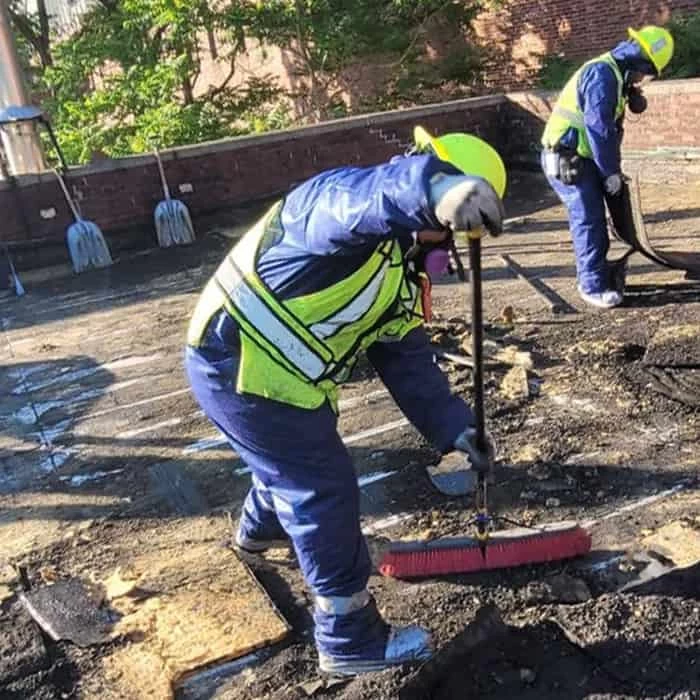
When the Walls Come Down in a Million-Dollar Home, Licensing Isn't Optional
Most East Williston homes were built before 1960. That means the walls you’re tearing out probably have a story — and not always a clean one. We handle demolition and hazardous material abatement under one license, one team, and one timeline.
I needed a professional consultation explanation of procedure for safe removal of Asbestos in my apartment complex. Without having an account yet, I was very impressed with the caring, knowledgeable and generous advice offered by Jessica, and will look forward to doing business in the future. Thank you so much! I feel much more informed about a sometimes scary endeavor. Peace. Nancy Silva Mineola, NY.
Mia Munoz
Used this company to clean up some water flood in my house. They were fast and easy to work with.very professional, Would recommend to anyone!
Nini Valle
Great company, had a flood and they responded quickly and efficiently. Billed my insurance company directly. I highly recommend this company!
joe colapietro, jr
I had pipe freeze in my basement right before a snow storm and they made to within an hour to help start the clean up process. They we by our side throughout the entire process and even helped with the insurance company. They did such a great job with the cleanup, repair, remidiation, I contracted them to perform the repairs and finishes in the basement. They came with enough manpower and material to get the job done. Leo and Jessica were nothing but a pleasure to deal with!!
Cristian Arredondo c
I had some water damage in my home and Green Island was able to take care of my issue quickly and effectively. I am very pleased with the work they did. They responded quickly and were very professional.
Michael M
Outstanding service! From the office to the field crew everyone was friendly, helpful and responsive. I highly recommend Green Island Group.
What Actually Changes When You Hire the Right Demolition Contractor in East Williston
In a village like East Williston — where roughly 83% of the housing stock predates 1960 — interior demolition is almost never just demolition. Knock out a kitchen wall in a 1948 Cape Cod off Roslyn Avenue and there’s a real chance you’re looking at asbestos floor tile adhesive, lead paint on the plaster, or pipe insulation that hasn’t been touched since Truman was president. A contractor who only holds a demolition license has to stop the moment any of that shows up. Your project halts, you wait weeks for a licensed abatement crew to mobilize, and your renovation timeline falls apart.
That doesn’t happen when your demolition contractor is also a licensed abatement contractor. We carry a New York State Department of Labor Asbestos Handling Contractor License alongside our demolition credentials, which means the same team that starts the teardown can legally handle whatever’s found inside the walls. No gap. No second mobilization fee. No project sitting idle while you coordinate between two separate companies.
For homeowners in the Wheatley School District area, where properties routinely sell north of a million dollars, there’s another outcome that matters just as much: documentation. When you go to sell, buyers’ attorneys will ask for demolition permits, asbestos disposal manifests, and clearance certificates. We produce all of it — not as a courtesy, but as a standard part of how we work. That paper trail protects your property’s value long after the job is done.
One Team That Knows East Williston's Older Homes Inside and Out
We’re a full-service environmental contracting and demolition company serving East Williston, Nassau County, and the greater New York metro area. We’ve built our reputation working in exactly the kind of housing stock that defines East Williston — pre-war colonials, 1950s ranches, expanded Cape Cods — where the materials behind the walls require more than just a sledgehammer and a dumpster.
We know the Town of North Hempstead’s permit process. We know the Nassau County Home Improvement Contractor license requirement that catches out-of-area operators off guard. We know the Historic Overlay District ordinance that applies to contributing structures near Station Plaza in East Williston, and what it means for a project before work even begins. That’s not something you learn from a template — it comes from doing this work in this county, repeatedly, over time.
When you call us, you’re not getting a national franchise with a local phone number. You’re getting a contractor who has pulled permits through the Town of North Hempstead’s Building Department, disposed of hazardous materials through licensed Nassau County facilities, and delivered the clearance certificates that East Williston homeowners need when it’s time to sell.
No Guesswork — Here's What Happens from First Call to Final Clearance
It starts with an assessment. Before any walls come down, we evaluate the scope of the project and the age of the structure. In East Williston, where a significant portion of homes were built between 1930 and 1959, that assessment almost always includes a conversation about asbestos and lead paint — not because it’s guaranteed to be there, but because the probability is high enough that you need to know before demolition begins, not after.
If testing is warranted, samples are collected and sent to a certified lab. If hazardous materials are confirmed, abatement happens first — contained, documented, and disposed of through a licensed facility with a manifest that follows the material from your property to its final destination. Under EPA NESHAP regulations, demolition of structures with asbestos above certain thresholds also requires written notification to the New York State Department of Labor at least 10 working days before work begins. We handle that notification as part of the process, not as an afterthought.
Once the site is clear, demolition proceeds. Permits are pulled in our name as the licensed contractor of record — which is exactly what the Town of North Hempstead requires. If your property falls within or near the East Williston Village Historic District, that review layer gets addressed before the first permit application goes in. When the work is complete, you receive the full documentation package: permits, disposal manifests, and clearance certificates. Everything you need, organized and ready.
Residential and Commercial Demolition Contractor Nassau County
What's Included When East Williston's Housing Stock Demands More Than Basic Demo
We handle the full range of demolition work that East Williston homeowners and property owners actually need — interior gut demolition, selective structural removal, full teardowns, and site preparation. But what sets us apart in this specific market is the environmental scope that runs alongside the demolition work. Asbestos abatement, lead paint removal, and mold remediation are performed in-house, by our licensed team, under the same project management structure. You’re not managing two contractors — you’re managing one.
For residential projects in the Wheatley School District area, that integrated capability matters because the homes here are old enough to contain virtually every hazardous material category that requires licensed handling. The 9×9 vinyl floor tiles common in 1940s and 1950s construction, the textured ceiling compounds applied before the early 1970s, the pipe and boiler insulation in older mechanical rooms — our crews know what to look for and how to handle it legally when they find it.
On the commercial side, we serve the broader North Hempstead corridor, including the Mineola medical district just south of East Williston, where institutional renovation and buildout projects require the same abatement-plus-demolition capability at a larger scale. Whether the project is a single-family gut renovation or a commercial interior demolition, the licensing, the documentation, and the process are the same. No shortcuts based on project size.
Do I need a permit to do demolition work in East Williston, NY?
Yes — and in East Williston, the permit requirements have a specific layer that surprises a lot of homeowners. Because the village sits within the Town of North Hempstead, demolition permits are processed through the Town’s Building, Safety Inspection and Enforcement Department. For residential demolition work, the Town requires the contractor to hold a Nassau County Home Improvement Contractor license. That permit must be pulled in the licensed contractor’s name — not the homeowner’s. If a contractor asks you to pull your own permit, that’s a clear sign they don’t hold the proper credentials for this jurisdiction.
There’s an additional consideration if your property is within or near the East Williston Village Historic District, which encompasses contributing structures around the Station Plaza area. Alterations to those structures require review under the village’s Historic Overlay District ordinance before demolition or significant exterior work can begin. We’re familiar with both the Town of North Hempstead permit process and the village’s historic review requirements, so nothing gets started without the right approvals in place.
How do I know if my East Williston home has asbestos before I start renovating?
The honest answer is that you don’t know until you test — but the age of your home tells you a lot about the probability. In East Williston, where approximately 83% of homes were built before 1960, the statistical likelihood of encountering asbestos-containing materials during interior demolition is significant. The most common locations are 9×9 vinyl floor tiles and their adhesive, textured ceiling compounds, pipe and boiler insulation, joint compound, and certain roofing and siding materials.
The right move before any demolition begins is to have a licensed inspector collect samples from the areas that will be disturbed. Those samples go to a certified lab, and results typically come back within a few days. If asbestos is confirmed above EPA threshold levels, written notification to the New York State Department of Labor is required at least 10 working days before demolition begins — that’s a federal regulatory requirement under EPA NESHAP, not something that can be skipped. We handle the testing coordination, the notification filing, and the abatement itself, so you’re not piecing together multiple contractors to get through a process that should be managed as one.
What's the difference between interior demolition and a full structural teardown?
Interior demolition — sometimes called a gut renovation or selective demolition — means removing specific elements inside a structure while keeping the shell intact. That might be a full kitchen gut down to the studs, a bathroom strip-out, a basement renovation, or the removal of non-load-bearing walls to open up a floor plan. The structure stays standing; what’s inside gets cleared out. This is the most common type of demolition work in East Williston’s residential market, where homeowners are renovating high-value properties rather than tearing them down entirely.
A full structural teardown means the entire building comes down to the foundation — or the foundation goes too, depending on the scope. This is more common in estate-level renovation projects or when a property has sustained severe structural damage. In East Williston’s market, where median home values exceed a million dollars and properties are being repositioned for significant renovation or rebuild, full teardowns do happen — but they require a more involved permit process, including asbestos notification for the full structure, and typically a longer project timeline. We handle both scopes, and the process for each starts the same way: a thorough assessment before anything is touched.
Who is responsible for pulling the demolition permit — me or the contractor?
The contractor pulls the permit — and that’s not just a convention, it’s a requirement in the Town of North Hempstead. The Town’s demolition permit process requires the licensed contractor of record to submit the application, along with documentation of their Nassau County Home Improvement Contractor license and current liability insurance. A homeowner pulling their own permit for work being done by a contractor is a red flag that the contractor isn’t properly licensed for this jurisdiction.
This matters for more than just regulatory compliance. When you go to sell your East Williston home, the permit record is public. Buyers’ attorneys and home inspectors will look at it. A permit pulled in the homeowner’s name for contractor-performed work — or no permit at all — raises questions that can complicate or delay a closing. We pull every permit in our name, as the licensed contractor of record, and provide you with copies as part of the project documentation package.
How long does a typical interior demolition project take in East Williston?
It depends on the scope and what’s found during the assessment phase. A straightforward interior gut — a kitchen or bathroom stripped to the studs in a home with no hazardous materials — can typically be completed in a few days. But in East Williston’s older housing stock, “straightforward” is not always the starting point. If asbestos or lead paint is confirmed, the abatement phase adds time to the front end of the project. EPA NESHAP regulations require a minimum 10-working-day notification period before demolition begins when asbestos above threshold quantities is present — that’s built into the timeline, not around it.
The most important thing you can do to protect your timeline is start with an honest assessment before you commit to a renovation schedule. Contractors who skip the pre-demolition evaluation and promise fast turnarounds are setting you up for a stoppage mid-project. Our approach is to build the abatement phase into the project plan from the beginning, so the timeline you’re given at the start reflects what the project actually requires — not an optimistic number that falls apart when something is found in the walls.
Does Green Island Group handle demolition near the East Williston Historic District?
Yes, and familiarity with the Historic Overlay District is part of what makes working in this specific area different from a standard demolition job elsewhere in Nassau County. East Williston’s Historic District — listed on the National Register of Historic Places — encompasses contributing structures in the village’s 19th and early 20th century core, centered around Station Plaza. The village’s Chapter 160 Zoning Code establishes a Historic Overlay District ordinance that requires review before alterations to contributing structures can proceed. Not every home in East Williston falls within the district boundary, but properties in or near that corridor require a more careful pre-project review before permits are submitted.
We approach every East Williston project with an awareness of where the historic review requirements apply and what they mean for the permit process. That means no surprises after work has started, no stop-work orders from a permit application that didn’t account for the overlay, and no scrambling to bring a project into compliance after the fact. If your property is in or near the historic core, that gets identified at the assessment stage — before anything else moves forward.