Elmont's Older Homes Deserve More Than a Sledgehammer
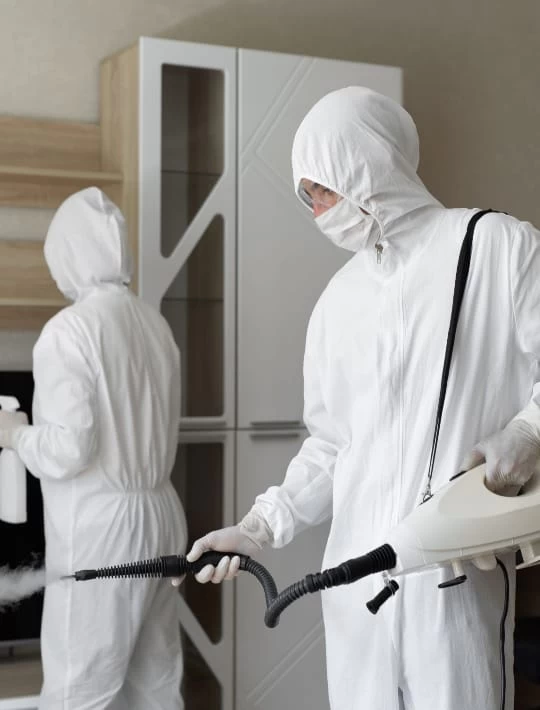
When your home was built in 1952, what’s behind the walls matters just as much as what comes down. We handle demolition in Elmont with the licensing to manage whatever your home reveals — asbestos, lead paint, mold — without stopping your project to call someone else.
I needed a professional consultation explanation of procedure for safe removal of Asbestos in my apartment complex. Without having an account yet, I was very impressed with the caring, knowledgeable and generous advice offered by Jessica, and will look forward to doing business in the future. Thank you so much! I feel much more informed about a sometimes scary endeavor. Peace. Nancy Silva Mineola, NY.
Mia Munoz
Used this company to clean up some water flood in my house. They were fast and easy to work with.very professional, Would recommend to anyone!
Nini Valle
Great company, had a flood and they responded quickly and efficiently. Billed my insurance company directly. I highly recommend this company!
joe colapietro, jr
I had pipe freeze in my basement right before a snow storm and they made to within an hour to help start the clean up process. They we by our side throughout the entire process and even helped with the insurance company. They did such a great job with the cleanup, repair, remidiation, I contracted them to perform the repairs and finishes in the basement. They came with enough manpower and material to get the job done. Leo and Jessica were nothing but a pleasure to deal with!!
Cristian Arredondo c
I had some water damage in my home and Green Island was able to take care of my issue quickly and effectively. I am very pleased with the work they did. They responded quickly and were very professional.
Michael M
Outstanding service! From the office to the field crew everyone was friendly, helpful and responsive. I highly recommend Green Island Group.
Most homeowners in Elmont aren’t thinking about demolition until something forces the issue — a flooded basement, a kitchen that hasn’t been touched since the ’70s, or a renovation that’s been on the list for years. When that moment comes, the last thing you want is to hire someone who gets three days in and has to stop because they found asbestos tile under the floor and they’re not licensed to touch it.
That’s the situation we’re built to prevent. Because we hold both demolition and asbestos abatement licensing — including Nassau County’s EHRP credential, which is a county-specific requirement that many contractors simply don’t have — your project doesn’t pause when something unexpected turns up. The same team that starts the job finishes it.
Elmont’s housing stock is overwhelmingly pre-1980. The median construction year here is 1952, and roughly 43% of homes were built before 1950. That’s not a statistic that lives in a spreadsheet — it’s the reality of nearly every kitchen gut, bathroom teardown, and basement demo in this neighborhood. When you’re working on a Dutch Broadway Cape Cod or a brick-veneer colonial near Hempstead Turnpike, hazardous materials aren’t a maybe. They’re a when. Having a contractor who’s already equipped for that reality isn’t a luxury — it’s the difference between a project that moves and one that stalls.
Why Elmont Homes Need More Than a Standard Demolition License
We’re a full-service environmental contracting firm based on Long Island, and we’ve been operating in Nassau County long enough to know exactly what the permit process looks like here — including the rodent-free certification that Nassau County requires before a demolition permit is issued, which catches a lot of out-of-area contractors off guard and delays projects by weeks.
We hold the NYS Department of Labor Asbestos Handling Contractor License, Nassau County’s EHRP licensing, and the full range of environmental credentials that cover asbestos abatement, mold remediation, and lead paint removal. That matters in Elmont specifically, because the homes here — particularly in the residential corridors around Dutch Broadway and throughout the post-war neighborhoods west of the Cross Island Parkway — were built in an era when those materials were standard. We don’t subcontract the hazmat piece out. It’s handled in-house, by the same crew, on the same timeline.
It starts with an assessment. Before anything comes down, we walk the property and evaluate what’s there — not just structurally, but from a materials standpoint. In Elmont, where the housing stock dates back to the 1940s and ’50s, that assessment almost always includes identifying potential asbestos-containing materials. Under New York State’s Industrial Code Rule 56, a licensed asbestos survey is required before any renovation or demolition that could disturb those materials. We handle that step, not you.
From there, if abatement is needed, we complete it under Nassau County’s EHRP requirements before demolition begins. Once the site is clear, the actual demolition work proceeds — interior selective demo, full structural teardowns, or anything in between — depending on what your project calls for. We pull the permits in our name as the licensed contractor of record. You’re not chasing down paperwork or trying to figure out which Nassau County office handles what.
When the work is done, you receive disposal documentation — manifests that confirm hazardous materials were removed and disposed of at a licensed facility. In a community where home values have climbed from under $200,000 to well over $600,000 in the past 25 years, that paper trail protects your property when you sell, refinance, or pull permits for future work. It’s not just cleanup — it’s documentation that follows the property.
We handle the full scope of residential and commercial demolition in Elmont — interior selective demolition, full structural teardowns, basement gutting, kitchen and bathroom demo, and site clearance for renovation or rebuild projects. We also serve commercial property owners and managers along the Hempstead Turnpike corridor who need demolition work done correctly and on a real schedule.
What sets the scope apart here is the environmental piece. Because Nassau County’s regulations require EHRP-licensed contractors for any asbestos abatement work — and because Elmont’s housing stock virtually guarantees that pre-1980 materials are present — our standard process includes the asbestos survey, the abatement if needed, and the demolition itself as a connected sequence rather than three separate contractor relationships. Mold remediation and lead paint removal are handled the same way, in-house, without bringing in a third party mid-project.
For homeowners dealing with storm damage or water infiltration — which is a real pattern in Elmont’s dense residential neighborhoods, especially during heavy summer storms — we also handle the demolition of water-damaged materials as part of a broader remediation scope. A flooded basement in a 1952 home isn’t just a water problem. It’s often a mold problem, and sometimes an asbestos problem, all at once. We’re built to handle that combination without making you manage it from three different directions.
Do I need an asbestos test before demolition work in Elmont, NY?
Yes — and it’s not optional. Under New York State’s Industrial Code Rule 56, any renovation or demolition project that could disturb potential asbestos-containing materials requires a licensed asbestos survey before work begins. In Elmont, this applies to the overwhelming majority of homes. With a median construction year of 1952 and roughly 43% of the housing stock built before 1950, the materials that trigger this requirement — floor tiles, ceiling texture, joint compound, pipe insulation — are present in most properties here.
The survey has to be performed by a certified inspector, and if asbestos is found, abatement must be completed by a contractor holding the NYS DOL Asbestos Handling Contractor License before demolition proceeds. We handle both steps, so you’re not coordinating between a testing company, an abatement firm, and a demolition contractor. One team manages the full sequence, which keeps your project moving instead of sitting idle between handoffs.
What permits are required for demolition in Nassau County?
Nassau County requires a demolition permit for residential and commercial demolition projects, and there’s a step most homeowners don’t know about until it slows them down: Nassau County also requires a rodent-free certification before that permit is issued. This applies to all residential, commercial, and industrial buildings. Contractors who work primarily in Suffolk County or the five boroughs often aren’t set up for this requirement, which causes delays when they’re working in Nassau for the first time.
Because Elmont is an unincorporated hamlet within the Town of Hempstead, there’s no village building department — permits go through Nassau County directly. We pull permits in our name as the licensed contractor of record, handle the rodent-free certification process, and manage the Nassau County EHRP licensing requirements for any asbestos abatement work that’s part of the scope. You don’t have to figure out which office handles what — that’s our job.
What does interior demolition typically cost for an Elmont home?
The honest answer is that cost in Elmont depends heavily on what’s inside the walls, not just the square footage of what’s coming down. A straightforward interior demo in a newer home is a very different job than gutting a 1952 Cape Cod on Dutch Broadway, where asbestos floor tiles, textured ceilings, and original drywall joint compound are common finds. When abatement is required — and in Elmont, it frequently is — that adds to the overall project cost in a way that a basic demo-only estimate won’t reflect.
What you should be cautious of is the low estimate from a contractor who hasn’t accounted for hazardous materials testing, Nassau County permit fees, or proper disposal documentation. Those costs are real, and a contractor who isn’t building them in is either planning to skip them or planning to surprise you with them later. A thorough estimate from a licensed contractor will look different from a stripped-down number — and in a community where homes are worth $600,000 or more, cutting corners on documentation creates real financial exposure down the road.
What is Nassau County's EHRP license and why does it matter for my project?
The Nassau County Environmental Hazard Remediation Program — EHRP — is a county-specific licensing requirement for contractors performing asbestos abatement work in Nassau County. It’s separate from and in addition to the New York State DOL asbestos contractor license. Individual technicians also need to hold an EHRT certification. This isn’t a statewide requirement — it’s specific to Nassau County, which means contractors who are licensed to do asbestos work in Suffolk County or New York City may not be authorized to do the same work in Elmont.
This matters because if you hire a contractor who holds a NYS DOL license but not the Nassau County EHRP credential, any asbestos abatement they perform in your home is technically outside their licensing authority in this county. That creates liability exposure for you as the property owner. We hold the Nassau County EHRP licensing and our technicians hold the required EHRT certifications, so the work is fully compliant from the first day on site.
Can one contractor handle both asbestos removal and demolition, or do I need separate companies?
You don’t have to use separate companies — but you do need to make sure the contractor you hire holds the right licenses for both scopes. In practice, many demolition contractors in the area are not licensed for asbestos abatement, and many abatement companies don’t perform demolition. That gap is what forces homeowners to manage two separate contractors, two separate schedules, and two separate points of accountability on the same job.
We hold both the asbestos abatement licensing and the demolition capability under one roof, which means the project doesn’t stop when hazardous materials are found. In Elmont, where the age of the housing stock makes that discovery almost routine, having an integrated team is a practical advantage — not just a convenience. There’s no waiting for an abatement company to finish before the demo crew can start, and there’s no gap in accountability between one contractor’s scope ending and another’s beginning.
What happens if mold or lead paint is found during demolition in my Elmont home?
It depends entirely on who you hired. If your demolition contractor isn’t licensed for mold remediation or lead paint removal, work has to stop until a separate licensed contractor can be brought in — and in Nassau County, finding an available, properly credentialed contractor on short notice isn’t always fast. That gap can add days or weeks to your project timeline, and it puts you in the position of managing a situation you weren’t expecting while your job sits idle.
We hold licensing for mold remediation and lead paint removal in addition to asbestos abatement and demolition. In Elmont, where homes from the 1940s and ’50s frequently contain all three — lead paint on pre-1978 surfaces, mold from decades of basement moisture, and asbestos in original building materials — this matters from the first day of work. A mid-project discovery doesn’t shut the job down. The same licensed team assesses what was found, handles the remediation, and keeps the demolition moving on schedule.