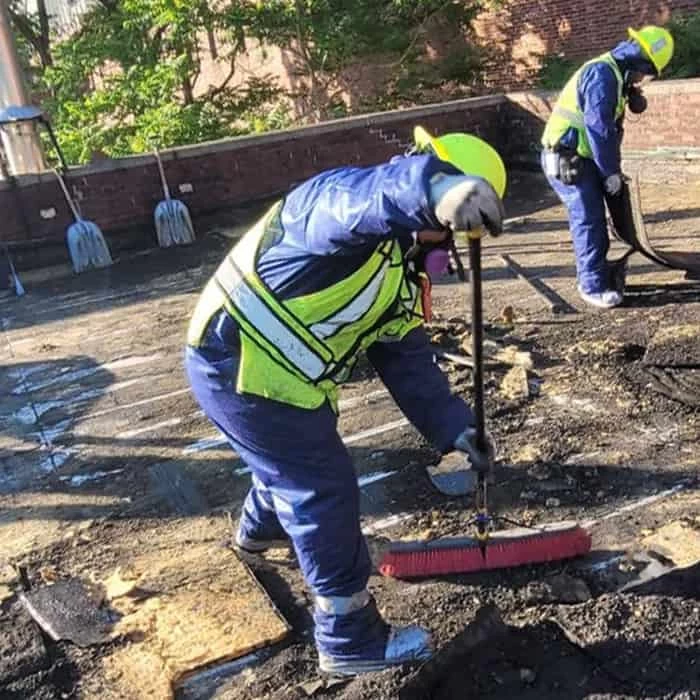
Farmingdale's Older Homes Don't Need Just a Demo Crew
Most homes in Farmingdale were built before 1980. That means before the first wall comes down, there’s a real chance asbestos or lead paint is already in the picture — and you need a demolition contractor who’s licensed to handle both, not one who’ll hand it off or skip the step entirely.
I needed a professional consultation explanation of procedure for safe removal of Asbestos in my apartment complex. Without having an account yet, I was very impressed with the caring, knowledgeable and generous advice offered by Jessica, and will look forward to doing business in the future. Thank you so much! I feel much more informed about a sometimes scary endeavor. Peace. Nancy Silva Mineola, NY.
Mia Munoz
Used this company to clean up some water flood in my house. They were fast and easy to work with.very professional, Would recommend to anyone!
Nini Valle
Great company, had a flood and they responded quickly and efficiently. Billed my insurance company directly. I highly recommend this company!
joe colapietro, jr
I had pipe freeze in my basement right before a snow storm and they made to within an hour to help start the clean up process. They we by our side throughout the entire process and even helped with the insurance company. They did such a great job with the cleanup, repair, remidiation, I contracted them to perform the repairs and finishes in the basement. They came with enough manpower and material to get the job done. Leo and Jessica were nothing but a pleasure to deal with!!
Cristian Arredondo c
I had some water damage in my home and Green Island was able to take care of my issue quickly and effectively. I am very pleased with the work they did. They responded quickly and were very professional.
Michael M
Outstanding service! From the office to the field crew everyone was friendly, helpful and responsive. I highly recommend Green Island Group.
What Changes When You Work With a Licensed Abatement Contractor
When a demolition project goes sideways in Farmingdale, it’s rarely because the walls were hard to knock down. It’s because something unexpected showed up behind them — and the contractor wasn’t equipped to deal with it. Asbestos floor tiles from a 1950s kitchen. Pipe insulation wrapped around an old boiler. Joint compound from a 1960s bathroom renovation. These aren’t rare finds in a village where a significant portion of the housing stock predates 1970. They’re the norm.
What changes when you work with a contractor who holds a NYS Department of Labor Asbestos Handling Contractor License is that the project doesn’t stop when something turns up. The assessment, the abatement, and the demolition all happen under one contract, with one team, on one timeline. No scrambling for a second company. No unexplained two-week gap while you wait for a remediation crew to get scheduled.
For homeowners along the older residential streets near downtown Farmingdale — where some homes date back to the early 1900s — that continuity isn’t a luxury. It’s the difference between a renovation that finishes on time and one that drags on for months because no one planned for what was actually inside the walls.
We’re based in Bohemia, NY, and have been serving Farmingdale and the surrounding Nassau County communities for years. Our work spans residential gut renovations, commercial interior demolition, and full structural teardowns, and we handle it all in-house.
What makes the difference here isn’t just experience — it’s licensing. Holding the NYS DOL Asbestos Handling Contractor License means we can legally perform abatement work that most demolition contractors have to subcontract out. For a homeowner in Farmingdale dealing with a pre-1960s Cape Cod or a Victorian-era home near Main Street, that matters more than almost anything else on a contractor’s credential list.
Our 4.7-star review record reflects something consistent: clients mention specific team members by name, cite clear communication from the first call through project completion, and note that the crew showed up when they said they would. In a category where the most common complaint is contractors going silent after the estimate, that track record speaks for itself.
How We Handle Demolition in Farmingdale Without Surprises
Before anything gets touched, we conduct a written pre-demolition assessment. This covers structural conditions, utility verification, and a hazardous materials evaluation — which, for most Farmingdale properties built before 1978, means testing for asbestos and lead paint. This step isn’t optional under OSHA 29 CFR 1926 Subpart T, and it’s also the step that protects you from discovering a problem mid-project when it’s far more expensive to deal with.
If hazardous materials are identified, abatement happens before demolition proceeds — handled by our own licensed team, not a third-party subcontractor. Once the space is cleared and post-abatement testing confirms it’s safe, the demolition work begins. Whether that’s a full structural teardown, a selective interior gut, or a targeted wall removal for a kitchen or bathroom renovation, the scope is driven by what you actually need.
One thing worth knowing if your property is within the incorporated Village of Farmingdale: the Village has its own Building Department and its own permit process, separate from Nassau County. There’s also a local ordinance that prohibits demolition work on Sundays and specific holidays. We pull permits correctly, schedule within the Village’s allowed hours, and handle the compliance side so it doesn’t become your problem to figure out.
Residential and Commercial Demolition Farmingdale NY
Built for Farmingdale's Mix of Old Homes and Active Redevelopment
We handle both residential and commercial demolition in the Farmingdale area, and the range matters here more than it might in other towns. On the residential side, you’ve got everything from Victorian-era homes near the downtown corridor — some with construction methods and materials that predate modern synthetic building products entirely — to postwar Cape Cods and colonials throughout South Farmingdale where the housing stock is predominantly from the 1940s through 1960s. Each era carries its own hazmat profile, and each project gets assessed accordingly.
On the commercial side, Farmingdale’s Downtown Revitalization Initiative has been pushing renovation and redevelopment activity through the village core. When older commercial buildings on Main Street get repurposed or gutted for new tenants, that work requires licensed commercial demolition contractors who understand what mid-20th-century commercial construction actually contains. We have the bonding capacity, compliance documentation, and project management infrastructure that commercial clients need — not just the tools to swing a hammer.
The East Farmingdale industrial zone and the Route 110 corridor add another layer. Buildings in that area tied to the region’s WWII-era aviation manufacturing history — Republic Aviation operated what is now Republic Airport — can contain industrial-grade asbestos insulation at concentrations that go well beyond typical residential levels. If you’re managing a property in that zone, you need a contractor whose abatement experience matches the scale of what’s actually in those walls.
Do I need a permit for demolition work in the Village of Farmingdale?
Yes — and the permit process in the incorporated Village of Farmingdale is handled by the Village Building Department, not Nassau County. This is a distinction that trips up contractors who primarily work in unincorporated parts of the county. The Village has its own municipal code, its own permit requirements, and its own inspection process. Demolition work — whether it’s a full structural teardown or a significant interior gut — requires a building permit pulled by the licensed contractor of record before work begins.
There’s also a local ordinance worth knowing about: the Village of Farmingdale prohibits demolition work on Sundays and on specific holidays, including New Year’s Day, Memorial Day, the Fourth of July, Labor Day, Thanksgiving, and Christmas. A contractor who schedules work without knowing this risks a stop-work order that stalls your project and creates compliance headaches that land on you as the property owner. We already know the Village’s specific requirements, so that doesn’t happen.
How do I know if my Farmingdale home has asbestos before starting demolition?
The honest answer is that you don’t know until you test — and visual inspection alone won’t tell you. Asbestos was used in dozens of building materials from the 1940s through the late 1970s: floor tiles, ceiling textures, pipe insulation, joint compound, roofing materials, and HVAC insulation. In Farmingdale, where a large portion of the housing stock was built between 1900 and 1969, the probability of encountering asbestos-containing materials in any meaningful renovation or demolition project is genuinely high.
The right process starts with a hazardous materials assessment before demolition begins. Samples are collected from suspect materials and sent to a certified lab. If asbestos is confirmed above threshold levels, it has to be removed by a contractor holding a NYS Department of Labor Asbestos Handling Contractor License before any demolition disturbs those materials. Skipping this step isn’t just a regulatory violation — it creates a contamination event that can cost far more to remediate than the original project budget. For a Farmingdale home with a current median value around $649,000, that’s not a risk worth taking.
What's the difference between full demolition and selective interior demolition?
Full demolition means the entire structure comes down — everything from the foundation up is removed and hauled away. Selective interior demolition, sometimes called a gut renovation or partial demo, means specific elements are removed while the structure stays intact. That might be a kitchen gut where cabinets, flooring, drywall, and ceilings are stripped back to the studs, or a basement renovation where old finishes, utilities, and framing are cleared out to make room for a new layout.
Most residential projects in Farmingdale fall into the selective category. A homeowner updating a 1950s kitchen or finishing a basement in a South Farmingdale Cape Cod doesn’t need the whole house torn down — they need a precise, clean removal of the specific materials being replaced, done without damaging what stays. The hazmat considerations are the same either way. Whether it’s full or selective, if the materials being removed contain asbestos or lead paint, those have to be handled by a licensed abatement contractor before the demo crew proceeds.
Can a demolition contractor legally handle asbestos removal, or is that a separate company?
Most demolition contractors cannot legally perform asbestos abatement. In New York State, asbestos removal requires a NYS Department of Labor Asbestos Handling Contractor License — a separate credential from a general contractor or demolition license. Individual workers on the abatement crew must also hold NYS DOL asbestos handler certifications, and air monitoring during the work must be conducted by a licensed NYS DOL Air Monitor. These aren’t suggestions — they’re legal requirements that apply regardless of project size once asbestos is confirmed above de minimis thresholds.
What this means practically is that many demolition contractors in the Farmingdale area will either subcontract the abatement phase to a separate company or, in some cases, proceed without proper protocols — which exposes you as the property owner to federal EPA fines and remediation liability. We hold the NYS DOL Asbestos Handling Contractor License and handle abatement in-house, with our own certified team. That’s not a minor distinction for a village where the majority of the housing stock falls squarely in the high-risk era for asbestos-containing materials.
How long does a demolition project typically take in Farmingdale, NY?
Timeline depends on the scope of the project, but there are a few factors specific to Farmingdale that affect scheduling. First, if the property is within the incorporated Village, permit approval through the Village Building Department has to happen before work starts — and that process takes time that needs to be built into the project schedule from the beginning. Second, if hazardous materials are found during the pre-demolition assessment, abatement has to be completed and post-abatement clearance testing has to confirm the space is safe before demolition proceeds. That adds time, but it’s time that protects you.
For a typical residential interior gut — kitchen, bathroom, or basement — the physical demolition work itself often takes one to three days once permits and abatement are resolved. A full structural teardown of a single-family home generally takes longer, depending on size, access, and disposal logistics. The best way to get an accurate timeline for your specific Farmingdale property is to start with a site assessment and a written scope of work, so there are no surprises once the project is underway.
What happens if asbestos is discovered after demolition has already started?
Work stops. That’s the legally required response — and it’s the right one. If asbestos-containing materials are disturbed without proper containment and removal protocols in place, you’re looking at a potential contamination event that affects the entire work area, the surrounding structure, and anyone who was present during the disturbance. In a pre-1980 Farmingdale home, this scenario is more common than most homeowners expect, particularly when a previous owner did undocumented renovation work that may have already disturbed materials without proper handling.
The remediation process after an uncontrolled disturbance is significantly more expensive and time-consuming than planned abatement done upfront. It can also create a disclosure obligation that affects your ability to sell the property without complications. The reason we start every project with a written hazardous materials assessment — before demolition begins — is specifically to avoid this situation. In a village where homes from the 1940s, 1950s, and 1960s are the norm rather than the exception, that upfront step isn’t extra caution. It’s just how the work should be done.