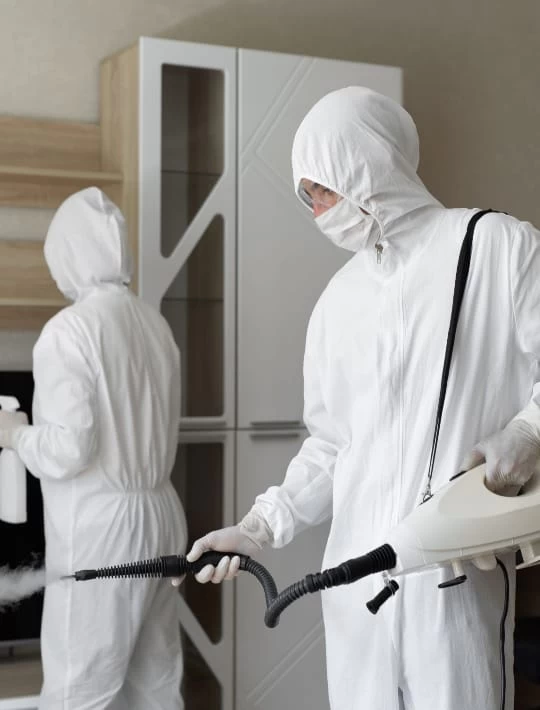
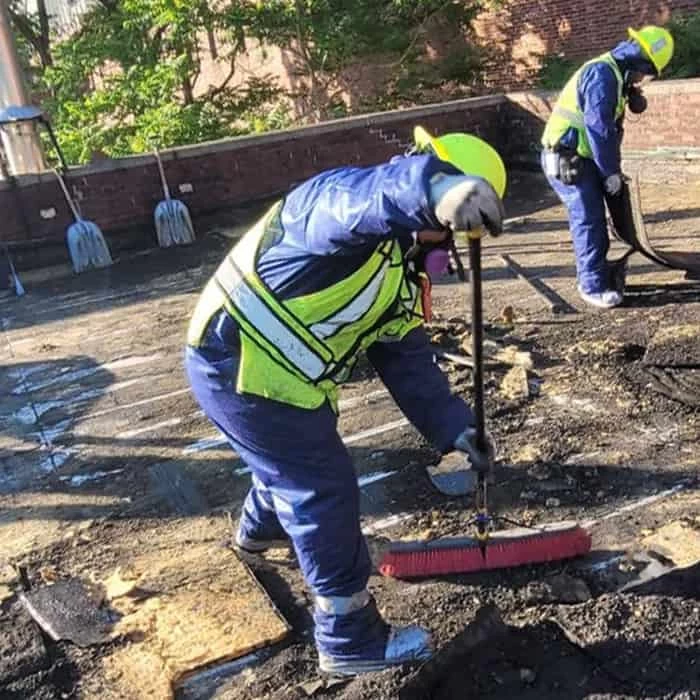
Most homes in Flower Hill were built in the 1950s and 60s — and behind those walls is often asbestos, lead paint, or both. We handle demolition and hazardous material abatement under one license, so your project doesn’t stall when something turns up.
I needed a professional consultation explanation of procedure for safe removal of Asbestos in my apartment complex. Without having an account yet, I was very impressed with the caring, knowledgeable and generous advice offered by Jessica, and will look forward to doing business in the future. Thank you so much! I feel much more informed about a sometimes scary endeavor. Peace. Nancy Silva Mineola, NY.
Mia Munoz
Used this company to clean up some water flood in my house. They were fast and easy to work with.very professional, Would recommend to anyone!
Nini Valle
Great company, had a flood and they responded quickly and efficiently. Billed my insurance company directly. I highly recommend this company!
joe colapietro, jr
I had pipe freeze in my basement right before a snow storm and they made to within an hour to help start the clean up process. They we by our side throughout the entire process and even helped with the insurance company. They did such a great job with the cleanup, repair, remidiation, I contracted them to perform the repairs and finishes in the basement. They came with enough manpower and material to get the job done. Leo and Jessica were nothing but a pleasure to deal with!!
Cristian Arredondo c
I had some water damage in my home and Green Island was able to take care of my issue quickly and effectively. I am very pleased with the work they did. They responded quickly and were very professional.
Michael M
Outstanding service! From the office to the field crew everyone was friendly, helpful and responsive. I highly recommend Green Island Group.
Your Flower Hill Renovation Moves Forward — No Stops, No Surprises
When you’re gutting a home in Flower Hill, you’re almost certainly dealing with pre-1980 construction. The median build year here is 1958, and a significant chunk of the housing stock goes back even further — into the 1930s and 40s. That means asbestos-containing materials are not a remote possibility. They’re a near-certainty. Floor tiles, pipe insulation, ceiling texture, joint compound — these materials were standard in the homes that make up neighborhoods like Pinewood at Flower Hill and the older sections along Manhasset Woods Road and Middle Neck Road.
The problem most homeowners run into is hiring a demolition crew that isn’t licensed to handle what they find. The project stops. A separate abatement company has to be scheduled — often weeks out. Your renovation timeline falls apart. We hold both the NYS Department of Labor Asbestos Handling Contractor License and the Nassau County EHRP license required to perform abatement work in this county. When something turns up mid-project, the same crew that’s already on-site handles it. You don’t lose weeks waiting on a second contractor.
What you’re left with after the job is a clean, documented result — disposal manifests, air clearance certificates, permit records. In a community where homes routinely sell for well over a million dollars, that paper trail isn’t just good practice. It’s protection for your investment when the next buyer’s attorney starts asking questions.
We’re a Long Island-based environmental contracting and demolition company serving Nassau and Suffolk counties and the greater New York City metro. Our work covers demolition, asbestos abatement, mold remediation, lead paint removal, and post-project restoration — all under one contractor, not a chain of subcontractors you never meet.
Operating in Nassau County means carrying the right credentials at every level. That includes the state-level NYS DOL Asbestos Handling Contractor License, the Nassau County EHRP contractor license, and EHRT-certified technicians on every qualifying project. These aren’t the same credential, and not every contractor working in the area holds all of them. For Flower Hill specifically — a village with its own Building Department at 1 Bonnie Heights Road in Manhasset — knowing which permit office governs your address matters before the first wall comes down.
We’ve worked across the North Shore, including the Manhasset, Roslyn, and Port Washington areas that make up Flower Hill’s three distinct sections. That familiarity with local permit offices, county requirements, and the specific hazardous materials profile of this housing stock is what makes the difference between a project that moves and one that doesn’t.
What Actually Happens From First Call to Final Clearance
It starts with an assessment. Before any walls come down, we evaluate the scope of the project and identify any hazardous materials present — asbestos, lead paint, mold. In a Flower Hill home built in the 1950s or earlier, this step is not optional. It determines what licenses are required, what the abatement sequence looks like, and what permits need to be pulled before work begins. For projects within the village boundaries, that permit comes from the Village of Flower Hill Building Department — not the Town of North Hempstead’s office, which is a distinction that matters and one that out-of-area contractors often get wrong.
Once the assessment is complete and permits are in place, abatement comes first if hazardous materials are present. Asbestos and lead are handled by our licensed technicians following NYS DOL and Nassau County EHRP protocols. Containment is set, materials are removed and documented, and disposal is tracked through a chain-of-custody manifest from your property to a licensed facility. After abatement clears, demolition proceeds — selective interior work, full gut, structural removal, whatever the scope calls for. Debris is cleared and the site is left ready for the next phase of your renovation.
The final step is clearance testing. An independent NYS DOL-licensed air monitor verifies that the space is safe to reoccupy and that the abatement work meets regulatory standards. That clearance certificate is yours to keep — and it’s the kind of documentation that holds up when your home goes back on the market years down the road.
One Contractor Handles What Flower Hill Projects Actually Involve
Demolition in Flower Hill isn’t the same as demolition in a community with newer housing stock. The homes here — particularly in the Pinewood at Flower Hill development, along Ridge Drive, and throughout the Manhasset and Port Washington sections of the village — were built during a period when asbestos was a standard construction material. A gut renovation on one of these homes almost always involves a regulated hazardous materials component, and the contractor you hire needs to be equipped to handle that legally and completely.
Our service scope covers residential demolition, interior gut demolition, selective structural demolition, asbestos abatement, lead paint removal, and mold remediation. For commercial properties in the surrounding Route 25A corridor or near the St. Francis Hospital area in Roslyn, we carry the bonding and insurance capacity for larger-scale commercial demolition as well. Every project includes a written scope of work, permit coordination with the relevant building authority — including the Village of Flower Hill Building Department at (516) 627-5000 — hazardous waste disposal documentation, and post-abatement air clearance certification.
What you’re not getting is a general contractor who farms out the abatement to a subcontractor you’ve never spoken to. Every phase of the work is managed by our licensed team, under the same contract, with full accountability from the first day on-site to the day the clearance certificate is issued.
Does the Village of Flower Hill require its own demolition permit?
Yes, and this is one of the most common points of confusion for homeowners starting a demolition or renovation project in Flower Hill. Because Flower Hill is an incorporated village — not just a hamlet or neighborhood within the Town of North Hempstead — it has its own Building Department located at Village Hall, 1 Bonnie Heights Road in Manhasset. Demolition work that is structural in nature requires a permit from that office, not from the Town of North Hempstead’s building department.
The village advises residents to call the Building Department directly at (516) 627-5000 when they’re unsure whether a permit is required. If your project involves removing walls, taking down structural elements, or performing any work beyond cosmetic updates like painting or flooring, you almost certainly need a permit. A contractor who tells you to “just call the county” without knowing that Flower Hill has its own permit process is a contractor who doesn’t know this village. That gap in knowledge can cause real delays and compliance problems before the project even starts.
My Flower Hill home was built in the 1950s — does it likely have asbestos?
Almost certainly, yes — in some form. Homes built in the 1940s through the late 1970s routinely contain asbestos-containing materials, and Flower Hill’s median construction year of 1958 puts the majority of the village’s housing stock squarely in that window. The materials most commonly found include vinyl floor tiles, the adhesive used beneath them, pipe and duct insulation, ceiling texture (sometimes called “popcorn ceiling”), joint compound used on drywall seams, and certain types of roofing and siding materials.
The important thing to understand is that asbestos in intact condition isn’t necessarily an immediate hazard. The risk comes when those materials are disturbed — which is exactly what demolition does. That’s why abatement has to happen before demolition begins, not after. If your contractor isn’t licensed to test, identify, and remove asbestos-containing materials before swinging a sledgehammer, they’re either skipping a required step or planning to call someone else after the fact. Either way, that creates a problem for you — legally, financially, and from a health standpoint.
What is the Nassau County EHRP license and why does it matter for my project?
The EHRP — Environmental Hazard Remediation Program — is a Nassau County-specific licensing requirement for contractors performing asbestos abatement work within the county. It exists on top of the New York State Department of Labor Asbestos Handling Contractor License, which is the state-level credential. Individual technicians performing the hands-on abatement work must also hold EHRT (Environmental Hazard Remediation Technician) certification issued by Nassau County.
This matters for your project because not every contractor who holds a state asbestos license also holds the Nassau County EHRP license. Contractors who primarily work in Suffolk County or New York City may be fully credentialed at the state level but technically non-compliant for work performed in Nassau County. If an abatement contractor working in your Flower Hill home doesn’t hold the EHRP license, the work they perform may not meet county standards — which can create problems when you go to sell the property or if the work is ever inspected. Asking a contractor directly whether they hold the Nassau County EHRP license is a straightforward way to separate qualified operators from those who aren’t equipped to work here.
How long does a typical interior gut demolition take in a Flower Hill home?
The honest answer is that it depends on what’s found during the initial assessment — and in Flower Hill, where the housing stock is predominantly pre-1980, that assessment frequently turns up asbestos or lead paint that needs to be addressed before demolition can begin. For a straightforward interior gut on a mid-century home with no significant hazardous material complications, the demolition phase itself might take anywhere from a few days to a week depending on the size of the home and the scope of what’s being removed.
When asbestos abatement is required — which is common in homes built in the 1950s and 60s throughout neighborhoods like Pinewood at Flower Hill — the abatement phase adds time to the overall schedule. Containment setup, material removal, air monitoring, and clearance testing all have to happen in sequence before demolition proceeds. A realistic timeline for a full gut renovation project that includes abatement might run two to three weeks for the combined abatement and demolition phases, depending on the extent of the hazardous materials found. Getting a clear scope from your contractor upfront — including what happens if additional materials are discovered — is the best way to protect your renovation timeline.
Can one contractor handle demolition and asbestos removal, or do I need to hire separately?
You don’t have to hire separately, but you need to make sure the contractor you hire actually holds the credentials to perform both scopes of work legally. Many general contractors and demolition crews will tell you they “handle everything” — but when it comes to asbestos abatement specifically, the legal requirement in New York State is a NYS DOL Asbestos Handling Contractor License, and in Nassau County, an EHRP contractor license on top of that. A GC who subcontracts the abatement to someone else without disclosing it isn’t giving you a single point of accountability — they’re adding a layer you didn’t know about.
The real advantage of hiring a contractor who holds both licenses in-house is what happens mid-project. Discoveries behind walls — additional asbestos materials, lead paint, unexpected mold — don’t stop the job when the same crew is equipped to handle them. If your demolition contractor has to pause and call in a separate abatement company every time something turns up, you’re looking at scheduling delays, additional mobilization costs, and a renovation timeline that keeps slipping. For Flower Hill homes with their age and construction profile, having one licensed team handle the full scope from assessment through clearance is the practical choice, not just the convenient one.
What documentation should I receive after demolition and abatement work in Flower Hill?
At minimum, you should receive a hazardous waste disposal manifest for any asbestos or lead materials removed from your property, a post-abatement air clearance certificate issued by an independent NYS DOL-licensed air monitor, and copies of the permits pulled for the project — including the permit from the Village of Flower Hill Building Department if the work falls within the village boundaries.
In a community like Flower Hill, where homes sell for well over a million dollars and renovation history is scrutinized closely during real estate transactions, this documentation is genuinely important. A future buyer’s attorney or home inspector will ask whether any demolition or abatement work was performed and whether it was done properly. The disposal manifest proves that hazardous materials were removed and disposed of through a licensed facility — not dumped. The air clearance certificate proves the space was independently verified as safe after abatement. Without these records, you have a gap in your property’s compliance history that can complicate or delay a sale. A contractor who doesn’t provide this documentation as a standard deliverable is leaving you with a liability you may not discover until it’s inconvenient to resolve.