Forest Hills Buildings Are Old. Your Contractor Needs to Know That.
Most buildings in Forest Hills were built before 1980 and that changes everything about how demolition has to be done. We handle the asbestos, the permits, and the teardown, all under one roof.
I needed a professional consultation explanation of procedure for safe removal of Asbestos in my apartment complex. Without having an account yet, I was very impressed with the caring, knowledgeable and generous advice offered by Jessica, and will look forward to doing business in the future. Thank you so much! I feel much more informed about a sometimes scary endeavor. Peace. Nancy Silva Mineola, NY.
Mia Munoz
Used this company to clean up some water flood in my house. They were fast and easy to work with.very professional, Would recommend to anyone!
Nini Valle
Great company, had a flood and they responded quickly and efficiently. Billed my insurance company directly. I highly recommend this company!
joe colapietro, jr
I had pipe freeze in my basement right before a snow storm and they made to within an hour to help start the clean up process. They we by our side throughout the entire process and even helped with the insurance company. They did such a great job with the cleanup, repair, remidiation, I contracted them to perform the repairs and finishes in the basement. They came with enough manpower and material to get the job done. Leo and Jessica were nothing but a pleasure to deal with!!
Cristian Arredondo c
I had some water damage in my home and Green Island was able to take care of my issue quickly and effectively. I am very pleased with the work they did. They responded quickly and were very professional.
Michael M
Outstanding service! From the office to the field crew everyone was friendly, helpful and responsive. I highly recommend Green Island Group.
What Changes When Your Contractor Actually Knows Forest Hills
Forest Hills isn’t a generic Queens neighborhood. You’ve got pre-war co-op buildings along Queens Boulevard, Tudor homes from the 1910s in Forest Hills Gardens, and post-war towers that were built right in the middle of peak asbestos use. When you’re planning a gut renovation or a teardown in Forest Hills, the building’s age isn’t a footnote it’s the first thing that determines how the job has to be done, who needs to be licensed to touch it, and what permits have to be filed before anyone swings a tool.
NYC Local Law 76/85 requires an asbestos investigation before any permitted demolition or renovation work on pre-1987 buildings. The Department of Buildings won’t issue a full demolition permit without an ACP-5 form confirming the space is clear. If you’re in a co-op on 71st Avenue or renovating a home near Station Square, that process isn’t optional and a contractor who doesn’t understand it will cost you time, money, and a potential stop-work order.
When you hire a contractor who handles abatement and demolition together, the whole project moves cleaner. No waiting on a separate abatement company to finish before demo can start. No miscommunication between vendors. No gaps in documentation that slow down your board approval or your permit. You get one team, one timeline, and one point of accountability from the first inspection to the last load out.
We’ve been doing this work across New York for over 12 years and that includes all five boroughs, with extensive experience in Forest Hills and throughout Queens. We’re licensed through the NYC Department of Buildings, certified under NYS Department of Labor Industrial Code Rule 56, and compliant with NYC DEP asbestos abatement requirements. Those aren’t the same credential. You need all three for work in Forest Hills, and not every contractor walking around Queens has them.
Our work here spans the full range of what Forest Hills actually looks like co-op gut renovations in post-war towers off Queens Boulevard, selective interior demo in pre-war apartments near Austin Street, and residential teardowns on the edges of Forest Hills Gardens where the neighbors and the community governance make precision and professionalism non-negotiable. Over 340 completed projects across New York means we’ve seen what’s inside these walls before. We’re not guessing.
From Permit to Cleanout Here's the Honest Walkthrough
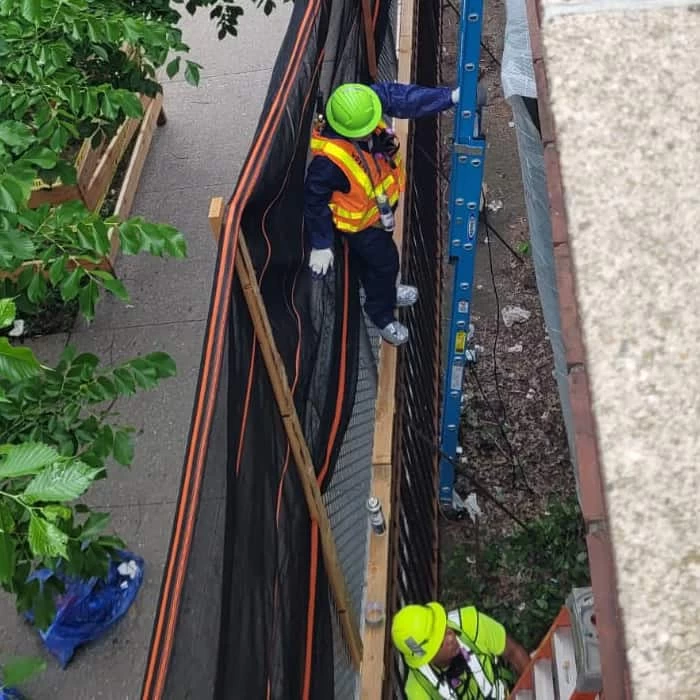
It starts before anyone touches a wall. We conduct a pre-demolition hazardous material survey to identify asbestos, lead paint, or mold in the space. In Forest Hills, this step is almost always relevant the building stock is old, and 9×9 floor tiles, pipe insulation, and original plaster walls are common indicators of materials that need to be handled before structural work begins. This isn’t busywork. It’s what keeps your project from getting stopped halfway through.
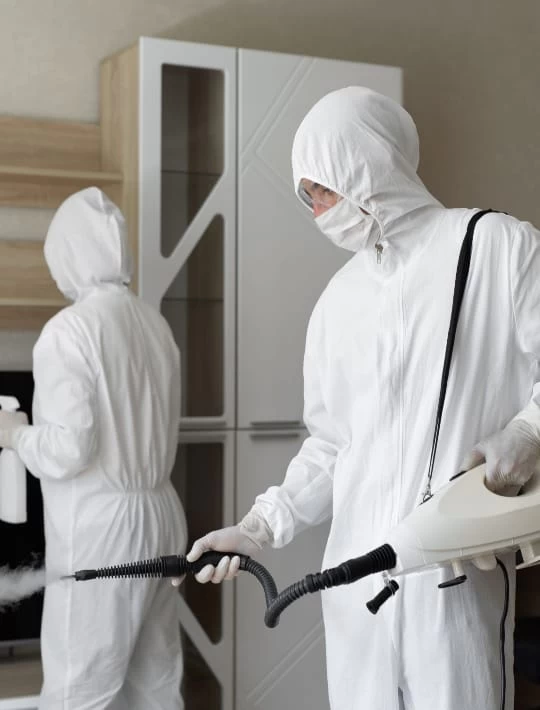
Once the survey is complete and the scope is clear, we handle permitting directly with the NYC Department of Buildings. If abatement is required, that work gets done first under proper containment negative air pressure systems, sealed work areas, and certified disposal before any demolition begins. For co-op owners in Forest Hills, this also means we operate within your building’s alteration agreement: respecting work hour windows, protecting elevators and common areas, and keeping the building management and your neighbors out of the conflict zone.
After abatement clears, demolition moves forward whether that’s a full gut, selective interior removal, or structural teardown. The site gets cleaned, debris gets hauled, and you get documentation of everything that was done. That paper trail matters when you’re closing out a permit, satisfying a co-op board, or filing an insurance claim.
Commercial and Residential Demolition Specialists, Queens NY
Built for the Complexity That Comes With Forest Hills Projects
Forest Hills generates a wider range of demolition work than most Queens neighborhoods. You’ve got cooperative apartment owners doing full kitchen and bathroom gut renovations in buildings that haven’t been touched since the 1960s. You’ve got developers clearing sites along the Queens Boulevard corridor for new residential construction projects like the active pipeline near 113th Street signal that land use in Forest Hills is still shifting. And you’ve got homeowners near Forest Hills Gardens who need work done carefully, because the community and its architectural character come with real expectations around how a job gets handled, not just whether it gets done.
We cover the full scope: residential demolition, commercial demolition, interior selective demo, full structural teardowns, and integrated asbestos and lead abatement. For disaster-related work flooded basements after a storm overwhelms the sewer system on Yellowstone Boulevard, or fire damage in an apartment building we respond 24/7 and bill insurance carriers directly. That matters in a neighborhood with as much below-grade living space and aging building infrastructure as Forest Hills has.
Every project gets handled with NYC DOB permits in place, proper DEP-certified abatement where required, and documentation that holds up to scrutiny from a co-op board, a building inspector, or an insurance adjuster.
Do I need a permit to demo walls inside my Forest Hills co-op apartment?
In most cases, yes. Interior demolition in a New York City apartment including co-ops typically requires an alteration permit from the NYC Department of Buildings, and that permit usually needs to be filed by a registered design professional like an architect or engineer. Beyond the city permit, your Forest Hills co-op board will almost certainly require you to submit an alteration agreement before work begins. That agreement sets the rules: approved work hours (usually Monday through Friday, 9am to 5pm), elevator protection requirements, dust containment standards, and how debris gets removed from the building.
Where it gets more complicated is the asbestos question. If your Forest Hills building was constructed before 1987 and the overwhelming majority of Forest Hills co-op buildings were NYC Local Law 76/85 requires an asbestos investigation before any permitted work starts. If asbestos-containing materials are found, they have to be abated by a properly licensed contractor before demolition can proceed. A contractor who skips this step isn’t saving you time. They’re exposing you to a stop-work order and potential liability.
How do I know if my Forest Hills apartment building contains asbestos?
The honest answer is that you can’t know without testing. But the building’s age gives you a strong indicator. If your Forest Hills building was constructed between the 1920s and the mid-1980s which covers most of Forest Hills’ residential stock, from the pre-war buildings near Austin Street to the post-war cooperative towers along Queens Boulevard there’s a meaningful probability that asbestos is present somewhere in the unit. Common locations include floor tiles (especially 9×9 inch vinyl tiles, which were widely used in post-war Forest Hills apartments), the adhesive used to install them, pipe and boiler insulation, ceiling tiles, plaster walls, and joint compound.
The only way to confirm is a professional bulk sample test conducted by a licensed asbestos investigator. In New York City, that investigator needs to be certified by the NYC Department of Environmental Protection a separate credential from the state-level license. We can coordinate the investigation as part of the pre-demolition process, so you’re not trying to find and schedule a separate vendor before work can even start.
What does interior demolition typically cost for a gut renovation in Queens, NY?
Interior demolition costs in New York City vary based on the size of the space, the scope of what’s being removed, and whether hazardous materials are present. For a typical one- or two-bedroom co-op gut in Forest Hills, you’re generally looking at a range that reflects NYC pricing which runs higher than national averages because of permitting requirements, licensed abatement, air monitoring, and certified disposal costs that are legally required here and not optional.
If asbestos abatement is needed before demolition can begin which is common in Forest Hills’ pre-war and post-war building stock that adds to the total, but it also protects you from the much larger cost of a mid-project stop-work order or a regulatory violation. The most important thing to understand is that a quote that doesn’t include permitting, abatement, and proper disposal isn’t a lower price. It’s an incomplete scope that shifts legal risk onto you. Get a full scope in writing before anything starts, so the number you agree to is the number that covers the actual job.
Can a contractor based on Long Island legally do demolition work in Forest Hills, NY?
Only if they hold the right New York City-specific credentials and that’s a short list. Demolition work within the five boroughs, including Forest Hills and the rest of Queens, requires licensing from the NYC Department of Buildings. That’s separate from a standard New York State contractor license, and it’s what legally authorizes a contractor to pull demolition permits within the city. A contractor who is licensed to work on Long Island but doesn’t hold NYC DOB licensing cannot legally pull those permits which means either the work goes unpermitted (a serious problem for Forest Hills co-op owners and anyone who plans to sell or refinance) or the property owner ends up pulling their own permits, which shifts regulatory responsibility in a direction you don’t want.
Beyond the DOB credential, asbestos abatement within New York City requires NYC DEP certification again, separate from the NYS Department of Labor license that covers Long Island work. We hold both the NYC DOB license and the NYC DEP certification, which is why we can operate legally across all five boroughs, including Forest Hills.
What happens if water damage or a flood requires emergency demolition in Forest Hills?
You need to move fast. Mold starts growing within 24 to 48 hours of water intrusion, and Forest Hills has real exposure to this the neighborhood’s older sewer infrastructure and large inventory of basement apartments and below-grade storage spaces in cooperative buildings create consistent vulnerability when heavy rain events overwhelm the system. Tropical Storm Ida in 2021 caused significant basement flooding throughout Queens, and many Forest Hills residents dealt with exactly this scenario.
Emergency demolition in a water-damaged space means gutting the affected walls, flooring, and insulation down to clean, dry substrate before mold can establish itself. We operate 24/7 for emergency response and bill insurance carriers directly, which removes one major layer of stress when you’re already dealing with a damaged home or apartment. If the damage is in a Forest Hills co-op unit, we also understand the documentation requirements that building management will ask for so the insurance claim and the board communication don’t become a second crisis on top of the first one.
Does demolition work in Forest Hills Gardens require anything different or special?
Technically, the regulatory requirements are the same NYC DOB permits, asbestos investigation on pre-1987 buildings, proper abatement if needed. But Forest Hills Gardens has a layer of community governance that doesn’t exist in most other parts of Queens. The Forest Hills Gardens Corporation, which has governed the enclave since 1922, enforces covenants that protect the historic character of the neighborhood. The homes here Tudor Revival and Arts and Crafts architecture dating back to the community’s founding in 1909 sit on streets like Arbor Close and Greenway Terrace where the visual and physical impact of any construction work is noticed by neighbors and the corporation alike.
What that means practically is that how the job is done matters as much as whether it gets done. Noise, dust, debris management, and the condition of the site during and after work all carry more weight in Forest Hills Gardens than they would on a standard Queens residential block. A contractor who treats it like any other job and ignores those expectations creates problems for the property owner with neighbors, with the corporation, and potentially with the project timeline. We’ve worked in and around New York City’s most densely governed residential communities long enough to know that professionalism on a job like this isn’t optional.