Franklin Square's 1950s Homes Need More Than a Demo Crew
Most homes in Franklin Square were built around 1952 — and what’s inside those walls requires a licensed demolition contractor who can handle what they find. We do the full job.
I needed a professional consultation explanation of procedure for safe removal of Asbestos in my apartment complex. Without having an account yet, I was very impressed with the caring, knowledgeable and generous advice offered by Jessica, and will look forward to doing business in the future. Thank you so much! I feel much more informed about a sometimes scary endeavor. Peace. Nancy Silva Mineola, NY.
Mia Munoz
Used this company to clean up some water flood in my house. They were fast and easy to work with.very professional, Would recommend to anyone!
Nini Valle
Great company, had a flood and they responded quickly and efficiently. Billed my insurance company directly. I highly recommend this company!
joe colapietro, jr
I had pipe freeze in my basement right before a snow storm and they made to within an hour to help start the clean up process. They we by our side throughout the entire process and even helped with the insurance company. They did such a great job with the cleanup, repair, remidiation, I contracted them to perform the repairs and finishes in the basement. They came with enough manpower and material to get the job done. Leo and Jessica were nothing but a pleasure to deal with!!
Cristian Arredondo c
I had some water damage in my home and Green Island was able to take care of my issue quickly and effectively. I am very pleased with the work they did. They responded quickly and were very professional.
Michael M
Outstanding service! From the office to the field crew everyone was friendly, helpful and responsive. I highly recommend Green Island Group.
When your kitchen gut renovation or basement demo goes sideways in Franklin Square, it’s almost never because of the demolition itself. It’s because the crew swinging the sledgehammer wasn’t licensed to deal with what was behind the drywall. In Franklin Square, where the median home was built in 1952, that’s not a rare scenario — it’s the standard one. Asbestos floor tiles, textured ceilings, pipe insulation, old joint compound — these aren’t surprises in a Cape Cod from the post-war era. They’re expected.
What changes when you hire a contractor who holds both demolition capability and a NYS Department of Labor Asbestos Handling Contractor License is simple: the project doesn’t stop. There’s no scrambling to find a second contractor, no weeks of delay waiting to reschedule, no liability gap between who found the problem and who’s licensed to fix it. We handle it start to finish.
For Franklin Square homeowners on tight renovation timelines — or estate executors managing a property from out of state — that continuity matters more than almost anything else. You get a written scope before work begins, clear communication throughout, and documentation at the end that protects you when it’s time to sell.
We’re an environmental contracting and demolition firm serving Long Island and the New York City metro area. Our work ranges from interior gut demolitions in Franklin Square’s residential Cape Cods to full structural teardowns and commercial buildout demo along corridors like Hempstead Turnpike. What stays consistent is the scope: asbestos abatement, demolition, and cleanup handled under a single contract, with one team accountable for all of it.
Operating throughout Nassau County, we’re familiar with the Town of Hempstead’s permit process, the Nassau County rodent-free certification requirement that catches a lot of homeowners off guard, and the NYS DOL compliance requirements that apply to any pre-1980 structure. That’s not general knowledge — it’s the specific regulatory landscape Franklin Square homeowners navigate every time a renovation touches original construction.
Our clients appreciate something more practical than credentials: we answer the phone, show up when we say we will, and keep you informed. In a business where the most common complaint is contractors who disappear after the estimate, that’s worth more than most people realize until they’ve been burned.
From First Call to Final Clearance — Here's the Actual Process
It starts with a free on-site estimate. Before any scope is written or contract signed, someone comes out, walks the property, and assesses what you’re actually dealing with. For a Franklin Square home built in the 1950s, that assessment includes identifying materials that are likely to contain asbestos — floor tiles, ceiling texture, pipe insulation, roofing material — and determining whether testing is required before demolition can legally proceed. You’ll know what you’re looking at before any work begins.
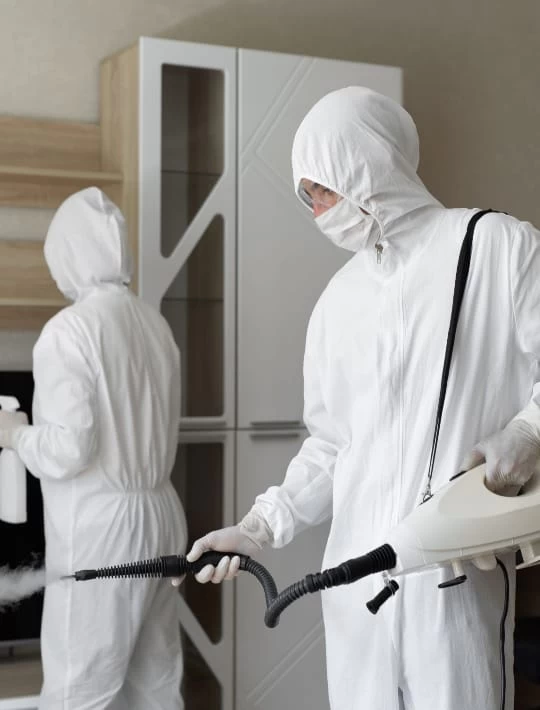
If testing confirms asbestos-containing materials, abatement happens first. We hold the NYS DOL Asbestos Handling Contractor License required to legally perform that work in New York State, so there’s no delay waiting on a separate subcontractor. Once abatement is complete and air clearance testing confirms the space is clean, demolition proceeds. The Town of Hempstead requires a demolition permit for this work, and Nassau County requires a rodent-free certification before any structure can be demolished — we handle both as part of the process, not as an afterthought.
When the job is done, you receive disposal documentation — a chain of custody manifest showing that all hazardous materials were transported to and received by a licensed facility. That paperwork protects you at resale and during any future permit applications. It’s the difference between work that was done and work that can be proven.
Commercial and Residential Demolition Franklin Square
The Full Scope, Built for Franklin Square's Actual Conditions
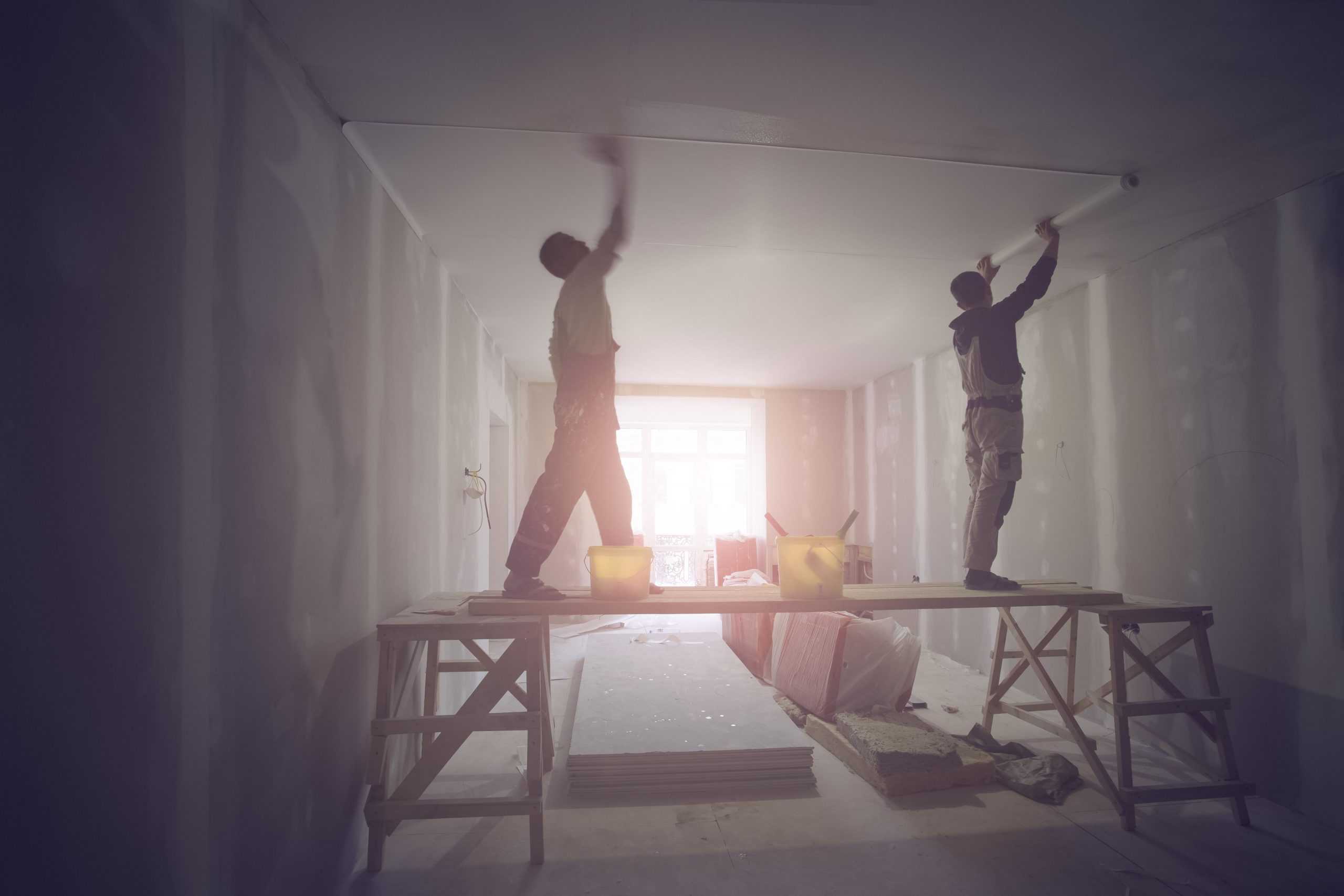
We handle residential and commercial demolition across Franklin Square and the surrounding Town of Hempstead. On the residential side, that means interior gut demolitions — kitchens, bathrooms, basements, dormer additions — in the Cape Cod and post-war housing stock that defines this community. These homes are dense, close together, and old enough that almost every project has a hazardous materials dimension. We scope the work accordingly.
On the commercial side, the Hempstead Turnpike and Nassau Boulevard corridor has seen active renovation and revitalization — including the largest renovation of Franklin Plaza since it was originally built in 1970. Commercial demolition in this environment requires proper bonding, commercial-grade insurance, and the project management infrastructure to coordinate permits, abatement, and structural work without disrupting neighboring tenants or businesses. We serve municipal and commercial clients in addition to residential homeowners, which means we have the operational capacity when the project scope demands it.
Every project — residential or commercial — includes a written scope before work begins, permit coordination with the Town of Hempstead Building Department, Nassau County rodent-free certification handling, NYS DOL-compliant asbestos abatement where required, and full disposal documentation at closeout. There are no handoffs between contractors, no gaps in who’s responsible, and no surprises on the back end.
Do I need a permit to demolish a wall or room in Franklin Square, NY?
Yes, and the permit comes from the Town of Hempstead Building Department — not a local village office. Franklin Square is an unincorporated hamlet, which means it has no village government of its own. All building and demolition permits for work in Franklin Square are issued through the Town of Hempstead. This catches a lot of homeowners off guard, especially those who assume there’s a local Franklin Square building department they can walk into.
For interior demolition — removing walls, gutting a kitchen, finishing a basement — a permit is still required in most cases depending on the scope of the structural work involved. The Town of Hempstead Building Department can be reached at 516-812-3088, and permits can also be submitted through their Online Permit Center. When we handle your project, permit coordination is part of the process. You don’t have to figure out the paperwork on your own.
Is asbestos really a concern in a Franklin Square home from the 1950s?
It’s not just a concern — in a Franklin Square home built around 1952, it’s close to a certainty that at least some asbestos-containing materials are present somewhere in the structure. Asbestos was used routinely during that era in vinyl floor tiles, ceiling texture (the popcorn finish common in post-war Cape Cods), pipe and duct insulation, roofing shingles, and joint compound. Franklin Square’s housing stock is among the most asbestos-dense in Nassau County — the Town of Hempstead’s cluster of post-war Cape Cods has been specifically identified as one of the highest-concentration areas in the country.
That doesn’t mean every renovation triggers a full abatement. It depends on where the work is happening, what materials are being disturbed, and what testing shows. But it does mean that any contractor you hire for demolition or gut renovation in a Franklin Square home of that vintage should be licensed by the NYS Department of Labor to perform asbestos abatement — because if they find something, they need to be legally authorized to handle it. A general contractor license does not cover asbestos removal in New York State.
What is a rodent-free certification and do I need one before demolition?
Yes — Nassau County requires a rodent-free certification before demolition of any residential, commercial, or industrial building in the county. Franklin Square falls under this requirement. The certification confirms that the structure has been inspected and is free of active rodent activity before demolition begins. Without it, you can’t legally proceed with the teardown, and discovering this requirement mid-project can cause real delays.
The certification is coordinated through Nassau County, and the contact number for that process is 516-227-9715. It’s one of those requirements that many homeowners — and even some contractors — don’t know about until it becomes a problem. We factor this into the project timeline from the start, so it doesn’t become a last-minute obstacle. It’s a small step, but skipping it or discovering it late can push your demo date back by days or longer depending on scheduling.
How long does interior demolition typically take in a Franklin Square Cape Cod?
For a standard interior gut — a kitchen, bathroom, or finished basement in a post-war Cape Cod — the physical demolition work itself often takes one to three days depending on the scope. What affects the overall timeline more significantly is what comes before: the permit process through the Town of Hempstead, the Nassau County rodent-free certification, and any required asbestos testing and abatement if hazardous materials are found.
If asbestos abatement is needed, that phase adds time — abatement must be completed and air clearance testing must confirm the space is clean before demolition can resume. In a Franklin Square home from the 1950s, it’s smart to build that possibility into your planning from the start rather than assume it won’t apply. When you work with a contractor who handles abatement and demolition in-house, that transition happens without scheduling gaps or waiting on a separate company to become available. The project moves as efficiently as the conditions allow.
What licenses should a demolition contractor have for work in New York State?
At minimum, a demolition contractor in New York State should hold a valid general contractor license, general liability insurance, and workers’ compensation coverage. But for any project involving a pre-1980 structure — which covers virtually every home in Franklin Square — the contractor also needs a NYS Department of Labor Asbestos Handling Contractor License to legally disturb or remove asbestos-containing materials. Individual workers performing the abatement must hold their own NYS DOL asbestos handler certifications. These are separate credentials from a general contractor license, and one does not substitute for the other.
At the federal level, EPA NESHAP regulations require at least 10 working days’ advance notice before demolition of any structure containing asbestos above threshold quantities. OSHA regulations also require a written engineering survey of the structure before demolition begins. These aren’t optional steps — they’re legal requirements. Before you sign any demolition contract in Franklin Square, ask the contractor directly whether they hold the NYS DOL Asbestos Handling Contractor License. If they can’t confirm it, find someone who can.
Can Green Island Group handle both the asbestos removal and the demolition in Franklin Square?
Yes — and that’s the core reason most Franklin Square homeowners choose us for this type of work. The majority of demolition contractors operating in this area are single-trade operators. They do the demo, but they’re not licensed for asbestos abatement. So when something is found — and in a 1950s Cape Cod, something usually is — the project stops while the homeowner scrambles to find a separate abatement contractor, waits for their schedule to open up, and then tries to reschedule the original demo crew. That gap can add weeks to a project and creates a real liability question about who’s responsible for what.
We hold the NYS DOL Asbestos Handling Contractor License and perform abatement and demolition under a single contract with one team managing the full scope. For Franklin Square homeowners undertaking gut renovations, estate cleanouts, or structural demolition in older housing stock, that continuity isn’t a convenience — it’s the difference between a project that moves forward and one that stalls at the worst possible moment. One call, one scope, one team from assessment through final clearance.