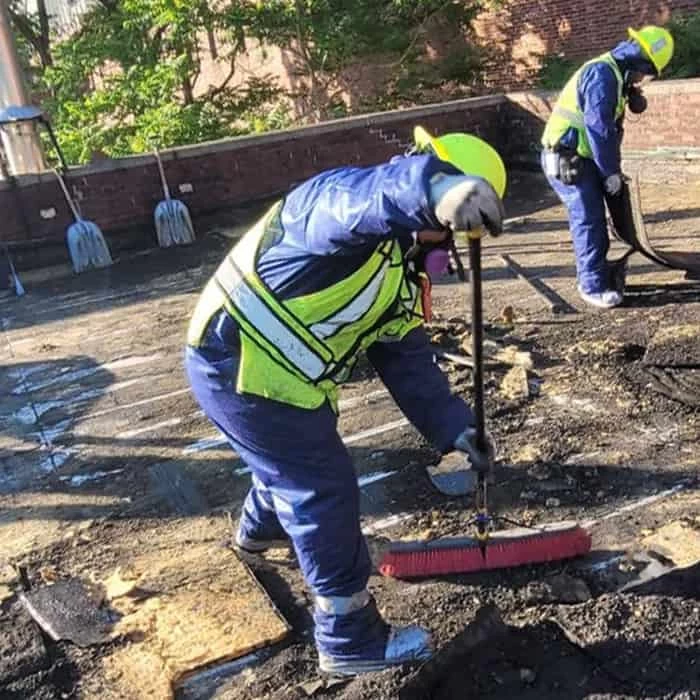
When the Walls Come Down in Glen Head, the Paperwork Has to Hold Up Too
In a community where homes sell for seven figures and permits get scrutinized, you need a demolition contractor in Glen Head who handles everything — structure, hazardous materials, and documentation — under one roof.
I needed a professional consultation explanation of procedure for safe removal of Asbestos in my apartment complex. Without having an account yet, I was very impressed with the caring, knowledgeable and generous advice offered by Jessica, and will look forward to doing business in the future. Thank you so much! I feel much more informed about a sometimes scary endeavor. Peace. Nancy Silva Mineola, NY.
Mia Munoz
Used this company to clean up some water flood in my house. They were fast and easy to work with.very professional, Would recommend to anyone!
Nini Valle
Great company, had a flood and they responded quickly and efficiently. Billed my insurance company directly. I highly recommend this company!
joe colapietro, jr
I had pipe freeze in my basement right before a snow storm and they made to within an hour to help start the clean up process. They we by our side throughout the entire process and even helped with the insurance company. They did such a great job with the cleanup, repair, remidiation, I contracted them to perform the repairs and finishes in the basement. They came with enough manpower and material to get the job done. Leo and Jessica were nothing but a pleasure to deal with!!
Cristian Arredondo c
I had some water damage in my home and Green Island was able to take care of my issue quickly and effectively. I am very pleased with the work they did. They responded quickly and were very professional.
Michael M
Outstanding service! From the office to the field crew everyone was friendly, helpful and responsive. I highly recommend Green Island Group.
What You Actually Get When Nothing Gets Left Behind
Most demolition projects in Glen Head don’t fail because of the demolition itself. They stall because someone finds asbestos tile under the vinyl floor in a 1958 Cape Cod, and the contractor standing there isn’t licensed to touch it. Suddenly you’re waiting weeks for a third-party abatement crew to get scheduled, approved, and on-site — while your timeline and your budget absorb the hit.
When your contractor holds both a demolition license and a NYS Department of Labor Asbestos Handling Contractor License, that scenario doesn’t happen. The same team that starts the job finishes it. No handoffs, no delays, no separate contracts to manage.
That matters especially in Glen Head, where the housing stock spans everything from early 20th-century Colonial estates to the Cape Cods and ranch homes built during the post-WWII expansion of the 1940s and 1960s. Pre-1980 construction is the rule here, not the exception — and with it comes a realistic probability of asbestos-containing materials in the floor tiles, pipe insulation, plaster, roofing, or ceiling finish. Knowing that going in, and having a contractor who is licensed to handle whatever gets uncovered, is what keeps your project moving and your property record clean.
One License Covers What Most Contractors Have to Subcontract Out
We are a full-service environmental contracting and demolition company based on Long Island, serving Glen Head and Nassau County’s North Shore communities. We hold licensing for both structural demolition and asbestos abatement — which means one contract, one crew, and one point of contact from assessment through cleanup.
Working in Glen Head’s pre-1980 housing stock is not new territory for our team. We understand the Town of Oyster Bay’s permit process — the notarized applications, the contractor disclosure requirements, the two sets of drawings the Building Division needs before a demolition permit gets approved. We know what clean documentation looks like when the job is done, and we know why it matters in a market where homes along North Shore Acres and Hill Terrace represent some of the most significant financial assets their owners will ever hold.
Our 4.7-star review record reflects something consistent: customers who called during a stressful project and found a team that actually communicated, showed up, and delivered what we said we would.
No Surprises — Here's Exactly How a Glen Head Demolition Job Runs
It starts with a site assessment. Before anything gets touched, we evaluate the structure, identify any materials that need testing, and scope the full project. In a Glen Head home built before 1980, that assessment includes looking at the areas most commonly associated with asbestos-containing materials — floor tiles, pipe insulation, textured ceilings, boiler wrap — so there are no mid-project discoveries that catch anyone off guard.
From there, permits get pulled through the Town of Oyster Bay’s Building Division. That means a complete, notarized application, contractor disclosure affidavits, and structural drawings that meet the Town’s requirements. We handle this as the licensed contractor of record — which protects your property history and keeps the permit filed correctly the first time.
Once permits are approved and any necessary abatement is complete, the demolition work begins. The job site is kept organized and contained, which matters in a residential community like Glen Head where your neighbors are close and the appearance of your property during the project reflects on you. When the work is finished, you receive disposal manifests for any hazardous materials removed, clearance documentation if abatement was performed, and a complete permit close-out record — everything you need if you ever sell the property, apply for a subsequent permit, or simply want proof that the job was done right.
What's Included When Your Home's History Is on the Line
We handle residential demolition work across the full range of project types in Glen Head — selective interior demolition for kitchen and bathroom gut renovations, partial structural demolition for additions and reconfigurations, and full structural teardowns for properties where a rebuild makes more sense than a renovation. Given Glen Head’s home values, all three scenarios are active in this market right now.
Every project includes pre-demolition hazardous material assessment, which is not optional in a community where the housing stock skews heavily pre-1980. If testing confirms asbestos or lead paint, we handle abatement in-house under the same contract — no separate vendor, no separate schedule. Post-abatement clearance testing is conducted by a licensed NYS DOL Air Monitor to confirm the space is safe before demolition continues. Disposal manifests document the full chain of custody from your property to a licensed facility.
For commercial clients — including property owners along the Glen Head Road and Glen Cove Road corridors, or institutional projects tied to the North Shore School District’s ongoing capital renovation program — we carry the bonding and insurance coverage that commercial and municipal work requires. Whether it’s a residential gut renovation on a quiet street off Cedar Swamp Road or a commercial demolition project in the broader 11545 service area, the licensing, the documentation, and the process are the same.
Do I need a permit to demolish walls or gut a room in Glen Head?
Yes — and the permit process in Glen Head runs through the Town of Oyster Bay’s Building Division, not a village-level building department. Glen Head is an unincorporated hamlet within the Town of Oyster Bay, which means all demolition permits are issued out of the Town’s offices at 74 Audrey Avenue in Oyster Bay, with a satellite office on Hicksville Road.
The application requires notarized forms, contractor disclosure affidavits from both the homeowner and the contractor, and two sets of drawings showing the scope of work — floor plans, elevations, structural details, and a plot diagram for larger projects. It is not a simple online form. The process is detailed enough that professional permit expediting services actively market to Glen Head homeowners, which gives you a sense of how much documentation is actually involved.
When we pull your permit, we do it as the licensed contractor of record. That means the permit is filed correctly, the documentation is complete, and your property record reflects a properly permitted project — which matters when you sell, refinance, or apply for any subsequent permits down the road.
How do I know if my Glen Head home has asbestos before starting a renovation?
The honest answer is that you don’t know until it’s tested — and in Glen Head, testing before you start is the right move. A significant portion of Glen Head’s housing stock was built between the 1940s and 1970s, which places it squarely in the range where asbestos-containing materials were standard in residential construction. Floor tiles, pipe and boiler insulation, textured ceiling finishes, roofing materials, and plaster with asbestos binder were all commonly used in homes of that era, and none of them look different from non-asbestos versions without lab analysis.
The pre-demolition assessment we conduct identifies the materials most likely to contain ACMs and collects samples for laboratory testing before any demolition work begins. If results come back positive above threshold levels, abatement happens before demolition proceeds — handled in-house, under the same contract, without a project halt while you wait for a separate vendor to get scheduled.
Skipping this step is not worth the risk. Disturbing asbestos-containing materials without proper abatement creates a health hazard, a regulatory violation, and a liability that follows the property — not just the contractor.
What's the difference between selective demolition and a full teardown?
Selective demolition means removing specific elements of a structure while leaving the rest intact — knocking out a kitchen down to the studs, opening up walls between rooms, removing a bathroom to the subfloor, or clearing a basement ceiling to access mechanical systems. This is the most common type of demolition work in Glen Head’s renovation market, where homeowners are updating aging interiors in pre-1980 homes that have strong bones but outdated finishes and layouts.
A full teardown means the entire structure comes down to the foundation — or the foundation comes out too, depending on the scope. In Glen Head, where homes in the higher price ranges can reach $2 million to $4 million, the teardown-and-rebuild scenario makes economic sense when the structure is functionally obsolete but the land value justifies new construction. Full teardowns have a more complex permit and regulatory footprint than selective demolition, including NESHAP notification requirements for structures with asbestos above threshold quantities, which require advance notice to the EPA before demolition can begin.
Both project types are well within our scope, and both get handled with the same permit rigor, hazardous materials process, and documentation standard.
Who is responsible for pulling the demolition permit — me or the contractor?
In New York, a licensed contractor can pull the permit as the contractor of record, and that is the right way to do it for a demolition project. When the contractor pulls the permit, they are taking on the professional and regulatory responsibility for the work — which is appropriate, because they are the ones performing it.
When a homeowner pulls their own permit for contractor work, it can create complications: the homeowner becomes responsible for ensuring code compliance, inspections, and close-out, and if something goes wrong, the liability picture gets murkier. For demolition projects in Glen Head specifically — where the Town of Oyster Bay’s application requires contractor disclosure affidavits and licensed contractor documentation — having the contractor pull the permit as the contractor of record is both the cleaner process and the one that protects your property record most clearly.
We handle permit applications as the licensed contractor of record on every project. The application, the documentation, the review process, and the close-out are all managed by our team — you don’t have to navigate the Town of Oyster Bay’s Building Division on your own.
How much does interior demolition typically cost in Glen Head, NY?
The range is wide because the scope varies significantly. A single-room gut — kitchen or bathroom stripped to the studs and subfloor — typically runs in the $3,000 to $8,000 range depending on the size of the space and what’s found inside the walls. A full interior gut of a mid-sized home can run $15,000 to $30,000 or more. Full structural teardowns in Glen Head, where homes are larger and the regulatory footprint is more complex, can range from $25,000 to $60,000 depending on the structure’s size, the presence of hazardous materials, and the scope of site work required.
What drives the variation more than anything else is what gets discovered during the project. In a Glen Head home built in 1955, finding asbestos floor tile, pipe insulation, or lead paint is not unusual — and properly abating those materials adds cost that a contractor who skips the assessment step won’t include in their initial quote. That’s why quotes for the same scope of work can vary by hundreds of percent: one contractor is pricing the demolition, and another is pricing the demolition plus the regulatory compliance that protects you.
When you compare estimates, ask specifically what each quote includes for hazardous materials assessment, abatement, and disposal documentation. The answer tells you a lot about which contractor is actually accounting for the full scope of the job.
Can Green Island Group handle both the asbestos abatement and the demolition in Glen Head?
Yes — and that is specifically what separates us from most demolition contractors operating in this market. The NYS Department of Labor licenses asbestos abatement contractors separately from general contractors. Most demolition contractors do not hold both licenses, which means when asbestos is found mid-project, they legally cannot touch it. The project stops, a third-party abatement contractor gets called in, and you are now managing two separate vendors, two separate schedules, and a project that has gone sideways.
We hold a NYS DOL Asbestos Handling Contractor License alongside our demolition licensing. That means one team handles the full scope — assessment, abatement, clearance testing, demolition, and disposal documentation — under a single contract. In Glen Head’s pre-1980 housing stock, where the probability of encountering asbestos-containing materials on any given project is high, this is not a minor operational detail. It is the difference between a project that moves on schedule and one that stalls at the worst possible moment.
Post-abatement clearance testing is conducted by a licensed NYS DOL Air Monitor — independent verification that the remediation was done correctly and the space is safe. You receive that documentation when the job is complete, along with disposal manifests that track every removed material from your property to a licensed facility.