Most Hewlett Harbor Homes Were Built Before 1960 — Demolition Here Requires a Licensed Contractor
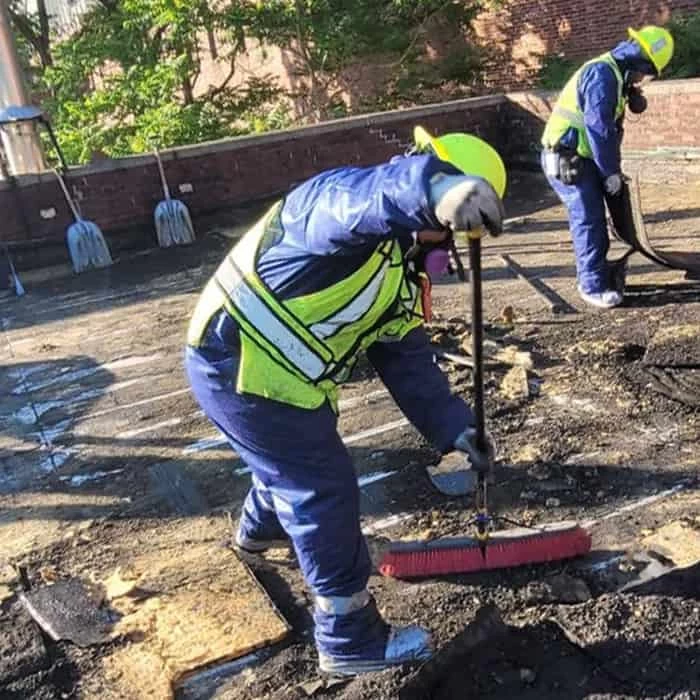
Most homes in Hewlett Harbor were built between the 1920s and 1950s — and what’s behind those walls demands a licensed demolition contractor who knows exactly how to handle it. We carry a New York State Department of Labor Asbestos Handling Contractor License, which means when something hazardous is found during demolition, we handle it directly. No delays. No separate subcontractors. No project stops.
I needed a professional consultation explanation of procedure for safe removal of Asbestos in my apartment complex. Without having an account yet, I was very impressed with the caring, knowledgeable and generous advice offered by Jessica, and will look forward to doing business in the future. Thank you so much! I feel much more informed about a sometimes scary endeavor. Peace. Nancy Silva Mineola, NY.
Mia Munoz
Used this company to clean up some water flood in my house. They were fast and easy to work with.very professional, Would recommend to anyone!
Nini Valle
Great company, had a flood and they responded quickly and efficiently. Billed my insurance company directly. I highly recommend this company!
joe colapietro, jr
I had pipe freeze in my basement right before a snow storm and they made to within an hour to help start the clean up process. They we by our side throughout the entire process and even helped with the insurance company. They did such a great job with the cleanup, repair, remidiation, I contracted them to perform the repairs and finishes in the basement. They came with enough manpower and material to get the job done. Leo and Jessica were nothing but a pleasure to deal with!!
Cristian Arredondo c
I had some water damage in my home and Green Island was able to take care of my issue quickly and effectively. I am very pleased with the work they did. They responded quickly and were very professional.
Michael M
Outstanding service! From the office to the field crew everyone was friendly, helpful and responsive. I highly recommend Green Island Group.
What Changes When You Hire a Licensed Contractor for Hewlett Harbor Demolition
When you’re gutting a 70-year-old home on Hewlett Bay, the last thing you want is a contractor who hits a wall — literally — because they’re not licensed to handle what’s inside it. Asbestos floor tiles, pipe insulation, and joint compound from the mid-century era are standard in Hewlett Harbor’s housing stock. If your contractor can’t legally remove them, your project stops. That’s not hypothetical — it’s one of the most common reasons gut renovations in this area go sideways.
We carry a New York State Department of Labor Asbestos Handling Contractor License. That means when something is found behind the walls — and in a 1940s Hewlett Harbor home, it usually is — we handle it. No third-party delays, no separate contracts, no lost weeks waiting for a licensed sub to show up.
There’s also the waterfront factor. Homes along Macy Channel, Thixton Creek, and Georges Creek sit in an area the Army Corps of Engineers has identified as high-risk for coastal flooding. Sandy left a mark on this village that a $3 million infrastructure recovery project couldn’t fully erase. If your basement flooded, if mold took hold, or if structural damage has been sitting unaddressed — that’s work that needs to be scoped and handled correctly from the start, not patched around.
One Team, Every License, No Handoffs — That's How We Work in Hewlett Harbor
We’re a full-service environmental contracting and demolition firm serving Nassau County and the broader Long Island area. We hold licensing across demolition, asbestos abatement, mold remediation, lead paint removal, and water damage restoration — which matters a great deal in a community like Hewlett Harbor, where the average home is pushing 80 years old and sits within reach of tidal water.
Most contractors working in the Five Towns area hold one or two of these licenses and subcontract the rest. That’s where projects get complicated — multiple schedules, multiple points of contact, and accountability that gets blurry fast. We operate differently. One contract covers the full scope, and one project manager stays with you from assessment through completion.
We have direct experience navigating Hewlett Harbor’s specific permit requirements, including the Nassau County Department of Health rodent-free inspection certificate that has to be coordinated carefully before any demolition permit is issued. That’s the kind of local knowledge that keeps your project moving on schedule.
Here's Exactly How We Handle Demolition in Hewlett Harbor
It starts with a site assessment. Before any walls come down, we evaluate the structure for hazardous materials — asbestos, lead paint, mold — because in Hewlett Harbor’s pre-1960 housing stock, these aren’t edge cases. They’re the baseline expectation. Knowing what’s there before demolition begins is what keeps your project legal, on schedule, and properly documented.
From there, permitting gets handled. In Hewlett Harbor, that means coordinating with the village — which operates under its own Board of Trustees and zoning ordinance, separate from the Town of Hempstead — as well as obtaining the Nassau County Department of Health rodent-free inspection certificate, which expires within 10 days of issuance. Timing that correctly is something a lot of contractors get wrong the first time. We’ve done this before and plan around it.
Once permits are in place, demolition proceeds in a controlled, sequenced way. Hazardous materials are abated first, with proper containment and disposal documentation. Structural demolition follows. Debris is managed daily, the job site stays clean, and neighboring properties are protected throughout — which matters in a village of roughly 450 homes where your neighbors are close and paying attention. When the work is done, you receive a full documentation package: disposal manifests, clearance testing certificates, and permit records.
What's Actually Included When You Hire Us for Hewlett Harbor Demolition
Residential demolition in Hewlett Harbor isn’t a one-size service. A full gut renovation of a 1940s waterfront home involves hazardous materials assessment, licensed asbestos abatement, lead paint removal, structural demolition, and debris removal — often with mold remediation layered in if the property has had any flood exposure. We handle all of it under a single contract. You’re not managing four separate vendors across a six-week project.
For properties along the village’s waterways — Macy Channel, Hewlett Bay, Thixton Creek, Georges Creek — demolition work also has to account for the 50-foot setback requirements in Hewlett Harbor’s zoning code and the flood damage prevention provisions in the village ordinance. These aren’t details you want to discover after demolition begins. We review site-specific zoning constraints before work starts so your rebuild isn’t delayed by a variance issue that could have been caught earlier.
Interior demolition for gut renovations, partial structural demolition, full teardown-and-rebuild projects, and post-storm damage remediation are all within scope. If your project involves a structure that has been compromised by flooding — a recurring reality for low-lying waterfront properties in this part of Nassau County’s South Shore — water damage assessment and mold remediation can be folded into the same project engagement. One call covers it.
Do I need a separate permit for demolition in Hewlett Harbor specifically?
Yes, and the process in Hewlett Harbor is more layered than most people expect. Because Hewlett Harbor is an incorporated village with its own Board of Trustees and zoning ordinance, it operates independently from the Town of Hempstead for local approvals. That’s different from the adjacent hamlet of Hewlett, which falls under Town of Hempstead jurisdiction directly.
On top of the village-level process, Nassau County requires a rodent-free inspection certificate from the Nassau County Department of Health before any demolition permit will be issued. That certificate is only valid for 10 days from the date it’s issued, so the timing between your inspection and your permit application has to be coordinated carefully. If you miss the window, you start over. We’ve navigated this specific process for Hewlett Harbor properties and build that timing into the project plan from the beginning.
My home was built in the 1940s — does that mean there's definitely asbestos?
Not definitively, but the probability is high enough that you should assume yes until testing proves otherwise. The EPA estimates that homes built before 1980 carry significant asbestos risk, and for homes built in the 1920s through 1950s — which covers most of Hewlett Harbor’s housing stock — the risk is concentrated in specific materials: 9×12 vinyl floor tiles, ceiling texture, pipe insulation, joint compound, roofing shingles, and certain types of attic insulation. These materials don’t look different from non-hazardous versions. You can’t identify them visually.
The only way to know is to test, and the only way to legally remove confirmed asbestos-containing materials in New York State is through a contractor holding a NYS Department of Labor Asbestos Handling Contractor License. We hold that license. If testing comes back clean, the project moves forward as standard demolition. If ACMs are found, we handle abatement — no project pause, no waiting on a subcontractor.
How does waterfront location affect demolition and what I can rebuild in Hewlett Harbor?
It affects both the demolition process and your rebuild options in ways that are worth understanding before you start. Hewlett Harbor’s zoning code establishes setback requirements for structures near the village’s waterways — buildings in most residential districts must be set back at least 50 feet from Macy Channel, Hewlett Bay, Thixton Creek, and Georges Creek. The village code also includes freshwater wetlands protections and flood damage prevention provisions that apply to properties in low-lying areas.
What this means practically is that if you’re demolishing a structure that sits close to one of these waterways, the footprint of what you can rebuild may be constrained by the setback rules. Discovering that after demolition — when you’re ready to break ground on a new foundation — creates expensive delays. We review site-specific zoning constraints as part of the pre-demolition assessment so you understand your rebuild envelope before anything comes down. It’s a step that takes a few hours and can save weeks.
What documentation will I receive after the demolition is complete?
For any project involving asbestos abatement, you receive a disposal manifest — a chain-of-custody document that tracks the removed materials from your property to a licensed disposal facility. This is a federal requirement under EPA NESHAP regulations, and it’s the document that proves the work was done legally. You also receive post-project air clearance testing certificates, which confirm that airborne asbestos fiber levels meet the clearance standards required before the space can be reoccupied or worked in by other trades.
In addition to the abatement documentation, you receive permit records and a written scope of work covering everything that was done. In a real estate market where Hewlett Harbor homes average close to $1.8 million and buyers conduct thorough due diligence, this paperwork has real value. When you eventually sell, buyers and their attorneys will ask about prior demolition and renovation work. Having a complete, clean documentation package answers those questions before they become negotiation issues.
My basement flooded during a storm — does Green Island Group handle that kind of demolition too?
Yes. Post-storm demolition and remediation is a significant part of what we do, and it’s particularly relevant for Hewlett Harbor given the village’s location on Hewlett Bay. The Army Corps of Engineers has identified the Nassau back bays — including Hewlett Bay — as a high-risk region for coastal flooding, and Sandy produced storm surge in the western Nassau back bays that exceeded FEMA’s 100-year flood elevation benchmarks. Hewlett Harbor undertook a $3 million infrastructure recovery project in the aftermath. The flood risk here is documented and ongoing.
When a basement floods, mold can begin growing within 24 to 48 hours. If the water damage has been sitting, or if a previous remediation didn’t address the full scope, the affected materials — drywall, insulation, framing, flooring — often need to come out. We handle water damage assessment, mold remediation, and the structural demolition of compromised materials as a combined scope. You don’t need to find a separate mold contractor and a separate demo contractor and coordinate them yourself.
How long does a gut renovation demolition typically take in a Hewlett Harbor home?
It depends on the size of the home, the scope of the gut, and what the hazardous materials assessment turns up — but for a typical mid-century Hewlett Harbor home, interior demolition for a full gut renovation generally runs between three and seven business days of active work, not counting the permitting and inspection phase that precedes it.
The permitting timeline in Hewlett Harbor adds time upfront that a lot of homeowners don’t factor in. Between the village-level approval process, the Nassau County rodent-free inspection certificate, and — if asbestos is present above EPA threshold quantities — the mandatory 10-working-day advance notice requirement under federal NESHAP regulations, the pre-demolition phase can take two to four weeks depending on how quickly inspections are scheduled. Starting the permitting process early, before your renovation contractor is ready to begin, is the most effective way to avoid a gap in your project schedule. We walk you through that timeline at the start so you can plan around it accurately.