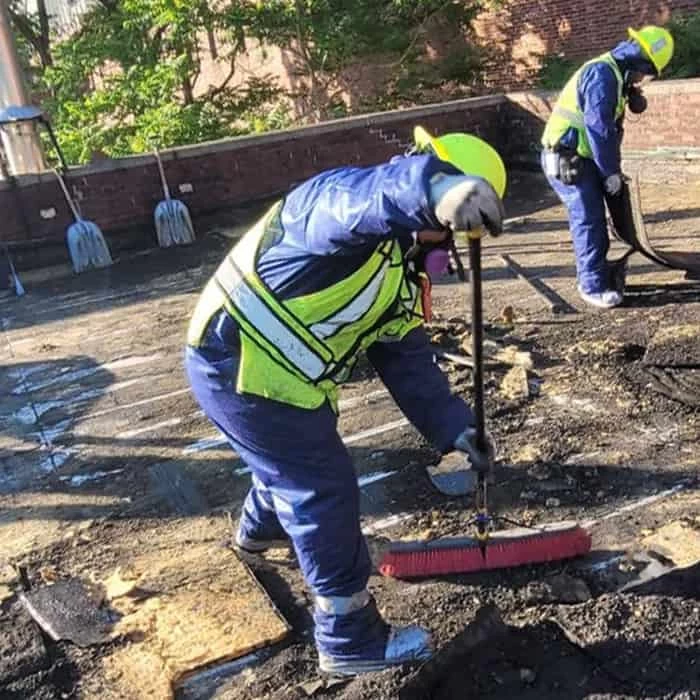
Island Park homes take a beating. When flood damage, aging materials, or a gut renovation puts you at the demo stage, you need a licensed demolition contractor who knows exactly what’s behind these walls — and how to handle it legally.
I needed a professional consultation explanation of procedure for safe removal of Asbestos in my apartment complex. Without having an account yet, I was very impressed with the caring, knowledgeable and generous advice offered by Jessica, and will look forward to doing business in the future. Thank you so much! I feel much more informed about a sometimes scary endeavor. Peace. Nancy Silva Mineola, NY.
Mia Munoz
Used this company to clean up some water flood in my house. They were fast and easy to work with.very professional, Would recommend to anyone!
Nini Valle
Great company, had a flood and they responded quickly and efficiently. Billed my insurance company directly. I highly recommend this company!
joe colapietro, jr
I had pipe freeze in my basement right before a snow storm and they made to within an hour to help start the clean up process. They we by our side throughout the entire process and even helped with the insurance company. They did such a great job with the cleanup, repair, remidiation, I contracted them to perform the repairs and finishes in the basement. They came with enough manpower and material to get the job done. Leo and Jessica were nothing but a pleasure to deal with!!
Cristian Arredondo c
I had some water damage in my home and Green Island was able to take care of my issue quickly and effectively. I am very pleased with the work they did. They responded quickly and were very professional.
Michael M
Outstanding service! From the office to the field crew everyone was friendly, helpful and responsive. I highly recommend Green Island Group.
A Clean Start — Without the Surprises Halfway Through
Most demolition problems in Island Park don’t start with the sledgehammer. They start when a contractor opens up a wall, finds asbestos floor tile or mold-saturated framing, and suddenly doesn’t know what to do next — or worse, keeps going anyway. That’s when a simple demo job turns into a regulatory problem and a health risk you didn’t sign up for.
The homes in Island Park were built primarily in the 1920s through the 1960s. That means asbestos-containing materials and lead paint aren’t edge cases here — they’re the baseline expectation. A contractor who isn’t licensed to handle those materials legally cannot finish the job without either stopping the project or cutting corners. Neither outcome works for you.
What you actually want is a demolition scope that’s been assessed upfront, hazardous materials identified before work begins, and a licensed team that can handle every phase without handing the project off to someone else. When that’s how it runs, the job moves. No stalls, no liability gaps, no mid-project surprises that blow up your timeline.
Licensed Demolition Contractors Serving Nassau County
One License Covers Everything This Job Requires
We’re a full-service environmental contracting and demolition firm serving Long Island and the greater New York metro area. We hold a New York State Department of Labor Asbestos Handling Contractor License — the credential required by law to legally disturb, remove, and dispose of asbestos-containing materials in New York State. That’s not a detail buried in the fine print. In Island Park, where the housing stock is as old as it is and flood exposure is as high as it is, that license is the difference between a job that gets done right and one that creates problems down the road.
We already serve Island Park as part of our documented Nassau County service territory. Our team has worked in South Shore barrier island communities and understands what coastal flood damage actually looks like inside a structure — not just surface water, but saltwater intrusion, compromised framing, and mold that’s been growing behind walls since the last major storm. That experience shows up in how we scope the job, not just how we finish it.
It starts with an assessment — not an estimate pulled out of thin air, but an actual walkthrough of the structure to understand what’s there before any work begins. In Island Park’s older housing stock, that means looking for asbestos-containing materials like floor tile, pipe insulation, joint compound, and ceiling texture. It means checking for lead paint in pre-1940 and pre-1960 construction. And in any home that’s seen flood water, it means evaluating what’s been compromised at the structural level versus what can stay.
Once the assessment is complete, you get a written scope of work that covers what’s being removed, how hazardous materials will be handled, and what the permit process looks like. Island Park is an incorporated village with its own building department, and demolition work here requires a village permit — separate from Nassau County’s home improvement contractor licensing requirements and any state-level abatement notifications required under EPA NESHAP rules. We handle that process. You don’t have to figure out which forms go where.
The work itself follows the sequence the law requires: abatement of hazardous materials before structural demolition proceeds, proper containment during removal, and licensed disposal with a documented chain of custody. When the job is done, post-project clearance testing confirms the space is clean before any new construction begins. That documentation matters — for your contractor, for your insurance, and for any future buyer of the property.
Every Scope Built Around What These Homes Actually Contain
We handle residential demolition, interior gut demolition, structural demolition, and selective demo for renovation projects throughout Island Park, Barnum Island, and Harbor Isle. Our service isn’t limited to swinging a hammer — it includes the full environmental scope that virtually every project in this community requires: asbestos testing and abatement, lead paint assessment under EPA RRP protocols, mold remediation when it’s found behind walls or under floors, and post-project air quality clearance testing before reconstruction begins.
For Island Park homeowners dealing with post-flood damage, that integrated capability matters in a specific way. Structures in FEMA Zone VE that have sustained substantial damage — defined as damage exceeding 50% of the structure’s pre-damage value — may be required to be demolished and rebuilt to current flood-resistant construction standards rather than simply repaired. We understand how that determination interacts with your demolition scope and what documentation is needed to support an NFIP insurance claim or a Nassau County building permit for elevated reconstruction.
Every project includes a written scope of work before demo begins, hazardous materials disposal manifests as a standard deliverable, and clearance documentation at close-out. Whether you’re doing a full teardown, gutting a flood-damaged lower level, or clearing the way for a major renovation in a pre-war bungalow off Long Beach Road, the process is the same: assess it honestly, scope it accurately, and execute it with the licenses the job actually requires.
Do I need a permit to demo a wall or gut a room in Island Park, NY?
Yes — and the permit requirements in Island Park are layered in a way that catches a lot of homeowners off guard. Because Island Park is an incorporated village within the Town of Hempstead, it maintains its own building department and issues its own permits for demolition and renovation work. That’s separate from Nassau County’s home improvement contractor licensing requirements, which apply to any contractor doing the work. For projects involving asbestos-containing materials — which is a realistic expectation in most Island Park homes built before 1980 — there’s also a New York State DOL notification requirement and, in some cases, an EPA NESHAP pre-demolition notification depending on the scope and material quantities involved.
The short version: the permit has to be pulled by a licensed contractor, not the homeowner, and the licensing requirements stack at the village, county, and state level simultaneously. We handle the permit process as part of the project scope — you don’t have to sort out which agency needs what and in what order.
How do I know if my Island Park home has asbestos before starting demolition?
You don’t know until it’s tested — and in Island Park, the odds are not in your favor if the home was built before 1980. Island Park was developed primarily between the 1920s and the 1960s, which means the typical Island Park home falls squarely in the high-risk window for asbestos-containing materials. Common locations include vinyl floor tiles and the mastic adhesive beneath them, textured ceilings, pipe insulation on older heating systems, joint compound used in drywall finishing, and roofing materials on older structures.
Testing requires a licensed asbestos inspector to collect samples from suspect materials, which are then sent to an accredited laboratory for analysis. If asbestos is confirmed above regulatory thresholds, abatement must be completed by a NYS DOL-licensed contractor before any demolition work disturbs those materials. Skipping this step doesn’t make the liability go away — it transfers it to you as the property owner. We handle both the assessment and the abatement, so the testing result doesn’t create a gap in the project timeline.
What does flood damage actually do to a structure that requires demolition, not just drying?
Saltwater flooding — which is what Island Park gets during storm surge events from Reynolds Channel and the Atlantic — does a different kind of damage than freshwater. Salt accelerates corrosion in metal fasteners and structural connectors, degrades drywall and insulation irreversibly, and creates an environment where mold establishes itself faster and more aggressively than in freshwater-flooded structures. Materials that appear intact on the surface after a flood event are often compromised at the structural or microbial level in ways that only become visible once the walls are opened.
The practical threshold for demolition versus drying is this: if drywall, insulation, or structural framing has been saturated — especially with saltwater — it generally needs to come out. Drying it in place doesn’t reverse the salt contamination or eliminate the mold risk. In Island Park homes that have flooded more than once, the cumulative damage to wall assemblies and lower-level framing is often more extensive than it looks from the outside. A proper assessment before any decisions are made is the only way to know what the actual scope is.
What is FEMA Zone VE and how does it affect my demolition options in Island Park?
Zone VE is FEMA’s coastal high-hazard designation — it applies to areas subject to both flooding and wave action simultaneously, which is the most severe flood risk classification in the National Flood Insurance Program. Following Hurricane Sandy, FEMA revised its Flood Insurance Rate Maps and placed significant portions of Island Park in Zone VE. That designation has direct consequences for what you can do with a substantially damaged structure.
Under NFIP rules, if a structure in Zone VE sustains damage that exceeds 50% of its pre-damage market value — a threshold known as “substantial damage” — it must be brought into compliance with current floodplain management regulations before it can be rebuilt. In practical terms, that usually means the structure must be demolished and the replacement built at an elevated foundation height that meets the village’s current base flood elevation requirements. This isn’t optional — it’s a condition of maintaining flood insurance coverage and receiving a building permit for reconstruction. Understanding how your demolition scope interacts with that determination, and what documentation supports the process, is something we can help you navigate.
How much does residential demolition typically cost in Island Park, NY?
The honest answer is that demolition costs in Island Park vary more than in most Nassau County communities because of the hazmat factor. A basic interior gut of a single room in a newer structure might run a few thousand dollars. A full structural demolition of a single-family home can range from $15,000 to $30,000 or more depending on size, access constraints, and what’s found during the assessment. In Island Park specifically, the age of the housing stock means asbestos abatement and lead paint remediation are realistic line items on most projects — and those costs are driven by the quantity of material, the type of abatement required, and licensed disposal fees that are non-negotiable under state and federal law.
What inflates costs unexpectedly is discovering hazardous materials mid-project with a contractor who isn’t licensed to handle them. That scenario stops the job, requires bringing in a separate abatement contractor, and often costs more than if the assessment had been done upfront. Getting a written scope that accounts for the likely hazmat conditions in your specific home — before demo begins — is the most reliable way to get an accurate number and avoid mid-project cost surprises.
Can Green Island Group handle both the demolition and the mold remediation in the same project?
Yes — and in Island Park, that matters more than it would in most other communities. The combination of an older building envelope, chronic moisture from the surrounding waterways, and recurring flood events means mold is a predictable finding in demolition projects here, not an occasional surprise. When mold is discovered behind walls or under flooring during a demo job, a contractor who can only handle the structural removal has to stop and bring in a separate remediation team. That handoff creates scheduling gaps, accountability questions, and delays that compound quickly when you’re trying to move a project forward.
We handle mold remediation and demolition as an integrated scope. When contaminated materials are identified during the demolition process, they’re remediated by the same licensed team under the same project management structure — not handed off to a subcontractor you’ve never met. The result is a single chain of documentation covering both the demo and the remediation, which is what your rebuild contractor, your insurance carrier, and any future buyer of the property will want to see when the project is complete.