Islip Terrace Homes Are Old. Demo Needs to Be Done Right.
Most homes in Islip Terrace were built before 1980 and that changes everything about how demolition gets done. We handle it all in-house, from asbestos abatement to full teardown, right here in Suffolk County.
I needed a professional consultation explanation of procedure for safe removal of Asbestos in my apartment complex. Without having an account yet, I was very impressed with the caring, knowledgeable and generous advice offered by Jessica, and will look forward to doing business in the future. Thank you so much! I feel much more informed about a sometimes scary endeavor. Peace. Nancy Silva Mineola, NY.
Mia Munoz
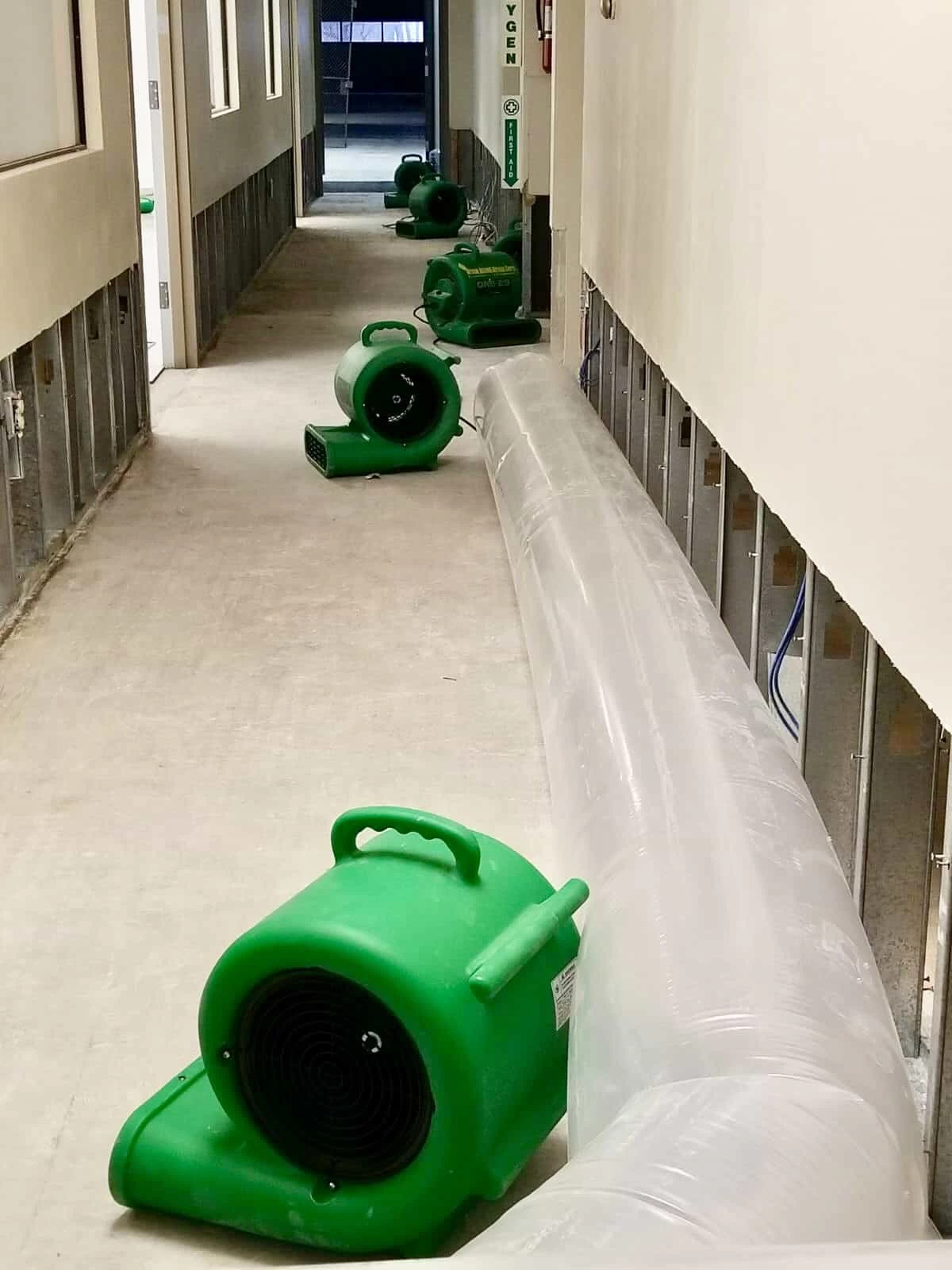
Used this company to clean up some water flood in my house. They were fast and easy to work with.very professional, Would recommend to anyone!
Nini Valle
Great company, had a flood and they responded quickly and efficiently. Billed my insurance company directly. I highly recommend this company!
joe colapietro, jr
I had pipe freeze in my basement right before a snow storm and they made to within an hour to help start the clean up process. They we by our side throughout the entire process and even helped with the insurance company. They did such a great job with the cleanup, repair, remidiation, I contracted them to perform the repairs and finishes in the basement. They came with enough manpower and material to get the job done. Leo and Jessica were nothing but a pleasure to deal with!!
Cristian Arredondo c
I had some water damage in my home and Green Island was able to take care of my issue quickly and effectively. I am very pleased with the work they did. They responded quickly and were very professional.
Michael M
Outstanding service! From the office to the field crew everyone was friendly, helpful and responsive. I highly recommend Green Island Group.
What Changes When Your Contractor Handles Everything In-House
When you hire a demolition contractor who can only do part of the job, you end up managing the rest yourself. You’re calling around for an asbestos company, waiting on their schedule, then calling your demo crew back and your renovation timeline quietly falls apart. That’s the situation a lot of Islip Terrace homeowners find themselves in, and it’s completely avoidable.
With a median construction year of 1963 and roughly 21% of homes built before 1950, the odds that your home has asbestos-containing materials somewhere floor tiles, pipe insulation, ceiling texture are real. Not theoretical. Real. A contractor who isn’t licensed for abatement has to stop the moment something is found. We don’t stop. Abatement is handled in-house, under the same roof as the demolition crew, which means your project keeps moving.
The same applies to oil tanks, lead paint, and mold all common in pre-1980 South Shore homes like those throughout Islip Terrace. You don’t want to discover any of those mid-project with a contractor who has no answer for them. When you start with a team that’s already prepared for what’s likely inside a 1960s Islip Terrace home, you’re not hoping for the best. You’re planning for it.
12 Years In, 5,000 Projects Deep and Still Local to Islip Terrace
We’re based in Bohemia, NY about 8 miles from Islip Terrace on Route 27. That’s not a coincidence. The Town of Islip is our backyard. We know the Building Division’s permit requirements, we know what their inspectors look for, and we know what’s inside the walls of a 1960s Cape Cod on Carleton Avenue. That kind of familiarity doesn’t come from a website it comes from doing the work here in Islip Terrace, consistently, for over a decade.
Over 5,000 completed projects across Long Island and New York City. Active NYS Department of Labor asbestos certifications. More than $2 million in general liability coverage which is what the state actually requires for demolition work, not the bare minimum some contractors carry. We’re available 24/7, including for emergency response, which matters on the South Shore when storms roll through and structures get compromised overnight.
If you’ve read reviews about us, you’ve probably seen Leo and Jessica mentioned by name. That’s what this looks like when a company actually stays accountable to the people it works for.
Demolition Specialist Process in Islip Terrace, NY
No Guesswork Here's Exactly How We Handle Your Islip Terrace Project
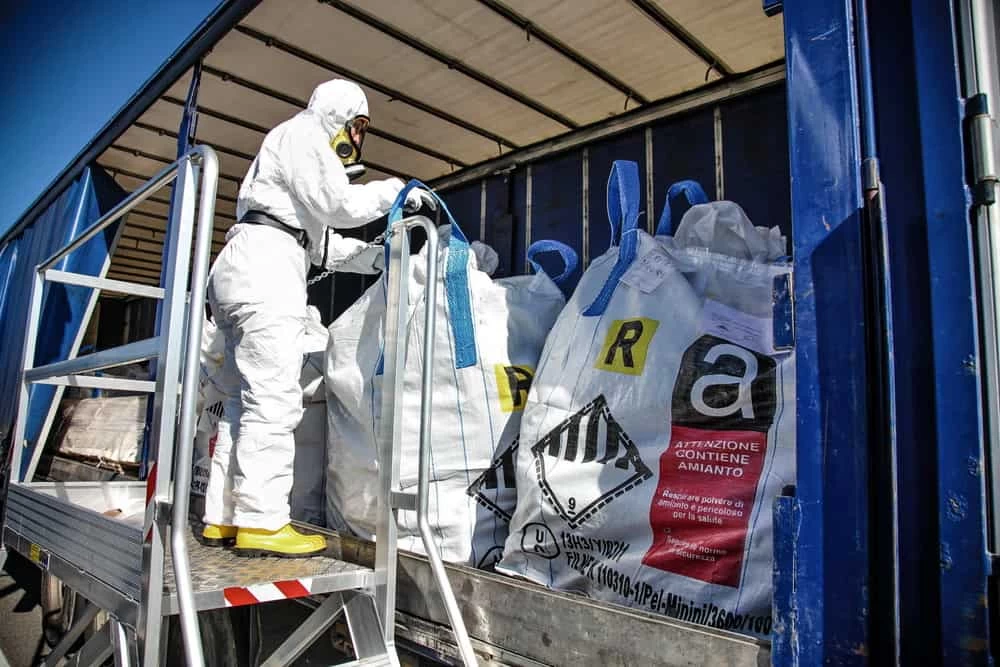
It starts with a walkthrough. Before anything gets touched, we assess the scope what’s coming down, what’s staying, and what’s likely hiding inside the structure based on its age and construction type. For most Islip Terrace homes, that means taking the pre-1980 construction seriously and checking for asbestos-containing materials before we ever swing a tool. If something is found, we handle the abatement ourselves. No subcontractors, no waiting on a separate crew’s calendar.
From there, we take care of the Town of Islip Building Division permit process. That means pulling the current survey, submitting the asbestos clearance documentation, filing the correct Workers’ Compensation certificates not ACORD forms, which the Town explicitly rejects and coordinating any required utility disconnections. Permit processing typically runs two to four weeks in Islip, so starting that process early matters. We manage it so you’re not chasing paperwork while your project sits idle.
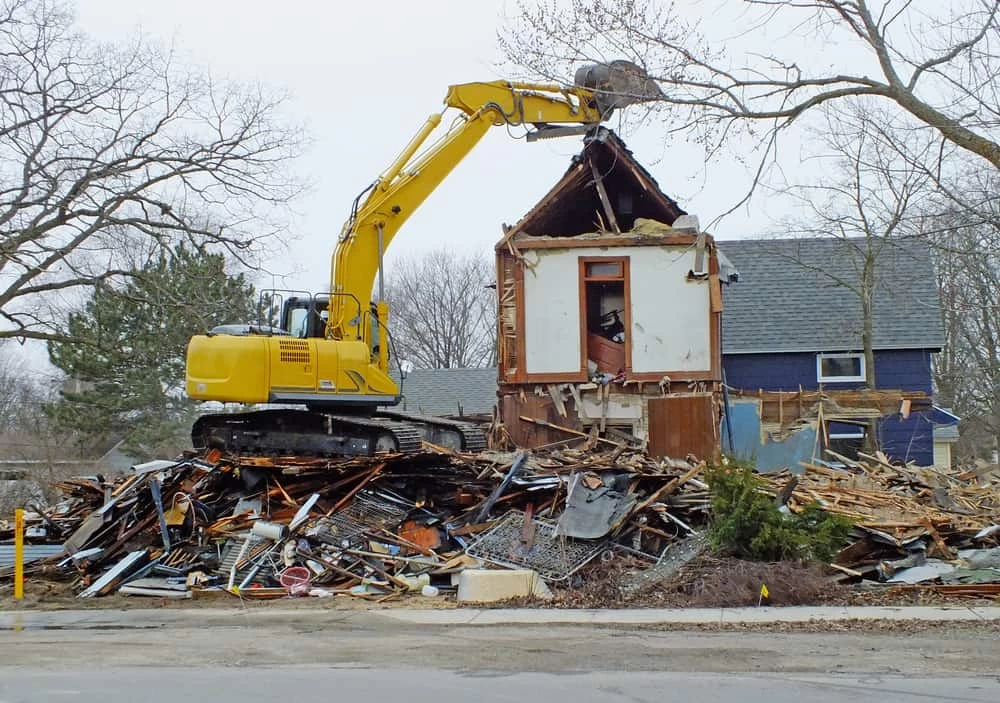
Once permits are approved and the site is cleared, demolition proceeds whether that’s a full teardown, a selective interior gut, or a basement-level structural removal. Debris is hauled, the site is graded, and you’re left with a clean slate ready for whatever comes next. One point of contact from the first call to the final walkthrough.
Built for What South Shore Homes Actually Throw at You
Demolition in Islip Terrace isn’t just about what’s visible. It’s about what’s behind the drywall, under the tile, wrapped around the pipes and having a plan for all of it before the project starts. We cover the full scope: residential and commercial demolition, interior selective demo, full structural teardowns, site preparation, asbestos abatement, mold remediation, lead paint removal, and oil tank removal. If your home was built before 1980, there’s a reasonable chance you’ll need more than one of those before you’re done.
For homeowners on the insurance side dealing with storm damage, water intrusion, or fire we also work directly with your insurance company. The August 2024 flash flooding that triggered a state emergency response across Nassau and Suffolk Counties sent a lot of Islip Terrace residents into exactly this situation: damaged structure, stressed-out family, insurance adjuster asking for documentation. We know how that process works and we’ve helped clients navigate it while the physical work gets done simultaneously.
Whether you’re gutting a kitchen in a 1965 ranch, tearing down a structure on one of Islip Terrace’s residential streets to rebuild from the ground up, or dealing with unexpected damage that needs immediate attention, the scope of work we bring is the same: complete, compliant, and handled by one team from start to finish.
Do I need an asbestos test before demolition on my Islip Terrace home?
In practical terms, yes and in many cases it’s required, not just recommended. The Town of Islip Building Division’s demolition permit application requires either a remediation report with lab results confirming asbestos was present and addressed, or a written certification that no asbestos was found. You can’t submit a complete application without one of those two things, which means the asbestos question has to be answered before a permit can even be issued.
Given that the median construction year for homes in Islip Terrace is 1963, and a significant portion of the hamlet’s housing stock was built before 1950, the likelihood of encountering asbestos-containing materials is high. Floor tiles, pipe wrap, ceiling texture, roofing materials, and joint compound were all commonly manufactured with asbestos during that era. A licensed inspector surveys the property, samples are sent to a lab, and results typically come back within a few days. If asbestos is confirmed, licensed abatement has to happen before demolition can proceed. We hold active NYS Department of Labor asbestos certifications and handle abatement in-house so that discovery doesn’t stop your project, it just becomes the next step we take care of.
How long does it take to get a demolition permit from the Town of Islip?
For a complete application meaning all required documents are submitted correctly the first time the Town of Islip Building Division typically processes demolition permits in two to four weeks. The word “complete” matters here. If something is missing or formatted incorrectly, the application gets kicked back and the clock resets.
The Town has specific requirements that catch a lot of contractors off guard. They require a current survey dated within two years. They require NYS Workers’ Compensation Insurance certificates in a specific format ACORD forms are explicitly not accepted. If the structure has an air conditioning system, a licensed HVAC contractor must document refrigerant evacuation before the permit can move forward. And if asbestos was present, the remediation documentation has to be included. Getting all of that right on the first submission is what separates a two-week turnaround from a six-week delay. We manage the entire permit process for Islip Terrace projects, which means you’re not learning the Town’s requirements on the fly while your renovation timeline slips.
What's the difference between full demolition and interior selective demolition?
Full demolition means the entire structure comes down foundation, walls, roof, everything above grade and the site is cleared and prepared for new construction. This is what happens when a homeowner purchases an older Islip Terrace property and wants to rebuild from scratch, or when a structure is too compromised to renovate economically. It involves utility disconnection coordination, permit management, hazmat clearance, debris removal, and site grading.
Interior selective demolition is more surgical. You’re removing specific elements a kitchen, a bathroom, a finished basement, a load-bearing wall with proper structural planning while leaving the rest of the structure intact. This is the more common scenario for Islip Terrace homeowners who want to renovate rather than rebuild. The challenge with interior demo in pre-1980 homes is that you’re often working in close proximity to materials that may contain asbestos or lead paint, which requires careful containment and proper disposal protocols. It’s not the same as ripping out a 2005 kitchen. The age of the home changes how the work has to be done, and a contractor who doesn’t account for that is creating liability for you.
Can a demolition contractor in Islip Terrace also handle storm damage situations?
Yes, and on the South Shore, that capability matters more than people often realize until they need it. Islip Terrace sits in a part of Suffolk County that sees real storm exposure nor’easters, hurricane remnants, and the kind of inland flash flooding that triggered a state emergency declaration across Nassau and Suffolk Counties in August 2024. When a storm compromises a structure, the damage doesn’t wait for business hours and neither should your contractor.
We operate 24/7 and have a documented track record of emergency response in the Islip Terrace area we already have an active storm damage restoration operation serving this community. When structural demolition is needed before restoration can begin, we respond, assess, and get to work. We also work directly with insurance companies, which matters enormously when you’re dealing with an adjuster, a damaged home, and a displaced family all at the same time. Storm-triggered demolition jobs often move faster than planned renovation projects we’re built for that pace.
How much does it cost to demolish a house in Islip Terrace, NY?
The honest answer is that it depends on several factors that vary significantly from property to property and in Islip Terrace specifically, the age of the housing stock adds variables that don’t exist in newer communities. A straightforward full demolition of a modest single-family home on Long Island typically runs somewhere in the range of $8,000 to $20,000 or more, depending on size, accessibility, and what’s found inside the structure.
What moves the number up in a pre-1980 Islip Terrace home is the presence of hazardous materials. If asbestos abatement is required which is common given the hamlet’s 1963 median construction year that adds cost. Lead paint removal, oil tank decommissioning, and mold remediation all carry their own pricing depending on scope. The advantage of working with a contractor who handles all of those services in-house is that you’re not paying a markup for a subcontractor on top of the demo cost, and you’re not absorbing the delay cost of coordinating two separate crews. We provide clear, itemized estimates so you know exactly what you’re looking at before any work begins.
Does Green Island Group handle the full process, or do I need to hire multiple contractors?
One contractor, start to finish that’s the point. For Islip Terrace homeowners, this matters more than it might in a newer community. When your home was built in the 1960s, a demolition project almost never ends at just demolition. There’s an asbestos survey. There may be abatement. There could be an oil tank that needs to come out. There might be mold in a basement that’s been dealing with Long Island’s high water table for sixty years. Each one of those discoveries, in the hands of a contractor who only does demo, becomes your problem to solve.
We cover asbestos abatement, mold remediation, lead paint removal, oil tank removal, and environmental remediation all under the same license, the same insurance policy, and the same project management. We also handle the Town of Islip permit process from application to approval. What that means practically is that you make one call, you have one point of contact, and you don’t spend weeks coordinating between separate companies with separate schedules. For a community where 92% of residents are long-term homeowners with real investment in their properties, that kind of accountability isn’t a bonus it’s what the job actually requires.