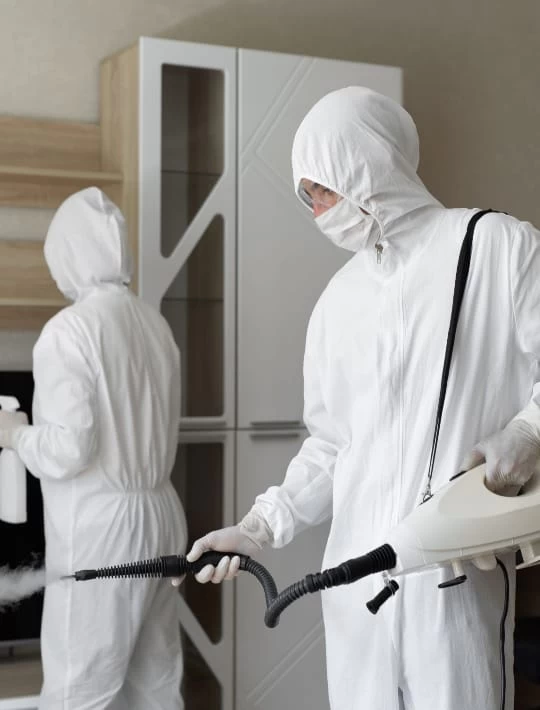
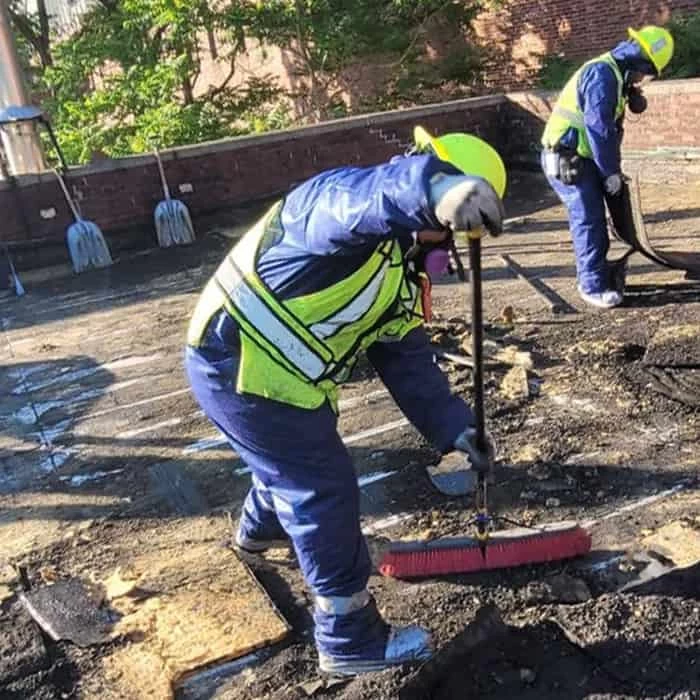
I needed a professional consultation explanation of procedure for safe removal of Asbestos in my apartment complex. Without having an account yet, I was very impressed with the caring, knowledgeable and generous advice offered by Jessica, and will look forward to doing business in the future. Thank you so much! I feel much more informed about a sometimes scary endeavor. Peace. Nancy Silva Mineola, NY.
Mia Munoz
Used this company to clean up some water flood in my house. They were fast and easy to work with.very professional, Would recommend to anyone!
Nini Valle
Great company, had a flood and they responded quickly and efficiently. Billed my insurance company directly. I highly recommend this company!
joe colapietro, jr
I had pipe freeze in my basement right before a snow storm and they made to within an hour to help start the clean up process. They we by our side throughout the entire process and even helped with the insurance company. They did such a great job with the cleanup, repair, remidiation, I contracted them to perform the repairs and finishes in the basement. They came with enough manpower and material to get the job done. Leo and Jessica were nothing but a pleasure to deal with!!
Cristian Arredondo c
I had some water damage in my home and Green Island was able to take care of my issue quickly and effectively. I am very pleased with the work they did. They responded quickly and were very professional.
Michael M
Outstanding service! From the office to the field crew everyone was friendly, helpful and responsive. I highly recommend Green Island Group.
Your Renovation Moves Forward — Without the Hidden Setbacks
Here’s what most homeowners in Lake Success don’t realize until they’re already mid-project: the homes in this village were built in an era when asbestos floor tiles, textured ceilings, and pipe insulation were completely standard. A 1950s or 1960s home on Lakeville Road or near the Great Neck South school district isn’t just charming — it’s almost certainly carrying materials that require licensed handling before a single wall comes down.
When you hire a contractor who can only demo and not abate, your project stops the moment something gets found. And something almost always gets found. What that means in practice is a two-to-three-week delay while a separate abatement company gets scheduled, a second contract gets signed, and your renovation timeline quietly falls apart.
We hold the NYS Department of Labor Asbestos Handling Contractor License. That means when asbestos turns up — and in Lake Success’s housing stock, it’s a when, not an if — the project keeps moving. No handoffs, no gaps, no surprise stops. You get a complete paper trail too: permits, disposal manifests, and clearance documentation that protects your property’s compliance record long after the work is done.
We’re a Long Island-based environmental contracting and demolition firm that has been serving Nassau County homeowners, businesses, and municipalities for years. The reason clients in Lake Success and the broader Great Neck area keep calling is straightforward: there aren’t many contractors who can legally handle asbestos abatement, lead paint removal, mold remediation, and full demolition under one roof. We do all of it, under one contract, managed by one team.
Lake Success isn’t a territory we’re reaching into from somewhere unfamiliar. We already serve this incorporated village and understand the Building Department standards, the permit fee schedule, and the code enforcement environment that comes with working in a community that has managed its own development standards since 1939.
What you get with us is a contractor who shows up accountable. Our reviews reflect that — not just stars, but clients who named specific team members because the communication actually stood out. In a market where follow-through is rare, that matters.
No Guesswork — Here's Exactly How the Work Gets Done
It starts with a site assessment. Before anything is touched, we evaluate the full scope — what’s coming out, what’s staying, and what materials are likely present based on the age and construction type of the structure. For most homes in Lake Success, that means testing for asbestos-containing materials and lead paint before demolition begins. This isn’t optional in Nassau County — the Town of North Hempstead’s own demolition permit application explicitly requires a certified abatement company if hazardous materials are encountered. We satisfy that requirement in-house.
From there, we handle the permitting. Lake Success has its own Building Department with a specific fee schedule: residential demolition permits run $1,000, commercial permits run $2,000. We know the process, we know the documentation requirements, and we pull the permits correctly the first time. If a construction fence is required, that permit ties directly to the demolition permit — another step we manage so you don’t have to track it yourself.
Once permits are in hand and any hazardous materials are properly abated, demolition proceeds. Debris is removed and disposed of through a documented chain of custody. When the work is complete, we provide post-project clearance documentation — not just our word that the space is clean, but verified proof. For a home in Lake Success where you’re preparing for a full renovation or eventual resale, that paperwork is worth having.
Interior and Structural Demolition Lake Success NY
What's Actually Included When You Hire Us
We handle the full range of demolition services that Lake Success homeowners and commercial property owners actually need — interior gut demolition, selective structural demolition, full teardown, and everything that comes with the hazardous materials side of the work.
For residential projects, that typically means gut renovations: kitchens, bathrooms, basement conversions, full-floor removals. These are exactly the projects where mid-century construction creates the most risk. Vinyl asbestos tile was standard flooring in 1950s and 1960s homes. Popcorn ceilings through the 1970s frequently contained asbestos. Joint compound, pipe insulation, and roofing materials from this era are all potential sources. We test, abate, and demo — in sequence, under one contract, without stopping the clock on your project.
For commercial work, including the kind of tenant buildout and renovation activity that happens at a campus like 1111 Marcus Avenue, we bring the same licensed, documented approach. Nassau County’s Home Improvement Contractor license requirement applies to residential permits, and our licensing is current and on file. Every project — residential or commercial — ends with a complete documentation package: permits, disposal manifests, and clearance certificates. In a village where properties regularly change hands at seven figures and buyers conduct serious due diligence, that paperwork is part of what you’re paying for.
Do I need a permit for demolition work in Lake Success, NY?
Yes — and because Lake Success is an incorporated village, the permit process runs through the village’s own Building Department, not just the Town of North Hempstead. That’s an important distinction. The village has its own code enforcement officers, its own fee schedule, and its own standards that apply on top of the New York State Uniform Code.
For residential demolition, the permit fee in Lake Success is $1,000. For commercial work, it’s $2,000. If a construction fence is required around the site, that permit must be filed alongside the demolition permit — and it becomes void if demolition doesn’t start within 30 days of issuance. These are details that trip up contractors who don’t regularly work in incorporated Nassau County villages. We handle the permit application, the documentation, and the filing so the process doesn’t slow down your project before work even begins.
How do I know if my Lake Success home has asbestos before starting a renovation?
The honest answer is: if your home was built before 1980, you should assume it does until testing says otherwise. The residential housing stock in Lake Success is predominantly mid-century construction — homes built in the 1940s, 1950s, and 1960s when asbestos-containing materials were used everywhere. Vinyl floor tiles, textured ceiling coatings, pipe insulation, joint compound, and roofing materials from this era are all common sources.
The only way to know for certain is a professional inspection and laboratory testing of material samples. This needs to happen before demolition begins — not after something gets disturbed. Once ACMs are disturbed without proper containment, you’re dealing with an EPA issue, not just a construction delay. We conduct pre-demolition assessments and coordinate testing as part of the project intake process, so you have a clear picture of what’s present before any work starts.
What licenses does a demolition contractor actually need to work in Nassau County?
There are a few layers here, and they matter. For residential work in Nassau County, contractors are required to hold a Nassau County Home Improvement Contractor (HIC) License before permits can be issued. This is a documented requirement on the Town of North Hempstead’s demolition permit application — not just a general best practice. A contractor who doesn’t hold this license cannot legally pull a residential permit in Nassau County, which means the permit may end up in your name, along with the liability that comes with it.
If the project involves asbestos — which it almost certainly will in a pre-1980 Lake Success home — the contractor also needs a NYS Department of Labor Asbestos Handling Contractor License. This is a separate, state-issued credential that authorizes legal disturbance, removal, and disposal of asbestos-containing materials. It requires documented training, specific insurance, and compliance history. Not every contractor who offers demolition services holds it. We do, and it’s what allows us to handle the full scope of a demolition project without stopping to bring in a separate abatement company.
What happens if asbestos is found after demolition has already started?
This is the scenario every homeowner wants to avoid — and it’s more common than people expect in Lake Success’s housing stock. If asbestos-containing materials are disturbed without proper containment and licensed removal, you’re looking at a mandatory work stoppage, potential EPA notification requirements, emergency abatement costs, and a project timeline that can stretch weeks or months beyond what was planned.
The Town of North Hempstead’s own demolition permit documentation addresses this directly: if asbestos is encountered, a certified asbestos removal company must be brought in to handle it in accordance with all applicable regulations. That requirement doesn’t disappear because the demo contractor didn’t expect to find anything. The best way to avoid this situation entirely is pre-demolition testing before work begins. We build this into the project process so that what’s behind the walls is known — and planned for — before the first tool touches anything.
How long does a residential demolition project typically take in Lake Success?
Timeline depends on the scope, but there are a few Lake Success-specific factors worth understanding. Because the village has its own Building Department, permit processing runs on the village’s schedule — not the town’s. Factoring in application review and approval, you should generally plan for permit lead time before physical work begins. If hazardous materials abatement is required — and in most pre-1980 homes in Lake Success, it will be — that phase needs to be completed and cleared before demolition proceeds.
For a standard interior gut renovation, the demolition phase itself typically runs a few days to a week once work is authorized. Full structural demolition takes longer depending on the size of the structure and site conditions. What we control is the efficiency of the process once it’s underway: because we handle abatement and demolition in-house, there’s no waiting for a second contractor to mobilize. The phases move in sequence without the scheduling gaps that slow down projects when multiple companies are involved.
Why does proper disposal documentation matter when renovating a home in Lake Success?
In a village where homes regularly sell for over a million dollars and buyers conduct thorough due diligence, the compliance record of a property matters more than most homeowners realize until they’re at the closing table. When asbestos or other hazardous materials are removed during a renovation, New York State requires a documented chain of custody — a manifest that tracks the material from your property to a licensed disposal facility. This isn’t optional, and it isn’t just paperwork for paperwork’s sake.
Where it becomes critically important is at resale. A buyer’s attorney in a Lake Success transaction is going to ask about prior demolition and remediation work. If the documentation doesn’t exist, or if the contractor who did the work wasn’t licensed to handle hazardous materials, that becomes a negotiating issue — or a deal issue. We provide complete disposal documentation as a standard deliverable on every project involving hazardous materials: permits, manifests, and post-project clearance certificates. That package is yours to keep, and it protects the value of your property long after the renovation is finished.