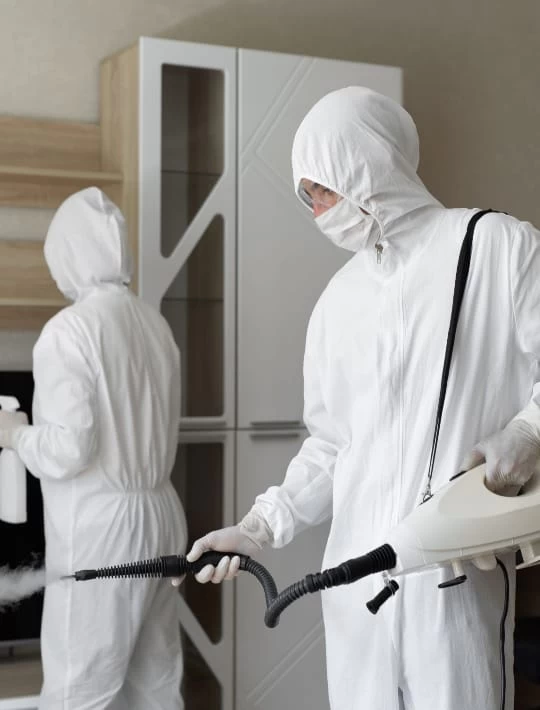
Gold Coast Properties Deserve More Than a Demo Crew
When your Lattingtown property has history built into its walls — literally — you need a demolition contractor who shows up prepared, not one who figures it out after the first wall comes down. We handle demolition and hazardous material abatement under one contract, so your project moves forward without the stops and surprises that come from coordinating separate companies.
I needed a professional consultation explanation of procedure for safe removal of Asbestos in my apartment complex. Without having an account yet, I was very impressed with the caring, knowledgeable and generous advice offered by Jessica, and will look forward to doing business in the future. Thank you so much! I feel much more informed about a sometimes scary endeavor. Peace. Nancy Silva Mineola, NY.
Mia Munoz
Used this company to clean up some water flood in my house. They were fast and easy to work with.very professional, Would recommend to anyone!
Nini Valle
Great company, had a flood and they responded quickly and efficiently. Billed my insurance company directly. I highly recommend this company!
joe colapietro, jr
I had pipe freeze in my basement right before a snow storm and they made to within an hour to help start the clean up process. They we by our side throughout the entire process and even helped with the insurance company. They did such a great job with the cleanup, repair, remidiation, I contracted them to perform the repairs and finishes in the basement. They came with enough manpower and material to get the job done. Leo and Jessica were nothing but a pleasure to deal with!!
Cristian Arredondo c
I had some water damage in my home and Green Island was able to take care of my issue quickly and effectively. I am very pleased with the work they did. They responded quickly and were very professional.
Michael M
Outstanding service! From the office to the field crew everyone was friendly, helpful and responsive. I highly recommend Green Island Group.
Here’s what most Lattingtown homeowners find out too late: their demolition contractor isn’t licensed to handle what’s inside the walls. The crew shows up, something gets disturbed — asbestos floor tile, pipe insulation, textured plaster — and the whole project halts while they scramble to bring in a separate abatement company. That delay can run weeks. On a large estate renovation where architects, designers, and a general contractor are all working to a timeline, weeks matter.
Lattingtown’s housing stock makes this risk higher than almost anywhere else in Nassau County. Homes built during the Gold Coast era — from the 1890s through the 1930s — were constructed when asbestos use was at its peak, not its decline. It wasn’t just in the floor tiles. It was in the plaster, the pipe insulation, the roofing felts, and the fireproofing. Even properties built in the 1950s and 1960s on subdivided estate parcels fall within the pre-1980 window that requires asbestos testing before any demolition begins.
When we take on a project in Lattingtown, the assessment, abatement, and demolition all happen under one contract. If something is found mid-project — and in structures this age, something often is — the same team handles it. Your timeline stays intact. Your project doesn’t stall. And when the work is done, you get the disposal manifests and clearance documentation that protect you if a buyer’s attorney asks questions down the road.
Residential Demolition Contractor Serving Lattingtown, NY
The License That Actually Matters in Lattingtown
We’re a Long Island-based environmental contracting and demolition firm serving residential, commercial, and municipal clients across Nassau County and the broader New York metro area. What sets us apart in a market full of demo crews is straightforward: we hold the NYS Department of Labor Asbestos Handling Contractor License — the credential New York State requires to legally disturb, remove, and dispose of asbestos-containing materials. In Lattingtown, where the majority of structures predate 1980 and many predate World War II, that license isn’t a bonus. It’s the baseline.
We serve the full roster of North Shore communities — including Lattingtown’s immediate neighbors in Oyster Bay Cove, Mill Neck, Matinecock, and Bayville — so the layered permit environment that comes with the Town of Oyster Bay and the Village of Lattingtown’s own zoning code isn’t unfamiliar territory. Our clients consistently point to our communication and responsiveness as what keeps them coming back, and referring their neighbors.
What a Compliant Demo Project Actually Looks Like in Lattingtown
It starts before anyone swings a tool. For any structure in Lattingtown that predates 1980 — which covers the overwhelming majority of the village’s housing stock — the first step is a thorough assessment of hazardous materials. That means testing for asbestos-containing materials, lead paint, and anything else that requires regulated handling before demolition can legally begin. We conduct this assessment and use the findings to build your project scope, so there are no surprises once work starts.
From there, permits get pulled. In Lattingtown, that means navigating the Village’s own construction requirements under Chapter 315 of the village code, the Town of Oyster Bay Building Division’s demolition permit process at 74 Audrey Avenue in Oyster Bay, and any applicable state or federal notification requirements — including the EPA’s NESHAP 10-working-day advance notice for structures with asbestos above threshold quantities. We handle all of this in our own name as the licensed contractor of record. You don’t have to learn the difference between the village’s requirements and the town’s — that’s our job.
Once permits are in place and any abatement work is complete, the demolition proceeds — whether that’s a single interior room, a carriage house on a multi-acre parcel, or a full structural clearance. The project closes with post-clearance air quality testing where applicable, and full disposal documentation delivered to you.
Commercial and Residential Demolition in Lattingtown, NY
Every Structure on Your Lattingtown Property, Handled Correctly
Lattingtown’s 2-to-3-acre minimum lot zoning means a lot of properties here have more than one structure. A main house, a carriage house, a pool house, a detached garage — each one may have its own hazardous material profile, its own permit requirement, and its own demolition scope. Our services cover the full range: interior selective demolition, structural demolition, full building demolition, asbestos abatement, lead paint removal, mold remediation, and post-project restoration. One contractor for the entire parcel.
For interior work — a kitchen gut, a bathroom teardown, the removal of a non-load-bearing wall in a historic structure — the process is the same: assess first, abate if needed, then demo. For full structural demolitions, that same protocol applies at a larger scale, with site cleanup and grading coordination included. Lattingtown’s village code also requires a grading permit for any alteration of existing grade, which we factor into the project plan from the start.
Waterfront and near-waterfront properties along Long Island Sound face an additional layer of exposure — storm and wind damage that can compromise structural integrity and require emergency response. Our emergency demolition capability means you’re not scrambling to find three separate contractors after a nor’easter hits. The same team that handles a planned estate renovation is available when timing isn’t on your side.
Do I need a permit to demolish a structure in Lattingtown, NY?
Yes — and in Lattingtown, the permit process involves more layers than most Nassau County homeowners expect. Because Lattingtown is an incorporated village, it operates under its own construction requirements chapter in addition to the Town of Oyster Bay’s building permit process. The village’s zoning code, Chapter 315, governs what can be altered, removed, or demolished within village limits. For the town-level permit, the Town of Oyster Bay Building Division at 74 Audrey Avenue in Oyster Bay processes demolition permits and requires a building permit before any demolition work can legally begin.
On top of that, if the structure contains asbestos above certain threshold quantities — which is common in Lattingtown’s pre-1980 and pre-1940 housing stock — federal EPA NESHAP regulations require a 10-working-day advance notification before demolition starts. New York State also requires that the contractor performing any asbestos disturbance hold a valid NYS DOL Asbestos Handling Contractor License. We handle the full permit and notification process in our own name, so you’re not trying to coordinate this across multiple agencies on your own.
Does asbestos testing need to happen before demolition starts in Lattingtown?
For any structure built before 1980, yes — asbestos testing is required before demolition in New York State, and skipping it isn’t a shortcut, it’s a liability. In Lattingtown specifically, this matters more than in most Nassau County communities. The village’s Gold Coast-era housing stock includes structures built from the 1890s through the 1930s, when asbestos was used extensively in applications most homeowners don’t think about: plaster binders, pipe insulation, roofing felts, fireproofing materials, and structural insulation — not just the floor tiles and popcorn ceilings people typically associate with asbestos.
Even homes built on subdivided estate parcels in the 1950s and 1960s fall within the pre-1980 testing requirement. The testing itself involves collecting samples from suspected materials and sending them to a certified laboratory. If asbestos-containing materials are confirmed, they must be abated by a licensed contractor before demolition of those areas can proceed. We perform the testing, conduct the abatement if needed, and then move directly into demolition — all under one contract, without the scheduling gap that comes from coordinating separate companies.
How much does demolition typically cost for a Lattingtown property?
Demolition costs in Lattingtown vary significantly based on scope, structure size, and what’s found during the pre-demolition assessment. A single-room interior demolition — a kitchen or bathroom gut — typically runs in the range of a few thousand dollars. A full structural demolition of a standalone outbuilding like a carriage house or pool house on a multi-acre parcel will be substantially more, and a full estate clearance involving multiple structures is a project-specific quote conversation.
What drives cost in Lattingtown more than in many other areas is the hazardous materials component. If asbestos abatement is required before demolition — which is common given the age and construction methods of homes here — that adds to the overall project cost. But it’s a required cost, not an optional one. A contractor who quotes you a low number without accounting for the abatement phase is either not planning to do it legally or is planning to surprise you with it later. The right approach is a full assessment upfront so your quote reflects the actual scope of the work, not just the easy parts of it.
Can one contractor handle both asbestos abatement and demolition in Lattingtown?
Yes — and honestly, that’s the way it should be done, especially on properties in Lattingtown. The alternative is hiring a demolition contractor who doesn’t hold the NYS DOL Asbestos Handling Contractor License, which means the moment they find something regulated, work stops and you’re waiting on a separate abatement company to schedule, mobilize, and clear the space before demolition can resume. On a large estate renovation with a full project team working to a timeline, that gap is expensive in ways that go well beyond the abatement invoice.
We hold the licensing to perform both services under one contract. That means the transition from abatement to demolition happens within the same project team, on the same schedule, without a coordination handoff. For Lattingtown properties — where multi-structure parcels, Gold Coast-era construction, and high-value renovation timelines are all common — this integrated approach isn’t a convenience, it’s the practical standard for getting the project done correctly and on time.
What happens if asbestos is discovered mid-demolition on my Lattingtown property?
If asbestos is discovered during demolition and your contractor isn’t licensed to handle it, work stops immediately. The contractor is legally required to cease activity in the affected area, and you’re now in the position of finding a licensed abatement company, waiting for them to schedule a site visit, waiting for remediation, and then waiting for post-clearance testing before demolition can resume. In a worst-case scenario, if materials were already disturbed before the discovery, you may be looking at a more extensive remediation and a regulatory notification process.
This is exactly why the pre-demolition assessment matters so much — and why working with a contractor who holds both licenses matters even more. Our protocol is to assess for hazardous materials before any work begins, which catches the vast majority of issues upfront. But in structures as old and complex as many Lattingtown properties, unexpected finds do happen. When they do, we address them in place, without stopping the project clock while you search for a second contractor. The work continues. The documentation stays clean.
How do I find a licensed demolition contractor in Lattingtown who knows the area?
The first thing to verify is licensing — specifically, the NYS DOL Asbestos Handling Contractor License if the structure predates 1980, which covers most of Lattingtown. Beyond that, you want a contractor who has actually worked in the North Shore’s incorporated village environment, because the permit and regulatory structure here is more layered than in most Nassau County communities. A contractor who regularly pulls permits through the Town of Oyster Bay Building Division and understands the Village of Lattingtown’s own construction requirements is going to move your project forward faster than one who’s figuring it out as they go.
Ask for proof of licensing, ask how they handle the permit process, and ask what happens if asbestos is found mid-project. A contractor who has clear, direct answers to all three of those questions — without hedging or deflecting — is the one worth having on a Lattingtown property. We serve Lattingtown and the surrounding North Shore communities including Bayville, Matinecock, Mill Neck, and Oyster Bay Cove, and carry the licensing, documentation practices, and project management standards that high-value properties in this area require.