North Fork Demolition Without the Permit Headaches
Laurel sits between two town governments, has some of the oldest housing stock on Long Island, and waterfront properties that come with their own set of rules. When you need a demolition contractor in Laurel, you need someone who already knows all of that before they show up.
I needed a professional consultation explanation of procedure for safe removal of Asbestos in my apartment complex. Without having an account yet, I was very impressed with the caring, knowledgeable and generous advice offered by Jessica, and will look forward to doing business in the future. Thank you so much! I feel much more informed about a sometimes scary endeavor. Peace. Nancy Silva Mineola, NY.
Mia Munoz
Used this company to clean up some water flood in my house. They were fast and easy to work with.very professional, Would recommend to anyone!
Nini Valle
Great company, had a flood and they responded quickly and efficiently. Billed my insurance company directly. I highly recommend this company!
joe colapietro, jr
I had pipe freeze in my basement right before a snow storm and they made to within an hour to help start the clean up process. They we by our side throughout the entire process and even helped with the insurance company. They did such a great job with the cleanup, repair, remidiation, I contracted them to perform the repairs and finishes in the basement. They came with enough manpower and material to get the job done. Leo and Jessica were nothing but a pleasure to deal with!!
Cristian Arredondo c
I had some water damage in my home and Green Island was able to take care of my issue quickly and effectively. I am very pleased with the work they did. They responded quickly and were very professional.
Michael M
Outstanding service! From the office to the field crew everyone was friendly, helpful and responsive. I highly recommend Green Island Group.
What Changes When You Work With a Contractor Who Knows Laurel
Most demolition problems in Laurel don’t start with the wrecking they start with the paperwork. Your property might fall under the Town of Southold’s building department, or it might fall under Riverhead’s. Those are two different permit processes, two different timelines, and two different sets of requirements. Hiring a contractor who doesn’t know which one applies to your parcel is how projects get stopped before they start.
Then there’s the housing stock itself. A large portion of homes along Main Road, around Laurel Lake, and on the Peconic Bay waterfront were built well before 1980. That means asbestos is a real possibility in the insulation, the floor tiles, the pipe wrapping, the roofing. If a contractor finds it mid-project and isn’t licensed to handle it, your job stops. You wait. You pay for two separate crews. Your timeline falls apart. When we handle asbestos abatement in-house, that scenario doesn’t happen.
For waterfront properties along Peconic Bay, there’s an additional layer: Southold Town Trustees review for any work within 100 feet of the shoreline or a wetland. That’s not a minor detail it’s a separate permit process that runs alongside your building permit. Knowing it exists before day one is the difference between a smooth project and a surprise stop-work order.
Licensed Demolition Contractors Serving Laurel, NY
12 Years In, and We Still Answer the Phone
We’ve been doing demolition and environmental work across Suffolk County for over 12 years. That includes residential teardowns in Laurel and throughout the North Fork, interior gut jobs, waterfront structures, and properties with hazardous materials that needed to be handled before a single wall came down. Over 5,000 completed projects. Real experience not a portfolio built on easy jobs.
We’re headquartered in Bohemia, which puts us squarely in Suffolk County and familiar with the regulatory landscape that governs work on the North Fork. We hold active NYS Department of Labor asbestos contractor certification, carry $2,000,000+ in general liability insurance, and are a certified MWBE contractor approved for both private and public work.
What actually shows up in the reviews isn’t the credentials it’s that Leo and Jessica answer calls, communicate throughout the job, and don’t disappear after the deposit clears. For a community like Laurel, where word travels fast and most property owners are managing significant investments, that kind of accountability matters more than any brochure.
How We Handle Demolition in Laurel From Start to Finish
It starts with a site assessment. Before anything is scheduled or priced, we evaluate the structure, identify potential hazardous materials, and determine which jurisdiction governs your parcel. In Laurel, that last step matters properties on the Southold side go through one building department, and properties in the Riverhead portion go through another. Getting that wrong from the start costs time and money.
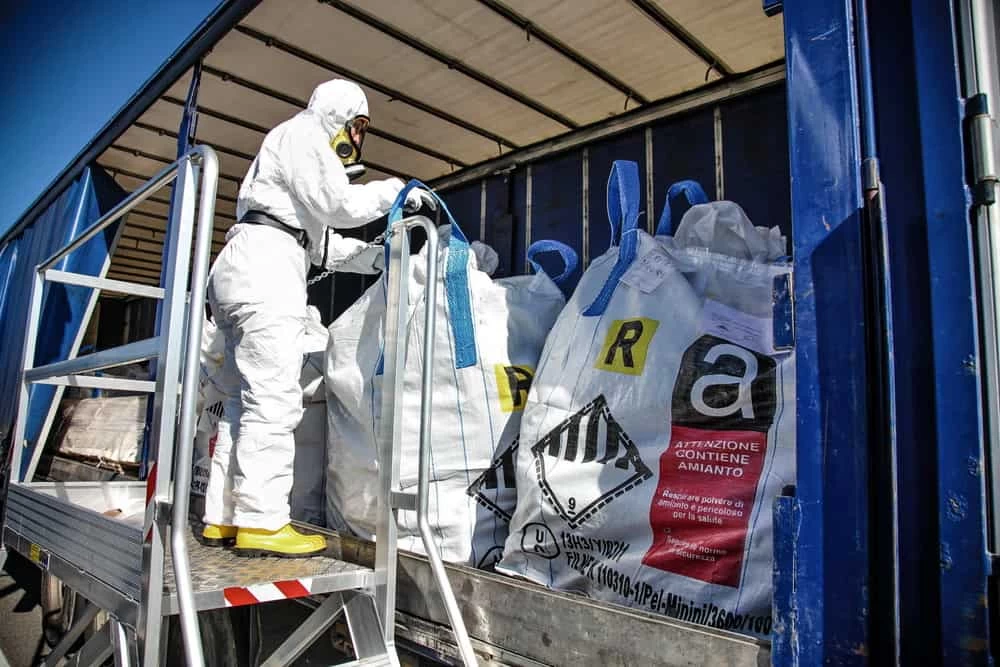
If the pre-demolition asbestos survey required by Suffolk County before any demolition proceeds turns up regulated material, we handle abatement in-house. No subcontracting. No waiting for a second company to get scheduled. The same crew that assessed the property handles the abatement, documents it properly for the county, and moves directly into demolition once clearance is confirmed.
From there, demolition proceeds according to the approved permit and scope. Debris is removed, recyclable materials are separated where possible, and the site is left clean and ready for whatever comes next whether that’s new construction, a foundation pour, or a sale. For waterfront properties on Peconic Bay, the Trustees permit process is factored in from the beginning, not discovered halfway through. We manage the whole thing start to finish, so you’re not coordinating between multiple contractors or chasing down paperwork on your own.
Demolition Specialists for Homes and Commercial Buildings
Full Demolition, Abatement, and Site Prep Under One Roof
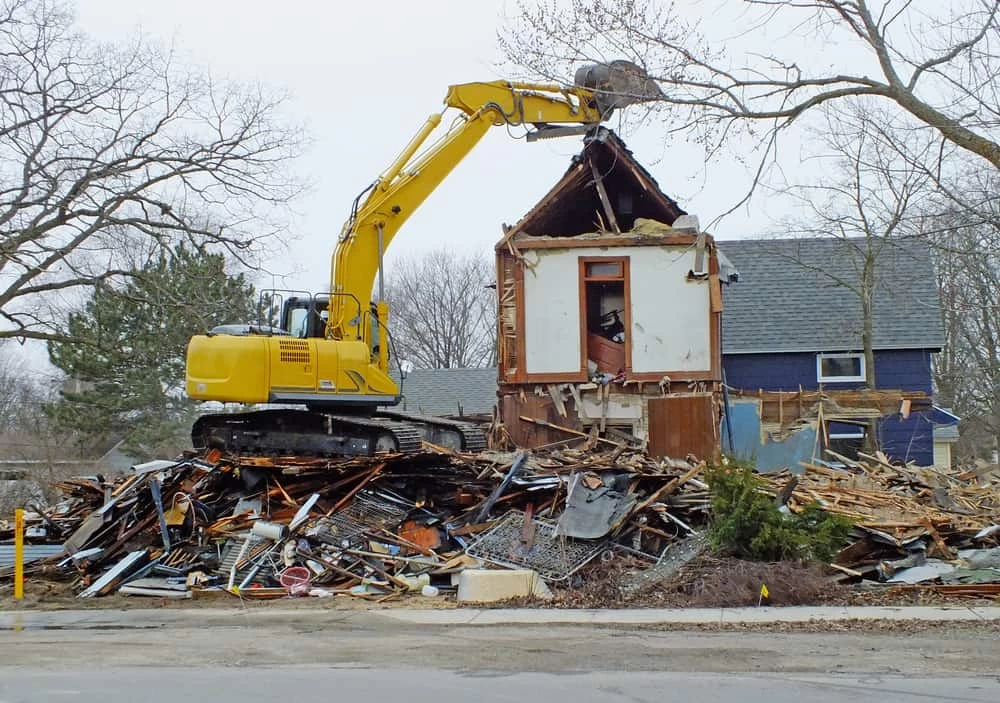
We handle the full range of demolition work full structural teardowns, selective interior demolition, commercial building removal, and emergency demolition when a storm or structural failure requires immediate response. On the North Fork, that last one matters. Peconic Bay waterfront properties take a hit from nor’easters and coastal storms, and when a structure is compromised, you need someone available and ready to move not someone who gets back to you in three business days. We operate 24/7 for exactly that reason.
For interior demolition gut renovations of older cottages, farmhouses, or mid-century homes along Laurel Lake or Main Road the same asbestos and lead paint awareness applies. The hazard doesn’t disappear just because the exterior is staying. Pre-1980 homes in this area routinely contain regulated materials inside the walls, under the floors, and in the ceilings. Every interior project starts with the same survey process as a full teardown.
On the commercial side, our MWBE certification opens eligibility for public and municipal contracts in Southold Town and Riverhead relevant for any institutional or government-adjacent work in the area. Whether it’s a residential property on Peconic Bay Boulevard, an older agricultural structure off Route 25, or a commercial building in the Riverhead portion of Laurel, our scope of services covers it.
Do I need a permit to demolish a house in Laurel, NY?
Yes and in Laurel specifically, the first thing you need to figure out is which town’s building department your property falls under. Laurel is one of the few hamlets on Long Island that sits within two town jurisdictions simultaneously: the Town of Southold and the Town of Riverhead. Depending on where your parcel is located, your demolition permit application goes to one or the other and the two departments have different processes, different timelines, and different documentation requirements.
Beyond the building permit itself, Suffolk County requires a pre-demolition asbestos survey for any structure being demolished. If regulated asbestos-containing material is found above threshold quantities, abatement must be completed and documented before demolition can proceed. That’s a county-level requirement that applies regardless of which town’s permit you’re pulling. If your property has Peconic Bay frontage or is within 100 feet of a wetland, you’ll also need Southold Town Trustees approval a separate permit process that runs parallel to the building permit. Getting all three right from the start is what keeps your project on schedule.
How much does demolition typically cost for a home in Laurel, NY?
Demolition costs on the North Fork vary based on the size of the structure, what’s inside it, and what the site requires after the building comes down. For a standard single-family home in Laurel, full demolition typically ranges from $8,000 to $25,000 or more depending on square footage, access, and whether hazardous materials are present. Asbestos abatement, if needed, adds to that but having it handled in-house by us is significantly more cost-effective than bringing in a separate abatement firm and restarting the job.
The age of Laurel’s housing stock is a real cost factor. Homes along Main Road and around Laurel Lake that predate 1980 have a high likelihood of containing asbestos or lead paint, and that needs to be scoped honestly upfront. A contractor who gives you a low number without accounting for hazmat is not giving you a real quote they’re giving you a number that will change once the walls open up. Transparent scoping at the start protects you from mid-project surprises, especially if you’re managing the project from outside the area.
What happens if asbestos is found during demolition on my Laurel property?
If a pre-demolition asbestos survey identifies regulated asbestos-containing material above the threshold quantities set by USEPA NESHAP regulations, abatement must happen before demolition proceeds. That’s not optional it’s a legal requirement enforced by the Suffolk County Department of Health Services. The abatement contractor must be licensed by the New York State Department of Labor, and the work must be documented and cleared before the demolition permit can move forward.
Where most projects run into trouble is when the demolition contractor and the abatement contractor are two separate companies. The demo crew shows up, asbestos is found, work stops, and now you’re waiting for a second company to get scheduled, complete the work, and get clearance often adding weeks to the timeline. We handle abatement in-house, so that gap doesn’t exist. The same team that does the survey manages the abatement and moves directly into demolition once clearance is confirmed. For property owners in Laurel dealing with older homes, especially those built before 1960, this is one of the most important questions to ask any contractor before you sign anything.
Can a historic home in Laurel be demolished, or are there restrictions?
It depends on whether the structure has been designated as a historic landmark under the Town of Southold’s Landmark Preservation chapter Chapter 170 of the Town Code. If a structure carries that designation, a demolition permit cannot be issued without a Certificate of Appropriateness from the Historic Preservation Commission. That’s a separate review process that runs before the standard building permit application, and it adds time to the overall timeline.
Laurel has documented 19th-century farmhouses and colonial-era structures the hamlet’s history runs deep, and the community’s awareness of historic preservation has been growing. If you’re not sure whether your property carries a historic designation, the Southold Town Building Department can tell you before you invest time in a permit application. If the structure is not designated, standard demolition permitting applies. If it is, the process is more involved but not impossible it just requires documentation and review that we can help you navigate from the start.
How does waterfront demolition work differently for Peconic Bay properties in Laurel?
Properties with frontage on Peconic Bay or located within 100 feet of a tidal wetland, freshwater wetland, or shoreline fall under the jurisdiction of the Southold Town Trustees. That means any demolition work or even significant site disturbance in that zone requires a Trustees permit in addition to the standard building permit from the Town of Southold Building Department. These are two separate applications, reviewed by two separate bodies, and they run on different timelines.
Many contractors who don’t regularly work on the North Fork aren’t aware of the Trustees’ jurisdiction until a stop-work order arrives. By then, the project is already behind schedule. We factor the Trustees review into the project plan from day one including the application timeline and any site-specific conditions the Trustees may require. If your property sits on Peconic Bay Boulevard or anywhere near the shoreline, make sure the contractor you hire knows this process before they touch anything.
How long does the demolition permit process take in Laurel, NY?
Timeline depends on which jurisdiction your property falls under and what the project involves. For a straightforward residential demolition in the Town of Southold, the permit process typically takes a few weeks from application to approval assuming the documentation is complete and there are no complications like historic review or Trustees involvement. The Town of Riverhead has its own process and its own timeline, so properties in the western portion of Laurel may experience a different pace.
When asbestos abatement is required, add time for the pre-demolition survey, abatement work, and post-abatement clearance documentation before demolition can legally begin. If Southold Town Trustees review is needed for a waterfront property, that process runs parallel to the building permit but has its own schedule. The honest answer is that a well-prepared permit application with all required documentation submitted correctly the first time moves significantly faster than one that goes back and forth with the building department. That’s where experience with the local process makes a real difference, particularly for property owners who aren’t local and can’t easily make trips to the Southold or Riverhead building departments in person.