Every tower in Lefrak City is pre-1980 and that changes everything about how interior demolition needs to be handled. We manage the asbestos, the permits, and the demo under one roof.
I needed a professional consultation explanation of procedure for safe removal of Asbestos in my apartment complex. Without having an account yet, I was very impressed with the caring, knowledgeable and generous advice offered by Jessica, and will look forward to doing business in the future. Thank you so much! I feel much more informed about a sometimes scary endeavor. Peace. Nancy Silva Mineola, NY.
Mia Munoz
Used this company to clean up some water flood in my house. They were fast and easy to work with.very professional, Would recommend to anyone!
Nini Valle
Great company, had a flood and they responded quickly and efficiently. Billed my insurance company directly. I highly recommend this company!
joe colapietro, jr
I had pipe freeze in my basement right before a snow storm and they made to within an hour to help start the clean up process. They we by our side throughout the entire process and even helped with the insurance company. They did such a great job with the cleanup, repair, remidiation, I contracted them to perform the repairs and finishes in the basement. They came with enough manpower and material to get the job done. Leo and Jessica were nothing but a pleasure to deal with!!
Cristian Arredondo c
I had some water damage in my home and Green Island was able to take care of my issue quickly and effectively. I am very pleased with the work they did. They responded quickly and were very professional.
Michael M
Outstanding service! From the office to the field crew everyone was friendly, helpful and responsive. I highly recommend Green Island Group.
If you’re renovating inside any of Lefrak City’s 20 towers, you already know the buildings are old. What you might not know is just how much that matters before a single wall comes down. Every unit in this complex was built between 1960 and 1969 which means asbestos-containing materials and lead paint are not a maybe. They’re a near-certainty in the floor tile adhesive, pipe insulation, ceiling tiles, and joint compound. The contractor you hire needs to be ready for that before they show up, not after they’ve already opened a wall.
When you work with a licensed demolition contractor who also handles abatement in-house, the project doesn’t stop the moment something gets discovered. There’s no scrambling to find a separate crew, no weeks of downtime while you wait for another company to schedule an abatement, and no change order that doubles your original quote. The scope is clear upfront because the hazardous material survey happens before pricing not after demolition starts.
Living in a building with hundreds of neighboring units adds another layer to this. Dust containment, noise, freight elevator scheduling, building management coordination these aren’t small details. They’re the difference between a renovation that finishes on time and one that creates problems with your building. Getting all of that handled by one team, under one contract, is what actually makes the project manageable.
340+ Projects in Lefrak City and Queens. Every License That Matters.
We’ve been serving the New York metro area for over 12 years, with active coverage across all five boroughs and Long Island. That includes Lefrak City, the surrounding Corona and Elmhurst communities, and everything under Queens Community Board 4. This isn’t a company that occasionally does demolition work we’ve built our entire operation around it, with more than 340 completed projects and a 4.7-star rating backed by real customer reviews.
What makes the difference in a market like Queens isn’t just experience it’s credentials. Demolition and asbestos abatement in NYC requires compliance with the NYC Department of Environmental Protection, the NYC Department of Buildings, and the NYS Department of Labor under Industrial Code Rule 56. We hold active certifications under all three. That’s not common, and it matters because hiring a contractor who’s missing even one of those puts the legal exposure on you, not them.
When you call us, you’re not explaining where Lefrak City is or what kind of buildings are there. That context is already understood and the process is built around it.
What Actually Happens Before the Walls Come Down in Lefrak City
The first step is always a pre-demolition hazardous material survey. In a Lefrak City apartment, this isn’t optional NYC Local Law 76 requires an asbestos investigation before any renovation or demolition project in the five boroughs. Because all 20 towers were built between 1960 and 1969, this survey almost always returns findings that require abatement before demolition can proceed. That’s not a problem it’s just the reality of working in pre-1980 buildings, and it’s something we build into the project timeline from day one.
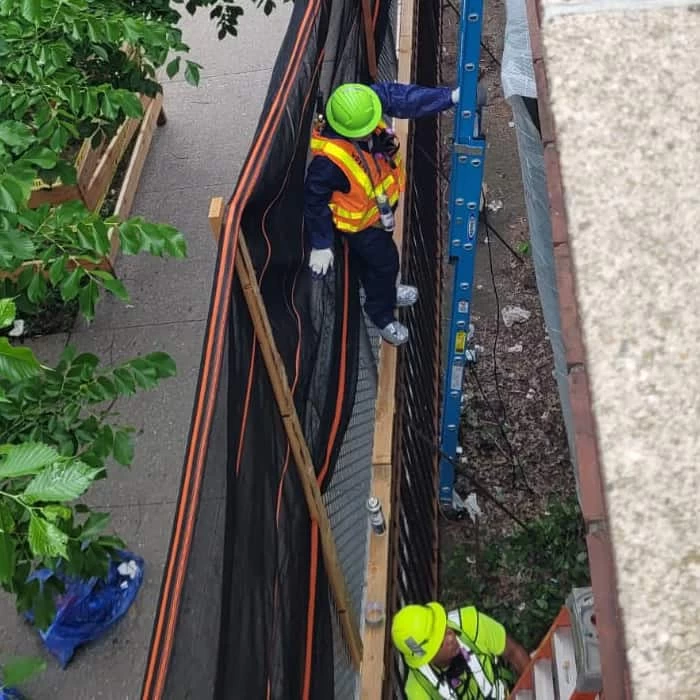
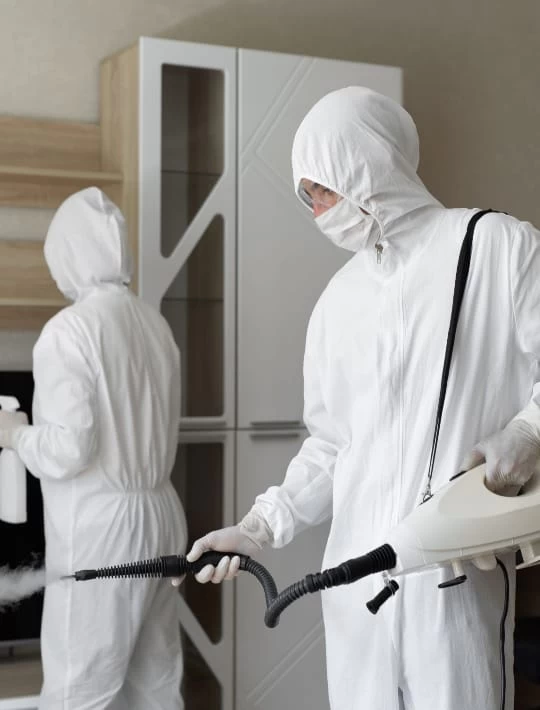
Once the survey results are in, abatement is scoped and priced alongside the demolition work. If asbestos or lead paint is present, we remove it under full NYC DEP certification, with the required independent air monitoring completed before the space is cleared for demo. All hazardous waste is double-bagged, labeled, and transported by a licensed carrier to an approved facility not thrown in a dumpster in the parking lot off Junction Boulevard.
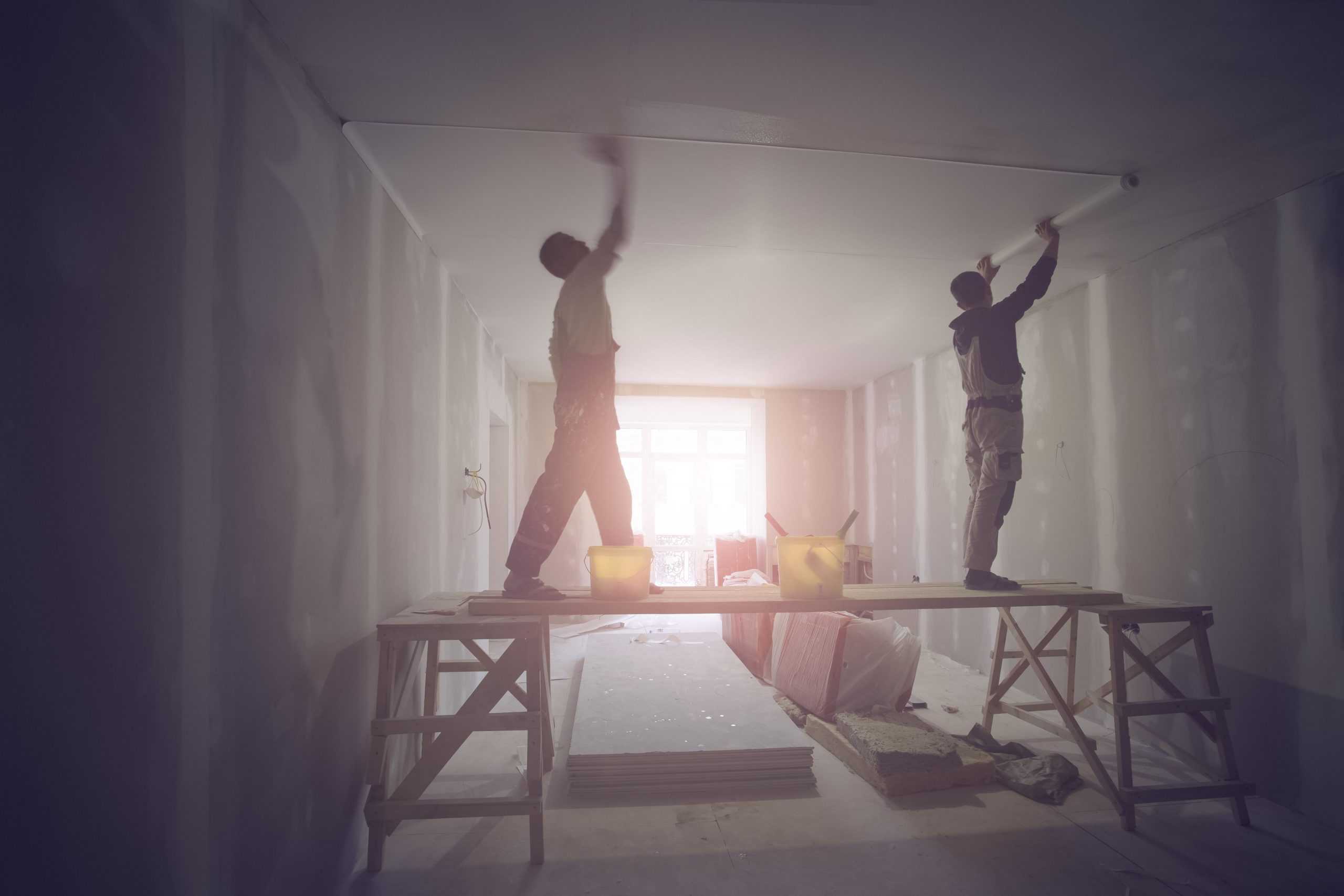
After abatement clears, demolition moves forward. In an occupied high-rise like Lefrak City, that means negative air pressure containment, HEPA filtration, and debris management protocols that protect the floors above and below your unit. Building management requirements, freight elevator scheduling, and after-hours work coordination are handled as part of the job not handed back to you to figure out. By the time the crew is done, the space is cleared, cleaned, and ready for whatever comes next.
Interior Demo, Abatement, and Cleanup All Included
We handle the full scope of interior demolition work that Lefrak City’s building stock actually requires. That includes kitchen and bathroom gut-outs, selective wall removal, flooring demolition, ceiling tile removal, and commercial space buildouts inside the towers and office buildings on the complex. If asbestos or lead paint is present and in a 1960s high-rise, it almost always is we handle abatement in-house under the same contract, not subcontracted out to a third party you’ve never met.
Beyond planned renovations, we also respond to emergency demolition scenarios. Lefrak City’s buildings are over 60 years old, and even after the $70 million infrastructure renovation completed in 2017, aging plumbing systems create ongoing risk of water intrusion. When a pipe fails and mold starts growing within 24 to 48 hours, you need a crew that answers the phone at 2am not one that calls back during business hours. We operate 24/7 and bill insurance carriers directly for disaster-related demolition and remediation work, which removes a significant administrative burden when you’re already dealing with a damaged unit.
For property managers overseeing apartment turnover renovations, commercial tenants reconfiguring leased space, or individual residents navigating a permitted interior project, the process and the compliance picture are the same: one contractor, full credentials, and a scope that accounts for what’s actually inside a 60-year-old Queens high-rise.
Do I need an asbestos test before renovating my Lefrak City apartment?
Yes and it’s not optional. NYC Local Law 76 requires an asbestos investigation before any renovation or demolition project in the five boroughs, no exceptions. Because every building in Lefrak City was constructed between 1960 and 1969, asbestos-containing materials are presumed present in common building components: floor tile and adhesive, pipe insulation, ceiling tiles, joint compound, and fireproofing materials. The investigation needs to be completed before any demolition work begins, and if asbestos is found which it almost always is in buildings of this age abatement must be performed by a contractor holding active NYC DEP certification before the space can be cleared for demo.
Skipping this step doesn’t make the asbestos disappear. It creates legal exposure for you as the property owner or tenant, can trigger stop-work orders from the NYC Department of Buildings, and puts anyone in the building at risk. The right move is to have the survey done upfront, get a clear scope, and price the abatement into the project from the start not discover it mid-demo when the budget is already committed.
How much does interior demolition cost in a Lefrak City apartment?
National average estimates for demolition the $1,100 to $2,900 range you’ll see on most cost guides don’t reflect what interior demolition actually costs in New York City. NYC’s regulatory requirements add real, mandatory costs that those averages don’t account for. Asbestos removal in New York runs $20 to $65 per square foot depending on the material type and quantity. Independent air monitoring after abatement legally required by New York State before the space can be reoccupied typically runs $600 to $1,200 per day. On top of that, NYC DOB permit fees, licensed hazardous waste disposal, and the cost of proper containment systems in an occupied high-rise all factor into the final number.
The most expensive version of this project is the one where a contractor quotes you a low number, starts demo, finds asbestos in the floor tile adhesive, and stops work with a change order that doubles the original price. In a Lefrak City apartment, that scenario isn’t hypothetical it’s predictable. A contractor who conducts a pre-demolition hazardous material survey before quoting gives you a number that reflects the actual scope of work, not an optimistic estimate that ignores what’s inside the walls.
Can a demolition contractor work inside an occupied building in Lefrak City?
Yes, but it requires a different level of preparation than a standalone residential teardown. In a high-density complex like Lefrak City where 14,000 residents live across 20 towers on 40 acres demolition work inside an occupied building has to account for neighboring units above, below, and on either side of the work area. That means negative air pressure containment systems to prevent dust and debris from migrating into shared spaces, HEPA filtration, and debris management protocols that keep the hallways and common areas clean throughout the project.
Beyond the technical side, working in Lefrak City also means coordinating with building management. The LeFrak Organization has protocols for contractor access, freight elevator scheduling, insurance requirements, and after-hours work. An experienced contractor navigates those requirements as part of the job scheduling elevator time, submitting the right documentation, and completing work within whatever time windows building management allows. If your contractor has never worked inside a managed high-rise complex before, those logistics become your problem to solve. If they have, it’s already handled.
What licenses does a demolition contractor need to work legally in NYC?
In New York City, demolition and asbestos abatement are governed by three separate regulatory bodies, and a contractor needs to be in compliance with all three to legally perform this work. The NYC Department of Environmental Protection issues certification specifically for asbestos abatement within the five boroughs this is a separate requirement from anything at the state level and is something many suburban contractors simply don’t hold. The NYC Department of Buildings issues demolition contractor licenses for work in all five boroughs. And the New York State Department of Labor governs all asbestos-related work statewide under Industrial Code Rule 56, which covers nine distinct license types including handlers, inspectors, supervisors, and air sampling technicians.
For a Lefrak City renovation, all three of these apply simultaneously. If the contractor you hire holds a NYS DOL license but not NYC DEP certification, they cannot legally perform asbestos abatement in Queens. If they hold DEP certification but no NYC DOB license, they cannot legally pull a demolition permit. Ask for credentials before signing anything, and verify them the NYC DEP and NYC DOB both have public license lookup tools. We hold all required credentials and can provide them on request.
What happens if water damage occurs in a Lefrak City high-rise apartment?
Water damage in a pre-1980 high-rise moves fast. Mold begins growing within 24 to 48 hours of water intrusion, and in a building where the walls likely contain asbestos-containing materials, you can’t just rip out the wet drywall yourself and call it done. The demolition of water-damaged materials in a Lefrak City apartment requires the same pre-demolition asbestos assessment and abatement protocol as any planned renovation the emergency nature of the situation doesn’t eliminate the regulatory requirements.
What it does change is the urgency. A contractor who operates 24/7 and can dispatch a crew the same night a pipe fails makes a real difference in how much damage compounds before work begins. We respond to emergency water damage, fire damage, and storm-related demolition around the clock, and bill insurance carriers directly for this type of work. That means you’re not managing a back-and-forth between us and your insurance adjuster while your apartment is sitting wet. The documentation, the scope, and the billing are handled on your behalf so you can focus on getting back into a livable space.
Why does Green Island Group specifically serve the Lefrak City area?
Lefrak City is one of the most specific demolition environments in all of Queens 20 towers, all built in the same decade, all pre-1980, all requiring the same asbestos and lead paint protocols before any interior work can proceed. That consistency creates a predictable, ongoing demand for licensed interior demolition and abatement services that most neighborhoods simply don’t have at this scale. With 4,605 apartments in continuous renovation cycles and commercial spaces in the complex’s office buildings turning over regularly, the need for a contractor who understands this specific building type doesn’t go away.
We already have an established presence in Lefrak City and the surrounding Queens Community Board 4 area including Corona and Elmhurst. Our team knows what building management at a large Queens rental complex expects, what the NYC DOB permit process looks like for interior demolition in a high-rise, and what a pre-demolition survey in a 1960s apartment is going to find. That familiarity shortens timelines, prevents the bureaucratic delays that slow down inexperienced contractors, and means the project starts from an informed baseline rather than a learning curve on your dime.