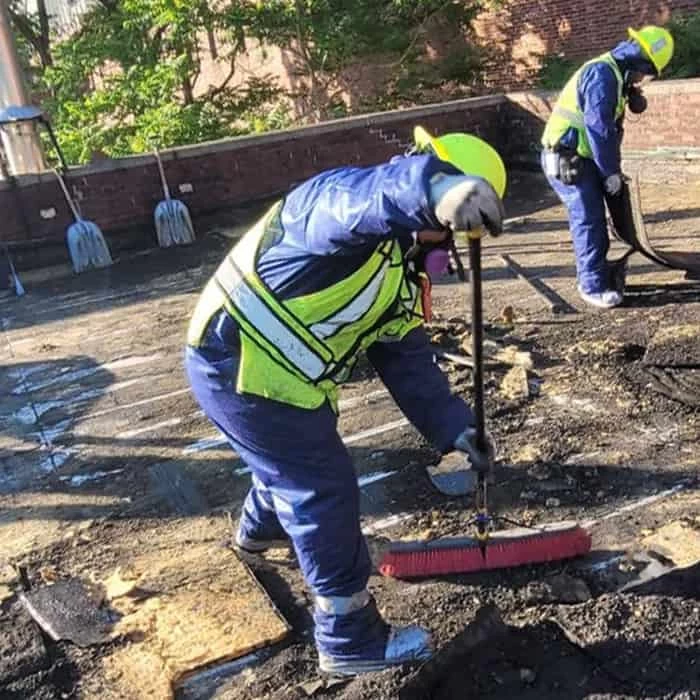
Most homes in Lido Beach were built before 1960 — and that means asbestos, lead paint, and a permit process that stops cold if you skip a step. We handle the assessment, the abatement, and the demolition under one contract.
I needed a professional consultation explanation of procedure for safe removal of Asbestos in my apartment complex. Without having an account yet, I was very impressed with the caring, knowledgeable and generous advice offered by Jessica, and will look forward to doing business in the future. Thank you so much! I feel much more informed about a sometimes scary endeavor. Peace. Nancy Silva Mineola, NY.
Mia Munoz
Used this company to clean up some water flood in my house. They were fast and easy to work with.very professional, Would recommend to anyone!
Nini Valle
Great company, had a flood and they responded quickly and efficiently. Billed my insurance company directly. I highly recommend this company!
joe colapietro, jr
I had pipe freeze in my basement right before a snow storm and they made to within an hour to help start the clean up process. They we by our side throughout the entire process and even helped with the insurance company. They did such a great job with the cleanup, repair, remidiation, I contracted them to perform the repairs and finishes in the basement. They came with enough manpower and material to get the job done. Leo and Jessica were nothing but a pleasure to deal with!!
Cristian Arredondo c
I had some water damage in my home and Green Island was able to take care of my issue quickly and effectively. I am very pleased with the work they did. They responded quickly and were very professional.
Michael M
Outstanding service! From the office to the field crew everyone was friendly, helpful and responsive. I highly recommend Green Island Group.
Your Project Doesn't Stall When the Unexpected Shows Up
When you’re tearing into a 1950s ranch off Lido Boulevard, you’re almost never dealing with just a demo job. You’re dealing with what’s inside the walls — asbestos floor tiles, pipe insulation, textured ceilings — materials that were standard when most of this neighborhood was built. If your contractor can’t legally handle those materials themselves, your project stops the moment they find something. That’s the gap most homeowners don’t see coming until it’s already costing them time and money.
Working with a licensed demolition and abatement contractor means that gap doesn’t exist. The same team that scopes your project tests for hazardous materials, handles the abatement in-house, and moves straight into demolition without a scheduling handoff to a separate company. For a community where nearly every home predates 1978, that’s not a bonus — it’s the only way to keep a project on track.
Lido Beach’s barrier island location adds another layer most contractors aren’t prepared for. You’ve got one road in and one road out, lots that were originally platted at tight dimensions, and neighbors close enough to notice everything. A contractor who’s worked in this environment before knows how to stage equipment, manage debris removal on Lido Boulevard, and run a clean, contained job site. That’s the difference between a project that finishes on schedule and one that creates problems with your neighbors and the Town of Hempstead Building Department.
One License Covers the Whole Job — No Subcontractors, No Gaps
We’re a full-service environmental contracting and demolition firm based on Long Island, serving Lido Beach, Nassau County, and the surrounding area. We hold the New York State Department of Labor Asbestos Handling Contractor License — the credential required by state law and explicitly required by the Town of Hempstead before any demolition permit is issued on a project involving asbestos-containing materials. That’s not a background detail. In a community where the median home in Lido Beach was built in 1959, it’s the license that determines whether your project can legally move forward at all.
Beyond the licensing, our work speaks through the people who’ve experienced it. Reviews consistently name specific team members, cite clear communication, and describe a crew that shows up prepared and leaves the site clean. For a tight-knit community like Lido Beach — where word travels fast and neighbors notice — that track record matters more than any sales pitch.
What Actually Happens From First Call to Clean Site
It starts with an assessment — not an estimate based on square footage alone. Before any work is scoped, we evaluate what’s present in the structure: asbestos-containing materials, lead paint, mold, or any other hazardous conditions that affect how the project needs to be handled. In Lido Beach, where the housing stock skews heavily pre-1978 and flood damage from storm events has left some homes with compounding issues behind finished walls, this step isn’t optional. It’s what keeps a project from being derailed two days in.
From there, if abatement is required — and in most Lido Beach homes, some level of it is — that work is completed in-house before demolition begins. The Town of Hempstead is explicit about this: asbestos abatement must be done before a demolition permit is issued. We handle that sequence, pull the permit in our name as the licensed contractor of record, and coordinate the utility disconnection verification that the town requires before work starts.
Once the abatement is cleared and the permit is in hand, demolition proceeds. We manage containment, debris removal, and site cleanup with the kind of care that a barrier island neighborhood demands — tight lots, one access road, and neighbors who are paying attention. When the job is done, you get disposal manifests documenting the chain of custody for all hazardous materials removed from your property. That documentation matters when you sell, when you pull your next permit, or when your insurance carrier asks questions.
Full-Scope Demo Without the Handoff to a Third Party
Our demolition service covers the full range of what Lido Beach properties actually require — interior gut demolition, structural demolition, selective demolition for renovations, and full teardown for properties being rebuilt from the ground up. That last category is more common here than in most Nassau County communities. Post-Sandy elevation compliance requirements mean that some barrier island homeowners are still navigating what happens when a structure is substantially damaged and FEMA’s flood zone rules require rebuilding to current base flood elevation standards. That process starts with demolition, and it requires a contractor who understands both the structural scope and the regulatory environment.
Every project includes hazardous materials assessment as a starting point — not an add-on. For homes in Lido Beach built between the 1920s and the 1970s, that means testing for asbestos in floor tiles, ceiling texture, pipe insulation, joint compound, and roofing materials, as well as lead paint evaluation in pre-1978 structures. If abatement is needed, it’s handled by our licensed team before demolition begins, in compliance with both Town of Hempstead code and NYS DOL requirements.
The service also includes permit coordination with the Town of Hempstead Building Department, post-abatement clearance testing, and complete disposal documentation for all hazardous waste removed from the property. Whether you’re gutting a mid-century home near Nickerson Beach, demolishing a flood-damaged structure for a full rebuild, or doing a selective interior demo before a high-end renovation, the scope is handled start to finish without splitting the work between contractors.
Does the Town of Hempstead require asbestos testing before demolition in Lido Beach?
Yes — and it’s not just a recommendation. The Town of Hempstead building code explicitly requires that all asbestos abatement be completed before a demolition permit is issued. That means if your contractor isn’t licensed to perform asbestos abatement themselves, your project cannot legally proceed until they bring in a separate abatement company, which adds time, coordination, and an unknown variable to your job.
In Lido Beach specifically, this matters on almost every project. The median home here was built in 1959, and roughly 37% of the housing stock predates 1950. Asbestos was used heavily in residential construction through the late 1970s — floor tiles, pipe insulation, textured ceilings, joint compound, roofing materials. Any demolition that disturbs those materials without proper abatement first is a code violation at the local level and a regulatory violation at the state and federal level. The safest and most efficient path is a contractor who holds the NYS DOL Asbestos Handling Contractor License and can handle both phases under one contract.
How much does demolition typically cost for a home in Lido Beach, NY?
Demolition costs in Lido Beach vary depending on the scope — interior gut demo, selective demolition, partial structural work, or full teardown — and on what’s found during the initial assessment. A straightforward interior gut on a mid-century ranch might run a few thousand dollars, while a full structural demolition with asbestos abatement, permit fees, and debris removal can reach $20,000 to $40,000 or more depending on the size of the structure and the extent of hazardous materials present.
What drives cost in Lido Beach specifically is the age of the housing stock combined with the barrier island logistics. Older homes almost always require some level of abatement, and abatement adds both labor and disposal costs that a general contractor without hazmat licensing can’t even quote accurately. Debris removal on the barrier island also has logistical constraints — there’s one road in and out, and equipment staging requires planning. The most accurate way to understand what your specific project will cost is a proper assessment before any work begins, not a ballpark based on square footage alone.
What happens if asbestos is discovered after demolition has already started?
Work stops. That’s the short answer. Under New York State law and federal EPA NESHAP regulations, once asbestos-containing materials are identified during an active demolition, the work must halt until a licensed abatement contractor addresses the situation. If your demo crew and your abatement contractor are two separate companies, you’re now coordinating an emergency scheduling situation while your project sits idle — and potentially while containment is needed to prevent fiber spread.
This is one of the clearest arguments for hiring a contractor who holds both the demolition capability and the NYS DOL Asbestos Handling Contractor License. When the same team handles both, discovery during demo doesn’t mean a project stoppage — it means a scope adjustment that gets handled by the people already on site. In a community like Lido Beach where pre-1980 materials are the norm, not the exception, encountering asbestos mid-project isn’t a worst-case scenario. It’s a common one. The question is whether your contractor is equipped to handle it without losing days or weeks.
Do I need a demolition permit in Lido Beach, and who pulls it?
Yes, a demolition permit is required through the Town of Hempstead Building Department for any demolition work in Lido Beach — including structural teardowns, significant interior gut work, and removal of any portion of a building. The permit process requires that utility services be disconnected and that asbestos abatement be completed before the permit is issued and work begins.
The permit should be pulled by the licensed contractor doing the work — in their name, as the contractor of record. If a contractor asks you to pull your own permit, that’s worth paying attention to. It sometimes means they aren’t properly licensed to pull it themselves, which raises questions about whether they’re qualified to do the work at all. We handle permit coordination as part of the project — including verifying utility disconnections and submitting the required documentation to the Town of Hempstead. You don’t have to navigate that process on your own.
Can a demolition contractor in Lido Beach handle post-flood or storm-damaged structures?
Yes, and in Lido Beach this is one of the more common project types. The community sits entirely on the Long Beach Barrier Island with direct Atlantic Ocean exposure and Reynolds Channel on the north side — there’s no elevation buffer and no protection from storm surge. The barrier island took significant damage during Superstorm Sandy in 2012, and some properties are still being addressed more than a decade later. Ongoing nor’easters and coastal flooding events continue to create situations where homeowners are dealing with structurally compromised buildings.
Storm-damaged structures in a FEMA Special Flood Hazard Area come with an additional layer of complexity. If the damage exceeds 50% of the structure’s pre-damage value — the “substantial damage” threshold under NFIP rules — the property must be brought into compliance with current base flood elevation standards before rebuilding. That often means full demolition and rebuilding on pilings or an elevated foundation. Navigating that process requires a contractor who understands both the demolition scope and the flood zone regulatory environment in Nassau County, not just one or the other.
How long does interior demolition take for a Lido Beach home renovation?
For a typical interior gut demolition in Lido Beach — kitchen, bathrooms, finished basement, or full-floor removal — the physical demo work itself often takes two to five days depending on the size of the space and the complexity of what’s being removed. But the total timeline from first call to cleared site depends heavily on what the initial assessment finds.
In a community where the majority of homes were built between the 1930s and the 1970s, asbestos abatement is a realistic part of the timeline on most projects. Abatement adds days to the schedule, not weeks, when it’s handled in-house — but if it requires coordinating a separate contractor, you can lose a week or more just in scheduling. Permit processing through the Town of Hempstead adds additional lead time before work can legally begin. The most accurate timeline estimate comes after a proper assessment, once the scope is fully understood.