When Your 1950s Split-Level Needs More Than a Demo Crew
Most Manhasset Hills homes were built during the asbestos era — and most demolition contractors aren’t licensed to handle what’s behind your walls. We are.
I needed a professional consultation explanation of procedure for safe removal of Asbestos in my apartment complex. Without having an account yet, I was very impressed with the caring, knowledgeable and generous advice offered by Jessica, and will look forward to doing business in the future. Thank you so much! I feel much more informed about a sometimes scary endeavor. Peace. Nancy Silva Mineola, NY.
Mia Munoz
Used this company to clean up some water flood in my house. They were fast and easy to work with.very professional, Would recommend to anyone!
Nini Valle
Great company, had a flood and they responded quickly and efficiently. Billed my insurance company directly. I highly recommend this company!
joe colapietro, jr
I had pipe freeze in my basement right before a snow storm and they made to within an hour to help start the clean up process. They we by our side throughout the entire process and even helped with the insurance company. They did such a great job with the cleanup, repair, remidiation, I contracted them to perform the repairs and finishes in the basement. They came with enough manpower and material to get the job done. Leo and Jessica were nothing but a pleasure to deal with!!
Cristian Arredondo c
I had some water damage in my home and Green Island was able to take care of my issue quickly and effectively. I am very pleased with the work they did. They responded quickly and were very professional.
Michael M
Outstanding service! From the office to the field crew everyone was friendly, helpful and responsive. I highly recommend Green Island Group.
When you’re gutting a kitchen or tearing out a bathroom in a Manhasset Hills home built in the 1950s or 1960s, the demolition itself is rarely the hard part. What slows projects down — and what creates real liability — is what gets found in the process. Floor tiles, ceiling texture, pipe insulation, joint compound. In Manhasset Hills, where virtually every home was built between 1940 and 1969, those materials almost always contain asbestos. A contractor who can only demo has to stop the moment anything suspicious turns up. That’s where projects stall.
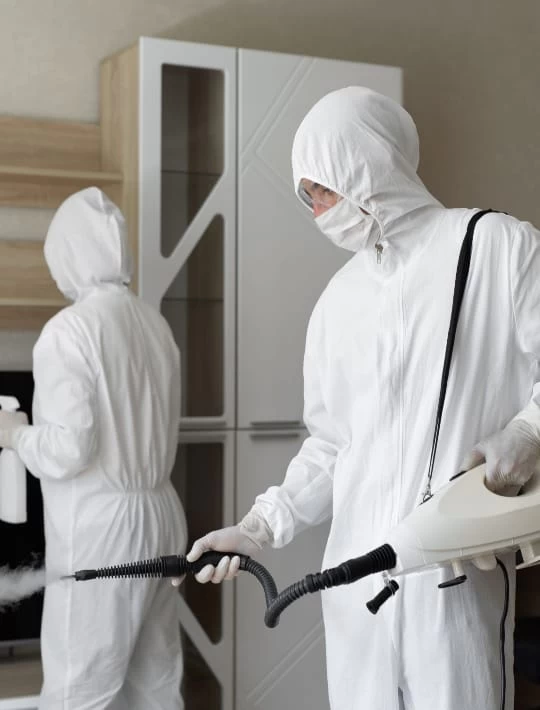
We hold a NYS Department of Labor Asbestos Handling Contractor License, which means the same team that starts your project can legally assess, contain, and remove hazardous materials without calling in a second company. No stop-work gaps. No handoff delays. No trying to coordinate two separate crews on a project that already has a timeline.
For the medical professionals and working families who make up most of Manhasset Hills, that matters. You’re not available to manage a contractor circus. You need one call, one team, and a project that moves forward — not one that sits waiting on a subcontractor’s schedule.
Residential Demolition Contractors Serving North Hempstead
Long Island Roots, Not a Franchise With a Local Phone Number
We’re a Long Island-based environmental contracting and demolition company. We’ve been working in Nassau County homes and commercial properties long enough to know what’s inside the walls of a Cherrywood Homes split-level in Manhasset Hills before we open them. That’s not a guess — it’s pattern recognition built from doing this work in communities exactly like Manhasset Hills for years.
We hold the licensing that actually matters here: a Nassau County Home Improvement License, a NYS DOL Asbestos Handling Contractor License, and the commercial general liability insurance the Town of North Hempstead requires before any demolition permit gets issued. We pull permits in our name. We handle the Nassau County rodent-free certification requirement. We know the Town of North Hempstead’s Building Safety and Inspection process, including the updated OpenGov permitting platform.
You’re not walking us through anything. We’ve done this here before.
It starts with an assessment. Before any demolition work begins in a Manhasset Hills home, we conduct a pre-project asbestos survey. Given the age of the housing stock here — almost entirely built between 1940 and 1969 — this isn’t optional, and it isn’t a formality. It’s how we find out what we’re actually working with before a single wall gets opened.
If the survey comes back clean, we move straight into demolition. If asbestos-containing materials are found — and in a 1957 or 1962 split-level in Manhasset Hills, that’s more common than not — we handle abatement in-house before demo proceeds. Proper containment, negative air pressure, and disposal with full documentation. No stopping the project, no calling a second company, no waiting.
Once abatement is complete and air clearance testing confirms the space is safe, demolition moves forward on schedule. Debris is removed, the site is cleaned, and you receive the documentation you need — disposal manifests, clearance certificates, permit sign-offs. Everything in writing, because in a community where homes are worth over a million dollars and future buyers will ask questions, you want a paper trail that holds up.
One License Covers What Most Contractors Can't Touch
Demolition in Manhasset Hills isn’t just a labor job — it’s a compliance job. The Town of North Hempstead requires a Demolition Permit Application before any structure or portion of a structure can come down. Nassau County requires a rodent-free certification before demolition begins on any residential or commercial property. The NYS Department of Labor requires advance notification for asbestos abatement above threshold quantities. And the EPA has its own 10-business-day notification requirement for larger projects. We navigate all of it.
Whether the project is a full gut renovation of a 1960s ranch off Continental Drive, a selective interior demolition before a kitchen overhaul, or a full structural teardown, the scope of what we handle doesn’t change. We bring the licensing, the insurance, the permit applications, and the hazmat credentials to every job. You don’t need to figure out which contractor handles which piece — we handle the whole thing.
For Manhasset Hills homeowners specifically, the asbestos abatement component is rarely optional. The community’s housing stock is too uniformly from the ACM era to assume otherwise. What we offer isn’t an upsell — it’s the realistic scope of what a properly executed demolition project in this hamlet actually requires.
Do I need a permit to demolish walls inside my Manhasset Hills home?
Yes — and the requirements are more layered than most homeowners expect. The Town of North Hempstead requires a Demolition Permit Application before any demolition work begins, whether it’s a full teardown or selective interior demo. Before that permit is issued, the contractor must present a valid Nassau County Home Improvement License and proof of commercial general liability insurance naming the Town of North Hempstead as an additional insured.
On top of that, Nassau County requires a rodent-free certification before demolition can proceed on any residential property. That’s a separate county-level requirement with its own process. If the project involves asbestos-containing materials — which is likely in any Manhasset Hills home built before 1970 — there are additional NYS DOL notification requirements under Industrial Code Rule 56. A contractor who isn’t pulling permits in their own name, or who asks you to pull the permit yourself, may not hold the credentials to do it legally. That’s worth asking upfront.
How do I know if my Manhasset Hills home has asbestos before demolition starts?
You can’t know by looking. Asbestos-containing materials don’t have a visible tell — the only way to confirm their presence is through sampling and laboratory analysis by a certified inspector. In Manhasset Hills, where the housing stock was built almost entirely between 1940 and 1969, the statistical likelihood of encountering asbestos in a pre-demo home is very high. Floor tiles, especially the 9×9 inch vinyl composition tiles common in 1950s and 1960s construction, are a frequent source. So are ceiling textures, pipe insulation, joint compound, and roofing felt.
A pre-project asbestos survey is required by New York State before any renovation or demolition that could disturb potential ACMs. This isn’t something a homeowner arranges separately — a licensed contractor should be building this into the project scope from the start. If a contractor skips the survey and something turns up mid-demo, the project stops, the liability question gets complicated, and the timeline blows up. Getting the survey done before work begins is how you avoid all of that.
What happens if asbestos is found after demolition has already started?
If asbestos is discovered mid-project — whether in a wall cavity, under flooring, or in ceiling material — work in that area has to stop immediately. Under NYS Industrial Code Rule 56, only a contractor holding a NYS DOL Asbestos Handling Contractor License can legally proceed with removal. If your demolition contractor doesn’t hold that license, they have to stand down and you have to find a separate abatement company, schedule them around the existing project, and then restart demo once clearance testing is complete.
That gap can cost days or weeks depending on scheduling. It also creates a liability question about any disturbance that already occurred before the discovery. The cleaner path — and the one that avoids all of this — is hiring a contractor who holds both the demolition and abatement licensing before work begins. In a community like Manhasset Hills, where the housing stock makes asbestos encounters genuinely common, this isn’t an edge case scenario. It’s a realistic part of the project plan.
How long does a demolition project in Manhasset Hills typically take from start to finish?
Timeline depends on scope, but there are a few factors specific to Manhasset Hills that affect scheduling. The permit process through the Town of North Hempstead’s Building Safety and Inspection Department adds lead time before any work can begin — typically a week or more depending on application volume and project complexity. If the project involves asbestos abatement, federal EPA NESHAP regulations require at least 10 business days’ advance notification before demolition of structures with asbestos above threshold quantities. That notification window is built into the project schedule, not added on top of it — but it does mean projects can’t start the day after a contract is signed.
For a standard interior gut demolition in a Manhasset Hills split-level or ranch — kitchen, bathrooms, or a full floor — the actual demo work typically runs one to several days once permits are in place and any required abatement is complete. Post-abatement air clearance testing adds another step before the space is cleared for reoccupancy or the next phase of renovation. A contractor who gives you a realistic timeline upfront, including permit lead times and any abatement windows, is giving you a more useful answer than one who just quotes the demo days alone.
What documentation should I receive after a demolition project in Nassau County?
At minimum, you should receive the closed-out demolition permit from the Town of North Hempstead, confirming the work was inspected and approved. If asbestos abatement was performed, you should receive a post-project air clearance certificate — independent testing that confirms the space meets NYS DOL standards for reoccupancy. You should also receive waste disposal manifests documenting the chain of custody for any hazardous materials removed from the property. These manifests show where the material went and confirm it was disposed of through a licensed facility.
This documentation matters well beyond the current project. In Manhasset Hills, where median home values exceed $1.1 million, a future sale will almost certainly involve due diligence questions about any renovation or demolition work done on the property. A buyer’s attorney or inspector will want to see that asbestos was properly handled, not just verbally assured. Having the clearance certificate and disposal manifests on file protects you at resale and removes any ambiguity about what was found and how it was handled.
How do I find a licensed demolition contractor in Manhasset Hills who also handles asbestos?
The key is knowing which licenses to ask for — not just whether a contractor is “licensed and insured” in general. For demolition work in Manhasset Hills, the two credentials that matter most are a Nassau County Home Improvement License (required by the Town of North Hempstead before any residential permit is issued) and a NYS Department of Labor Asbestos Handling Contractor License (required to legally perform asbestos abatement in New York State). These are separate licenses, and not every demolition contractor holds both.
You can verify the Nassau County Home Improvement License through Nassau County’s licensing office. The NYS DOL Asbestos Handling Contractor License is verifiable through the Department of Labor’s Asbestos Control Bureau. Beyond credentials, ask the contractor directly: do you pull the permit in your name, do you perform the pre-project asbestos survey, and do you provide air clearance documentation after abatement? In a community where most of the housing stock is from the 1940s through 1960s, those aren’t optional questions — they’re the baseline for hiring someone qualified to do the job correctly.