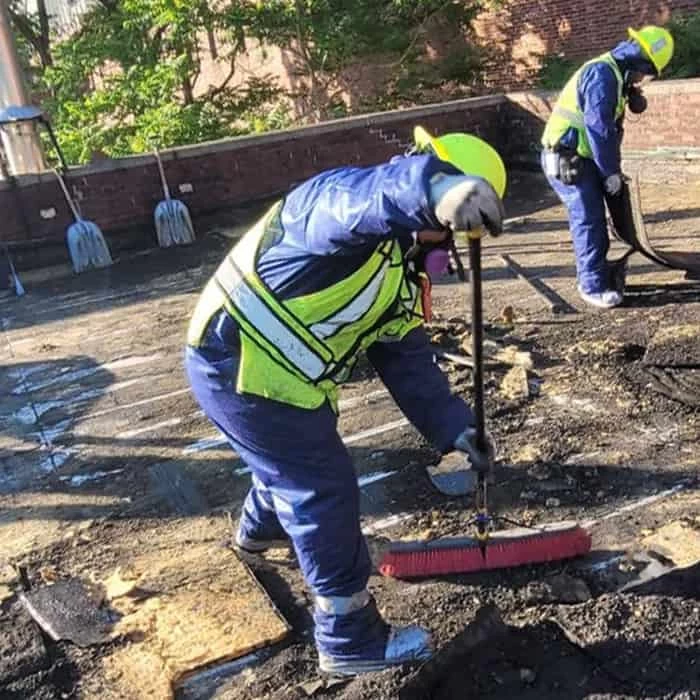
Manhasset Homes Built in the 1950s Need More Than a Wrecking Crew
When your Manhasset home was built in the 1950s and sits on land worth close to a million dollars, the demolition phase isn’t something you hand off to just anyone. We handle the full scope — hazardous materials, permits, demo, and cleanup — so nothing gets missed and nothing comes back to haunt you at closing.
I needed a professional consultation explanation of procedure for safe removal of Asbestos in my apartment complex. Without having an account yet, I was very impressed with the caring, knowledgeable and generous advice offered by Jessica, and will look forward to doing business in the future. Thank you so much! I feel much more informed about a sometimes scary endeavor. Peace. Nancy Silva Mineola, NY.
Mia Munoz
Used this company to clean up some water flood in my house. They were fast and easy to work with.very professional, Would recommend to anyone!
Nini Valle
Great company, had a flood and they responded quickly and efficiently. Billed my insurance company directly. I highly recommend this company!
joe colapietro, jr
I had pipe freeze in my basement right before a snow storm and they made to within an hour to help start the clean up process. They we by our side throughout the entire process and even helped with the insurance company. They did such a great job with the cleanup, repair, remidiation, I contracted them to perform the repairs and finishes in the basement. They came with enough manpower and material to get the job done. Leo and Jessica were nothing but a pleasure to deal with!!
Cristian Arredondo c
I had some water damage in my home and Green Island was able to take care of my issue quickly and effectively. I am very pleased with the work they did. They responded quickly and were very professional.
Michael M
Outstanding service! From the office to the field crew everyone was friendly, helpful and responsive. I highly recommend Green Island Group.
Most homeowners in Manhasset don’t realize the demolition phase is where renovation projects go sideways. Not because of the demo itself — but because of what gets discovered behind the walls of a home that’s been standing since 1955. Asbestos floor tiles. Pipe insulation. Textured ceilings. Lead paint on every surface. In Strathmore, Munsey Park, and the surrounding neighborhoods, this isn’t a worst-case scenario. It’s the norm.
When you hire a contractor who only does demolition, they stop the moment something turns up. Then you’re coordinating a separate abatement company, waiting weeks for scheduling, and watching your renovation timeline fall apart. We’re licensed for both — meaning when something is found, the same team handles it and the project keeps moving.
What you’re left with at the end isn’t just a cleared space. It’s a fully documented, permitted, legally compliant project with disposal manifests and clearance certifications you can hand to a future buyer or permit office without hesitation. In a market where Manhasset homes trade at $1.5 million and above, that paper trail is worth more than most people realize until they need it.
We are a Long Island-based environmental contracting and demolition firm that has been working across Nassau County for years — including the older North Shore communities like Manhasset where pre-1980 housing stock is the rule, not the exception. We hold a NYS Department of Labor Asbestos Handling Contractor License, which is the credential that legally authorizes asbestos abatement work in New York State. Most demolition contractors don’t have it.
That matters in Manhasset specifically. Whether you’re gutting a kitchen in a 1960s colonial off Plandome Road, tearing down a postwar ranch to build new, or reconfiguring space in a commercial property near the Community Drive corridor, the regulatory requirements don’t bend for contractors who aren’t licensed to meet them. We are, and we’ve handled the Town of North Hempstead’s permit process enough times to know exactly what’s expected.
It starts with an assessment. Before any walls come down, we evaluate the scope of the project and the age of the structure. For any Manhasset home built before 1980 — which covers the majority of the housing stock in Strathmore, Munsey Park, and most of the hamlet’s residential neighborhoods — that means a pre-demolition asbestos survey. This isn’t optional under New York State law. It’s required, and skipping it creates liability that follows the property, not just the contractor.
If hazardous materials are present, abatement happens first. We handle this in-house under our NYS DOL license, which means no waiting for a third-party company to get scheduled. Once the space is cleared and air testing confirms it’s safe, demolition proceeds. We pull the permit through the Town of North Hempstead’s Building Department in our own name — not yours — and manage the inspection process from start to finish.
For larger teardown projects, EPA NESHAP notification is submitted to the NYSDEC at least 10 working days before work begins, as required by federal law. When the job is done, you receive disposal manifests for any hazardous materials removed and a clearance certificate confirming the space is safe to reoccupy. Every step is documented. Nothing is left open.
Commercial and Residential Demolition Contractor Manhasset
Built for the Homes and Buildings on the North Shore
We handle residential interior demolition, full structural teardowns, and commercial demolition — and our approach doesn’t change based on project size. If you’re doing a gut renovation on a pre-war home in Munsey Park, a full teardown on a postwar ranch to rebuild new, or a tenant buildout in the commercial corridor near North Shore University Hospital on Community Drive, the licensing, permit handling, and documentation requirements are the same. We bring the same standard to all of it.
For residential projects, that typically means interior selective demolition for kitchen and bathroom renovations, basement reconfiguration, full-floor gut work, or complete structural teardowns. Manhasset’s teardown-rebuild market is active — when land values push past $800,000, the economics of tearing down a 1950s house and building new are hard to argue with. Every one of those projects requires pre-demolition hazardous material assessment and, in most cases, asbestos abatement before the demolition permit is issued.
For commercial work, we carry the bonding capacity and insurance coverage that institutional and commercial clients require. If your property sits in a historically sensitive area — Munsey Park’s colonial-reproduction streetscape, for instance — the Town of North Hempstead’s Historic Landmarks Preservation code may require a Certificate of Appropriateness before demolition proceeds. We know that layer exists and can navigate it. A lot of contractors find out about it after they’ve already started.
Do I need an asbestos test before demolishing a wall in my Manhasset home?
If your Manhasset home was built before 1980 — and the majority of homes in the area were — then yes, a pre-demolition asbestos assessment is legally required in New York State before any demolition work begins. This applies to interior selective demolition, not just full teardowns. A wall removal in a 1960s Strathmore colonial can disturb asbestos-containing joint compound, floor tiles, or insulation materials just as easily as a full gut renovation.
The assessment is performed by a licensed inspector who identifies suspect materials and, if necessary, collects samples for laboratory analysis. If asbestos-containing materials are confirmed above regulatory thresholds, abatement must be completed by a NYS DOL-licensed contractor before demolition proceeds. Skipping this step doesn’t just create a health risk — it creates legal liability for the property owner and can result in EPA fines and mandatory remediation costs that far exceed what the original abatement would have cost.
How do I get a demolition permit from the Town of North Hempstead?
Demolition permits in Manhasset are issued by the Town of North Hempstead’s Department of Building, Safety, Inspection and Enforcement. As of early 2025, the Town processes new permit applications through the OpenGov platform. The application requires documentation of workers’ compensation coverage that explicitly includes demolition work — not just general construction coverage — and the permit is issued to the licensed contractor of record, not the homeowner.
If your contractor asks you to pull the permit yourself, that’s worth paying attention to. A licensed contractor pulls the permit in their own name and takes responsibility for the work meeting code. We handle the permit application, manage the required inspections, and deliver a fully closed permit at project completion. For projects involving structures in historically sensitive areas like Munsey Park, there may also be a Certificate of Appropriateness requirement under the Town’s Historic Landmarks Preservation code — an additional step that needs to be addressed before demolition can legally begin.
What's the difference between hiring a demolition contractor and a demolition and abatement contractor?
A demolition-only contractor can take down walls, remove structures, and clear space — but they are not licensed to handle asbestos-containing materials, lead paint, or other regulated hazardous substances. When they encounter those materials, which happens routinely in Manhasset’s pre-1980 housing stock, they have to stop the job and wait for a licensed abatement contractor to come in separately.
We hold both capabilities under one license. When hazardous materials are found — and in a 1950s or 1960s Manhasset home, something usually is — the same team handles it without a scheduling gap, a separate contract, or a break in project momentum. For homeowners who are managing a renovation timeline, that continuity is a real operational difference. It also means one point of accountability for the entire project rather than two contractors pointing at each other if something goes wrong.
How much does interior demolition typically cost for a Manhasset gut renovation?
Interior demolition costs vary based on the scope of work, the size of the space, and what’s found during the pre-demolition assessment. A single-room gut — kitchen or bathroom — in a Manhasset home typically runs in the range of a few thousand dollars for the demolition labor itself. Where costs increase is when hazardous materials are present, which in Manhasset’s housing stock is a realistic expectation rather than an edge case.
Asbestos abatement adds cost depending on the type, quantity, and location of materials — pipe insulation, floor tiles, and textured ceiling coatings are the most common findings in mid-century North Shore homes. Lead paint remediation adds another layer if the project involves disturbing painted surfaces in pre-1978 construction. The honest answer is that a complete cost picture for any Manhasset interior demolition project isn’t possible without an assessment first. Any contractor who quotes a firm number without seeing the property and understanding the hazardous materials situation isn’t giving you a real number — they’re giving you a starting point that will change.
Can I do a full teardown in Manhasset without an asbestos survey first?
No. Under New York State law and federal EPA NESHAP regulations, a pre-demolition asbestos survey is required before any full structural demolition. For projects where asbestos-containing materials exceed regulatory thresholds — generally 260 linear feet of pipe insulation or 160 square feet of other ACMs — the EPA requires notification to the New York State Department of Environmental Conservation at least 10 working days before demolition begins.
In Manhasset, where the teardown-rebuild market is active and many of the homes being demolished were built in the 1940s through 1960s, this is a standard part of the process, not an exception. The survey identifies what’s present, abatement removes it under proper containment and disposal protocols, and then demolition proceeds. Attempting to skip or rush this sequence creates significant legal exposure for the property owner — not just the contractor — and can result in stop-work orders, fines, and mandatory remediation that delays the entire project by months.
Does the Town of North Hempstead have any special rules for demolition in historic neighborhoods like Munsey Park?
Yes. The Town of North Hempstead’s Historic Landmarks Preservation code — Chapter 27 of the Town Code — requires a Certificate of Appropriateness before any demolition or relocation of a building or structure within a designated historic landmark district. Munsey Park is a particularly relevant example: the village was developed in the late 1920s with homes deliberately designed as non-identical colonial reproductions, and the streetscape has been carefully maintained since. If your property falls within a designated area, you cannot simply pull a standard demolition permit and proceed — the Certificate of Appropriateness must be obtained first.
This is a step that catches a lot of homeowners and contractors off guard, especially if they’re coming from outside the Town of North Hempstead’s jurisdiction. Our familiarity with the local regulatory environment means this review doesn’t become a surprise mid-project. If your property may be in or near a historically sensitive area, that gets identified at the assessment stage — not after the permit application is already in and the timeline is set.