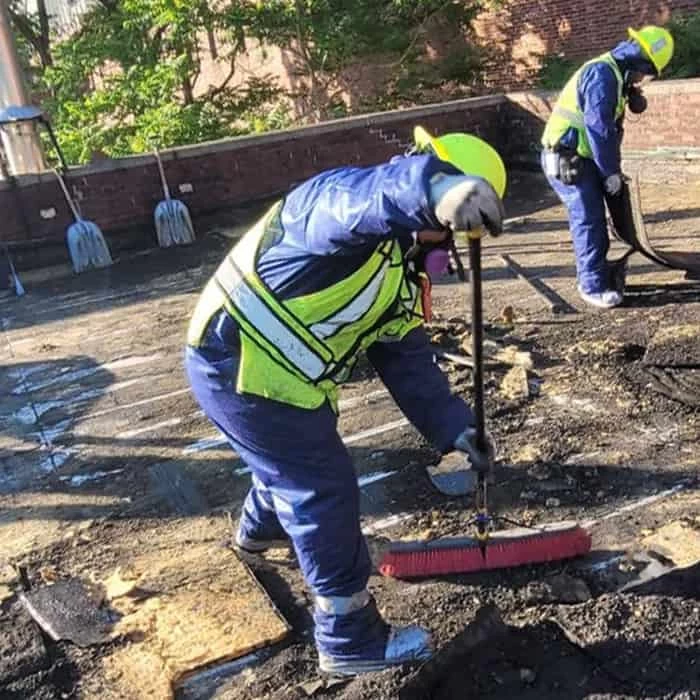
Gold Coast Estates Deserve More Than a Wrecking Crew
When your property dates back to the Gold Coast era, the wrong demolition contractor doesn’t just slow the project down — they create legal exposure you didn’t see coming. We handle licensed demolition in Mill Neck, NY with the asbestos credentials and regulatory fluency that estate-scale work actually requires.
I needed a professional consultation explanation of procedure for safe removal of Asbestos in my apartment complex. Without having an account yet, I was very impressed with the caring, knowledgeable and generous advice offered by Jessica, and will look forward to doing business in the future. Thank you so much! I feel much more informed about a sometimes scary endeavor. Peace. Nancy Silva Mineola, NY.
Mia Munoz
Used this company to clean up some water flood in my house. They were fast and easy to work with.very professional, Would recommend to anyone!
Nini Valle
Great company, had a flood and they responded quickly and efficiently. Billed my insurance company directly. I highly recommend this company!
joe colapietro, jr
I had pipe freeze in my basement right before a snow storm and they made to within an hour to help start the clean up process. They we by our side throughout the entire process and even helped with the insurance company. They did such a great job with the cleanup, repair, remidiation, I contracted them to perform the repairs and finishes in the basement. They came with enough manpower and material to get the job done. Leo and Jessica were nothing but a pleasure to deal with!!
Cristian Arredondo c
I had some water damage in my home and Green Island was able to take care of my issue quickly and effectively. I am very pleased with the work they did. They responded quickly and were very professional.
Michael M
Outstanding service! From the office to the field crew everyone was friendly, helpful and responsive. I highly recommend Green Island Group.
What Changes When the Right Team Handles Mill Neck Demolition
Most demolition problems in Mill Neck don’t start with the sledgehammer. They start weeks earlier, when a contractor without the right licensing encounters asbestos behind a plaster wall and the entire project stops cold. You’re suddenly coordinating with a second company, waiting on availability, paying emergency rates, and watching your renovation timeline fall apart. That’s the scenario a fully licensed, single-source contractor eliminates before it ever happens.
The housing stock in Mill Neck is genuinely different from the rest of Nassau County. Many of the estates along Frost Mill Road and West Shore Road were built between the 1890s and 1930s — and virtually every one of them contains asbestos-containing materials, lead paint, and other regulated substances that require proper assessment and abatement before any demolition work can legally begin. A contractor who holds both a NYS DOL Asbestos Handling Contractor License and full demolition licensing can handle the entire scope under one contract. That’s not a convenience — it’s legal protection.
It also means that when storm damage hits a waterfront property on Oyster Bay Harbor, or when a mid-century addition on a multi-acre estate needs to come down before a renovation can begin, there’s one call, one team, and one point of accountability from the first survey to the final disposal manifest. No gaps. No surprises.
The License Behind the Work Is What Actually Protects You
We are a full-service environmental contracting and demolition firm based on Long Island, serving residential, commercial, and municipal clients across Nassau and Suffolk counties. The work we do in Mill Neck is not the same as a gut renovation in a post-war cape — and we don’t treat it that way. Estate-scale demolition, selective interior demo inside historic structures, and full teardowns of older properties each carry their own regulatory requirements, and we’re licensed to operate across all of them.
We already serve the Mill Neck area with asbestos abatement services, which means we’re familiar with the Town of Oyster Bay Building Division permit process, the Nassau County environmental compliance requirements, and the specific challenges that come with pre-war construction on large, wooded lots. Whether the project is near Beaver Lake, off Cleft Road, or on a waterfront estate overlooking Oyster Bay Harbor, we know what this area requires and how to navigate it cleanly.
No Surprises — Here's Exactly How the Work Gets Done
Every project starts with a site assessment. Before any demolition work begins on a Mill Neck property, New York State law requires a mandatory asbestos survey by a NYS DOL-certified Asbestos Inspector. This isn’t optional, and it isn’t just a formality — it’s the step that determines what’s actually inside the walls before anyone touches them. We complete that survey, document the findings, and build the project scope around what’s there.
If the survey identifies asbestos, lead paint, or other regulated materials — which is common in structures built before 1980, and nearly certain in Gold Coast-era estates — abatement happens before demolition proceeds. Our team handles both phases under the same contract. We file the required notifications with the EPA under NESHAP regulations, coordinate with the Town of Oyster Bay Building Division at 74 Audrey Avenue for the demolition permit, and manage the Nassau County environmental compliance requirements in parallel. You don’t have to track any of that. We do.
Once abatement is cleared and permits are in place, demolition proceeds — whether that’s selective interior demo, structural removal, or a full teardown. When the work is complete, you receive disposal manifests and clearance documentation as a standard deliverable. That paperwork matters when you sell the property, apply for future permits, or simply want a clean record of what was done and how.
What's Included in Our Mill Neck Demolition Services Goes Beyond the Demolition Itself
The scope of a demolition project in Mill Neck typically involves more than just taking down walls. It involves understanding what’s inside them first. Our service covers the full sequence: pre-demolition asbestos inspection, hazardous materials abatement where required, licensed structural or selective demolition, and complete post-project documentation including disposal manifests and air clearance certificates. For properties near Shu Swamp Nature Preserve or along the waterfront, environmental compliance isn’t something we work around — it’s built into how we operate.
For estate renovation projects, selective demolition is often the right approach — removing specific structural elements, opening up floor plans, or taking down outbuildings like carriage houses and pool houses while preserving the main structure. This kind of precision work requires more planning than a standard teardown, and it requires a team that understands the load paths and original construction methods common in early 20th-century masonry and timber-frame estates. We’ve done this work before, and we bring that experience to every Mill Neck project.
For full teardowns — which are increasingly common as buyers purchase older estate properties and rebuild — we coordinate the entire process from permit application through final site clearing. The result is a clean, documented, legally compliant project that’s ready for whatever comes next, whether that’s new construction, sale, or a fresh renovation start.
Do I need a permit to demolish a structure in Mill Neck, NY?
Yes. Under Town of Oyster Bay code, a building permit is required before any demolition work can begin on a structure within Mill Neck. The permit is processed through the Town of Oyster Bay Building Division, located at 74 Audrey Avenue in Oyster Bay. This applies to full teardowns as well as significant partial demolitions — it’s not limited to knocking down an entire building.
Beyond the town permit, if the structure contains asbestos above certain threshold quantities, federal EPA NESHAP regulations require at least ten working days’ advance notification before demolition begins. New York State Industrial Code Rule 56 also requires a mandatory asbestos survey by a certified inspector before any renovation or demolition that could disturb suspect materials. In Mill Neck, where a significant portion of the housing stock predates 1980, that survey is almost always a required first step. We handle all of this on your behalf — you shouldn’t be navigating permit offices and regulatory agencies on your own.
How do I know if my Mill Neck property has asbestos before demolition?
The only way to know for certain is through a formal asbestos survey conducted by a NYS DOL-certified Asbestos Inspector. Visual inspection isn’t sufficient — many asbestos-containing materials look identical to non-hazardous materials. Pipe insulation, floor tiles, textured ceiling materials, joint compound, and roofing materials from the pre-1980 era commonly contain asbestos, and many of these materials are present in the Gold Coast-era estates and mid-century structures that make up a large portion of Mill Neck’s housing stock.
The survey involves collecting samples from suspect materials and having them laboratory-tested. If asbestos is found above regulated thresholds, abatement must be completed by a NYS DOL-licensed Asbestos Handling Contractor before demolition proceeds. This is not a step that can be skipped or worked around — disturbing asbestos-containing materials without proper abatement is a federal violation with significant financial consequences. The good news is that when the contractor performing the survey also holds the abatement license, the process moves efficiently and you’re not waiting on a second company to get involved.
What's the difference between selective demolition and a full teardown?
Selective demolition means removing specific elements of a structure — walls, floors, ceilings, outbuildings — while preserving what’s staying. It’s the approach used in most estate renovation projects where the goal is to reconfigure or update a property without starting from scratch. Full teardown means the entire structure comes down, typically when a buyer is clearing a site for new construction or when a structure is too deteriorated to renovate cost-effectively.
In Mill Neck, selective demolition is common in large estate renovations where original architectural elements are worth preserving, but interior layouts need to be opened up or modernized. It requires more planning than a full teardown because the contractor needs to understand which walls are load-bearing, how the original structure was built, and how to protect adjacent finishes and materials that aren’t being removed. Early 20th-century masonry and timber-frame construction — which you’ll find throughout Mill Neck’s Gold Coast estates — requires specific knowledge and care that not every demolition contractor has. A full teardown, by contrast, involves more straightforward structural removal but still requires the same pre-demolition asbestos survey, permit process, and disposal documentation.
Can storm damage to a waterfront property in Mill Neck require emergency demolition?
It can, and it happens more often than most people expect. Mill Neck’s position along Oyster Bay Harbor and Mill Neck Bay puts waterfront properties in the path of nor’easters and tropical storm remnants that can cause significant structural damage — fallen trees on rooflines, wind-damaged structural walls, flooded lower levels that compromise foundations. When that kind of damage occurs, some structural elements may need to come down before restoration can begin, either because they’re unsafe or because they’re blocking access to the areas that need to be repaired.
The challenge with storm-damaged structures is that the hazardous materials concern doesn’t go away just because the damage was sudden. If a fallen tree has compromised a wall in a pre-1980 estate, and that wall contains asbestos, the abatement requirement still applies before demolition of that section can proceed. A contractor who holds both the demolition and abatement licensing can assess the damage, determine what needs to come down, handle any hazardous materials present, and move into the demolition phase without stopping to bring in a separate team. For a Mill Neck property owner dealing with post-storm damage, that kind of integrated response matters.
How long does a typical demolition project take in Mill Neck?
Timeline depends on the scope, but the most important factor is usually the pre-demolition phase — not the demolition itself. The asbestos survey, laboratory analysis, permit application with the Town of Oyster Bay, and EPA NESHAP notification period (ten working days minimum for structures with asbestos above threshold) all happen before a single wall comes down. Trying to rush this phase is where projects get into trouble. Skipping or shortcutting the regulatory steps creates stop-work orders and remediation requirements that cost far more time than doing it right the first time.
For a selective interior demolition on a Mill Neck estate, the actual demolition work after permits and abatement are complete might take a few days to a week depending on scope. A full structural teardown of a larger property could take longer. The honest answer is that the timeline is driven by the regulatory process as much as by the physical work, and any contractor who quotes you a tight turnaround without accounting for the permit and abatement steps is either skipping those steps or hasn’t done this kind of work in Nassau County before.
What documentation should I receive when demolition is complete on my Mill Neck property?
At minimum, you should receive the asbestos disposal manifest — the chain-of-custody record showing that any asbestos-containing materials removed from your property were transported to and accepted by a licensed disposal facility. If lead paint or other hazardous materials were abated, you should receive documentation for those as well. And if asbestos abatement was performed, you should receive a post-abatement air clearance certificate confirming that the abated spaces tested below regulatory thresholds and are safe for reoccupancy or continued construction.
This documentation matters beyond the immediate project. Mill Neck properties regularly transact at prices well into the millions, and a buyer’s attorney or environmental consultant will ask about the history of any demolition or abatement work done on the property. Having a clean, complete documentation trail — disposal manifests, clearance certificates, permit close-out records — protects you at the point of sale and in any future permit applications. It also protects you if a regulatory inspection ever questions what happened to materials that were removed. We provide this documentation as a standard part of every project, not as an add-on.