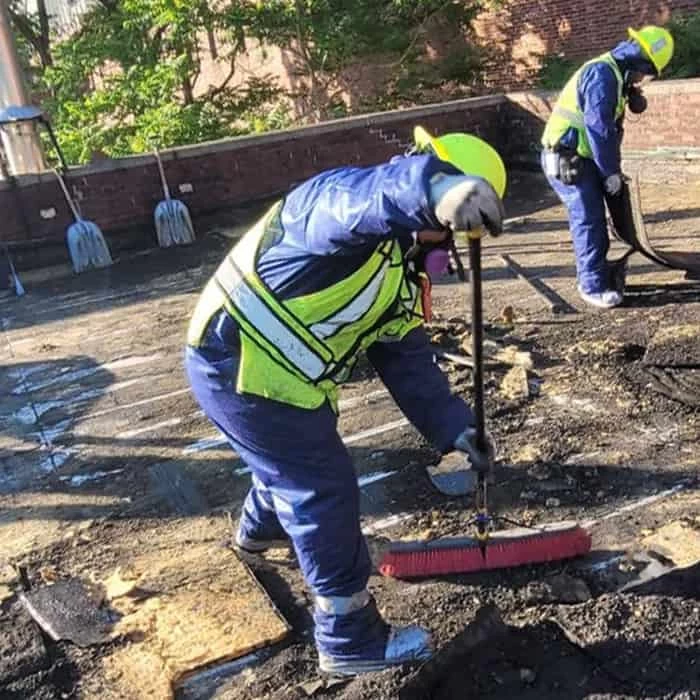
Pre-War Homes Here Demand More Than a Sledgehammer
Most homes in Munsey Park were built in the 1930s — and they’re hiding materials that require licensed removal before demolition can legally begin. We handle it all.
I needed a professional consultation explanation of procedure for safe removal of Asbestos in my apartment complex. Without having an account yet, I was very impressed with the caring, knowledgeable and generous advice offered by Jessica, and will look forward to doing business in the future. Thank you so much! I feel much more informed about a sometimes scary endeavor. Peace. Nancy Silva Mineola, NY.
Mia Munoz
Used this company to clean up some water flood in my house. They were fast and easy to work with.very professional, Would recommend to anyone!
Nini Valle
Great company, had a flood and they responded quickly and efficiently. Billed my insurance company directly. I highly recommend this company!
joe colapietro, jr
I had pipe freeze in my basement right before a snow storm and they made to within an hour to help start the clean up process. They we by our side throughout the entire process and even helped with the insurance company. They did such a great job with the cleanup, repair, remidiation, I contracted them to perform the repairs and finishes in the basement. They came with enough manpower and material to get the job done. Leo and Jessica were nothing but a pleasure to deal with!!
Cristian Arredondo c
I had some water damage in my home and Green Island was able to take care of my issue quickly and effectively. I am very pleased with the work they did. They responded quickly and were very professional.
Michael M
Outstanding service! From the office to the field crew everyone was friendly, helpful and responsive. I highly recommend Green Island Group.
When you own a 1930s Colonial on Copley Road or a Norman-style home off Sargent Boulevard, a renovation isn’t just a construction project — it’s a compliance event. The original materials in Munsey Park’s pre-war homes weren’t built with future demolition in mind. Asbestos floor tiles, pipe insulation, plaster with asbestos reinforcement, lead paint on every surface — these aren’t rare finds here. They’re the baseline. And if they’re not handled correctly before demolition starts, you’re looking at stop-work orders, fines, and a remediation bill that dwarfs what you would have paid to do it right the first time.
What you get when the process runs correctly is clarity. You know what’s in your home before anything gets touched. You know it was removed legally, by a NYS DOL-licensed team, with air clearance documentation and a disposal manifest that follows the material from your property to a licensed facility. That paperwork isn’t just for compliance today — it protects you when you sell. Buyers’ attorneys ask about this. Title reviews surface it. Having the documentation in hand means a clean transaction instead of a last-minute problem.
For a home worth $2 million or more, the difference between a contractor who understands this and one who doesn’t isn’t a minor detail. It’s the difference between a project that closes cleanly and one that creates liability you’ll carry for years.
We Know What's Inside These Walls Before We Touch Them
We’re a full-service environmental contracting and demolition company serving Nassau County and the greater Long Island area. The work we do in Munsey Park isn’t new territory for us — we understand the pre-war housing stock on the North Shore, the Town of North Hempstead’s permit process, and the specific materials profile that comes with homes built in the late 1920s through the 1940s.
What makes the difference for homeowners in Munsey Park is that we handle the entire scope in-house. Asbestos assessment, NYS DOL-licensed abatement, lead paint removal, and structural demolition — one contract, one team, one point of contact from start to finish. You’re not coordinating between an industrial hygienist, a separate abatement company, and a demo crew. That handoff problem disappears.
We’ve built a 4.7-star reputation by doing exactly what we say we’re going to do, communicating throughout the process, and leaving every job with documentation that actually means something. For homeowners in Munsey Park who are commuting to the city and can’t babysit a contractor all week, that accountability matters.
No Surprises — Here's Exactly How the Work Gets Done
It starts with an assessment. Before any permits are pulled or any work begins, we determine what hazardous materials are present in the structure. In Munsey Park, where the median construction year is 1938, this step almost always confirms the presence of asbestos-containing materials and lead paint — but the assessment tells us exactly where they are, in what quantities, and what the abatement scope needs to look like. That information drives everything that follows.
From there, we handle the NYS DOL notification and pull the required demolition permits through the Town of North Hempstead’s building department. If your project involves any tree removal — and Munsey Park’s tree ordinance requires a permit for any tree, living or dead — we flag that early so it doesn’t stall the timeline mid-project. If your renovation touches the exterior of the home and requires review by the village’s Building Advisory Committee, we account for that in the schedule. These aren’t surprises we discover on day three. They’re known variables we plan around from the start.
Once abatement is complete and air clearance is confirmed, demolition proceeds. Selective interior demo, structural work, full teardowns — the scope depends on your project. When the work is done, you receive the full documentation package: the NYS DOL abatement notification, air clearance certificates, and the disposal manifest proving every hazardous material left your property through a licensed chain of custody.
Every Scope We Handle, Built for Pre-War North Shore Homes
The demolition services we provide in Munsey Park cover the full range of what homeowners and contractors need when working with older residential structures. Interior selective demolition — kitchens, bathrooms, finished basements, wall removals — is the most common scope we see here, typically connected to gut renovations in homes that haven’t been touched structurally since they were built. We also handle full structural demolition when a home is being taken down to the foundation, as well as partial structural work for additions and major reconfigurations.
Every project in Munsey Park includes a pre-demolition hazardous materials assessment as a standard part of the process — not an optional add-on. Given the age of the housing stock here, skipping that step isn’t responsible, and it isn’t legal under NYS and EPA requirements. If asbestos or lead paint is confirmed, abatement happens before demolition begins, and you receive the clearance documentation before we proceed.
We also work alongside the architectural review process that’s specific to Munsey Park. The village’s Building Advisory Committee reviews alterations and additions, and selective demolition that affects the exterior character of a home needs to be coordinated with that process. We understand how that layer of oversight works and how to keep your project moving through it without unnecessary delays. Nassau County and North Hempstead permitting, NYS DOL licensing, EPA RRP certification for lead paint — all of it is handled in-house, under one contract.
Does my Munsey Park home need asbestos testing before demolition starts?
If your home was built before 1980 — and in Munsey Park, the median construction year is 1938 — the answer is effectively yes. New York State and federal EPA regulations require a pre-demolition asbestos investigation before any structural demolition work begins on a pre-1980 building. This isn’t a recommendation. It’s a legal requirement, and it applies whether you’re doing a full teardown or a targeted interior gut.
The practical reality in Munsey Park is that the original construction materials used in late-1920s through 1940s homes almost universally included asbestos-containing materials — floor tiles, pipe and boiler insulation, plaster, joint compound, roofing felt. Testing confirms exactly what’s present and where. If asbestos-containing materials are found above threshold quantities, they must be abated by a NYS DOL-licensed contractor before demolition proceeds. Skipping this step doesn’t make the asbestos go away — it just means it gets disturbed without containment, which creates an exposure risk and a serious legal liability for both the contractor and the property owner.
What permits are required for demolition work in Munsey Park, NY?
Demolition in Munsey Park operates under a few layers of permitting that are worth understanding before you start. The primary demolition permit is issued by the Town of North Hempstead’s Department of Building, Safety Inspection and Enforcement. That permit requires documentation of contractor licensing, insurance, and workers’ compensation coverage — and the contractor must hold a valid Nassau County license.
On top of that, the Incorporated Village of Munsey Park has its own layer of oversight. If your project involves any tree removal — including dead trees — you need a separate village permit, and the work must be performed by a Munsey Park-licensed arborist. If demolition is connected to a renovation that changes the exterior appearance of the home, the village’s Building Advisory Committee may need to review the plans before work begins. NYS DOL also requires advance notification before any asbestos abatement work starts. It’s a layered process, but when it’s managed correctly from the beginning, none of it needs to delay your project.
How long does a demolition project typically take for a pre-war home?
Timeline depends heavily on scope and what the pre-demolition assessment finds. For a selective interior demolition — a kitchen gut or bathroom removal in a Munsey Park Colonial — the physical demo work itself might take one to three days. But the full project timeline, from initial assessment through completed abatement and clearance testing, typically runs two to four weeks when asbestos or lead paint is confirmed.
The permitting sequence adds time as well. North Hempstead’s building department has its own review and issuance timeline, and NYS DOL requires advance notification before asbestos abatement begins — that notification period needs to be factored into the schedule. For full structural demolitions, the timeline extends further, particularly when tree removal permits and Building Advisory Committee review are involved. The honest answer is that the regulatory process takes longer than the physical work, which is why planning ahead — rather than calling a contractor the week you want to start — makes a real difference in how smoothly the project runs.
What's the difference between selective demolition and full structural demolition?
Selective demolition means removing specific elements of a structure while leaving the rest intact — pulling out a kitchen, taking down interior walls, gutting a basement, removing a bathroom down to the studs. It’s surgical. The goal is to clear the space for renovation without affecting the surrounding structure. This is the most common scope in Munsey Park, where homeowners are typically renovating within an existing pre-war Colonial or Norman-style home rather than tearing it down entirely.
Full structural demolition means taking the entire building down to the foundation — or removing it completely. This happens when a home is being replaced, when storm damage has made the structure unsalvageable, or when a major addition requires removing a significant portion of the existing building. Both scopes require the same pre-demolition hazardous materials process in Munsey Park’s pre-war housing stock, and both require permits through North Hempstead. The difference is in scale, timeline, and what comes next — but the compliance requirements at the front end are the same regardless of scope.
Will demolition work affect my home's standing with Munsey Park's architectural review process?
It depends on what the demolition is connected to. Interior selective demolition that doesn’t change the exterior appearance of the home generally doesn’t trigger the Building Advisory Committee’s review process. But if your demolition is the first phase of a renovation that involves an addition, an exterior alteration, or any change to the visible character of the home, the committee’s review applies — and it needs to happen before construction begins, not after.
Munsey Park’s architectural standards exist to maintain the Colonial Revival and English-style character that defines the village, and the committee reviews plans for additions and alterations to ensure they’re in harmony with the surrounding homes. This is a layer of oversight that most neighboring towns don’t have, and it’s one that surprises homeowners who aren’t aware of it going in. The practical implication for demolition is that if your project touches the exterior — or sets up a renovation that will — the architectural review timeline needs to be built into your project schedule from the start.
Does Green Island Group handle both the asbestos removal and the demolition, or do I need separate contractors?
We handle both under one contract. Assessment, NYS DOL-licensed asbestos abatement, lead paint removal, and structural demolition are all performed in-house by our team. You don’t need to find a separate abatement company, coordinate schedules between two contractors, or manage the handoff between phases yourself.
For Munsey Park homeowners — many of whom are commuting to Manhattan on the LIRR five days a week — that single-point-of-contact structure isn’t just convenient, it’s genuinely important. The alternative is managing two or three separate contractors through a process that has legal sequencing requirements: abatement must be completed and air clearance must be confirmed before demolition can proceed. When those are separate companies, the coordination risk falls on you. When it’s one team, the sequencing is managed internally, the documentation flows correctly, and you’re not the one making sure the abatement company sent the clearance certificate to the demo crew before they showed up. That’s our job, not yours.