Murray Hill's Older Homes Deserve More Than a Wrecking Crew
Most homes in Murray Hill were built before 1960 and that changes everything about how demolition needs to be handled. We manage asbestos abatement, lead removal, and full demolition under one contract, so your project doesn’t stall halfway through.
I needed a professional consultation explanation of procedure for safe removal of Asbestos in my apartment complex. Without having an account yet, I was very impressed with the caring, knowledgeable and generous advice offered by Jessica, and will look forward to doing business in the future. Thank you so much! I feel much more informed about a sometimes scary endeavor. Peace. Nancy Silva Mineola, NY.
Mia Munoz
Used this company to clean up some water flood in my house. They were fast and easy to work with.very professional, Would recommend to anyone!
Nini Valle
Great company, had a flood and they responded quickly and efficiently. Billed my insurance company directly. I highly recommend this company!
joe colapietro, jr
I had pipe freeze in my basement right before a snow storm and they made to within an hour to help start the clean up process. They we by our side throughout the entire process and even helped with the insurance company. They did such a great job with the cleanup, repair, remidiation, I contracted them to perform the repairs and finishes in the basement. They came with enough manpower and material to get the job done. Leo and Jessica were nothing but a pleasure to deal with!!
Cristian Arredondo c
I had some water damage in my home and Green Island was able to take care of my issue quickly and effectively. I am very pleased with the work they did. They responded quickly and were very professional.
Michael M
Outstanding service! From the office to the field crew everyone was friendly, helpful and responsive. I highly recommend Green Island Group.
One Contractor. No Permit Delays. No Surprise Stops.
Here’s what most people don’t find out until they’re already mid-project: in New York City, you legally cannot begin demolition in a pre-1980 building without an asbestos investigation first. In Murray Hill, where the median home was built in 1956 and over a third of the housing stock predates 1950, that’s not a rare edge case that’s nearly every job. If your contractor isn’t licensed for abatement, your project stops the moment asbestos or lead turns up behind a wall.
When you work with a contractor who handles abatement and demolition together, that stops being your problem. There’s no waiting for a second crew to come in, no scrambling to find someone licensed to deal with what was just discovered, and no stop-work orders sitting on your property while you figure it out. The project keeps moving because the same team that’s qualified to find the hazard is qualified to remove it.
For Murray Hill homeowners dealing with water damage, fire damage, or a gut renovation on a home that hasn’t been touched in decades that kind of continuity isn’t just convenient. It’s the difference between a project that finishes on time and one that drags on for months. And if you’re a landlord managing a rental unit near Northern Boulevard or a small multi-family property off Parsons Boulevard, every week of delay is a week of lost rent.
12 Years In. Every License That NYC Actually Requires.
We’ve been operating across the New York metro area for over 12 years, with more than 340 completed demolition projects across Long Island, Queens, and the five boroughs. That’s not a number pulled from a brochure it’s the kind of volume that means we’ve seen what’s inside Murray Hill’s walls before, and we know exactly what to do when we find it.
We hold NYC DOB licensing, NYC DEP asbestos abatement certification, and NYS DOL credentials the full stack that New York City requires, not just the state minimum. That matters specifically in Queens, where the DOB and DEP operate as separate regulatory layers and where a contractor missing one piece of that compliance picture can bring your entire project to a halt.
We also bill insurance carriers directly, which is a real advantage when you’re dealing with water or fire damage and the last thing you want is to manage an adjuster on top of a damaged property. Our team is reachable around the clock and based on our reviews, that’s not just a phone line. It’s an actual response.
What the Process Looks Like Before a Single Wall Comes Down
Before any physical work begins, the site gets a thorough assessment. Under NYC Local Law 76, a DEP-certified asbestos investigator has to survey any pre-1980 building before demolition or renovation can legally start. In Murray Hill, that’s the standard starting point not an exception. We handle that investigation as part of the process, so you’re not sourcing a separate inspector before you can even get a permit filed.
Once the assessment is complete, the permit work begins. That means filing the appropriate documentation with the NYC Department of Buildings whether that’s an ACP-5 for an asbestos-free clearance or an ACP-7 notification if abatement is required. If hazardous materials are present, abatement happens first, followed by independent air clearance testing before demolition moves forward. All of that is coordinated internally. You’re not managing the sequencing we are.
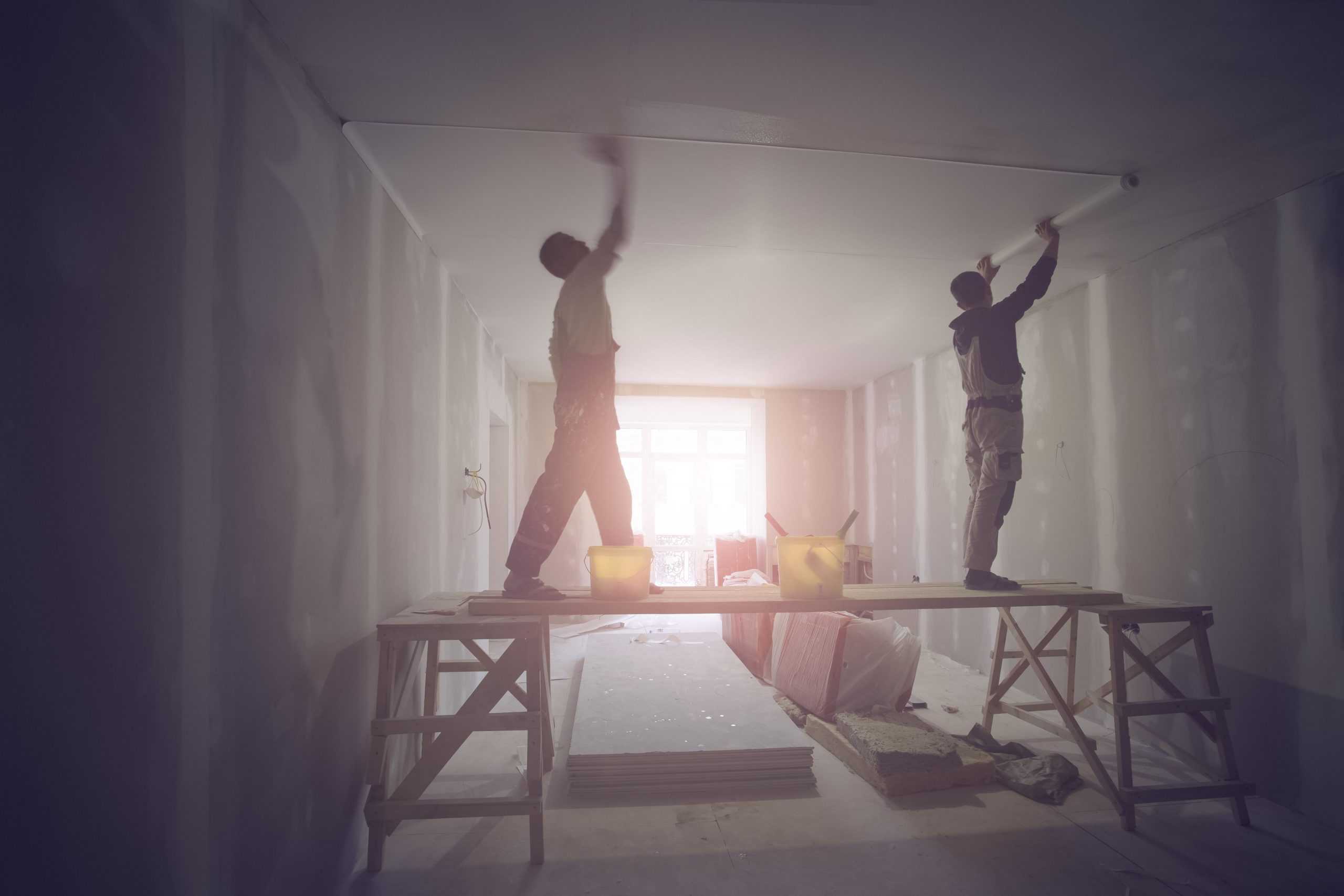
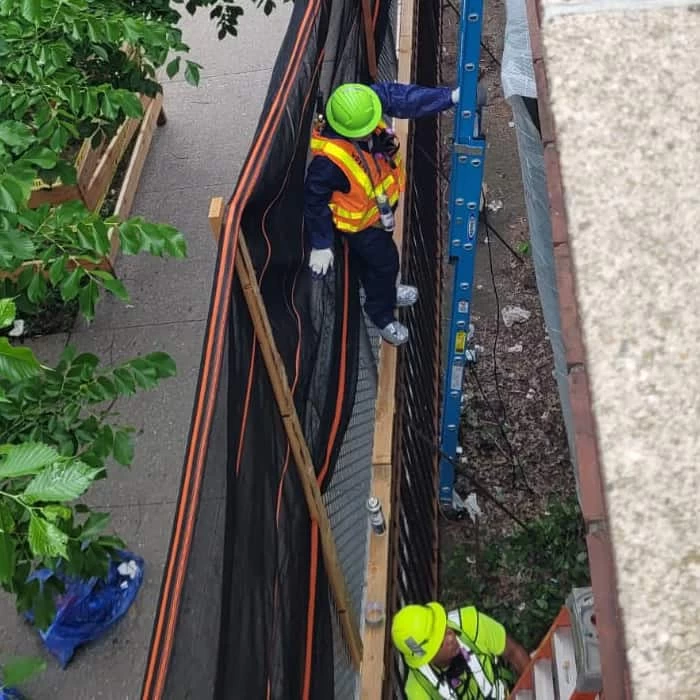
The actual demolition phase whether that’s a full teardown, an interior gut, or selective structural removal is executed with the density of Murray Hill’s residential blocks in mind. Attached and semi-detached homes on narrow lots require containment, dust control, and careful sequencing so neighboring properties aren’t affected. When the work is done, debris is sorted and removed, and the site is left clean and ready for whatever comes next.
Commercial and Residential Demolition Contractor Murray Hill
Asbestos Abatement, Permits, and Demolition All Under One Contract
Our core service in Murray Hill covers the full scope of what demolition actually requires in this neighborhood: asbestos testing and abatement, lead remediation, mold removal, interior selective demolition, and full structural teardowns. These aren’t separate offerings you mix and match they’re integrated into one project scope so nothing falls through the gap between contractors.
For residential work in Murray Hill, that typically means gut renovations in mid-century homes where the walls, floors, and ceilings haven’t been touched since the 1950s or 60s. Nine-by-nine vinyl floor tiles, pipe insulation, boiler wrap, joint compound these are the materials that commonly contain asbestos in homes of that era, and they show up regularly in the neighborhood’s housing stock. Knowing what to look for before demolition starts isn’t optional here. It’s the job.
For landlords and small property owners managing multi-unit buildings in Queens Community Board 7’s jurisdiction, our service also covers emergency response work water damage, fire damage, and the structural demolition that sometimes follows. We bill insurance directly, coordinate with adjusters, and keep the project moving so vacancy time stays as short as possible. Whether you’re on 162nd Street or a few blocks from the Murray Hill LIRR station, the process is the same: one team, one contract, one clear timeline.
Does my Murray Hill home require asbestos testing before demolition starts?
If your home was built before 1980 which covers the overwhelming majority of Murray Hill’s housing stock then yes, NYC law requires an asbestos investigation before any demolition or renovation work can begin. This comes from NYC Local Law 76, and it applies to every property in the five boroughs, not just commercial buildings. A DEP-certified asbestos investigator has to survey the areas that will be disturbed before a DOB demolition permit can even be issued.
In Murray Hill specifically, where the median construction year is 1956, this step applies to nearly every project. Common materials that test positive in homes of that era include 9×9 vinyl floor tiles, pipe and boiler insulation, ceiling tiles, roofing materials, and joint compound. The investigation isn’t something you can skip or do after the fact if asbestos is discovered mid-demolition by a crew that isn’t licensed to handle it, work stops immediately and you’re looking at a much more complicated and expensive situation than if the testing had been done upfront.
What permits are required for demolition work in Queens, NY?
Demolition in Queens falls under New York City’s jurisdiction, which means you’re dealing with the NYC Department of Buildings as your primary permitting authority. For any structural demolition, a DOB demolition permit is required before work begins. But to get that permit, you first need to satisfy the asbestos requirement either an ACP-5 form confirming the project is asbestos-free, or an ACP-7 notification filed with the NYC DEP if abatement is needed.
Depending on the scope of work, you may also need to coordinate with the NYC Fire Department and comply with USEPA NESHAP air quality standards. For larger projects in Queens Community Board 7’s jurisdiction which covers Murray Hill, Flushing, and Whitestone there may be additional notification or review requirements. The permit process has a specific sequence that has to be followed in the right order, by the right licensed parties. Getting that sequence wrong is one of the most common reasons demolition projects in NYC get delayed before they even start.
Can one contractor handle both asbestos removal and demolition in New York City?
Yes and having one contractor handle both is genuinely the better approach, especially in a neighborhood like Murray Hill where the two almost always go together. When asbestos abatement and demolition are managed by separate contractors, you’re coordinating two different permit processes, two different project timelines, and two different points of contact. If anything goes wrong or gets delayed on one side, the other side stalls too.
A contractor licensed for both services holding NYC DEP asbestos abatement certification alongside DOB demolition credentials can manage the full sequence internally. The asbestos survey happens, abatement is completed if needed, air clearance testing is done, and then demolition proceeds without a handoff gap in between. For Murray Hill homeowners dealing with a gut renovation or a teardown on a pre-1960 home, that integrated approach is what keeps the project on schedule and prevents the kind of mid-project surprises that blow up budgets.
How long does a residential demolition project typically take in Murray Hill?
Timeline depends on the scope of the project, but for a typical residential job in Murray Hill a gut renovation, a full interior demo, or a single-family teardown the realistic range is anywhere from a few days to a few weeks once permits are in hand. The permit process itself is often what takes the longest, particularly if asbestos abatement is required, because the ACP-7 notification has to be filed with NYC DEP before abatement can begin, and independent air clearance testing has to be completed before demolition can proceed.
For planning purposes, it helps to factor in that most Murray Hill homes will require at least the asbestos investigation step before anything else can move forward. Starting that process early before you’ve finalized your contractor or your build schedule is one of the most practical things you can do to avoid delays. Spring and early summer tend to be the busiest seasons for demolition in Queens, so scheduling lead time matters more during those months.
Is demolition covered by homeowners insurance for water or fire damage in NY?
It can be, depending on your policy and the cause of the damage. For water damage from a sudden pipe burst which is a real and recurring issue in Murray Hill’s older homes, many of which still have original cast-iron plumbing and aging boiler systems demolition of the affected structural elements is often covered as part of the remediation claim. The same generally applies to fire damage. What’s typically not covered is demolition driven purely by renovation or elective teardown.
The key is documentation and working with a contractor who understands the insurance process. We bill insurance carriers directly and coordinate with adjusters, which removes a significant administrative burden when you’re already dealing with a damaged property. We know what documentation insurers need, how to frame the scope of work, and how to keep the claim moving. If you’re a landlord with tenants displaced by damage, that kind of direct billing relationship can meaningfully shorten the time between the damage event and the day work actually starts.
How does demolition work on attached or semi-detached homes in Queens neighborhoods?
This is one of the more practical challenges in a neighborhood like Murray Hill, where a lot of the housing stock consists of attached and semi-detached homes on relatively narrow lots. When your exterior wall is shared with or close to a neighboring structure, demolition requires a different level of precision than a freestanding home on a wide suburban lot. The sequencing, containment, and structural approach all have to account for what’s on the other side of that wall.
In practice, that means careful planning before any structural work begins understanding which walls are load-bearing, what the shared structural relationship is with adjacent properties, and how to contain dust and debris so neighboring homes aren’t affected. Our licensed demolition specialists are experienced in exactly this kind of dense Queens residential work. We know how to execute a demo on a tight Murray Hill block without creating a liability situation for the neighboring property, and we carry full insurance coverage so that if something unexpected does happen, it’s handled properly not left for you to sort out.