I needed a professional consultation explanation of procedure for safe removal of Asbestos in my apartment complex. Without having an account yet, I was very impressed with the caring, knowledgeable and generous advice offered by Jessica, and will look forward to doing business in the future. Thank you so much! I feel much more informed about a sometimes scary endeavor. Peace. Nancy Silva Mineola, NY.
Mia Munoz
Used this company to clean up some water flood in my house. They were fast and easy to work with.very professional, Would recommend to anyone!
Nini Valle
Great company, had a flood and they responded quickly and efficiently. Billed my insurance company directly. I highly recommend this company!
joe colapietro, jr
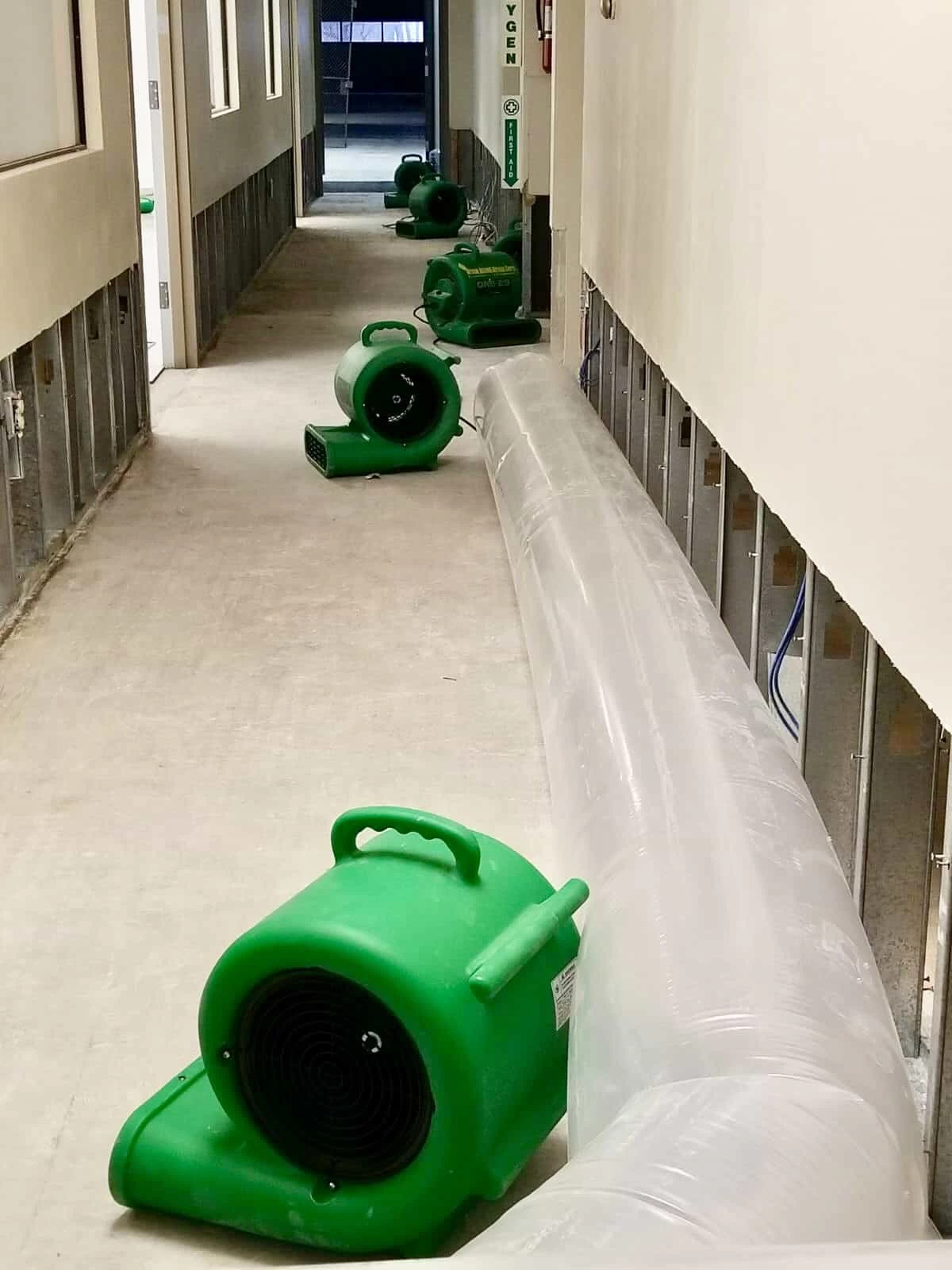
I had pipe freeze in my basement right before a snow storm and they made to within an hour to help start the clean up process. They we by our side throughout the entire process and even helped with the insurance company. They did such a great job with the cleanup, repair, remidiation, I contracted them to perform the repairs and finishes in the basement. They came with enough manpower and material to get the job done. Leo and Jessica were nothing but a pleasure to deal with!!
Cristian Arredondo c
I had some water damage in my home and Green Island was able to take care of my issue quickly and effectively. I am very pleased with the work they did. They responded quickly and were very professional.
Michael M
Outstanding service! From the office to the field crew everyone was friendly, helpful and responsive. I highly recommend Green Island Group.
Most demolition problems in New Suffolk don’t start with the demolition itself. They start the moment a contractor swings a hammer and finds something behind the wall they weren’t licensed to handle. Asbestos in the floor tiles. Lead paint in the trim. Old pipe insulation that nobody disclosed. When that happens with the wrong contractor, the job stops legally, it has to and now you’re coordinating two separate companies while your project sits idle.
New Suffolk’s housing stock is old. The hamlet was established in 1836, and even homes built in the mid-20th century are carrying materials that require certified handling before a single wall comes down. We hold active NYS Department of Labor asbestos contractor certification and handle abatement in-house. That means when something turns up and in a community this old, something usually does the project keeps moving without you having to make a single extra phone call.
There’s also the waterfront factor. Properties along Peconic Bay aren’t just subject to the Southold Town Building Department they may also require Trustee review under Chapter 275, which governs work near tidal waters. Contractors who don’t know that going in can trigger violations that cost more to fix than the original project. Knowing the regulatory landscape here isn’t optional. It’s the difference between a project that finishes and one that doesn’t.
We’ve been operating across Suffolk County for over 12 years, with more than 5,000 completed projects ranging from interior gut-outs to full structural teardowns. We’re based in Bohemia central Suffolk County which puts New Suffolk and the surrounding Southold Town area squarely within our established service territory. This isn’t a company making a long haul to reach the North Fork. We know the area, we know the permit offices, and we know what Southold Town Building Department inspectors expect when they show up.
What makes the difference in a small community like New Suffolk isn’t just competence it’s accountability. Our reviews consistently call out specific staff members by name for being reachable, honest, and present throughout the job. A 4.7-star rating across dozens of verified reviews reflects what happens when a company actually does what it says it will. In a hamlet of fewer than 400 people where word travels fast, that kind of track record isn’t a marketing asset. It’s a survival requirement.
No Guesswork Here's Exactly How a Job Runs in New Suffolk
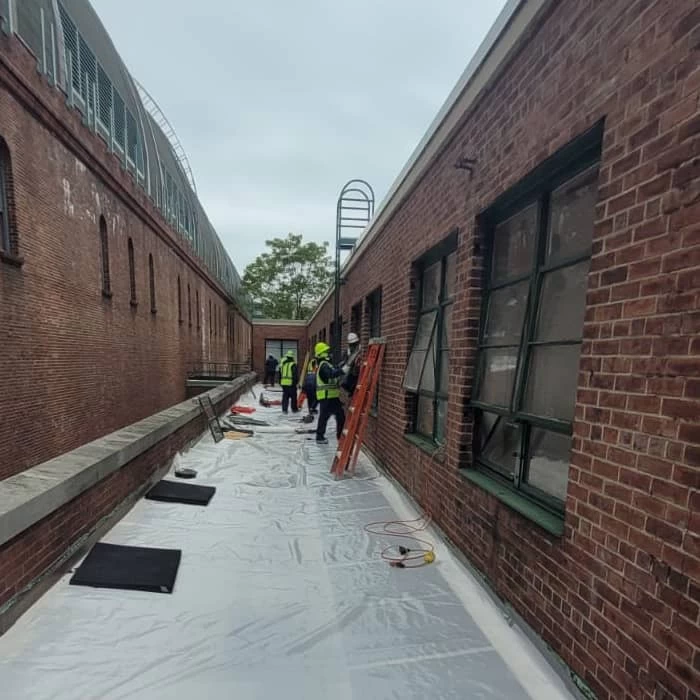
It starts with a site assessment. Before anything gets touched, our team evaluates the structure, identifies any hazardous materials asbestos, lead paint, mold and determines what permits are required for your specific property. For homes near the Peconic Bay waterfront, that assessment includes checking whether Southold Town Trustee review is needed in addition to the standard Building Department permit. That step alone has saved clients from costly violations they never saw coming.
Once the scope is clear, we manage the permit process through the Southold Town Building Department on your behalf. If you’re a second-home owner managing this remotely, or a long-time New Suffolk resident who’s never dealt with a demolition permit before, that matters. You don’t have to chase paperwork or figure out what four engineer-signed plan sets need to include. That’s handled.
When permits are in place and any required abatement is complete, demolition proceeds. Our crew works cleanly, keeps the site organized, and hauls everything out debris, materials, the works. Salvageable materials get recycled where possible, which matters in a community that takes its environmental character as seriously as New Suffolk does. When the job is done, the site is left clean and ready for whatever comes next, whether that’s a rebuild, a sale, or a fresh start on a property that’s been waiting years for this.
Every Scope Covered From Interior Work to Full Teardowns
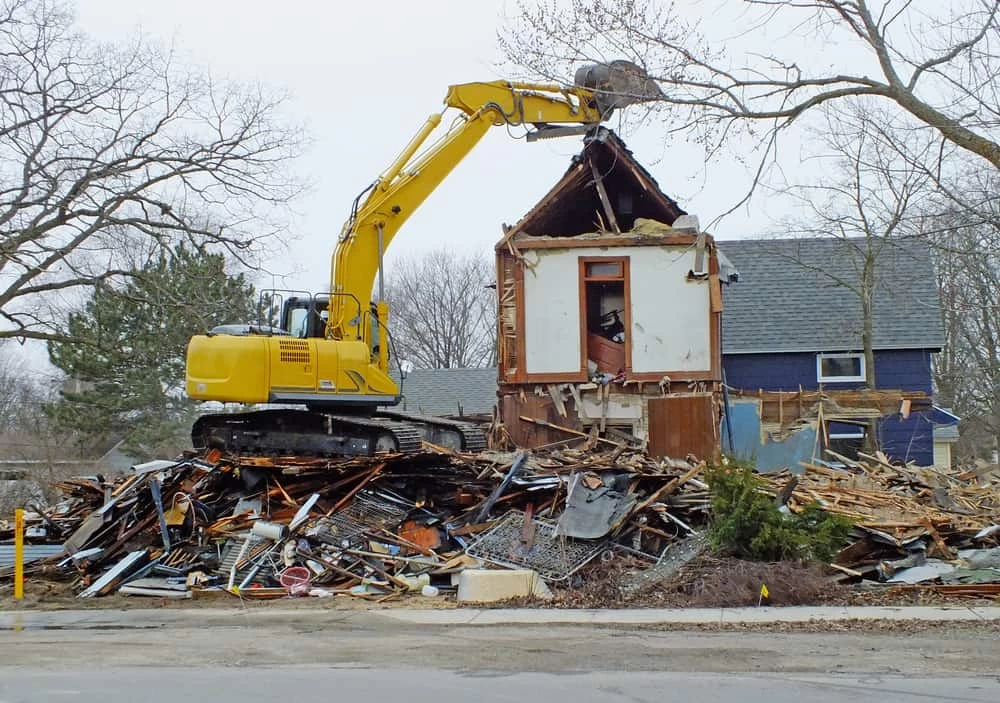
We handle the full range of demolition work that comes up in a North Fork community like New Suffolk. Interior selective demolition for renovation projects. Full structural teardowns for lots being cleared and rebuilt. Outbuilding and accessory structure removal sheds, barns, garages, older waterfront structures that have taken too many nor’easters. Emergency demolition for storm-damaged properties, available 24 hours a day, seven days a week, with documented response times under an hour.
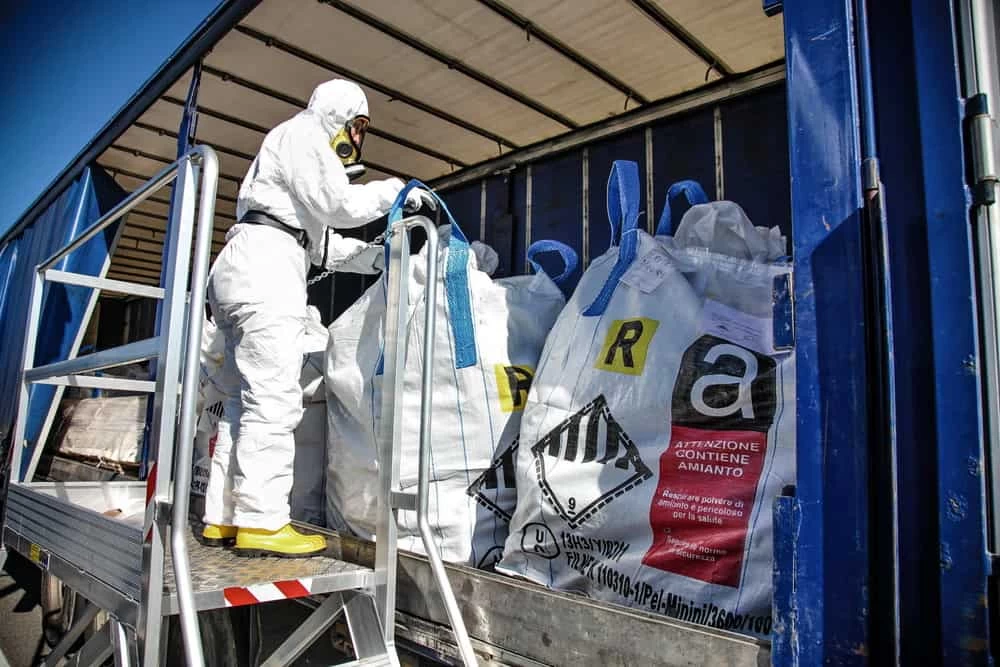
Asbestos abatement and lead paint removal are handled in-house, not subcontracted. That distinction is significant for properties in New Suffolk, where pre-1978 construction is the norm and hazardous materials are rarely optional to deal with. The NYS Department of Labor requires a licensed abatement contractor before demolition can proceed on any structure where asbestos-containing materials are present and we hold that certification. We also carry $2 million in general liability insurance, which is the minimum required by New York State for demolition work and the baseline any property owner on the North Fork should be asking for before signing anything.
For property owners dealing with storm damage, we work directly alongside insurance adjusters documenting the loss, supporting the claim, and managing the scope so you’re not left trying to translate contractor language into insurance language on your own. Whether it’s a single outbuilding or a full residential teardown on a Peconic Bay lot, the process is the same: assess, permit, abate, demolish, clear.
Do I need a permit to demolish a structure in New Suffolk, NY?
Yes all demolition work in New Suffolk falls under the jurisdiction of the Southold Town Building Department, located at Town Hall Annex on Main Road in Southold. You’ll need to submit a permit application along with a site survey and four sets of plans signed by a licensed engineer or architect. The process isn’t complicated if you know what’s required going in, but it does have specific documentation requirements that catch people off guard when they try to handle it themselves.
For properties near the Peconic Bay waterfront which covers a significant portion of New Suffolk there’s an additional layer. Southold Town’s Chapter 275 governs work near wetlands and tidal waters, and depending on how close your structure is to the water, you may also need review and approval from the Southold Town Trustees before demolition can begin. This is separate from the Building Department permit, and it’s a step that gets missed more often than it should. We manage both processes on your behalf so nothing falls through the cracks and your project doesn’t stall over paperwork.
Is asbestos testing required before demolition on Long Island?
Under New York State Department of Labor regulations, any demolition involving a pre-1980 structure requires an asbestos assessment by a certified inspector before work begins. If asbestos-containing materials are identified, a licensed abatement contractor must complete removal before demolition can legally proceed. This isn’t a guideline it’s a legal requirement enforced at both the state and local level, and it applies to every demolition project in New Suffolk regardless of size.
In a community like New Suffolk, where the housing stock includes structures dating back generations and even mid-century homes are now 60 to 80 years old, asbestos is rarely a hypothetical. It shows up in floor tiles, pipe insulation, roofing materials, joint compound, and ceiling texture. The question isn’t usually whether it’s there it’s where. We hold active NYS DOL asbestos contractor certification and handle the assessment and abatement in-house, so discovery doesn’t stop your project. It just becomes the next step in the process rather than a full reset.
How much does demolition typically cost for a home on the North Fork?
Demolition costs vary based on the size of the structure, the scope of work, what hazardous materials are present, and what permits are required. For a full residential teardown on Long Island, costs generally range from $8,000 to $25,000 or more depending on the property. Interior selective demolition for a renovation project will run significantly less. Asbestos abatement, if needed, adds to the total but it’s a required step, not an optional line item, and the cost of skipping it is far higher than the cost of doing it right.
In New Suffolk specifically, waterfront properties can carry additional cost considerations. If Southold Town Trustee review is required, there are application fees and potential timeline implications. If the structure is close to the water, debris removal and site management require more care to avoid violations related to materials near tidal areas the Town Code explicitly prohibits demolition debris as backfill behind bulkheads. The most accurate way to understand what your specific project will cost is a direct site assessment, which we provide as part of our initial consultation.
What happens if a nor'easter damages my property and I need emergency demolition?
It happens on the North Fork more than most people outside the area realize. Nor’easters hit Peconic Bay hard the October 2025 storm brought breaking waves up to 8 feet along the North Fork shoreline, with coastal flood warnings issued by the National Weather Service for the East End. When a storm tears apart a deck, floods a crawl space, or compromises a load-bearing wall, the window for a controlled response is short. Letting a damaged structure sit especially a waterfront structure exposed to continued weather accelerates deterioration and can create liability.
We operate 24 hours a day, 7 days a week, including emergency response for storm-damaged properties. Documented response times from customer reviews run under an hour. Beyond the physical demolition, we work directly alongside insurance adjusters to document the damage, support the claim, and manage the scope which matters enormously for seasonal property owners who aren’t on-site when the storm hits and are trying to manage the aftermath remotely. You make one call. The rest gets handled.
Can a demolition contractor in New Suffolk also handle mold and lead paint removal?
Not all of them and that distinction matters. Many demolition contractors handle the physical teardown but stop there. If mold, lead paint, or asbestos turns up during the job, they’re either not licensed to address it or they subcontract it out to a second company, which means delays, coordination issues, and cost overruns that nobody planned for. In older North Fork homes where moisture intrusion from coastal weather is common and pre-1978 construction is the rule rather than the exception, running into one or more of these issues isn’t unlikely. It’s expected.
We handle asbestos abatement, lead paint removal, and mold remediation in-house alongside demolition. That integrated approach means the job doesn’t stop when something turns up behind a wall it keeps moving. It also means you’re not managing two separate contractors with two separate schedules, two separate invoices, and two separate sets of communication. One company, one scope, one point of contact from assessment through final clearance.
How do I find a reliable demolition contractor in such a small, remote community like New Suffolk?
New Suffolk has fewer than 400 residents and no commercial district to speak of. There are no demolition contractors physically based in the hamlet the market is served by regional Suffolk County contractors who cover the area as part of a broader service territory. That means the question isn’t really about finding someone local to New Suffolk. It’s about finding a contractor who actually knows the specific regulatory environment here, shows up when they say they will, and doesn’t treat the North Fork like an inconvenient detour.
The things worth verifying before hiring anyone: active NYS Department of Labor asbestos contractor certification, a minimum of $2 million in general liability insurance, documented familiarity with Southold Town Building Department permit requirements, and a track record of completed projects in Suffolk County’s East End communities. Ask for the certificate of insurance. Ask for the license number. Ask whether they’ve pulled permits through Southold Town before. A contractor who’s done it knows the answers without hesitating. We’ve been operating across Suffolk County for over 12 years and have completed more than 5,000 projects the North Fork is part of our established service area, not an exception to it.