Gold Coast Homes Deserve More Than a Wrecking Crew
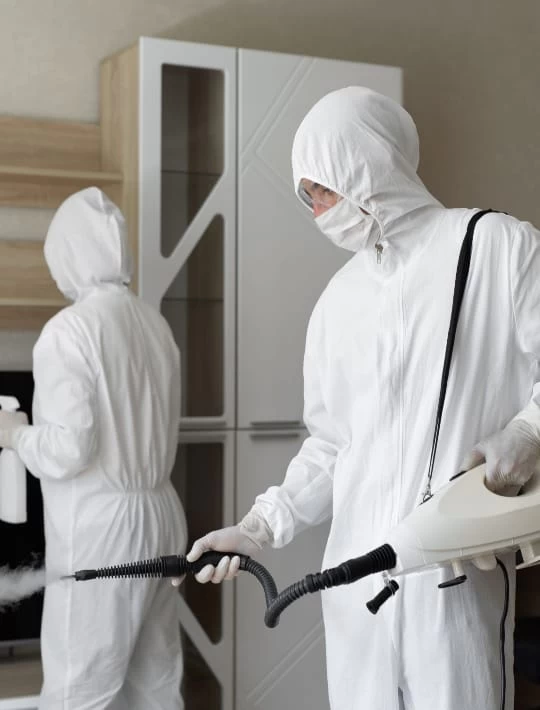
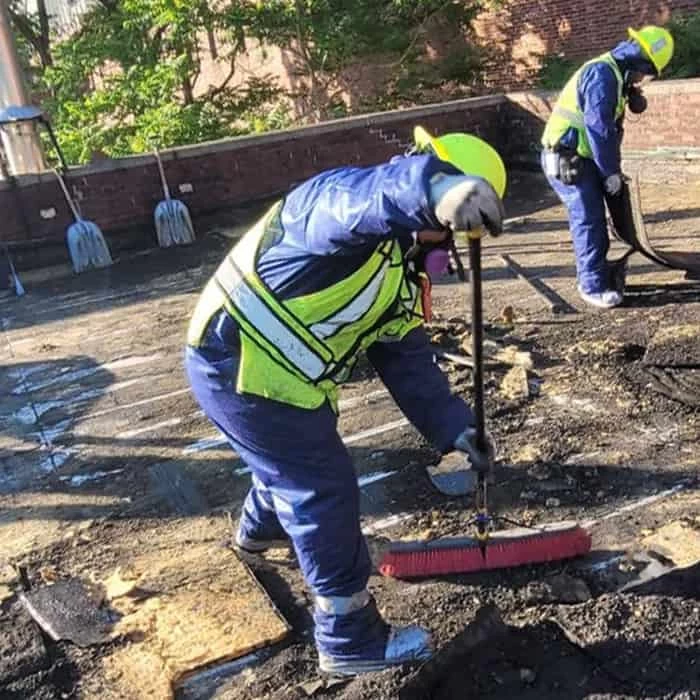
When your North Hills property has history behind its walls — and likely hazardous materials too — you need a licensed demolition contractor who handles the whole job, not just the easy part. We manage asbestos abatement, permitting, and structural demolition in-house, which means your project keeps moving instead of waiting between contractors.
I needed a professional consultation explanation of procedure for safe removal of Asbestos in my apartment complex. Without having an account yet, I was very impressed with the caring, knowledgeable and generous advice offered by Jessica, and will look forward to doing business in the future. Thank you so much! I feel much more informed about a sometimes scary endeavor. Peace. Nancy Silva Mineola, NY.
Mia Munoz
Used this company to clean up some water flood in my house. They were fast and easy to work with.very professional, Would recommend to anyone!
Nini Valle
Great company, had a flood and they responded quickly and efficiently. Billed my insurance company directly. I highly recommend this company!
joe colapietro, jr
I had pipe freeze in my basement right before a snow storm and they made to within an hour to help start the clean up process. They we by our side throughout the entire process and even helped with the insurance company. They did such a great job with the cleanup, repair, remidiation, I contracted them to perform the repairs and finishes in the basement. They came with enough manpower and material to get the job done. Leo and Jessica were nothing but a pleasure to deal with!!
Cristian Arredondo c
I had some water damage in my home and Green Island was able to take care of my issue quickly and effectively. I am very pleased with the work they did. They responded quickly and were very professional.
Michael M
Outstanding service! From the office to the field crew everyone was friendly, helpful and responsive. I highly recommend Green Island Group.
What Happens When Demolition Is Done Right in North Hills
Most demolition projects in North Hills don’t start with a sledgehammer. They start with a question: what’s inside these walls? The older estate-era and mid-century homes throughout this village — many built in the 1920s through the 1960s — routinely contain asbestos in floor tiles, ceiling texture, and pipe insulation, along with lead paint on virtually every painted surface. If your contractor can’t legally handle those materials, your project doesn’t move forward. It stops.
When you work with a contractor who holds a NYS Department of Labor Asbestos Handling Contractor License and performs both abatement and demolition in-house, the project keeps moving. There’s no waiting on a second company to show up, no gap between the hazmat phase and the structural work, and no finger-pointing if something unexpected turns up mid-job. You get one team, one timeline, and one point of accountability from the first assessment to the cleared site.
For a North Hills homeowner managing a gut renovation on a property worth $1M or more, that continuity isn’t a convenience — it’s protection. Protection for your renovation schedule, your budget, and the long-term value of your investment.
Licensed Demolition Contractors Serving North Hills
The License, the Experience, and No Handoffs
We are a full-service environmental contracting and demolition firm based on Long Island, serving residential, commercial, and municipal clients across Nassau County and the greater New York metro area. Our work spans everything from selective interior demolition in gated communities like the Estates at North Hills to full structural teardowns on estate properties near Shelter Rock Road — and everything in between.
What separates us from most contractors in this space is the ability to handle hazardous materials assessment, licensed asbestos abatement, and demolition under one contract. That’s not standard in this industry. Most contractors either do the demo and subcontract the hazmat work, or they handle remediation and pass the demolition off entirely. We do both, in-house, with the state licensing to back it up.
We’re known for communicating clearly, showing up when we say we will, and making a complicated process feel manageable — which matters a lot when you’re coordinating a renovation in North Hills, where HOA boards, gated entry protocols, and permit timelines all have to line up.
From First Call to Cleared Site — Here's the Sequence
It starts with a free estimate and a walkthrough of the scope. Before any work is proposed, we look at what’s there — the structure, the materials, the age of the building — and identify what the project actually requires. For most pre-1980 properties in North Hills, that includes a hazardous materials assessment before demolition can legally proceed. This step isn’t optional, and a contractor who skips it is creating a liability that lands on you, not them.
Once the scope is confirmed, we handle the permitting. In the Village of North Hills, that means working through the village’s own Building Department — not just the Town of North Hempstead — and coordinating requirements like the Nassau County Department of Health Certificate of Rodent Free Inspection, which has a 10-day expiration window that has to be timed carefully. PSEG disconnection documentation, elevation photographs, and current insurance proof are all part of the permit package. This is routine for our team. For a first-time demo client, it’s a maze.
After permits are in place, abatement happens first where required, followed by the structural demolition work. If your project is within a gated community, we coordinate access and work within any community-specific hour restrictions or HOA requirements. When the job is done, you receive full disposal documentation — a complete chain of custody for any hazardous materials removed — so your property’s record is clean for future permits, sales, or inspections.
Demolition Services for North Hills, NY Properties
Full-Scope Demolition Built for North Shore Properties
We handle the full range of residential demolition work that North Hills properties require. Selective interior demolition — gutting a kitchen, removing a bathroom, opening up a floor plan — is a common starting point for renovation projects in communities like the Estates at North Hills II, where buyers are updating mid-century ranch and multi-level homes to modern standards. Full structural demolition is available for estate-scale teardowns, where the goal is a cleared site ready for new construction.
Every project includes hazardous materials assessment as a standard part of the process, not an add-on. For North Hills properties, where the housing stock spans from Gold Coast-era estates to 1960s colonials, this isn’t a precaution — it’s a near-certainty that something will require attention before structural work begins. We hold a NYS DOL license to handle asbestos abatement in-house, which means discovery mid-project doesn’t stop your job. It gets handled by the same crew already on site.
Beyond demolition, we also provide mold remediation, lead paint removal, water damage restoration, and fire and smoke damage restoration — which means if your project uncovers additional issues during demo, there’s no scramble to find another contractor. The full documentation package, including disposal manifests and permit records, is delivered at project close so your property file is complete.
Do I need a permit to demolish a structure in the Village of North Hills?
Yes, and the permit process in North Hills has a few layers worth understanding before you start. The Village of North Hills is an incorporated village with its own Building Department, which means permits for work within the village boundaries go through the village — not just the Town of North Hempstead’s Department of Building, Safety, Inspection and Enforcement. That’s a distinction most contractors working in this area don’t flag upfront, and it can cause delays if the wrong application goes to the wrong office.
The permit application requires photographs of all building elevations, a survey with spot elevations at each corner of the structure, documented PSEG disconnection, and proof of current contractor insurance. There’s also a Nassau County Department of Health Certificate of Rodent Free Inspection required — and that certificate expires just 10 days after it’s issued, so the timing of when you get it relative to your demo start date has to be coordinated carefully. We manage all of this as part of the project, so you’re not chasing paperwork while trying to keep a renovation on schedule.
How do I know if my North Hills home contains asbestos before demolition starts?
The honest answer is: if your home was built before 1980, assume it does until a licensed inspector says otherwise. That applies to the vast majority of properties in North Hills, where the housing stock includes everything from early 20th century Gold Coast estate structures to mid-century colonials and ranch homes built through the 1960s and 1970s. Asbestos was used widely in floor tiles, ceiling texture (popcorn ceilings), pipe and duct insulation, joint compound, and roofing materials — it’s not always visible, and it’s not always in obvious places.
A hazardous materials assessment before demolition is the legally required first step for any project where asbestos-containing materials may be disturbed. Under EPA NESHAP rules, if asbestos is present above certain threshold quantities, a 10-working-day advance notification is required before demolition can proceed. We perform these assessments and handle the abatement in-house under our NYS DOL Asbestos Handling Contractor License, so you’re not waiting on a separate company to clear the site before demo can start. One team handles both phases, which keeps your project moving on a single timeline.
What's the difference between selective demolition and full structural demolition?
Selective demolition means removing specific elements of a structure while leaving the rest intact — gutting a kitchen down to the studs, removing a bathroom, taking out a wall to open a floor plan, or stripping a basement. It’s precise, controlled work that requires understanding what’s load-bearing, what contains utilities, and what materials need to be handled as hazardous before removal. For many North Hills renovation projects — particularly in gated communities where buyers are upgrading existing homes rather than tearing them down — selective interior demolition is the starting point.
Full structural demolition is the complete removal of a building down to the foundation, typically in preparation for new construction. In North Hills, where estate properties and larger residential lots create the space and budget for teardown-and-rebuild projects, full demolition is a common path for buyers who purchase an older home with the intention of building new. Both types of work require permits, and both require hazardous materials assessment on pre-1980 structures. The scope and sequencing differ, but the regulatory requirements apply to both — and a licensed contractor handles them the same way regardless of project size.
Can a demolition contractor work inside a gated community in North Hills?
Yes, but it requires more coordination than a standard residential job, and not every contractor is set up for it. Most of North Hills’s residential communities are private and gated — including the Estates at North Hills I and II, The Gates at North Hills, Whitewood, and others. Working within these communities means obtaining HOA or property management approval before work begins, coordinating gated entry for equipment and crew, complying with community-specific working hours and noise restrictions, and maintaining site cleanliness standards that go beyond what’s typical on an open residential street.
We have experience working within gated community environments on the North Shore of Long Island. Our team understands that showing up to a job in a community like this is not the same as showing up to an open suburban lot — the expectations are higher, the neighbor impact is more visible, and the HOA board has real authority to stop work that doesn’t meet community standards. When you hire a contractor for a project in one of these communities, it’s worth asking directly whether they’ve worked in gated environments before. The answer matters.
How long does a typical residential demolition project take in North Hills, NY?
It depends heavily on the scope, but the permit and abatement phases are usually what set the timeline — not the demolition itself. For a selective interior demo project, the physical work might take one to three days. But if hazardous materials are present (which is likely in any pre-1980 North Hills home), the abatement process has to happen first, and EPA NESHAP rules require a 10-working-day advance notification before demolition of structures with asbestos above threshold quantities. Factor in the Village of North Hills permit process — including the Nassau County rodent inspection certificate with its 10-day expiration — and a project that feels like it should take a week can easily require three to six weeks of lead time before the first tool touches the structure.
Full structural demolition on a larger estate property takes longer, both in permitting and in execution. The best way to understand your specific timeline is to get a written scope of work that maps out each phase — assessment, permitting, abatement if required, demolition, and site clearance — with realistic timeframes attached to each step. That way, if you’re coordinating with an architect or a general contractor who has a start date, you know exactly what needs to happen and when.
What documentation should I receive after a demolition project in North Hills?
At minimum, you should receive the closed permit from the Village of North Hills Building Department confirming the work was completed and inspected, and a disposal manifest for any hazardous materials that were removed. The disposal manifest is a chain-of-custody document that tracks asbestos or other regulated materials from your property to a licensed disposal facility — it’s the proof that the material was handled legally from removal through final disposal.
This documentation matters more than most homeowners realize at the time of the project. When you go to sell a property in North Hills — where homes regularly trade at $1M to $3M or more — a buyer’s attorney or inspector will ask about prior demolition and renovation work. If asbestos was removed and you can’t produce the disposal manifest, that becomes a due diligence issue that can slow or complicate the sale. When you apply for future renovation permits, the building department may also ask for records of prior permitted work. We provide the full documentation package at project close as standard practice, not something you have to ask for separately.