Your 1960s Home Deserves More Than a Sledgehammer and a Guess
Most demolition contractors in North Massapequa will show up and start swinging — but if your home was built before 1978, that’s a problem. We handle the demo and whatever’s behind the walls, legally and completely, under one contract.
I needed a professional consultation explanation of procedure for safe removal of Asbestos in my apartment complex. Without having an account yet, I was very impressed with the caring, knowledgeable and generous advice offered by Jessica, and will look forward to doing business in the future. Thank you so much! I feel much more informed about a sometimes scary endeavor. Peace. Nancy Silva Mineola, NY.
Mia Munoz
Used this company to clean up some water flood in my house. They were fast and easy to work with.very professional, Would recommend to anyone!
Nini Valle
Great company, had a flood and they responded quickly and efficiently. Billed my insurance company directly. I highly recommend this company!
joe colapietro, jr
I had pipe freeze in my basement right before a snow storm and they made to within an hour to help start the clean up process. They we by our side throughout the entire process and even helped with the insurance company. They did such a great job with the cleanup, repair, remidiation, I contracted them to perform the repairs and finishes in the basement. They came with enough manpower and material to get the job done. Leo and Jessica were nothing but a pleasure to deal with!!
Cristian Arredondo c
I had some water damage in my home and Green Island was able to take care of my issue quickly and effectively. I am very pleased with the work they did. They responded quickly and were very professional.
Michael M
Outstanding service! From the office to the field crew everyone was friendly, helpful and responsive. I highly recommend Green Island Group.
What Changes When the Right Contractor Handles Your North Massapequa Demo
North Massapequa’s housing stock tells the story pretty clearly. Most of these homes went up fast between the late 1940s and 1960s, when the Greater Massapequa area exploded from a small town into a full suburb almost overnight. That means floor tiles, pipe insulation, ceiling texture, and joint compound that were totally standard at the time — and that now require a licensed contractor to touch legally. When you hire a demolition crew that isn’t licensed for asbestos abatement, you’re not just rolling the dice on compliance. You’re taking on personal liability for how those materials are handled, disposed of, and documented. In a market where North Massapequa homes are selling for close to $850,000, that’s not a risk worth taking.
What you get when the abatement and demolition happen under the same roof is a project that doesn’t stop. No waiting three weeks for a separate abatement company to get scheduled after something is found mid-demo. No gap where no one is accountable. The work moves, the documentation is clean, and when it’s done, you have the disposal records and clearance paperwork that protect your home’s value at resale. For a community where the homeownership rate is 95%, and where most people have decades of equity tied up in their property, that paper trail matters more than most people realize until they need it.
Licensed Demolition Contractors, North Massapequa NY
We Know What's Behind the Walls Out Here
We’re based in the Massapequa area and have been serving North Massapequa and Nassau County homeowners for years. We hold the NYS Department of Labor Asbestos Handling Contractor License, which is the specific state-issued credential required to legally remove and dispose of asbestos-containing materials in New York. That’s not the same as being “licensed and insured.” It’s a separate, regulated license that most demolition contractors on Long Island simply don’t hold.
Beyond the licensing, the real difference is scope. We handle asbestos abatement, lead paint removal, mold remediation, structural demolition, interior selective demolition, and water damage restoration — all in-house. For a North Massapequa homeowner dealing with a gut renovation, a flooded basement, or a fire-damaged room in a home built during the Town of Oyster Bay’s post-war building boom, that means one team, one contract, and one point of contact from start to finish.
It starts with an assessment. Before any demo work begins in a North Massapequa home, we walk the property and evaluate what’s there — the structure, the materials, and anything that needs to be tested or documented before work can legally start. For homes built in the 1950s and 1960s, that typically means an asbestos survey. Under NYS DOL requirements and EPA regulations, demolition involving asbestos-containing materials above threshold quantities requires advance notification and licensed handling. The Town of Oyster Bay, which governs permitting for North Massapequa as an unincorporated hamlet, requires a demolition permit for structural work — and for homes of this age, asbestos documentation is part of that process. We manage the permit application and the compliance paperwork, so you’re not navigating the Town of Oyster Bay Building Department on your own.
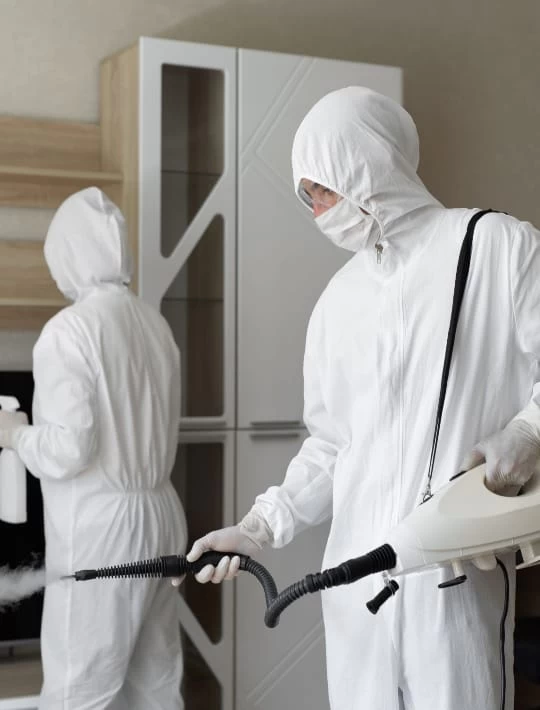
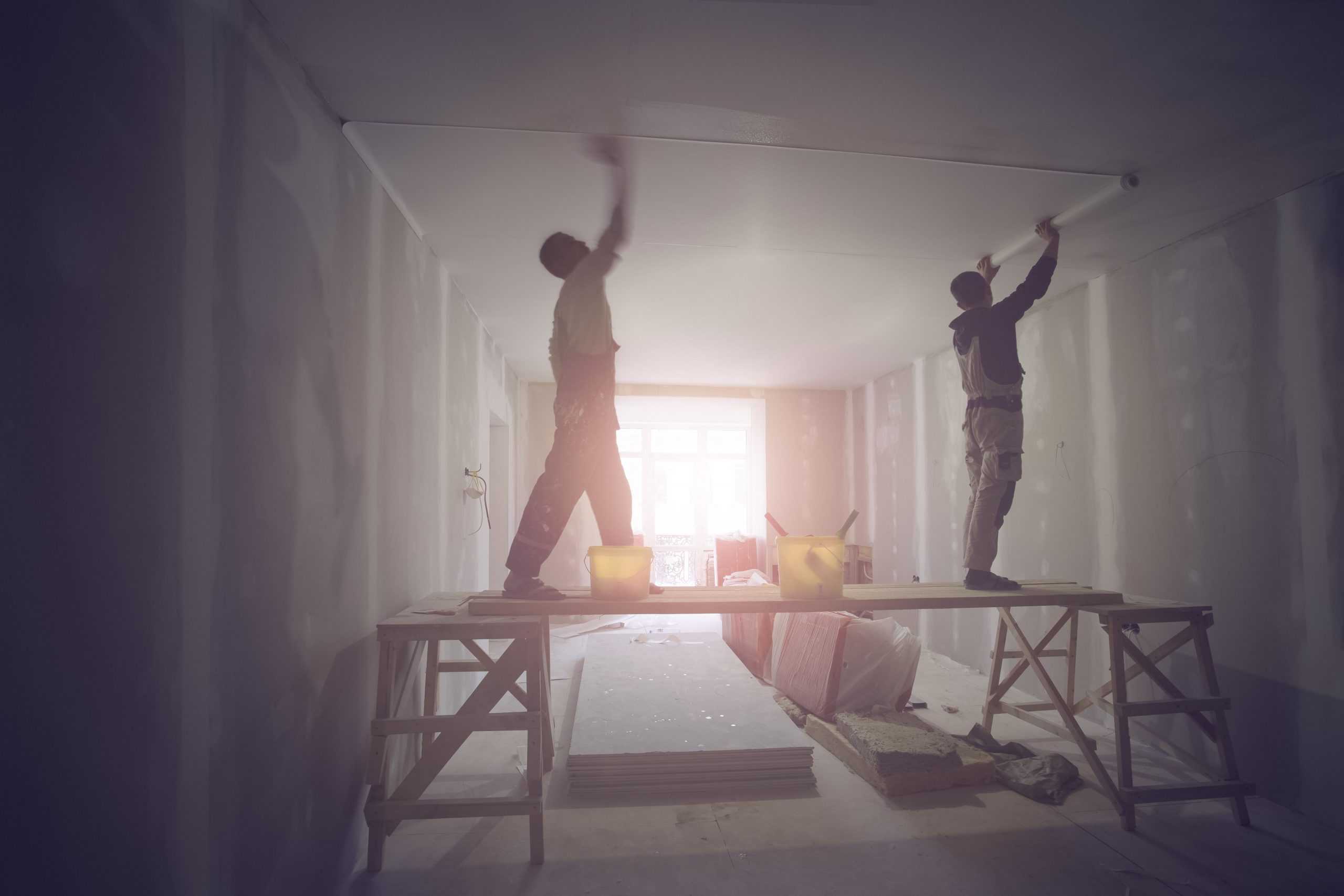
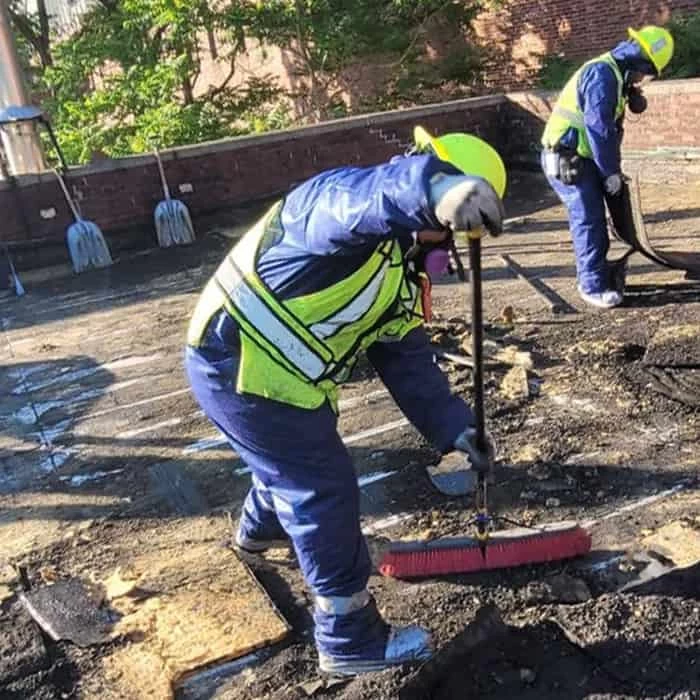
Once the assessment is complete and permits are in order, the physical work begins. For interior selective demolition — a kitchen gut, a bathroom strip-out, a finished basement that took on water — our crew works in contained sections to protect the rest of the home. For full structural demolition, utility disconnection is verified before anything is touched. If hazardous materials are found during the project, the same licensed team handles it without stopping the job to source a separate contractor. When the work is done, post-project clearance testing confirms the space is clean and safe, and you receive the full documentation package — disposal manifests, clearance results, and permit records.
Demolition Specialists Serving North Massapequa, NY
The Full Scope, Not Just the Easy Part
Our demolition services cover the full range of what North Massapequa homeowners actually run into: interior selective demolition for kitchens, bathrooms, and basements; full structural and residential demolition; asbestos and lead paint abatement; mold remediation; and water damage restoration when flooding has compromised structural materials. North Massapequa’s landlocked geography and older drainage infrastructure mean basement water intrusion is a real and recurring issue — especially in homes where the original waterproofing is 50 or 60 years old. When a flooded basement requires not just drying but demolition of damaged framing or finished materials, that full scope is handled by one team.
For commercial work, we also serve small business owners and property managers in and around the North Massapequa area — including tenant buildout demolition and commercial interior gut work. The bonding capacity and compliance documentation systems that come with commercial project experience directly benefit residential clients too, because the operational depth is already there.
Every project includes permit management through the Town of Oyster Bay, hazardous material handling under NYS DOL licensing, post-project clearance testing where applicable, and full disposal documentation. If asbestos or lead paint is involved, you receive the chain-of-custody records showing materials were removed by a licensed contractor and disposed of at a licensed facility — the documentation that protects your property in any future sale in Nassau County’s competitive real estate market.
Do I need an asbestos test before demolition in North Massapequa, NY?
If your home was built before 1978 — which describes the majority of North Massapequa’s housing stock — then yes, an asbestos survey is strongly recommended before any demolition work begins, and in many cases it’s legally required. Under New York State Department of Labor regulations and EPA NESHAP rules, demolition of structures containing asbestos above certain threshold quantities requires advance written notification to the state and federally licensed handling of the materials. The Town of Oyster Bay, which issues demolition permits for North Massapequa as an unincorporated hamlet, expects this documentation as part of the permit process for older structures.
The practical reason matters just as much as the legal one. Homes built in the 1950s and 1960s — the era when most of North Massapequa was developed — commonly contain asbestos in floor tiles, ceiling texture, pipe insulation, joint compound, and roofing materials. You won’t always know it’s there until someone looks. Starting demolition without that survey puts you in a position where work stops mid-project when something is found, and you’re scrambling to source a licensed abatement contractor on short notice. Getting the survey done upfront keeps the project moving and keeps you on the right side of the law.
Who issues demolition permits in North Massapequa, and how does that work?
Demolition permits in North Massapequa are issued by the Town of Oyster Bay Building Department. Because North Massapequa is an unincorporated hamlet — not an incorporated village — there is no separate village building department. All permitting flows through the Town of Oyster Bay directly. This is different from nearby Massapequa Park, which is an incorporated village with its own Building Department, so it’s worth knowing which jurisdiction you’re actually in before you start calling around.
The permit application requires documentation of utility disconnections before structural demolition begins, and for homes of the age common in North Massapequa, asbestos survey results are expected as part of the process. A licensed contractor pulls the permit in their name as the contractor of record — if someone tells you to pull your own permit, that’s often a sign they’re not properly licensed to pull it themselves. We manage the entire permit process for projects in North Massapequa, from application through post-project documentation, so you’re not left figuring out the Town of Oyster Bay’s requirements on your own.
What happens if asbestos is discovered during demolition in my home?
If asbestos is found mid-project, the right response depends entirely on whether your contractor is licensed to handle it. For most demolition-only contractors, discovery means the job stops. They’re not legally authorized to disturb, remove, or dispose of asbestos-containing materials, so they walk off the site while you locate a separate licensed abatement contractor — which can take weeks, especially if you’re starting from scratch.
When you’re working with us, discovery doesn’t stop the project. We hold the NYS DOL Asbestos Handling Contractor License, which means we can pivot immediately to abatement protocols, handle the material removal properly, and keep the project moving without a handoff gap. The abatement work is documented — air monitoring, disposal manifests, clearance testing — and that documentation becomes part of your project record. In North Massapequa, where the housing stock is overwhelmingly from the asbestos era, finding something during demo is a normal possibility, not a worst-case scenario. Having a contractor who can handle it in real time is the difference between a project that finishes on schedule and one that drags on for months.
Can I stay in my house during interior demolition in North Massapequa?
In many cases, yes — but it depends on the scope of work and what materials are involved. For selective interior demolition like a kitchen gut or bathroom strip-out in a North Massapequa home, it’s often possible to stay in the property as long as the work area is properly contained. Dust containment barriers, negative air pressure systems, and HEPA filtration are standard practice when working in occupied homes, and they matter more than most people expect in a 1,200 to 1,500 square foot Cape Cod or ranch where the living spaces are close together.
If the project involves asbestos or lead paint abatement, the standards are stricter. Depending on the scope of abatement work, temporary relocation may be required for the duration of that phase — typically a matter of days, not weeks. We’ll be direct with you about what’s required for your specific project before work begins. Post-abatement clearance testing is done before the space is reoccupied, and you’ll have the air quality results in hand before anyone moves back in. That’s not optional — it’s the standard.
How much does interior demolition typically cost in North Massapequa, NY?
Interior demolition costs in North Massapequa vary based on the size of the space, the scope of work, and whether hazardous materials are involved. A straightforward kitchen gut in a 1960s ranch home — removing cabinets, flooring, drywall, and fixtures — typically runs in the range of a few thousand dollars. Once you add asbestos abatement for floor tiles or ceiling texture, which is common in homes from this era, the cost increases to account for licensed removal, air monitoring, and disposal at a certified facility.
The honest answer is that any estimate you get without an on-site assessment is a guess. The condition of the materials, the presence of hazardous substances, and the accessibility of the space all affect the final number. What you should be comparing between contractors isn’t just the bottom line — it’s what’s included. A lower bid from a contractor who isn’t licensed for asbestos abatement may not include the abatement at all, which means you’ll pay for it separately anyway, often at a premium when it’s urgent. We provide free estimates and will walk you through exactly what’s included before any work begins.
Does Green Island Group handle basement demolition after flooding in North Massapequa?
Yes — and in North Massapequa specifically, this is one of the more common calls we receive. The community’s landlocked geography and aging drainage infrastructure mean that heavy rainfall events can push water into basements that were never designed with modern waterproofing standards. Homes built in the 1950s and 1960s often have original drainage systems that weren’t built to handle the kind of rainfall volumes that nor’easters and late-summer storms routinely deliver today.
When a basement floods and the finished materials — framing, drywall, insulation, flooring — have been saturated, the damage isn’t just cosmetic. Mold can begin growing within 24 to 48 hours in North Massapequa’s humid conditions, and once it’s in the wall cavities, you’re dealing with a remediation project, not just a cleanup. We handle the full scope: water extraction and structural drying, mold testing and remediation, demolition of damaged materials, and — if the original materials contain asbestos or lead paint, which is common in homes of this age — licensed abatement before anything is torn out. The entire project runs under one contract, which means no coordination between separate companies and no gap in accountability when the work crosses from one phase into the next.