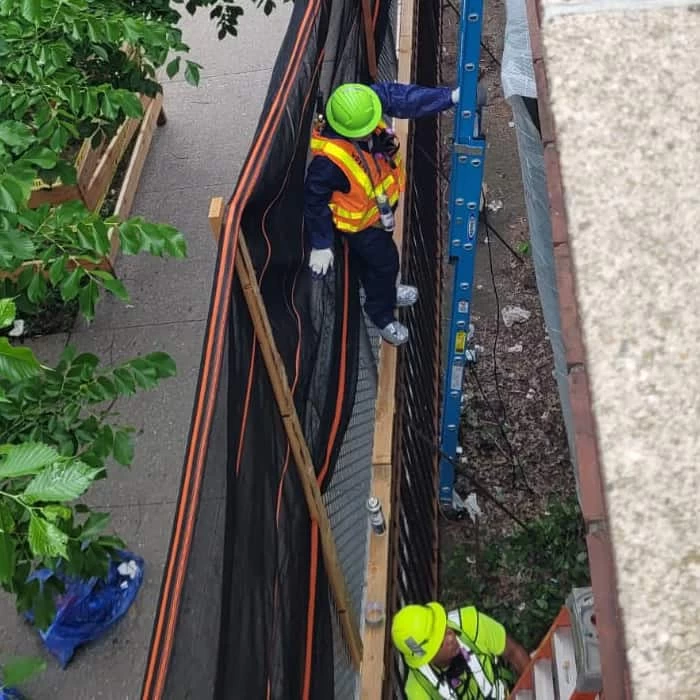
Oakland Gardens Homes Built in the 1950s Need This Before Demo Starts
Most homes in Oakland Gardens were built in the 1950s and that means asbestos, lead paint, and a permit process that stops cold if you skip the assessment. We handle all of it as one licensed team, so your project moves without delays.
I needed a professional consultation explanation of procedure for safe removal of Asbestos in my apartment complex. Without having an account yet, I was very impressed with the caring, knowledgeable and generous advice offered by Jessica, and will look forward to doing business in the future. Thank you so much! I feel much more informed about a sometimes scary endeavor. Peace. Nancy Silva Mineola, NY.
Mia Munoz
Used this company to clean up some water flood in my house. They were fast and easy to work with.very professional, Would recommend to anyone!
Nini Valle
Great company, had a flood and they responded quickly and efficiently. Billed my insurance company directly. I highly recommend this company!
joe colapietro, jr
I had pipe freeze in my basement right before a snow storm and they made to within an hour to help start the clean up process. They we by our side throughout the entire process and even helped with the insurance company. They did such a great job with the cleanup, repair, remidiation, I contracted them to perform the repairs and finishes in the basement. They came with enough manpower and material to get the job done. Leo and Jessica were nothing but a pleasure to deal with!!
Cristian Arredondo c
I had some water damage in my home and Green Island was able to take care of my issue quickly and effectively. I am very pleased with the work they did. They responded quickly and were very professional.
Michael M
Outstanding service! From the office to the field crew everyone was friendly, helpful and responsive. I highly recommend Green Island Group.
Your Oakland Gardens Project Moves. No Stops, No Surprises.
Here’s what most Oakland Gardens homeowners don’t realize until they’re already in it: the demolition itself isn’t usually what causes delays. It’s everything that has to happen before the first wall comes down. The ACP-5 asbestos assessment. The DEP notification. The DOB permit. If your contractor can’t handle those steps or worse, skips them your project gets stopped, and you’re the one holding the liability.
With Green Island Group, we handle the abatement and the demolition under one contract. That matters in a neighborhood where the median home was built in 1956, because virtually every project here will involve some form of hazardous material asbestos floor tile, pipe insulation, lead paint behind original woodwork. You don’t have to coordinate two separate licensed contractors or wait for one crew to clear out before another can start. The timeline stays intact.
Oakland Gardens also deals with real groundwater flooding issues documented water main breaks on residential streets have left basements with two feet of standing water. When that happens in a home with original 1950s construction, mold sets in fast and walls have to come out. That kind of emergency demolition needs a contractor who picks up the phone at any hour and knows exactly what NYC requires before, during, and after the work.
Residential Demolition Contractors Oakland Gardens NY
340 Projects In. We Know What's Behind Oakland Gardens Walls.
Green Island Group has been working in the New York metro area for over 12 years, completing more than 340 demolition projects across Long Island and all five boroughs. We’re licensed by the NYC Department of Buildings, certified by the NYC DEP for asbestos abatement, and fully compliant with NYS DOL Industrial Code Rule 56. That’s the complete regulatory stack for demolition work in New York City and we hold all of it.
We’ve worked throughout northeastern Queens, including the kinds of homes you find in Oakland Gardens: brick Tudors, Cape Cods, and ranch-style houses built decades ago that haven’t had a single wall opened since. We know what original 1950s construction in Oakland Gardens actually contains, and we plan for it from day one not after the demo crew is already on site.
Our reviews consistently mention one thing: we explain the process clearly. For homeowners near Queensborough Community College or along Francis Lewis Boulevard who are doing this for the first time, that’s not a small thing. It’s the difference between a project that goes smoothly and one that doesn’t.
What Actually Happens Before a Wall Comes Down in Oakland Gardens
The first step is an assessment not a sales pitch. We look at the scope of the project, the age and construction of the building, and what materials are likely present. For any pre-1987 structure in Oakland Gardens, that means a formal asbestos investigation and the completion of an ACP-5 form before the NYC Department of Buildings will issue a demolition permit. This isn’t optional, and it’s not something you can do after the fact. We handle it upfront so your permit process doesn’t stall.
If the assessment finds asbestos-containing materials that will be disturbed and in a 1950s Oakland Gardens home, that’s more likely than not abatement comes next. Our crews are certified, the work is documented, and air monitoring confirms clearance before demolition begins. There’s no gap in the timeline where you’re waiting on a second company to show up and finish their part.
Once clearance is confirmed, demolition proceeds. Whether it’s a full structural teardown, a gut renovation of a single floor, or selective demo ahead of a kitchen or bathroom remodel, we remove the debris, recycle salvageable materials where possible, and clear the site so it’s ready for whatever comes next. You’re not left managing the aftermath that’s part of the job.
Commercial and Residential Demolition Specialists Queens
Full-Scope Demo Built for NYC's Toughest Requirements
Oakland Gardens sits fully within NYC DOB jurisdiction, which means every demolition project residential or commercial comes with a specific set of legal requirements that don’t apply in Nassau or Suffolk County. The ACP-5 asbestos assessment is mandatory for any pre-1987 building before a permit is issued. Lead paint protocol applies to virtually every home in Oakland Gardens. DEP certification is required for abatement. These aren’t technicalities they’re the legal baseline, and skipping any one of them creates real exposure for the property owner.
We cover the full scope: hazardous material testing, licensed asbestos and lead abatement, NYC DOB-compliant demolition, debris removal, and site preparation. We handle residential teardowns, interior gut demolition, selective structural demo, and emergency demolition for water or fire-damaged properties. For Oakland Gardens homeowners dealing with the aftermath of basement flooding or a water main event, we also bill insurance carriers directly removing one more thing from your plate during an already stressful situation.
The homes along Vanderbilt Parkway, near Alley Pond Park, and throughout the Springfield Boulevard corridor all present the same core challenge: original construction materials that require careful handling before any real demo work can start. We’ve seen it enough times to know how to price it accurately, scope it correctly, and execute it without surprises.
Do I need an asbestos test before demolishing anything in my Oakland Gardens home?
If your home was built before April 1, 1987 which covers nearly every property in Oakland Gardens then yes, an asbestos assessment is legally required before the NYC Department of Buildings will issue a demolition permit. This is mandated under NYC Local Law 76 and applies to any renovation or demolition that will disturb building materials. It’s not a recommendation. It’s a condition of the permit.
The assessment involves a DEP-certified investigator collecting samples from suspect materials floor tiles, pipe insulation, joint compound, ceiling texture, and others common in 1950s Oakland Gardens construction. If asbestos-containing materials are found and will be disturbed during the project, abatement must be completed and documented before demo begins. The completed assessment is submitted as an ACP-5 form to the DOB. Skipping this step doesn’t just risk a fine it can result in a stop-work order that shuts your entire project down until it’s resolved.
How much does demolition actually cost in Queens, NY?
Demolition in New York City costs more than national averages suggest, and that gap is real. NYC DOB permitting, mandatory asbestos assessments, DEP-certified abatement, licensed disposal, and air monitoring are all legally required components of a compliant demolition project in Queens and they all add cost that a generic online estimate won’t account for.
For a residential interior gut demolition in Oakland Gardens, the total cost depends on the square footage, the extent of hazardous materials found, and the scope of work. Asbestos abatement alone can run $20 to $65 per square foot for friable materials, and the ACP-5 assessment is a separate line item. A full structural teardown on a single-family home will cost more than a selective interior demo. What you should watch out for is a quote that doesn’t include these items because they’ll show up as change orders later, or the contractor will skip them and leave you exposed. Get a quote that covers the complete scope from the start.
What permits are required for demolition work in Oakland Gardens, NY?
Because Oakland Gardens is in Queens one of New York City’s five boroughs all demolition work falls under NYC Department of Buildings jurisdiction. That means you need a DOB demolition permit before any structural work begins. To get that permit for a pre-1987 building, you first need a completed ACP-5 asbestos assessment report on file. If abatement is required, the abatement contractor must hold NYC DEP certification and file the appropriate notifications before work begins.
On top of that, any asbestos abatement work is governed by NYS Department of Labor Industrial Code Rule 56, which sets licensing requirements for abatement contractors and their workers. For larger projects that exceed certain asbestos quantity thresholds, USEPA NESHAP regulations also require advance notification. This is a layered regulatory environment, and the permit process alone can take time if it’s not managed correctly from the start. A contractor who knows this process and has done it repeatedly in northeastern Queens is going to move faster and with fewer complications than one who’s figuring it out as they go.
Can the same contractor handle asbestos removal and demolition in Oakland Gardens?
Yes and honestly, that’s the setup you want. When asbestos abatement and demolition are handled by two separate companies, you’re managing two schedules, two contracts, and a gap in the middle where your project sits idle waiting for one crew to finish before the other can start. In Oakland Gardens, where nearly every home falls within the asbestos risk window, that coordination problem is the single most common reason projects run late and over budget.
When one contractor holds both the NYC DEP abatement certification and the NYC DOB demolition license, the transition from abatement to demo is seamless. There’s one point of contact, one project timeline, and no finger-pointing if something comes up between phases. For Oakland Gardens homeowners who are planning renovations around school schedules District 26 families tend to want projects wrapped up before the fall that kind of timeline control is worth a lot.
What happens if flooding in my basement requires demolition work?
Oakland Gardens has experienced serious flooding events including a water main break on 67th Avenue that left cars underwater and pushed two feet of water into at least one home’s basement. When that kind of water intrusion hits a house with original 1950s construction, the damage compounds quickly. Mold begins developing within 24 to 48 hours. Walls, flooring, and ceilings that absorbed water often have to come out entirely before remediation can happen.
Emergency demolition in this context still requires compliance with NYC DOB and DEP rules there’s no emergency exemption from the asbestos assessment requirement if the materials being removed are in a pre-1987 building. What matters is having a contractor who can respond fast, assess the scope accurately, and move through the required steps without unnecessary delay. We operate 24 hours a day, seven days a week for exactly this reason. We also bill insurance carriers directly, which removes a significant administrative burden when you’re already dealing with a damaged home.
How do I know if a demolition contractor in Oakland Gardens is actually licensed to do this work?
This is one of the most important questions you can ask and the answer is verifiable. In New York City, you can look up any contractor’s DOB license status directly through the NYC Department of Buildings website using their license number. For asbestos abatement specifically, you can verify DEP certification through the NYC DEP’s online contractor registry. NYS DOL certification under Industrial Code Rule 56 is a separate credential that governs asbestos work statewide.
The reason this matters so much in Oakland Gardens is that the neighborhood’s housing stock almost guarantees hazardous materials will be present. A contractor who isn’t DEP-certified cannot legally perform asbestos abatement in New York City full stop. If they do it anyway, the liability falls on the property owner. Some contractors who advertise in the Queens market hold a DOB license but not DEP certification, or vice versa. Before you sign anything, ask for both license numbers and verify them yourself. It takes five minutes and tells you everything you need to know about whether a contractor can legally complete the full scope of your project.