Demolition Contractor in Port Jefferson Station, NY
When Your 1950s Ranch Finally Meets Its Match
Most homes in Port Jefferson Station were built before you were born and tearing one down the right way takes more than a wrecking ball. We handle the demolition, the asbestos, the permits, and the cleanup so your project doesn’t stall before it starts.
I needed a professional consultation explanation of procedure for safe removal of Asbestos in my apartment complex. Without having an account yet, I was very impressed with the caring, knowledgeable and generous advice offered by Jessica, and will look forward to doing business in the future. Thank you so much! I feel much more informed about a sometimes scary endeavor. Peace. Nancy Silva Mineola, NY.
Mia Munoz
Used this company to clean up some water flood in my house. They were fast and easy to work with.very professional, Would recommend to anyone!
Nini Valle
Great company, had a flood and they responded quickly and efficiently. Billed my insurance company directly. I highly recommend this company!
joe colapietro, jr
I had pipe freeze in my basement right before a snow storm and they made to within an hour to help start the clean up process. They we by our side throughout the entire process and even helped with the insurance company. They did such a great job with the cleanup, repair, remidiation, I contracted them to perform the repairs and finishes in the basement. They came with enough manpower and material to get the job done. Leo and Jessica were nothing but a pleasure to deal with!!
Cristian Arredondo c
I had some water damage in my home and Green Island was able to take care of my issue quickly and effectively. I am very pleased with the work they did. They responded quickly and were very professional.
Michael M
Outstanding service! From the office to the field crew everyone was friendly, helpful and responsive. I highly recommend Green Island Group.
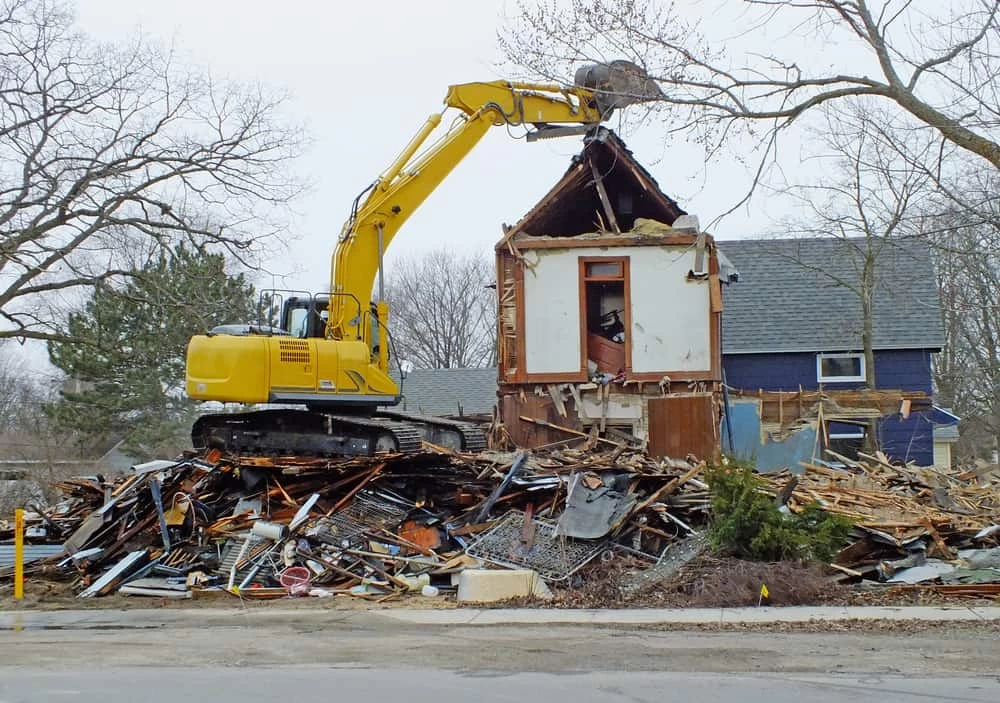
Residential Demolition Services Port Jefferson Station
Your Project Moves Forward No Surprises, No Stops
Nearly half the homes in Port Jefferson Station were built in the 1940s through the 1960s. That means the odds of finding asbestos in a floor tile, pipe wrap, or ceiling texture are not a worst-case scenario they’re just Tuesday. When a contractor isn’t licensed for abatement, they stop working the moment it shows up. Your project sits. Your timeline blows up. That doesn’t happen here.
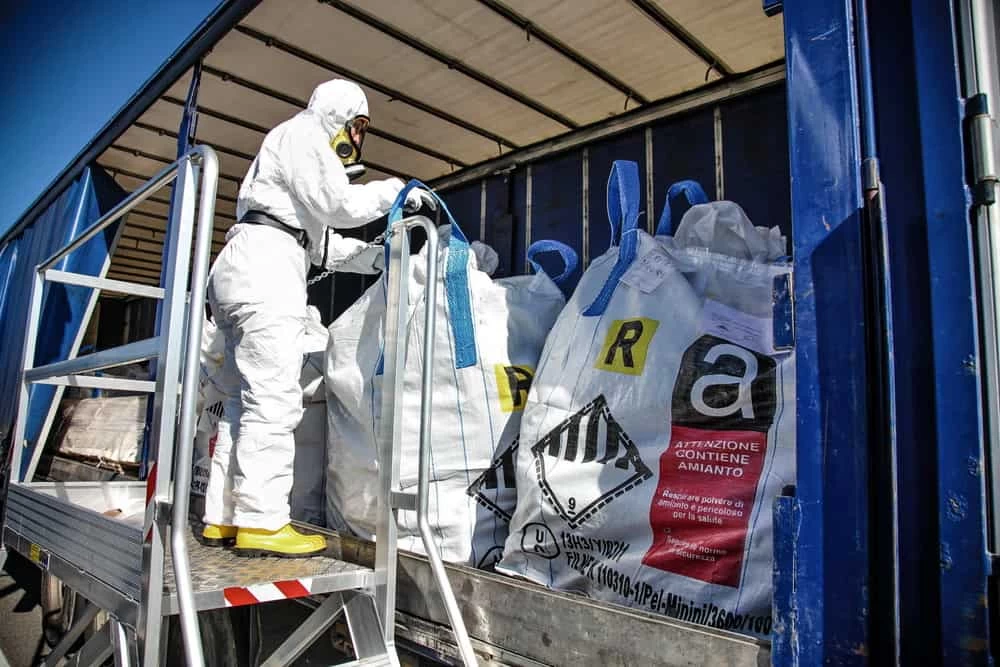
Because we handle asbestos abatement in-house, discovery doesn’t mean delay. The hazardous material is identified during the initial site assessment, abatement is scheduled as part of the project scope, and demolition proceeds without a gap in the work. We’re licensed by the NYS Department of Labor for asbestos contractor certification, and we build abatement into every Port Jefferson Station project from the start so discovery is a step in the process, not a derailment.
Beyond the hazmat piece, Port Jefferson Station’s North Shore location means weather can turn a routine demo into an emergency. Nor’easters, frozen pipes, wind damage these don’t wait for business hours. Having a contractor available around the clock, and one that actually answers, matters more here than in most places.
Licensed Demolition Contractors Port Jefferson Station NY
5,000 Projects In. Zero Guesswork Left.
We’ve been working across Long Island and New York City for over 12 years, with more than 5,000 completed projects under our belt. That’s not a number pulled from a brochure it’s the kind of volume that means your project isn’t a learning experience for anyone on our crew.
We’re based in Bohemia, about 20 miles down Route 347 from Port Jefferson Station, which makes us a genuine local operation not a metro contractor claiming to serve Suffolk County from two hours away. We know the Town of Brookhaven permit process inside and out. We know what’s inside a postwar ranch home on the North Shore. We know what the Suffolk County Department of Health Services expects before a project gets cleared. When you hire us for demolition work in Port Jefferson Station, you’re working with a contractor that has completed hundreds of projects in this exact area.
We hold active NYS Department of Labor asbestos contractor certification, carry over $2 million in general liability coverage, and are MWBE certified for public and state agency work. Our 4.7-star rating across dozens of verified reviews isn’t the most impressive thing about us the fact that customers name specific staff members and describe sub-one-hour response times is.
What Actually Happens From First Call to Final Clearance
It starts with a site assessment. Before anything is touched, our team evaluates the structure for hazardous materials asbestos, lead paint, mold because in a pre-1980 home in Port Jefferson Station, finding one of those is more likely than not. That assessment shapes the scope, the timeline, and the permit applications that follow.
From there, we file for the demolition permit through the Town of Brookhaven Building Division and handle any required coordination with the Suffolk County Department of Health Services. That 90-day permit window starts ticking the moment it’s issued, so our goal is always to have abatement completed and demo ready to begin before the paperwork even lands. No scrambling, no extensions, no surprises on the back end.
Once hazmat clearance is confirmed, demolition proceeds whether that’s a full residential teardown, a selective interior gut, or a commercial strip-out along the Route 112 corridor. Debris is hauled, the site is cleared, and if your project is insurance-driven storm damage, fire, burst pipe we document everything and work directly with your adjuster so you’re not managing two crises at once. From the first call to the final walkthrough, our process is designed to keep your project moving.
Demolition Specialists Near Port Jefferson Station NY
One Contractor Covers What Most Can't Touch Alone
Most demolition contractors do one thing: demolition. That works fine when a structure is clean. But in Port Jefferson Station, where the majority of the housing stock predates 1980, “clean” is rarely where you start. We handle the full scope asbestos abatement, lead paint removal, mold remediation, oil tank removal, and demolition under one roof. That integration isn’t a marketing angle. It’s what keeps your project from getting handed off, delayed, or stopped by something that should have been anticipated from day one.
For residential work, we handle full-structure teardowns, interior gut demolitions before a renovation, and selective demo when only part of a home needs to go. For commercial properties along Nesconset Highway or the Route 112 corridor, we handle tenant improvement demolition, retail strip-outs, and structural clearance all with the licensing and insurance that commercial landlords and property managers actually require.
If your project is tied to an insurance claim water intrusion, fire damage, or storm damage from a nor’easter we handle the documentation and adjuster communication directly. You get one point of contact for the entire process, from hazmat assessment through final site clearance, and a contractor who already knows what Brookhaven inspectors are looking for at the finish line.
Do I need a permit to demolish a home in Port Jefferson Station?
Yes demolition in Port Jefferson Station falls under the Town of Brookhaven’s jurisdiction, and a demolition permit is required before any structural work begins. The permit is valid for 90 days from the date of issuance, which is a tighter window than most homeowners expect. If the work isn’t completed within that timeframe, you’re looking at extensions, re-inspections, and potential delays that can push a project back significantly.
The permit process also involves more than just the Building Division. Depending on the project, you may need coordination with the Suffolk County Department of Health Services, and in some cases the Town may require a bond to guarantee that demolition of an existing structure is completed before a new one is built on the same lot. Having a contractor who has navigated this process in Brookhaven specifically not just “on Long Island” makes a real difference in how smoothly that permit window gets used.
What happens if asbestos is found during demolition in Port Jefferson Station, NY?
If asbestos is discovered mid-project and your contractor isn’t licensed to handle it, work stops completely. They’re legally required to halt demolition until a licensed abatement company comes in, assesses the material, and clears it. In Port Jefferson Station, where roughly half the housing stock was built in the 1940s and 1960s, this isn’t a rare edge case. It’s a common scenario that catches homeowners off guard when they’ve hired a contractor who didn’t account for it upfront.
When we handle asbestos abatement in-house, the process looks completely different. The hazardous material is identified during the initial site assessment, abatement is scheduled as part of the project scope, and demolition proceeds without a gap in the work. NYS Industrial Code Rule 56 governs all asbestos abatement in New York, and the contractor performing the work must hold an active NYS Department of Labor asbestos contractor certification. We carry that certification and build abatement into every Port Jefferson Station project from the start so discovery is a step in the process, not a derailment.
How long does a demolition project typically take in Port Jefferson Station?
Timeline depends heavily on what’s in the structure before demolition begins. A straightforward residential teardown on a clean site can be completed in a matter of days. But in Port Jefferson Station, where pre-1980 construction is the norm, you’re almost always adding time upfront for hazardous material testing and abatement and that’s the right call, not a delay. Skipping that step creates legal exposure and health risk, and it can result in stop-work orders that cost far more time than the abatement itself.
On the permit side, the Town of Brookhaven’s 90-day demolition permit window sets the outer boundary for how long the active work phase can run. Most projects including permit filing, abatement, demolition, and site clearance are completed well within that window when the contractor manages the process from the beginning. The biggest timeline risks are last-minute hazmat discoveries, permit filing delays, and gaps between subcontractors. Working with a single contractor who handles all of it eliminates most of those risks entirely.
Can you handle demolition connected to an insurance claim after storm damage?
Yes, and it’s a significant part of what we do. Port Jefferson Station sits in the weather path for nor’easters and coastal storm systems that regularly hit Northwest and Northeast Suffolk County. Burst pipes in winter, wind-damaged roofs, flooded basements these situations often require immediate demolition of affected areas before remediation and rebuilding can begin. The problem is that homeowners dealing with property damage are simultaneously managing an insurance claim, and that’s a lot to handle at once.
We work directly with insurance adjusters on behalf of clients. That means documenting the damage properly, communicating what work needs to be done and why, and making sure the scope of demolition and remediation is recorded in a way that supports your claim. We’re available 24/7 for emergency response and that’s not a tagline. Customers have documented sub-one-hour on-site response times during winter storm events. When your property is actively at risk, that response window matters more than almost anything else.
What's the difference between full demolition and selective interior demolition?
Full demolition means the entire structure comes down foundation to roof, cleared to the ground. This is common in Port Jefferson Station when a developer or homeowner is doing a teardown-rebuild: buying an older lot, removing the existing structure entirely, and building new. Given that median home values in the area are approaching $550,000, that math makes sense more often than it used to. The land value alone justifies the investment in a new build.
Selective or interior demolition is a different scope. This is what happens when a homeowner wants to gut a kitchen, open up a floor plan, remove a load-bearing wall with proper structural planning, or strip a basement down to the concrete before a full renovation. The hazmat considerations are the same any demolition that disturbs materials in a pre-1980 home requires asbestos and lead paint evaluation but the physical scope is contained to specific areas of the structure rather than the whole thing. Both types of work require permits through the Town of Brookhaven, and both benefit from a contractor who handles the hazmat piece without stopping the job.
How do I verify that a demolition contractor in Port Jefferson Station is properly licensed?
The two most important credentials to verify for demolition work in New York are the contractor’s general liability insurance and their NYS Department of Labor asbestos contractor certification. For demolition specifically, New York requires a minimum of $2 million in total general liability coverage more than what’s required for most specialty trades. You can ask any contractor for a certificate of insurance before signing anything, and a legitimate contractor will provide it without hesitation.
For asbestos certification, the NYS DOL maintains a public database of licensed asbestos contractors, supervisors, and handlers. Given that Port Jefferson Station’s housing stock is predominantly pre-1980 construction, hiring a demolition contractor who isn’t asbestos-certified isn’t just a compliance risk it’s a practical one. If they discover regulated material and aren’t licensed to handle it, your project stops and you’re starting the contractor search over from scratch. Beyond licensing, look for documented local experience in Brookhaven-jurisdiction towns specifically, since the permit process here has its own requirements that differ from Nassau County or New York City work.