Historic Homes, Coastal Exposure Demolition Done Right in Quogue
Quogue’s housing stock is old, the permit process is layered, and the storm risk is real. We handle all of it licensed demolition with in-house asbestos abatement, start to finish.
I needed a professional consultation explanation of procedure for safe removal of Asbestos in my apartment complex. Without having an account yet, I was very impressed with the caring, knowledgeable and generous advice offered by Jessica, and will look forward to doing business in the future. Thank you so much! I feel much more informed about a sometimes scary endeavor. Peace. Nancy Silva Mineola, NY.
Mia Munoz
Used this company to clean up some water flood in my house. They were fast and easy to work with.very professional, Would recommend to anyone!
Nini Valle
Great company, had a flood and they responded quickly and efficiently. Billed my insurance company directly. I highly recommend this company!
joe colapietro, jr
I had pipe freeze in my basement right before a snow storm and they made to within an hour to help start the clean up process. They we by our side throughout the entire process and even helped with the insurance company. They did such a great job with the cleanup, repair, remidiation, I contracted them to perform the repairs and finishes in the basement. They came with enough manpower and material to get the job done. Leo and Jessica were nothing but a pleasure to deal with!!
Cristian Arredondo c
I had some water damage in my home and Green Island was able to take care of my issue quickly and effectively. I am very pleased with the work they did. They responded quickly and were very professional.
Michael M
Outstanding service! From the office to the field crew everyone was friendly, helpful and responsive. I highly recommend Green Island Group.
What Changes When the Right Contractor Shows Up in Quogue
Most demolition headaches in Quogue don’t start with the wrecking crew. They start before anyone swings a tool when a contractor pulls a permit without knowing the Village of Quogue has its own Building Department, or when asbestos turns up in a 1920s shingle cottage and the demo crew has to stop because they’re not certified to handle it. That’s where projects stall, budgets blow up, and timelines fall apart.
When you work with a contractor who already knows this market, the process looks completely different. Permits get pulled correctly the first time. If your structure was built before 1941, the Town of Southampton’s Landmarks and Historic Districts Board review gets handled as part of the process not discovered as a surprise after you’ve already scheduled the crew. And if hazardous materials are found, work continues because abatement is handled in-house.
For properties along Dune Road or anywhere near Quantuck Bay or Shinnecock Bay, there’s also the coastal erosion compliance layer another regulatory requirement that catches unprepared contractors off guard. We manage that for you, so the project moves forward the way it should.
12 Years In, 5,000 Projects Deep Including Quogue and East Quogue
We’ve been operating across Long Island and New York City for over 12 years, with more than 5,000 completed projects including active work in Quogue and East Quogue. This isn’t a contractor discovering the East End for the first time. The regulatory environment here, from the Village of Quogue’s own permit process to the Town of Southampton’s historic district review requirements, is familiar territory.
We carry $2,000,000 in general liability insurance, hold active NYS Department of Labor asbestos contractor certifications, and are registered with the NYC Department of Buildings. That combination of credentials matters on a project in Quogue, where the housing stock is old, the properties are high-value, and the permit process has more layers than most Suffolk County municipalities.
We also hold MWBE certification and operate 24/7 including emergency response for storm-damaged properties, which in a community as coastal-storm-exposed as Quogue is not a feature you want to find out your contractor doesn’t offer after the fact.
No Surprises Here's Exactly How Your Quogue Demolition Runs
It starts with a site assessment. Before anything else, we walk the property, document existing conditions, and determine what the project actually involves full teardown, selective interior demolition, or something in between. For any structure built before 1980, this includes identifying materials that may require asbestos testing prior to demolition. In Quogue’s housing stock, that’s the norm, not the exception.
From there, permitting begins. That means filing with the Village of Quogue’s Building Department and, where applicable, initiating the Town of Southampton’s Landmarks and Historic Districts Board review process for pre-1941 structures. That board has up to 45 days to render its report something that needs to be factored into the project timeline from day one, not discovered mid-project. Coastal erosion compliance review gets handled at this stage as well for any shoreline-proximate properties.
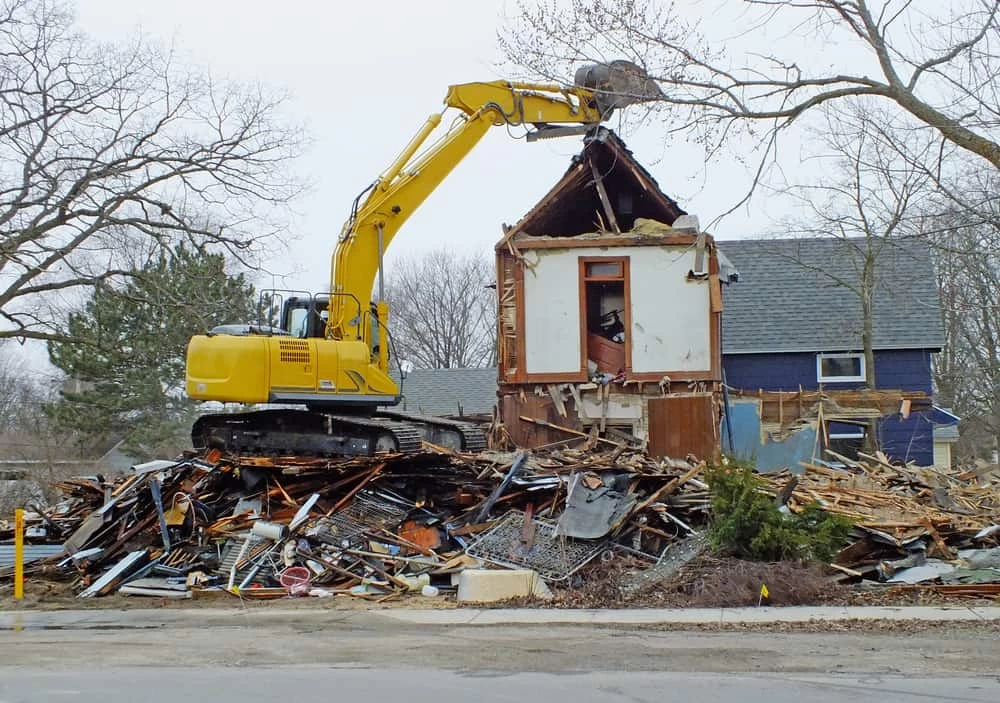
Once permits are issued and any required abatement is complete, demolition proceeds. We work to scope meaning if you need a full structure removed, that’s what happens; if you need surgical interior demo to preserve a historic exterior, that’s what happens instead. Site is cleared, debris is removed, and the property is left ready for whatever comes next. If you’re managing an insurance claim alongside the project common after storm damage we coordinate directly with your carrier so you’re not stuck in the middle.
Full Demolition, Abatement Included One Contractor
The biggest operational gap with most demolition contractors in Quogue and the broader Southampton area is that they don’t handle hazardous materials in-house. When asbestos or lead paint turns up and in a village where over 250 homes in the Historic District alone predate World War II, it regularly does a contractor without NYS DOL asbestos certification has to stop work and bring in a separate abatement company. That means delays, additional coordination, and cost you didn’t plan for.
We offer full-scope residential and commercial demolition with in-house asbestos abatement, lead paint removal, and mold remediation. For a property owner in Quogue, that means one contractor manages the entire process from pre-demolition environmental survey through final site clearance. Full structural teardowns, selective interior demolition, pool removal, and accessory structure removal are all within scope.
For properties in coastal erosion hazard areas Dune Road oceanfront, bay-side lots along Quantuck or Shinnecock we’re also familiar with the Village’s coastal erosion management ordinance under NYS ECL Article 34 and factor that compliance requirement into the project plan from the start. Whether you’re tearing down a storm-damaged structure, clearing a lot for new construction, or renovating a historic cottage while preserving its exterior character, the scope gets handled under one roof, with one point of contact throughout.
Do I need a separate demolition permit from the Village of Quogue?
Yes and this is one of the most common points of confusion for property owners in Quogue. The Village of Quogue has its own incorporated Building Department and issues its own demolition permits, separate from the Town of Southampton. That means you’re not just filing with the Town you’re filing with the Village first, and the documentation requirements, fees, and review process are specific to the Village’s own code and Board of Trustees.
On top of that, if your structure was built before 1941, the application also gets referred to the Town of Southampton’s Landmarks and Historic Districts Board for review. That board has up to 45 days to render its recommendation, and a Certificate of Appropriateness must be issued before demolition can proceed on any landmark or historic district property. If you’re working with a contractor who isn’t aware that both the Village and the Town have a role in this process, you’re likely to hit a stop-work situation at some point. We handle both permit tracks as part of the project from the start.
Does my Quogue property likely have asbestos, and does that affect the demo timeline?
If your property was built before 1980 which describes the overwhelming majority of homes in Quogue asbestos-containing materials should be presumed present until a licensed inspector says otherwise. That includes insulation, floor tiles, roofing materials, pipe wrap, drywall compound, and popcorn ceilings. In the Quogue Historic District, where homes date back to the 18th and 19th centuries, the likelihood is even higher.
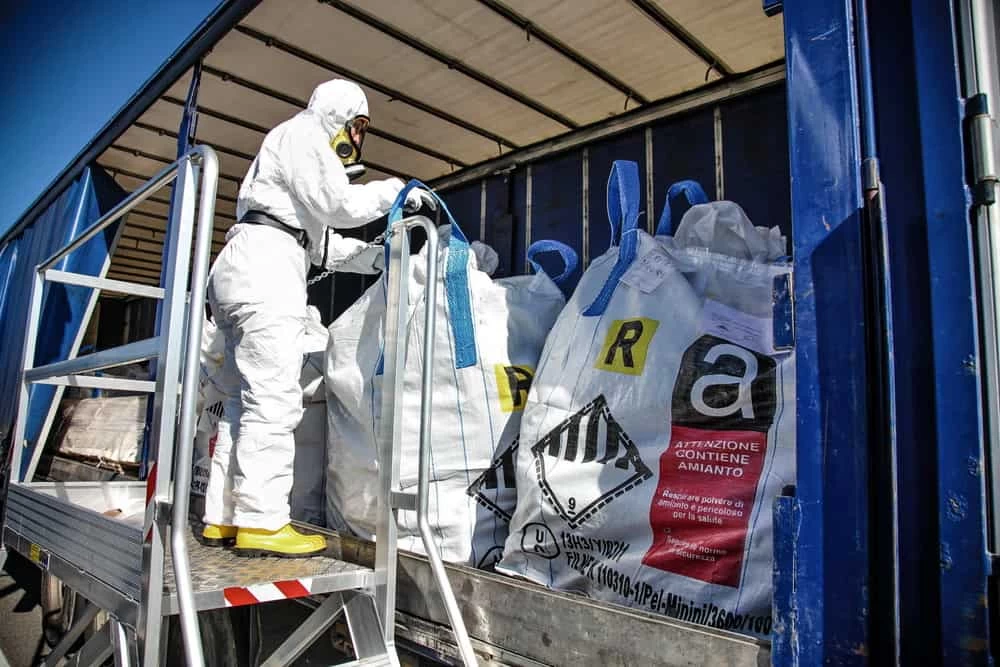
The effect on your timeline depends entirely on your contractor. If your demolition contractor isn’t NYS DOL certified for asbestos work, they are legally required to stop when asbestos is identified and bring in a separate abatement company which can add weeks and significant cost to your project. We handle asbestos abatement in-house under full NYS Department of Labor certification, which means when we find it, we handle it and keep the project moving. Pre-demolition testing is built into the process so there are no mid-project surprises.
What happens if my Quogue property is in the Historic District?
If your property falls within the Quogue Historic District listed on the National Register of Historic Places in 2016 and encompassing over 250 shingle-style homes or if your structure was built before 1941 anywhere in the Town of Southampton, your demolition project requires review by the Town’s Landmarks and Historic Districts Board before a permit can be issued. This is not optional, and it is not a formality.
The Board evaluates demolition applications against established preservation criteria and has up to 45 days to render its report. A Certificate of Appropriateness must be issued before any work begins. This review process needs to be built into your project schedule from day one not treated as something to deal with after you’ve already hired a crew. We prepare the required documentation, submit the application, and manage the review timeline so the 45-day window doesn’t become a project-killing delay. If your project involves preserving the historic exterior while doing interior demolition, that scope gets planned and executed accordingly.
How does storm damage affect demolition requirements for Quogue oceanfront properties?
For properties along Dune Road or any of Quogue’s bay-front and oceanfront areas, storm damage demolition involves an additional regulatory layer that doesn’t apply to inland properties. The Village of Quogue has adopted a coastal erosion management program under NYS Environmental Conservation Law Article 34, which establishes specific standards for demolition and construction in designated coastal erosion hazard areas. Any demolition work in these zones may require review under the Village’s coastal erosion ordinance in addition to the standard building permit.
Quogue has declared states of emergency in response to multiple storm events including Hurricane Erin in 2025 and the village has been identified as the only municipality on the south shore of Long Island without a long-term beach erosion plan, meaning storm damage to coastal structures is a recurring reality here, not a rare scenario. When a storm compromises a structure on Dune Road or a bay-side lot, the demolition response needs to account for both the emergency timeline and the environmental compliance requirements. We operate 24/7 for exactly these situations, and our team is familiar with Quogue’s coastal ordinance requirements from prior work in the area.
What's the difference between full demolition and selective demolition for a Quogue renovation?
Full demolition means the entire structure is removed down to the foundation what most people picture when they hear “teardown.” This is common in Quogue’s active luxury redevelopment market, where buyers acquire aging mid-century or early 20th-century properties, demolish the existing structure, and build a custom home from the ground up. The permit process, environmental survey, and site clearance all apply in full.
Selective demolition is a different scope entirely. It means removing specific elements walls, floors, ceilings, structural components within an existing building while leaving the rest intact. This is particularly relevant in Quogue for historic properties where the exterior character and structural integrity need to be preserved, but the interior needs to be opened up for a modern renovation. Selective demo requires more precision and more coordination with your architect and general contractor to make sure the right things come out and the wrong things don’t. We handle both scopes, and the approach gets defined clearly during the initial site assessment so you know exactly what you’re getting before any work begins.
How long does a full demolition project typically take in Quogue, NY?
The honest answer is that the permit process is usually the longest part not the physical demolition itself. For a straightforward residential teardown in Quogue with no historic district involvement, permitting through the Village of Quogue’s Building Department typically takes a few weeks once the application is complete and documentation is in order. If your property triggers the Town of Southampton’s Landmarks and Historic Districts Board review required for any pre-1941 structure you need to add up to 45 days for that review process on top of the Village permit timeline.
The physical demolition of a standard residential structure, once permits are in hand and any required asbestos abatement is complete, typically takes anywhere from a few days to about two weeks depending on the size of the structure, site access, and scope of work. In Quogue, site access can be a factor particularly for properties on the barrier island along Dune Road or in areas with limited road access. The full timeline from initial assessment to cleared site, factoring in permitting and abatement, realistically runs six to twelve weeks for most projects. Starting the permit process early especially if your property is in or near the Historic District is the single most effective way to keep that timeline from stretching further.